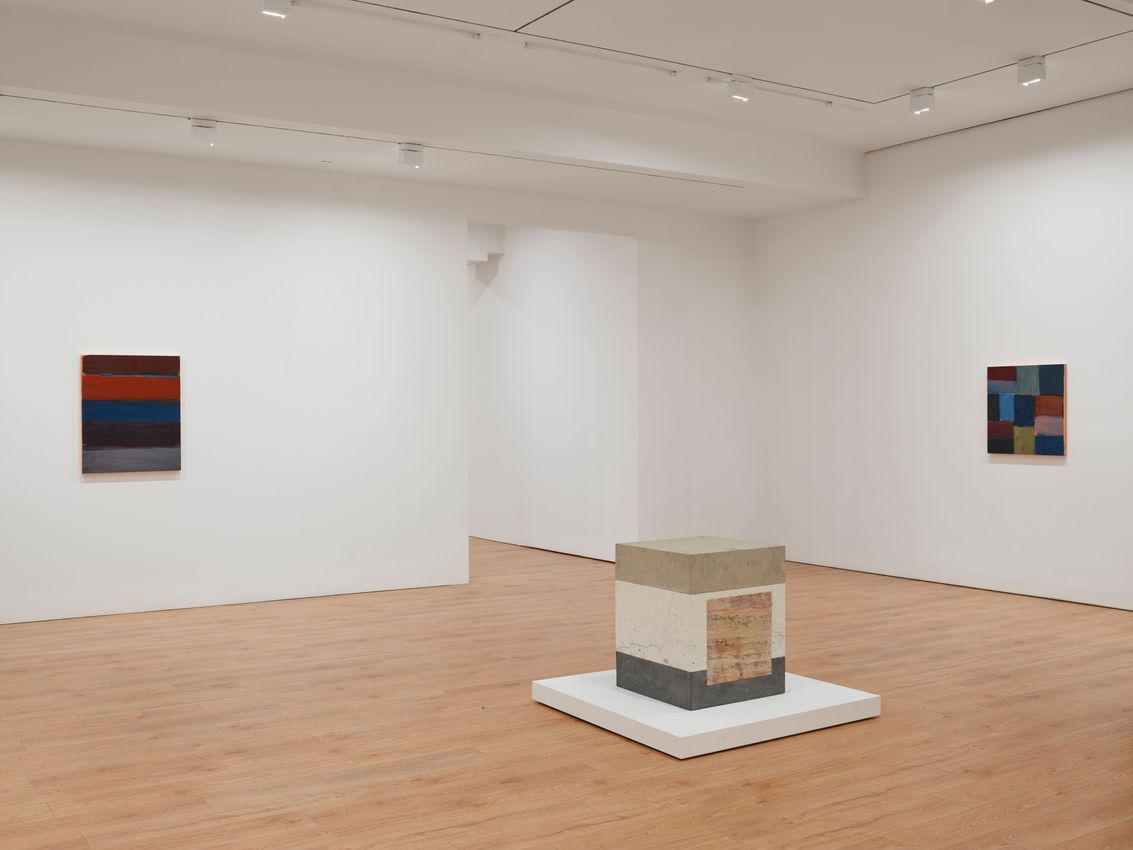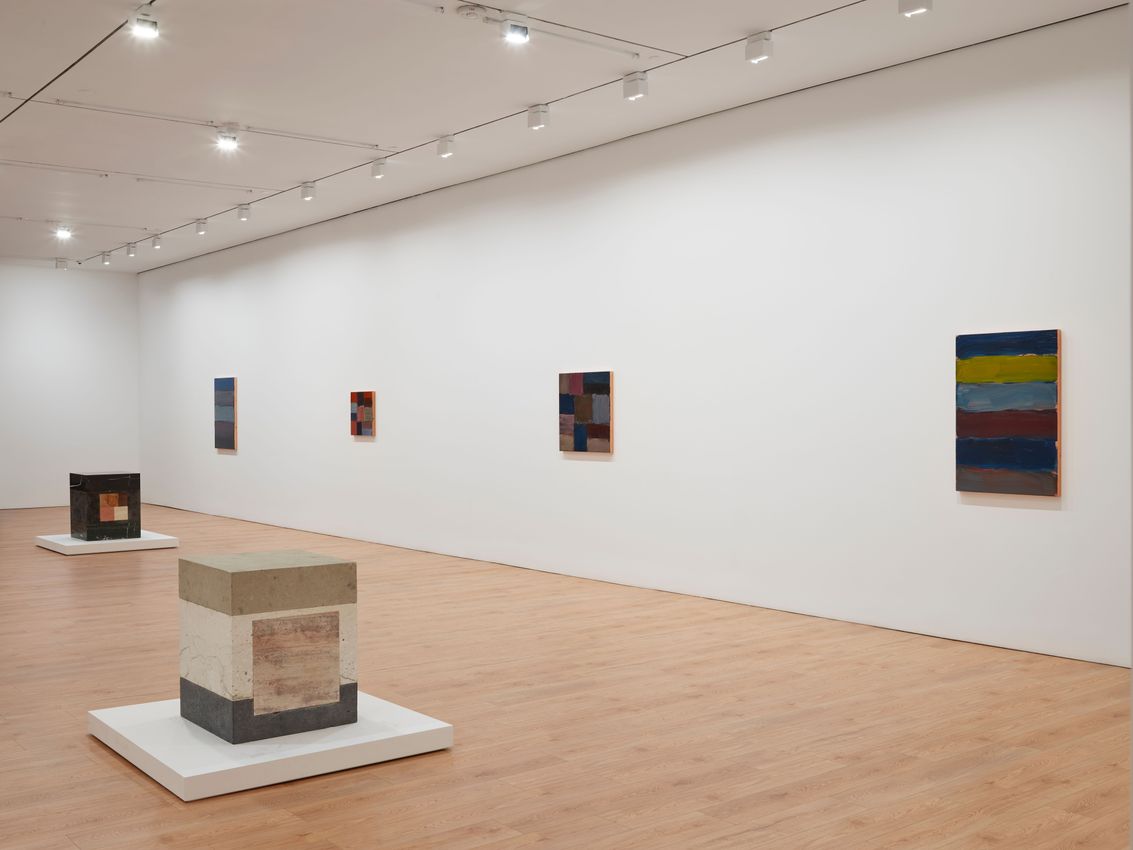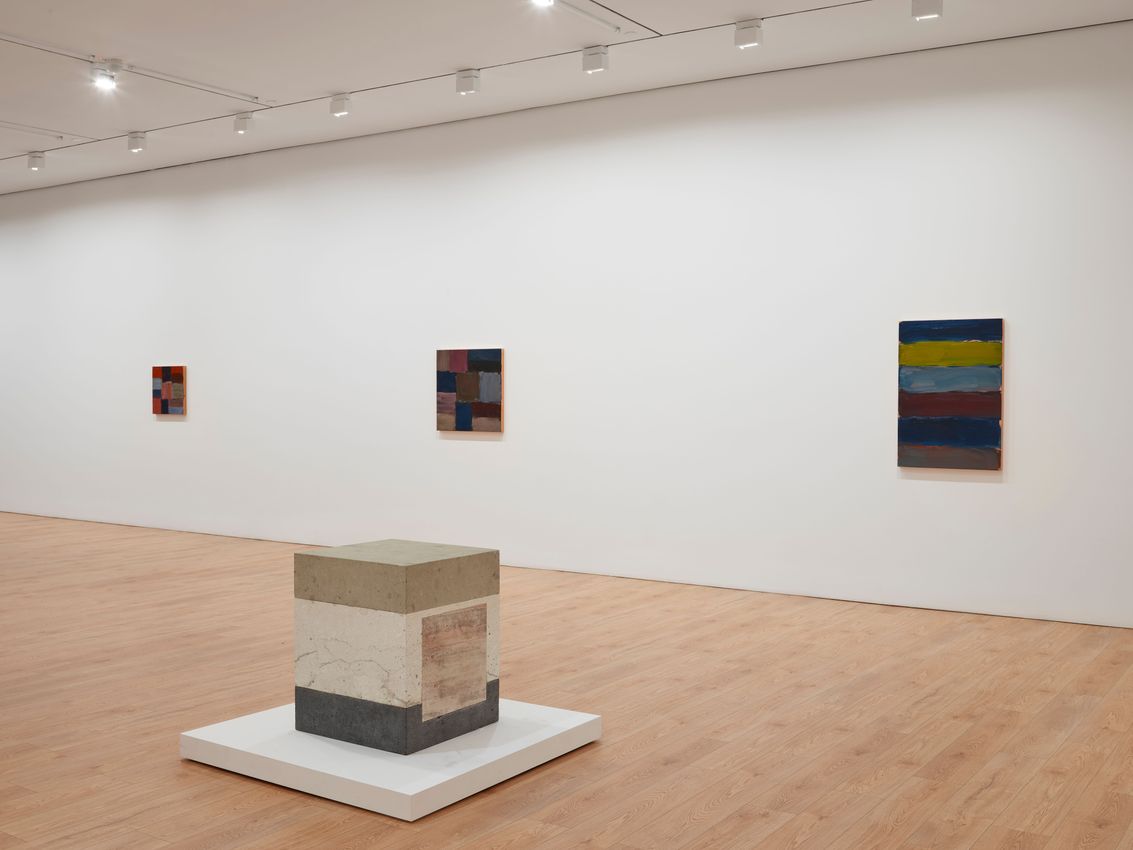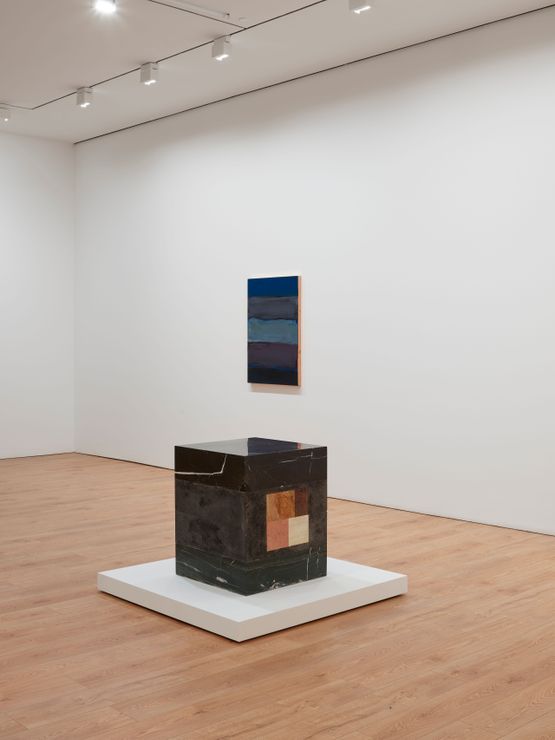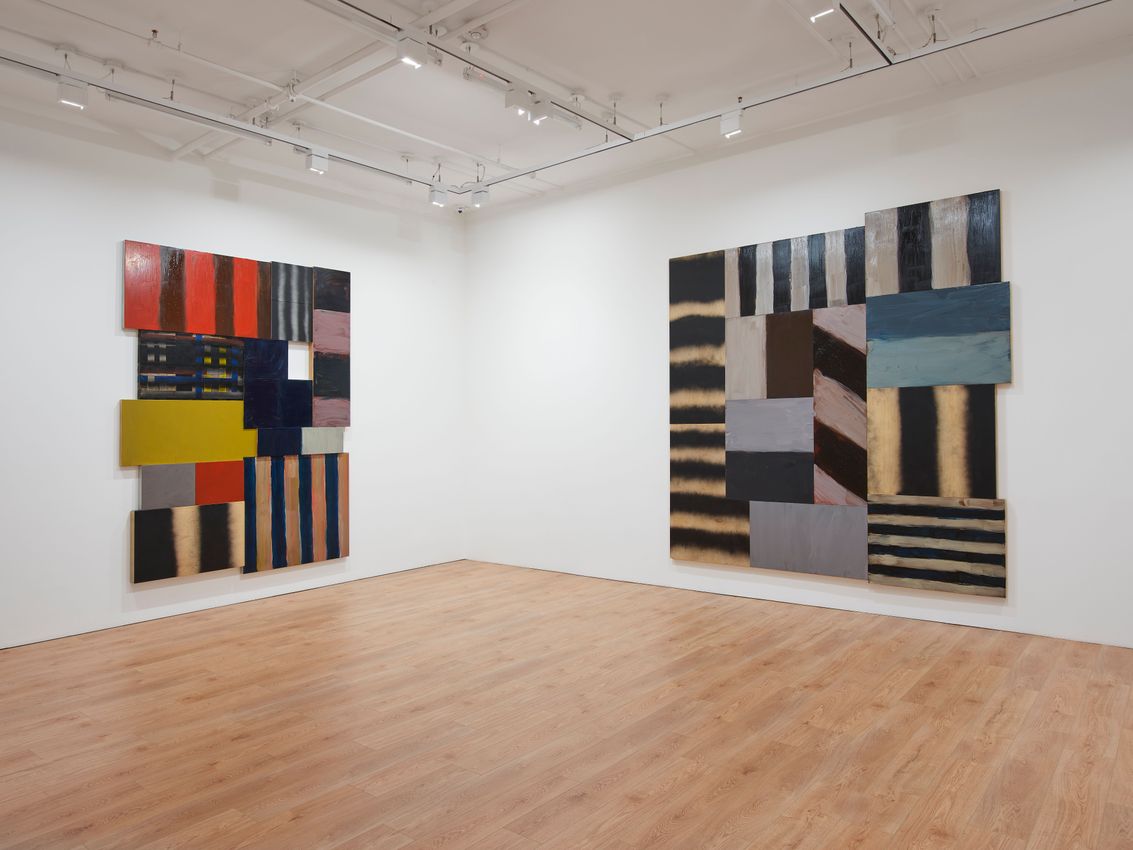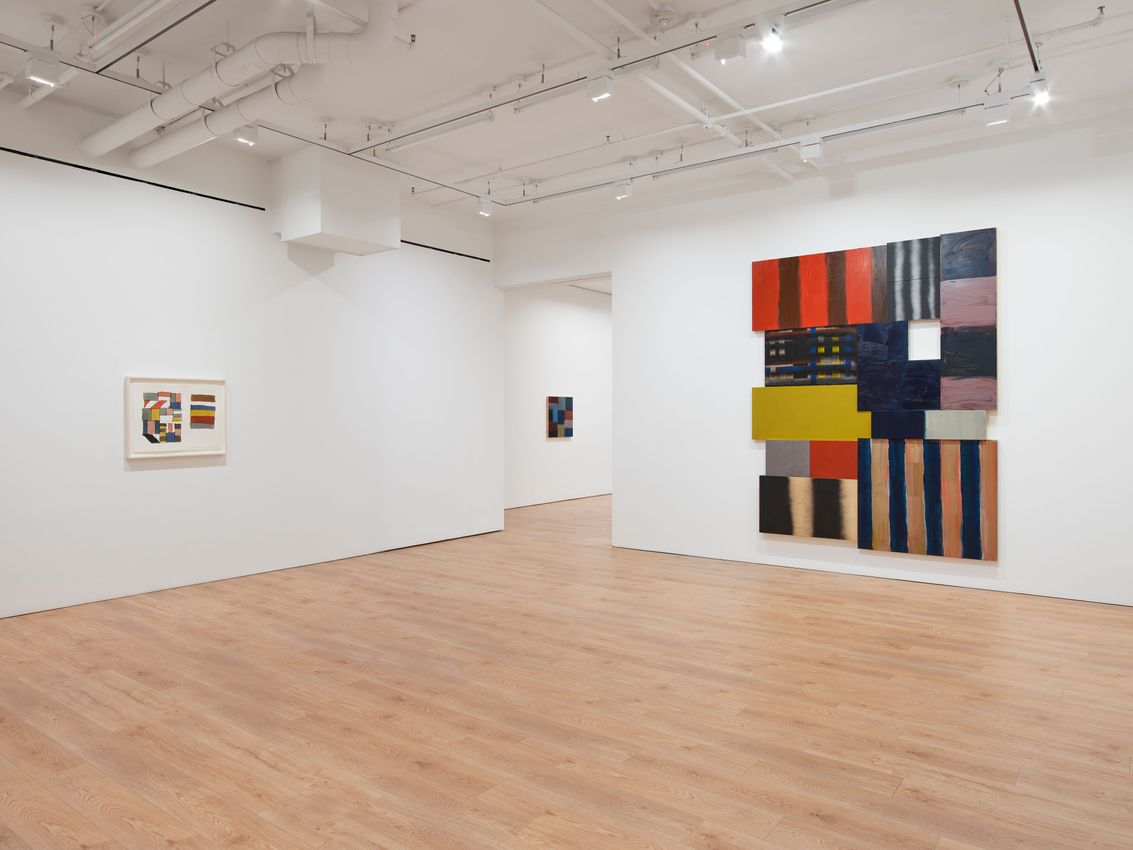
Lisson Gallery is pleased to present Tower, a solo exhibition by renowned painter Sean Scully featuring three interrelated bodies of work. The eponymous new series of Tower paintings represents a radical departure and a bold dismantling of his practice, each being formed from a concatenation of smaller, individual panels, seemingly employing different styles and diverse moments from his own painterly back catalogue. Through the disorder and disjuncture of these tessellating panels, incorporating gaps, overlaps and holes, comes a newfound harmony and rhythm, that also references an earlier, spiritual era of art – such as the perspectival depth and world building found in Quattrocento Italy – as well as the rupture of modern art – in Analytic Cubism or Lucio Fontana’s pierced surfaces, for example.
Assembled from wood, felt and aluminum, the Tower works are inherently sculptural, featuring graffiti-esque spray paint, competing grids and flashes of road signs, which bring to mind the tumult of our high-rise, built environment. Through Scully’s complex amalgamation of cohesion and fracture, the Tower paintings carry an allegorical force, conveying echoes of ambitious structures like the World Trade Center and the Tower of Babel, and suggesting the gulf between demise and reconstruction. In parallel to the exhibition, seven additional new works from the Tower series are on view at Scully’s studio space, with viewings available by appointment.
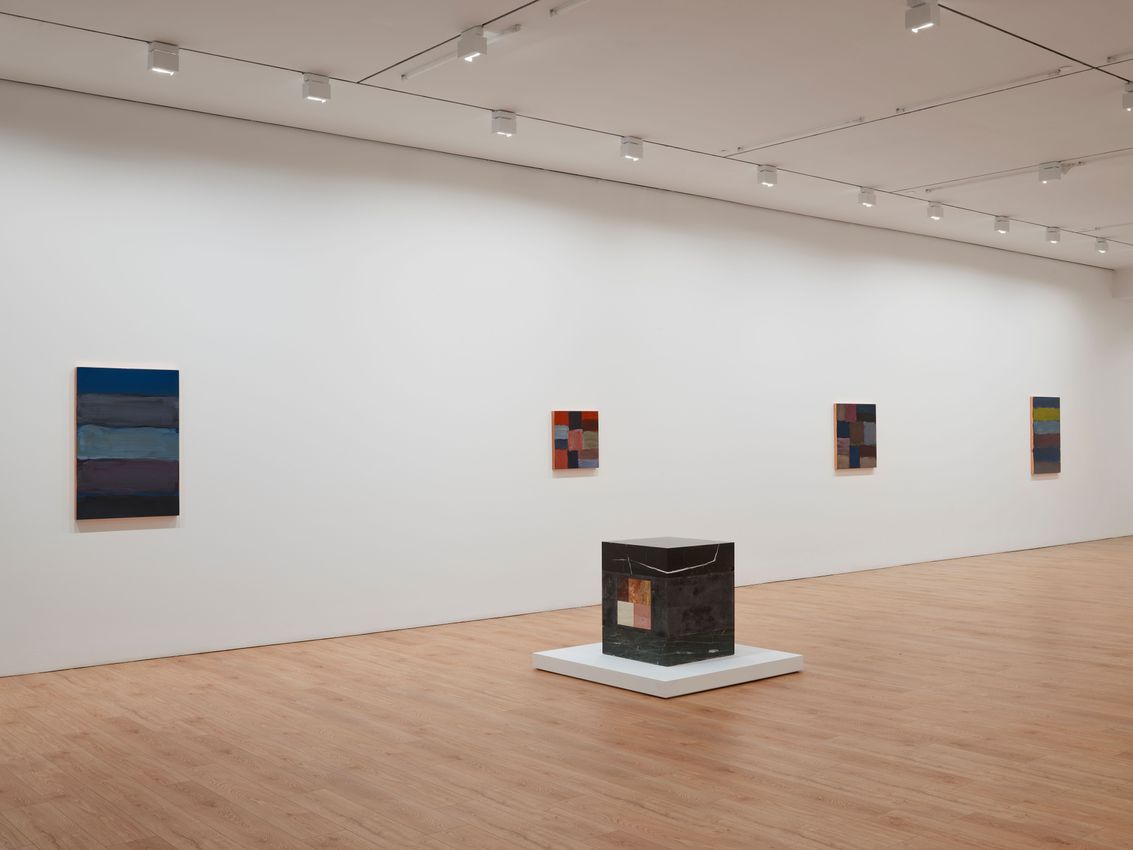
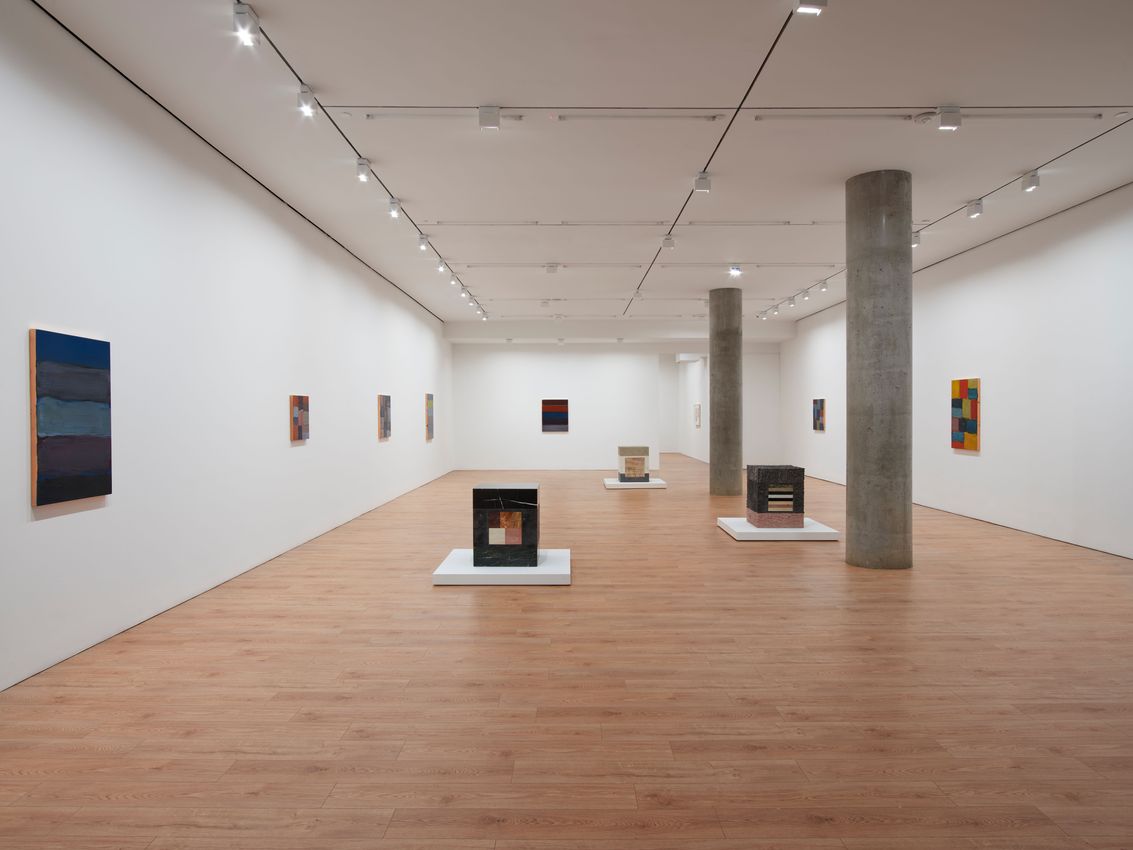
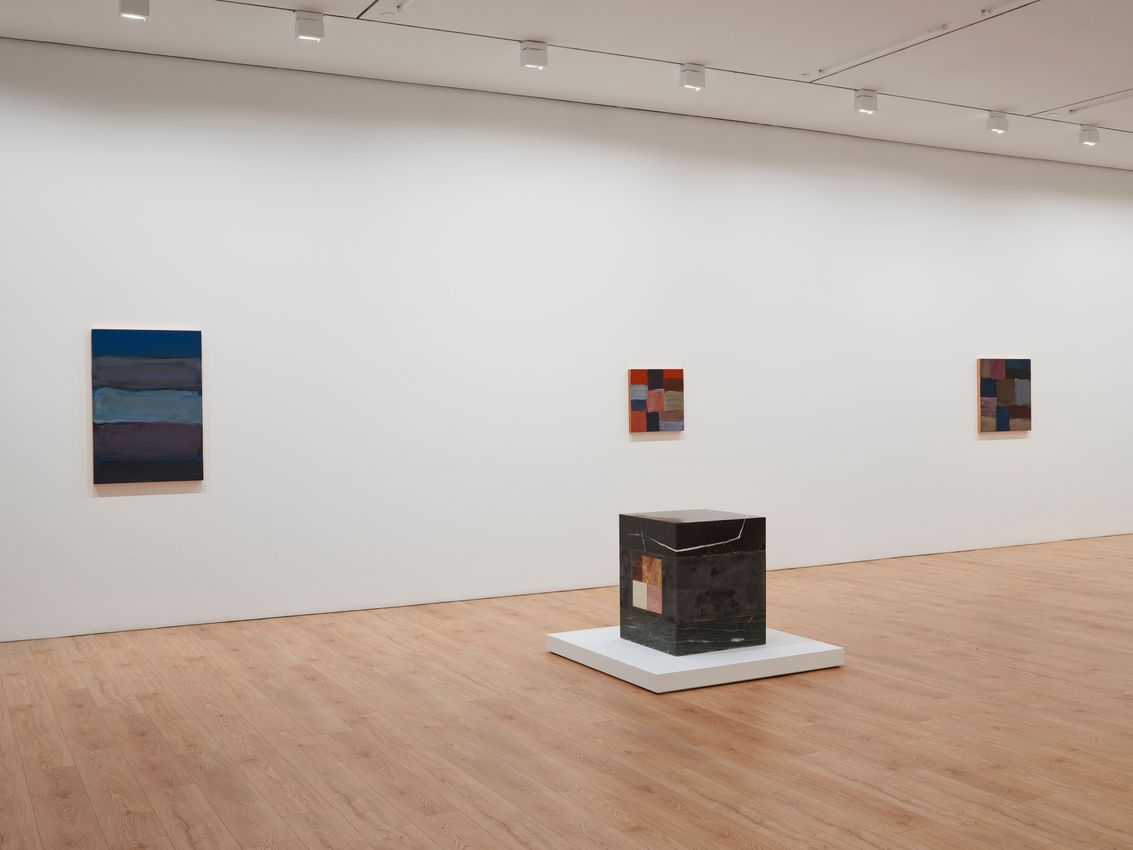
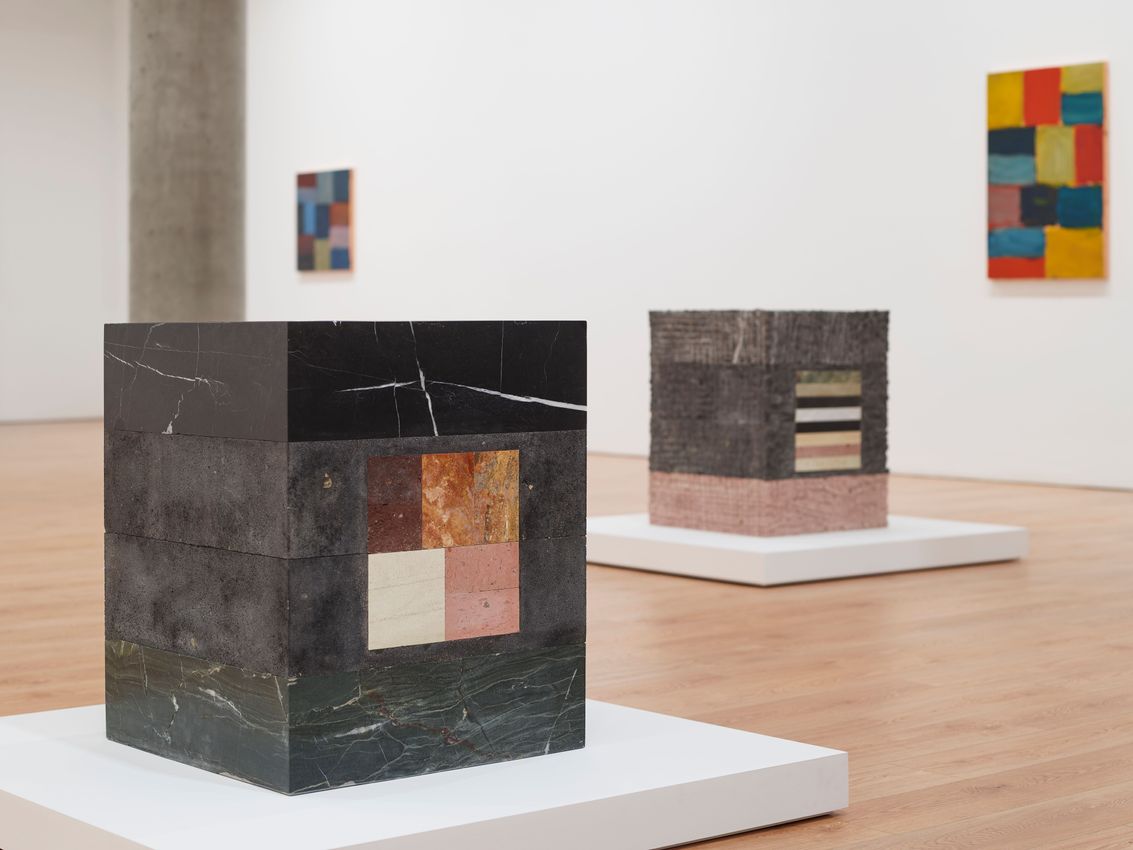
A further series of paintings contrasts the monumental with the intimate, while a trio of stone sculptures acts as a pivot between the two. Across the display, Scully re-examines concepts that have shaped his five-decade career – the relationship between form and feeling, the emotive potential of abstraction, and the pitting of romantic ‘gesture’ against an aesthetic of impersonality.
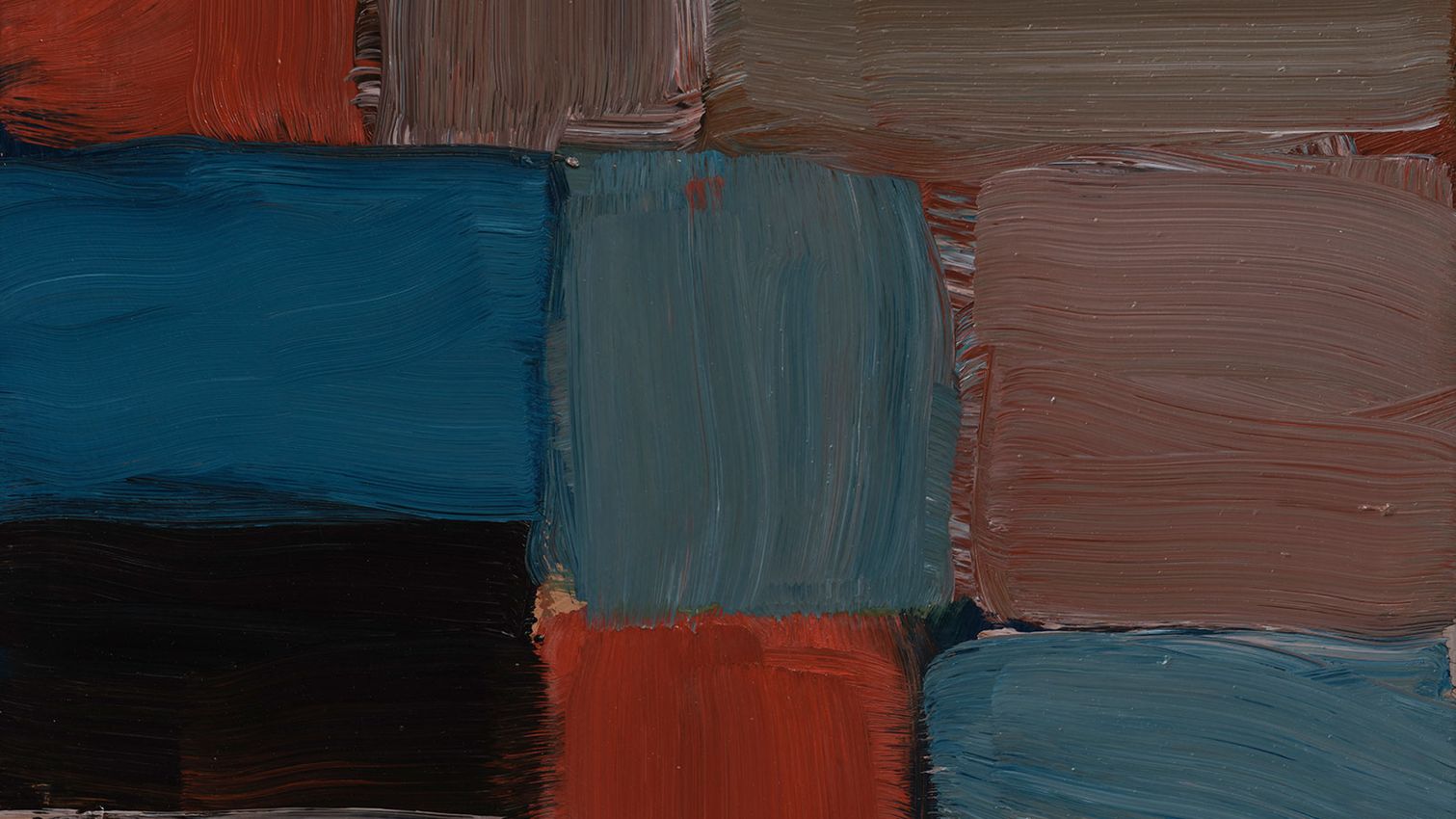
In seven paintings on copper, Scully has arranged gestural sweeps of jostling color into tiered bands and tentative grids, suggestive of both turbulence and containment. The metallic surface is both redolent of industry and the earth, because, as Scully points out, “The paintings have a relationship with the elemental world.” As with the holes in the Tower series, here tiny breaks in the paintwork allow the copper support to shine through, functioning as a kind of underpainting or underpinning. Conjuring allusions from copperplate etchings to medieval icon painting, the pigment-veiled metal enhances the metaphoric power and surface strength of each piece.
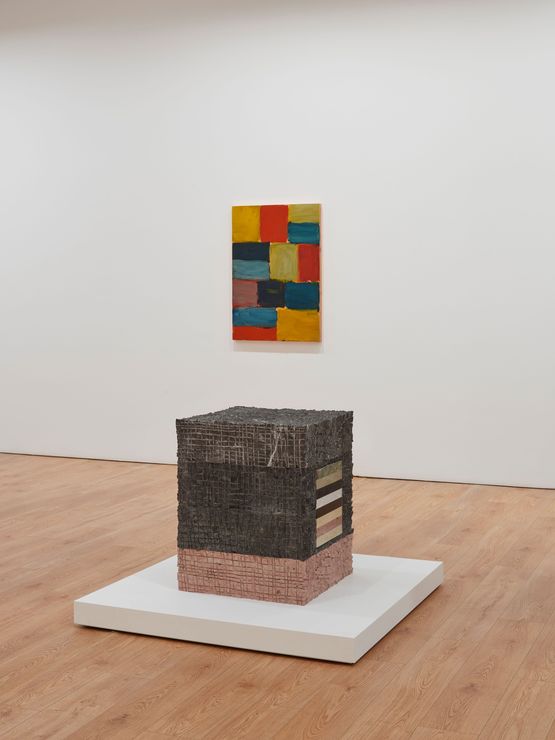
Since his Supergrid acrylic paintings of the 1970s, rectilinear and grid structures have been a near-constant in Scully’s art. He has often observed that his work combines the rigor of Modernist abstraction with the pathos of historical European painting. In three free-standing sculptures, these twin currents are translated into compact, lapidary form. Planed blocks of stone fit together in cuboid stacks. Belying the minimalist precision of the construction, the stone itself is a subtle index of ‘real life.’
The sculptures, with their scale and rectilinear precision, form a grounding counterpoint to the loftier paintings. Yet in the Tower series, it is also possible to perceive an emotive undertow—one found throughout Scully’s art and arguably linked to his Irish heritage, birth into homelessness, and upbringing in South London. As ever in his art, the personal and the autobiographic glimmer within the apparently systematic.


Sean Scully is one of the most important painters of his generation, whose work is held in major museum collections around the world. While known primarily for his large-scale abstract paintings, comprised of vertical and horizontal bands, tessellating blocks and geometrical forms comprised of gradated and shifting colours, Scully also works in a variety of diverse media, including printmaking, sculpture, watercolour and pastel. Having developed a style over the past five decades that is uniquely his own, Scully has cemented his place in the history of painting. His work synthesises a thoroughly international collection of influences and personal perspectives–ranging from the legacy of American abstraction, with inspiration from the likes of Mark Rothko and Jackson Pollock, and that of European tradition, with nods to Henri Matisse and Piet Mondrian, as well as references to classical Greek architecture. While monumental in scale and gesture, Scully’s work retains an undeniable delicacy and sincerity of emotion.


A respected voice in contemporary art discourse.
Focusing on ambitious storytelling and insightful art-world commentary. Ocula Magazine publishes in-depth interviews, critical essays and timely analysis on the artists, exhibitions and ideas driving the global art world.
Learn more about Ocula Magazine
Showcasing the best of the art world.
Ocula partners with galleries from around the world to highlight their artists, artworks and exhibitions. Gallery membership is by application and invitation, with each member vetted by an independent panel.
Learn more about Ocula Membership

Specialises in the sale of major artworks.
Led by a team with deep ties to the world’s leading auction houses, galleries and collectors. Ocula’s advisory team offers bespoke services to high-net-worth clients from around the world who are looking to acquire the best of contemporary and modern art.
Learn more about our team and services