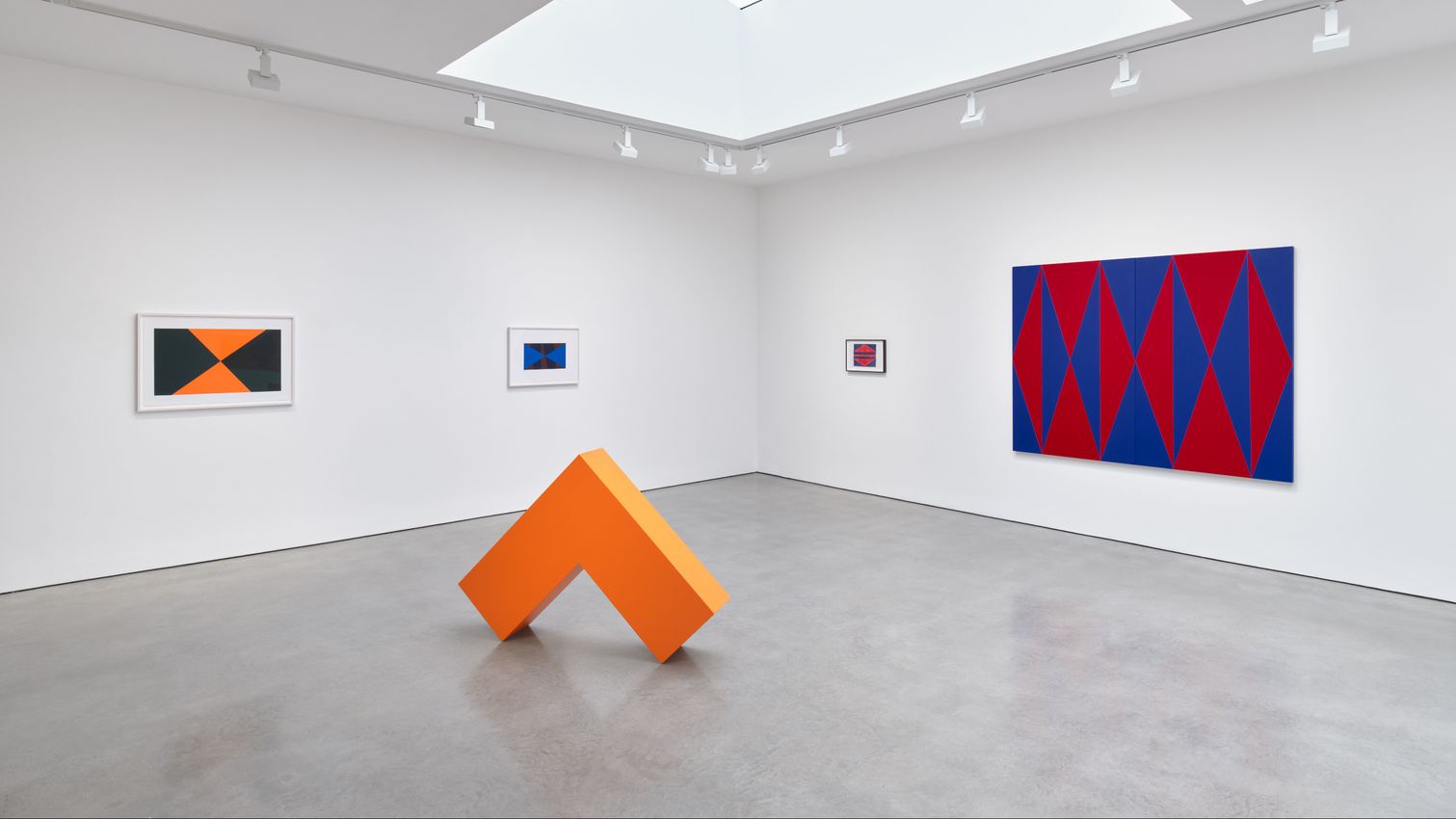
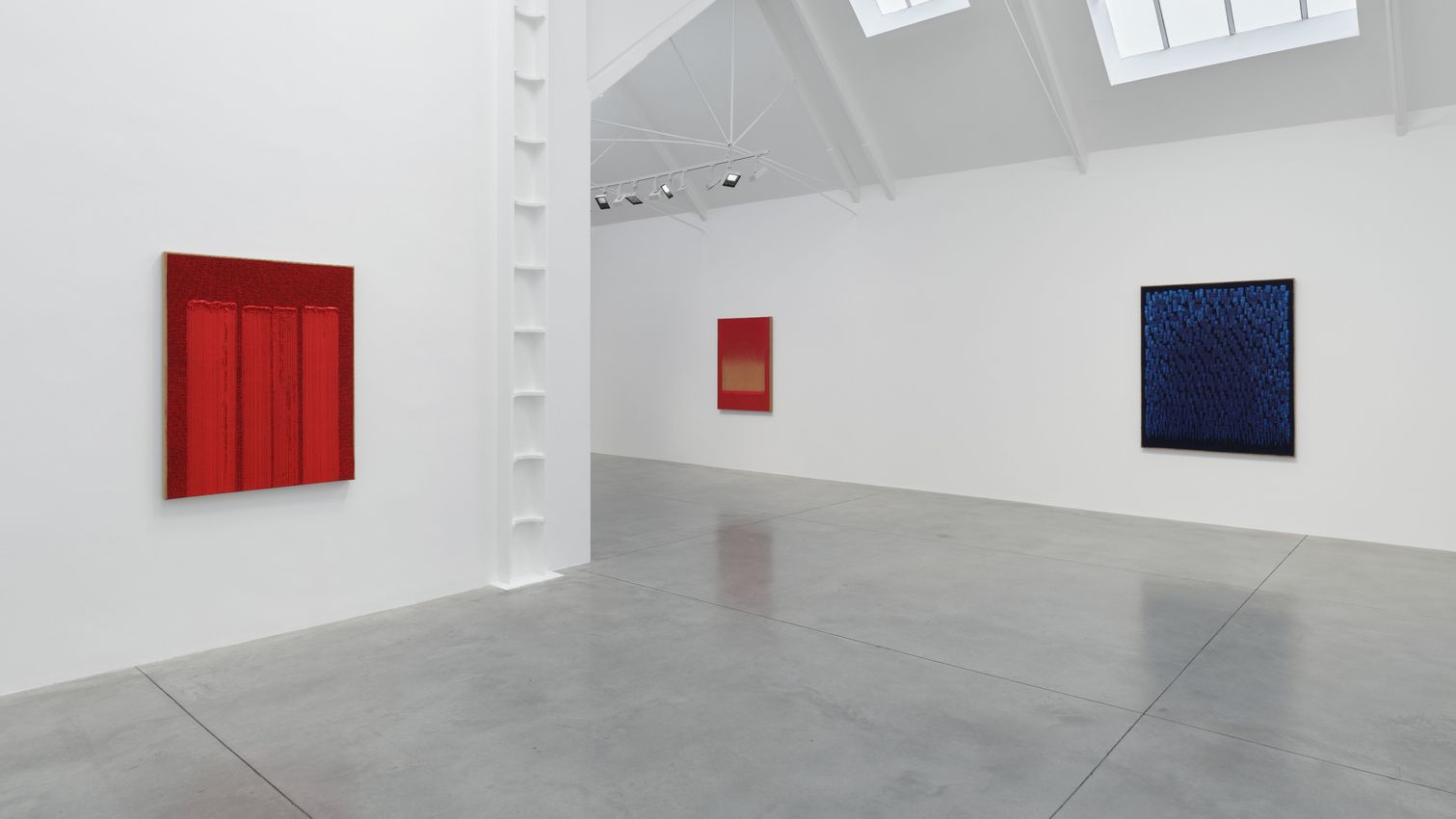
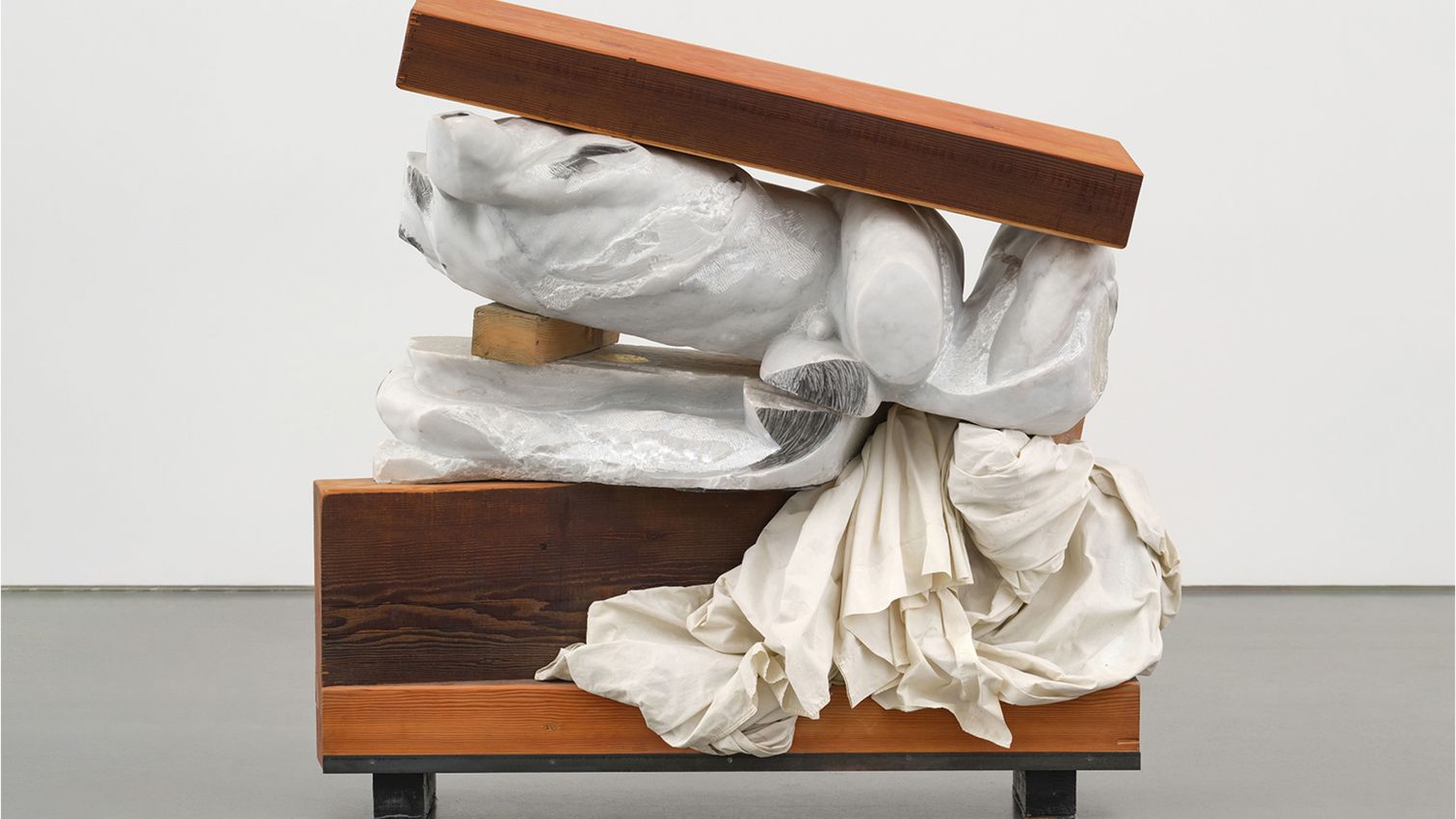
ART & DECO Gallery and Lisson present the group exhibition ‘CIRCLE — LINE — SQUARE’ (stylised as ○ — □), bringing together works by Richard Deacon, Spencer Finch, Ryan Gander, Carmen Herrera, Anish Kapoor, Richard Long, Julian Opie, Pedro Reyes, and Hiroshi Sugimoto alongside a selection of Shanghai Art Deco furniture and design pieces. Staged at ART & DECO Gallery in Shanghai’s M50 Creative Park, the exhibition explores how three elemental geometric forms—the circle, line, and square—are dynamically interpreted across contemporary artworks and design objects.
Circles, lines, and squares are fundamental forms in the visual language, which recur throughout the architectural façades, furniture, and object details of the Art Deco style. ‘CIRCLE — LINE — SQUARE’ presents paintings, sculptures, photographs, and conceptual works that works resonate with one another formally through the lens of these three geometry elements, giving rise to reflections on material, the experience of viewing, and space. The exhibition also features a collection of Shanghai Art Deco pieces, which reveals the city’s singular historical connection to Art Deco—a defining element of Shanghai’s architectural and design language in the first half of the twentieth century—and opens up further dialogues with the artists’ works.
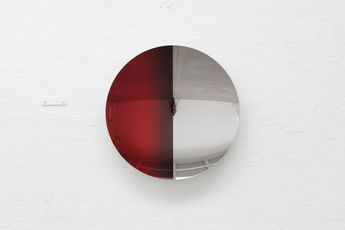
The exhibition starts with a group of artworks featuring the circle element. Anish Kapoor’s Untitled (2022) sets the elemental geometry of a circle within a rectilinear block of alabaster. The clarity of this structure is complicated by the material itself: the stone’s translucency and natural veining introduce visual depth into the work. The circular form draws the eye inward, toward a space whose boundaries remain difficult to fix, continuing Kapoor’s long engagement with material, void, time, and perception. Nearby, the painterly mirror Prussian Blue to Organic Green and Black (2023) tests the boundaries of spatial perception. The reflected image within the lacquered surface appears upside down, alluding to the possibility of an alternate perceptual reality. The full moon in Natural Sign / Time Management (Solemn estranged moon) (2021) by Ryan Gander was made by printing the base of an acrylic paint-coated pan—found by the artist in his kitchen—onto Japanese denim. The work extends the artist’s conceptual practice, juxtaposing familiar imagery, everyday materials, and unexpected associations to prompt viewers to question how meaning is constructed.
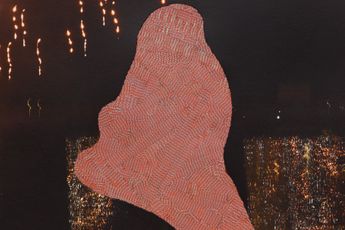
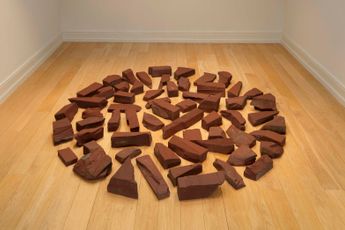
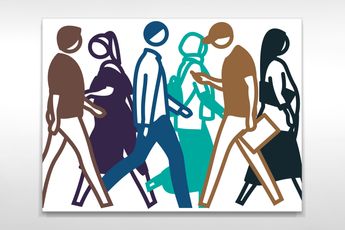
The exhibition continues with a series of works characterised by lines. Richard Long presents two works, including the photograph River Yangtze Stone Line, China (2010), which captures a line formed through the artist’s direct intervention in the landscape, continuing his decades-long practice of walking as a means of marking territory and time; and the painting Untitled (2024), a manifestation of elemental balance, as well as the physical vigour with which water and clay are applied under the force of gravity. Julian Opie presents a group of figure paintings, bringing a reduced language of line and plane to the human figure, with a focus on essential yet legible contours. The lines that structure his work reinforce a sense of the body as a set of distinct, legible components, allowing geometry to enter relationships of posture, recognition, and human scale.
Nearby, Richard Deacon’s Red Speckle Republic (2009) gathers irregular ceramic units into a rectilinear structure that nonetheless retains the possibility of being dismantled and reassembled, holding structure and contingency in the same object. Pedro Reyes’s Lithophone (Hexatonal) (2018), carved from black marble, occupies the territory of both sculpture and musical instrument, connecting geometric construction to the possibilities of use, function, and sound.
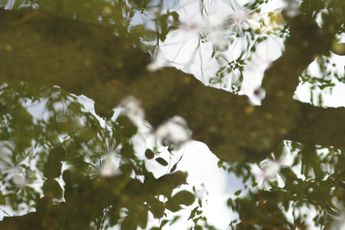
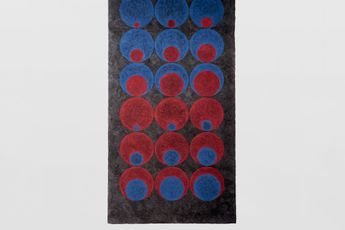
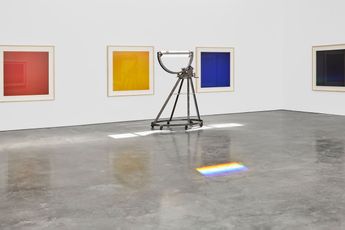
The upstairs space highlights the geometry of a rectangle. Carmen Herrera’s geometric paintings organise spatial relationships through a precise calibration of direction, edge, and proportion, characteristic of the hard-edged abstraction she pursued across seven decades of practice. In Spencer Finch’s Camouflage (erased) (2021), a projected camouflage pattern is first rendered in soft pastel and then progressively erased, leaving form suspended between appearance, disappearance, and residue. Meanwhile, Hiroshi Sugimoto examines the very conditions of looking both outdoors and indoors via works from two of his iconic photography series: Ligurian Sea, Riomagio (1993) and Salle 37, Palais de Tokyo, Paris (2013).
ART & DECO Gallery, 1F, Building 7, No. 50 Moganshan Road, Shanghai
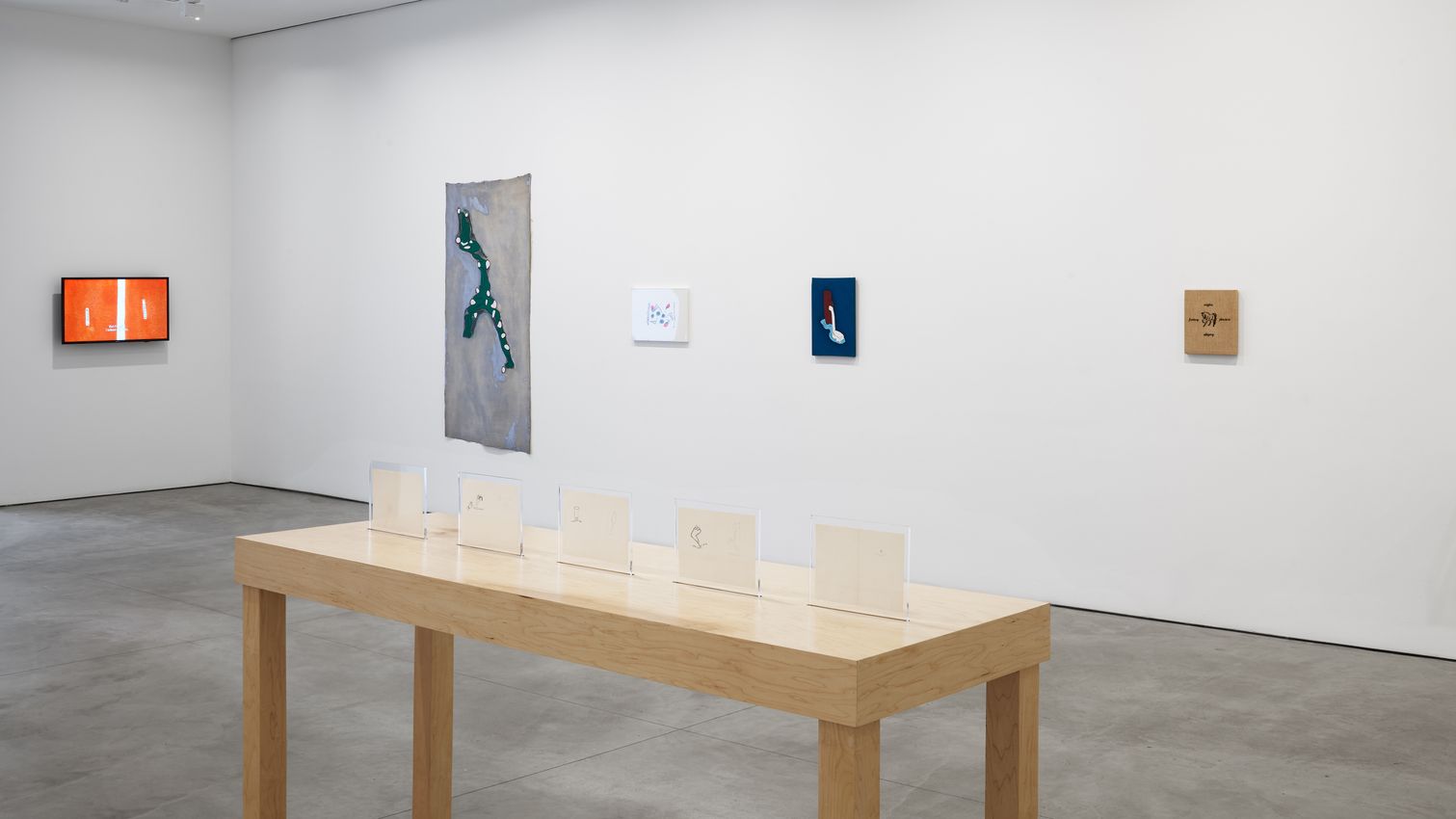
Courtesy Lisson Gallery.


Established in 1967 in London, Lisson Gallery is one of the most well-known galleries operating globally. Boasting an influential and continuing legacy, including playing a pivotal role in the careers of many pioneers of historically important art movements, the gallery works with some of the most significant contemporary artists today.

A respected voice in contemporary art discourse.
Focusing on ambitious storytelling and insightful art-world commentary. Ocula Magazine publishes in-depth interviews, critical essays and timely analysis on the artists, exhibitions and ideas driving the global art world.
Learn more about Ocula Magazine
Showcasing the best of the art world.
Ocula partners with galleries from around the world to highlight their artists, artworks and exhibitions. Gallery membership is by application and invitation, with each member vetted by an independent panel.
Learn more about Ocula Membership

Specialises in the sale of major artworks.
Led by a team with deep ties to the world’s leading auction houses, galleries and collectors. Ocula’s advisory team offers bespoke services to high-net-worth clients from around the world who are looking to acquire the best of contemporary and modern art.
Learn more about our team and services