



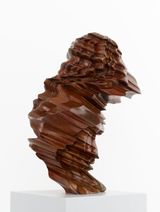
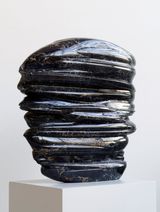
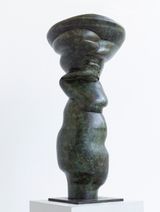
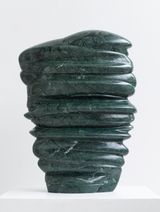
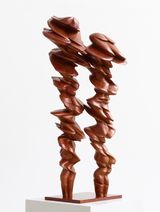
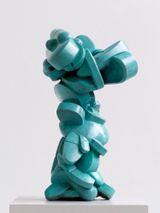
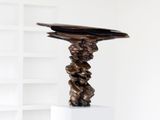
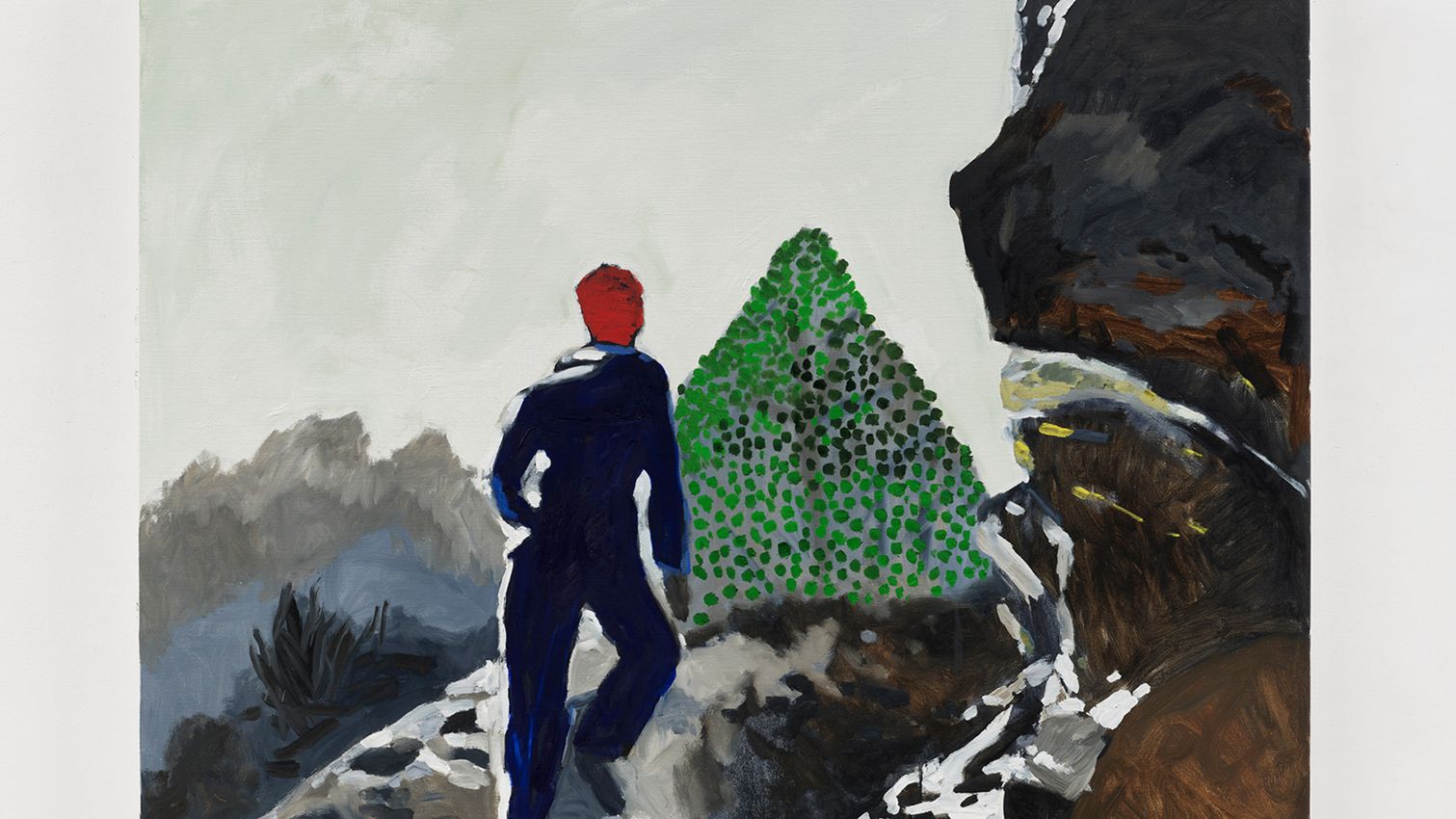
Lisson Gallery is pleased to present a solo exhibition of new work by Tony Cragg, centred on the latest in his series of Incident sculptures, alongside recent pieces from related, ongoing bodies of work. The show revolves around numerous upright forms that resemble standing figures or columnar pillars, but which are abstracted and complicated through Cragg’s rigorous process of hand carving – whether through the act of building up and constructing or through careful erosion and hollowing out. The porosity and openness of these new Incident works collapse any boundaries between internal and external structure, between solid and air, creating sculptural moments that are at once transitory and eternal, organic and deliberate. A further dimension to these animated and gestural configurations – which seem to dance and commune with one another as though being drawn in space – is their hard-edged materiality, being variously manufactured from patinated bronze, reflective stainless steel or the velveteen surface of weathered corten steel.
For over 50 years, Cragg has fostered a practice combining his interests in the natural and the manmade worlds that has nevertheless remained resolutely a product of his own invention, experimentation and imagination. A new 2025 iteration of his Hedge series, for example, only fleetingly recalls the twists and twines of the hedgerows he investigated as a child, before exploding out and growing into interweaving planes and sinuous lines. Similarly, the recent Stand works in this show can initially be read anthropomorphically – as torso-like volumes with heads or limbs – but soon transcend memory and dissolve perception, developing instead into original forms with fresh associations, both bodily and other worldly.
Cragg’s Masks, composed of stratified stone in circular or elliptical striations, lean toward a futuristic dynamism. Though abstracted from multiplied, compounded profiles of a person’s face, these works are still deeply attuned to the human, in scale, material presence and in the way they invite a physical, almost empathic response from viewers. Across his oeuvre, Cragg’s focus remains on the expressive possibilities of materials rather on than any direct representation, harnessing instead the possibilities of movement, mass and molecular arrangement that are inherent in all matter.
This dialogue between the figurative qualities in the Stands and Masks continues outdoors, where monumental outdoor versions of these two series are installed side-by-side in the external courtyard. At the heart of the exhibition, the internal courtyard features a major bronze Contradiction sculpture, which rotates between a whirling, centrifugal force and a towering verticality – seemingly defying gravity and pulling skywards.
Alongside an interconnectedness and shared complexity across all of Cragg’s output, these works together present an artist who is not only continuing to evolve and enrich the range of thoughts, materials and forms involved in his creations, but also someone constantly pushing at the limits of what is possible to achieve in sculpture.
This exhibition follows major solo shows this year at leading European institutions in Dubrovnik, Dessau, Salzburg and Rome, as well as his last major display in the UK at Castle Howard, York (2024). It runs concurrently with a presentation at the artist’s Sculpture Park Waldfrieden in Wuppertal (2025–26)
Tony Cragg is one of Britain’s foremost sculptors. Constantly pushing to find new relations between people and the material world, he works with stone, wood, glass, aluminium, cast bronze and cast iron, and found objects, from plastic consumer goods to rubbish from the streets. His early stacked works present a taxonomical understanding of the world, and he has said that he sees manmade objects as “fossilized keys to a past time which is our present”. So too, the witty floor and wall arrangements of objects that he started making in the 1980s blur the line between manmade and natural landscapes: they create an outline of something familiar, where the contributing parts relate metaphorically to the whole. Cragg originally trained as a scientist and had a job as a lab technician at the National Rubber Producers Research Association, 1966–68, an experience that is reflected in his vigorous approach to material. He has said, “I see a material or an object as having a balloon of information around it”, 1992, and he pummels this aura in different ways across two broad bodies of work – Early Forms and Rational Beings. The Early Forms explore the possibilities of distorting everyday vessels such as vases or plastic bottles, morphing into and around themselves. The Rational Beings sculptures take the outline of a human gesture or profile as starting point for exuberant improvisations on natural processes.


Established in 1967 in London, Lisson Gallery is one of the most well-known galleries operating globally. Boasting an influential and continuing legacy, including playing a pivotal role in the careers of many pioneers of historically important art movements, the gallery works with some of the most significant contemporary artists today.

A respected voice in contemporary art discourse.
Focusing on ambitious storytelling and insightful art-world commentary. Ocula Magazine publishes in-depth interviews, critical essays and timely analysis on the artists, exhibitions and ideas driving the global art world.
Learn more about Ocula Magazine
Showcasing the best of the art world.
Ocula partners with galleries from around the world to highlight their artists, artworks and exhibitions. Gallery membership is by application and invitation, with each member vetted by an independent panel.
Learn more about Ocula Membership

Specialises in the sale of major artworks.
Led by a team with deep ties to the world’s leading auction houses, galleries and collectors. Ocula’s advisory team offers bespoke services to high-net-worth clients from around the world who are looking to acquire the best of contemporary and modern art.
Learn more about our team and services
