We are pleased to present 5W<1H, Tokyo-based artist Takuro Tamura’s first solo exhibition at MAKI Gallery. Over fifty new works, including paintings and sculptures, will be on view at our gallery space in Omotesando, Tokyo.
5W1H, or what is commonly known as the Five Ws (who, what, when, where, why) and the how, represents the most basic and fundamental questions asked in any situation. In particular, the “how” is crucial to Tamura and the way he approaches the making of his works.
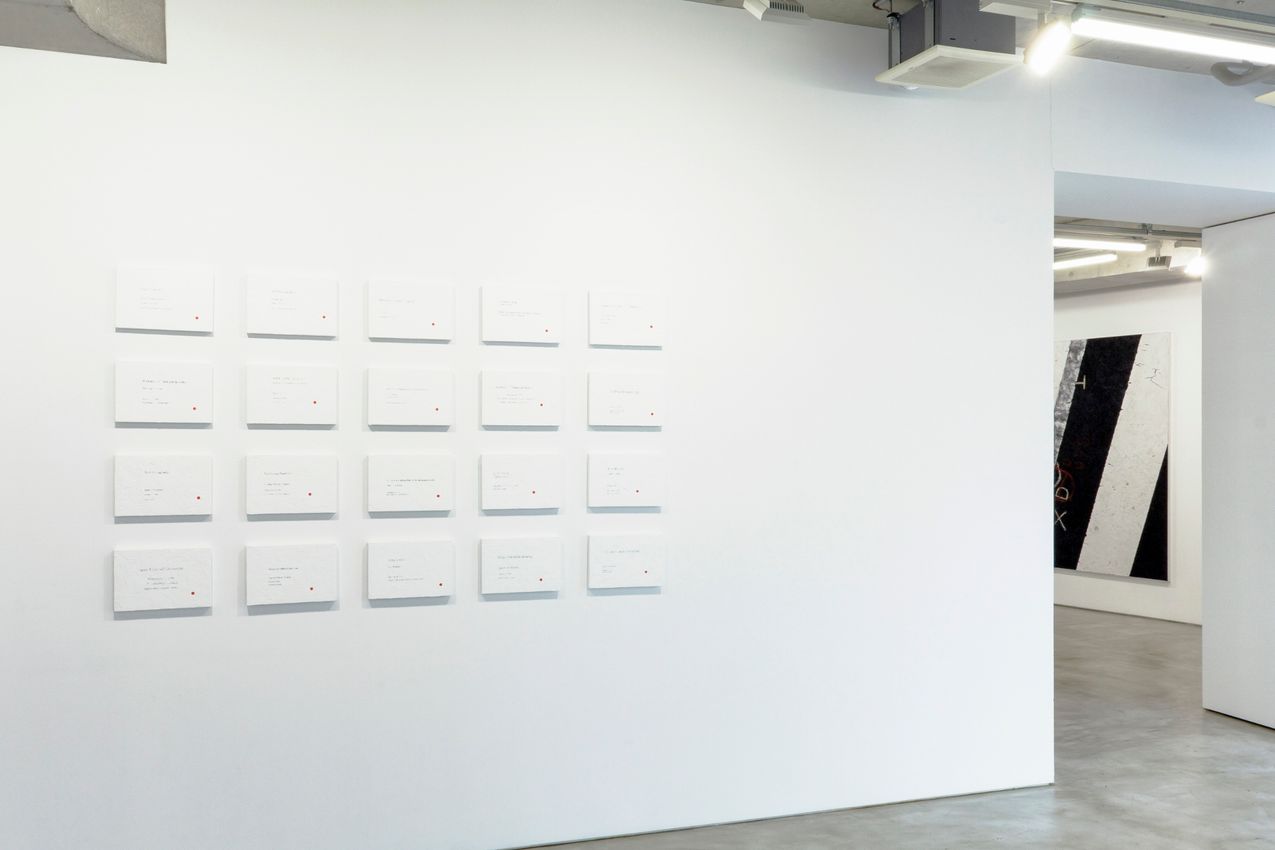
Premiering in this exhibition is Tamura’s new series, Sold Painting, which stems from the question: How do we add value to a work of art? The red sticker that is often used to mark a sold work at an exhibition or art fair is perhaps the most simple and straightforward indication of value. Anyone who sees multiple red stickers at a show may immediately believe the artist and their work must be of great worth. Fascinated by this phenomenon, Tamura wondered if a caption affixed with a red sticker could be more impressive than the work itself. He explores this concept by forming a staggering grid of captions, featuring fictional artist names and artwork titles, that prompts viewers to scrutinize the way we assess artworks and their value.
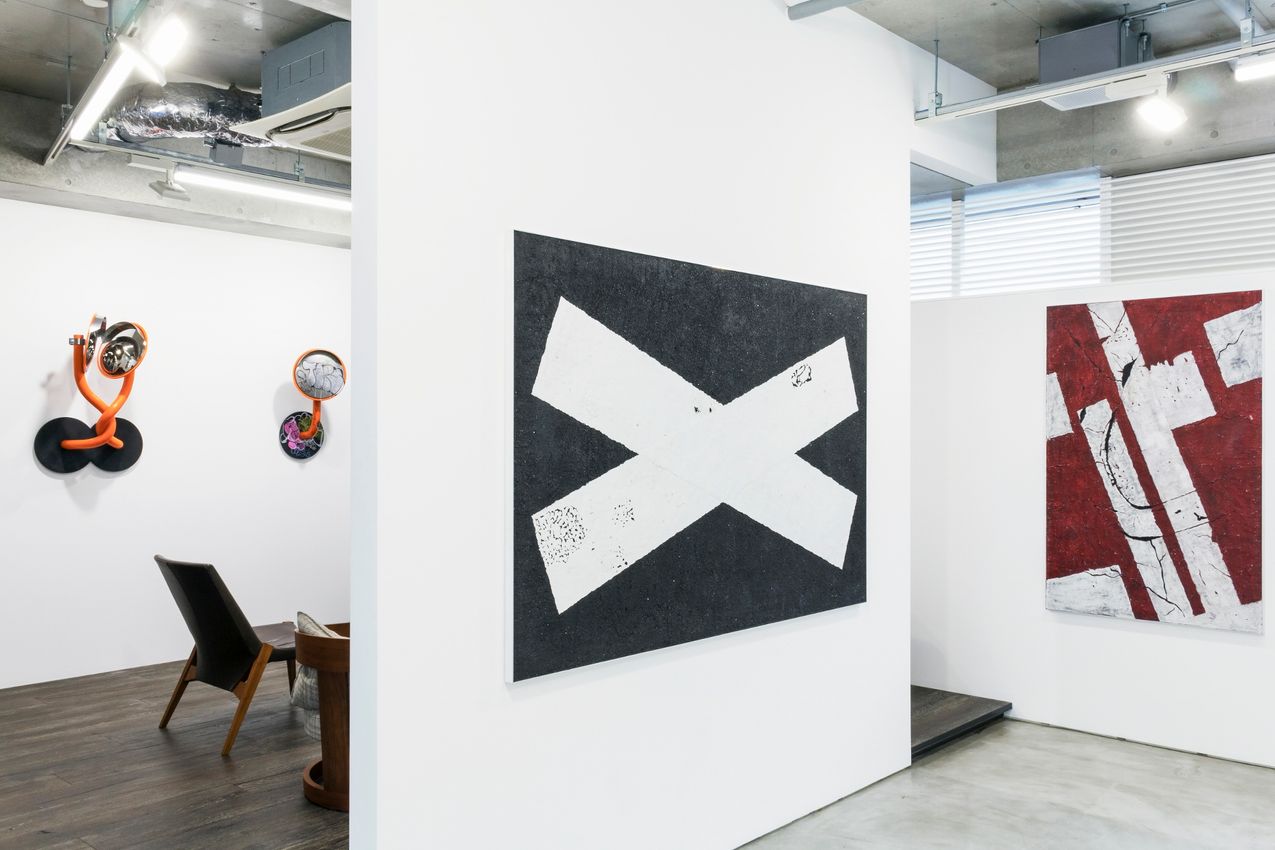
In addition to these new works, Tamura expands upon two existing series—his asphalt paintings and Lovers series—which debuted in a group show held earlier this year at MAKI Gallery / Tennoz I, Tokyo. His Lovers series structurally rearranges traffic mirrors to appear anthropomorphized and this time, the previously freestanding mirror sculptures have migrated to the wall where a neglected, wistful loner stares longingly at a pair of lovers.
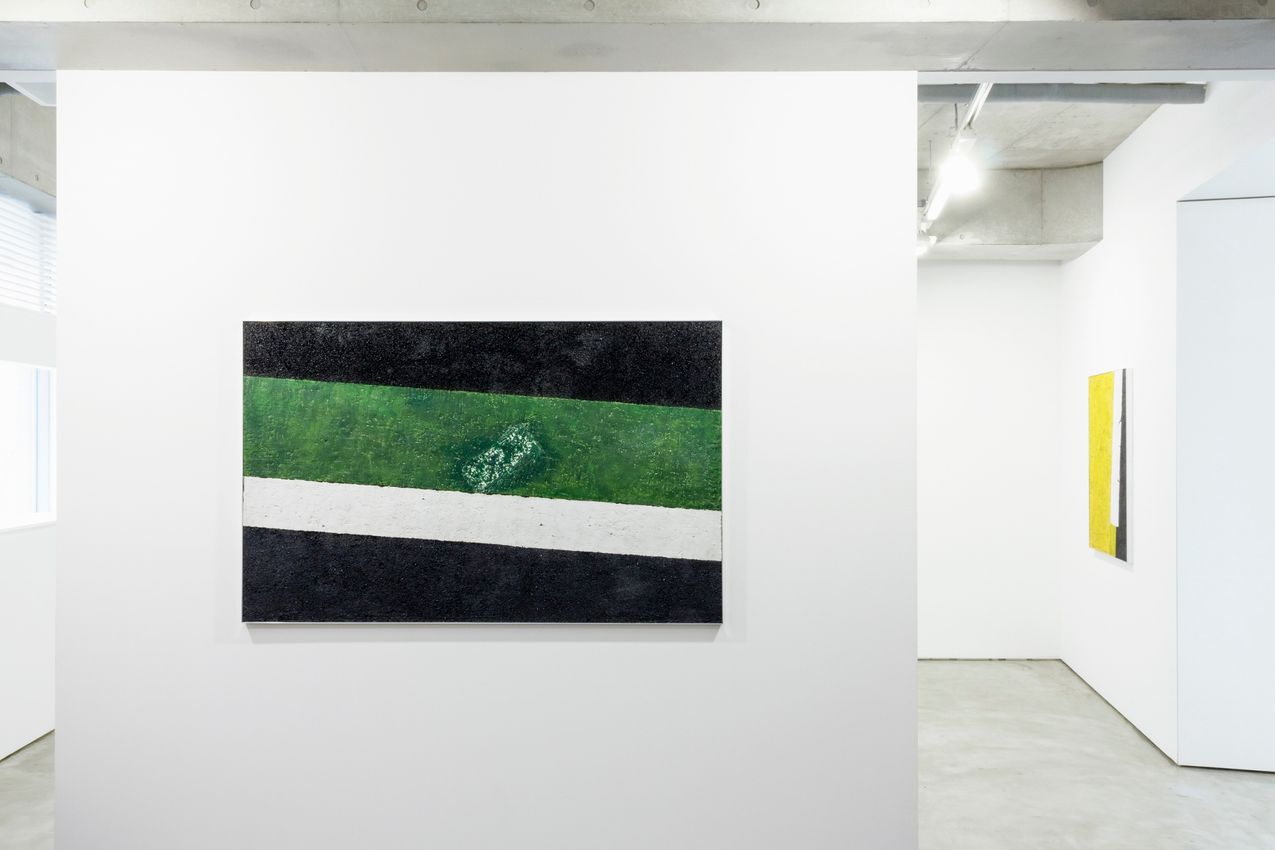
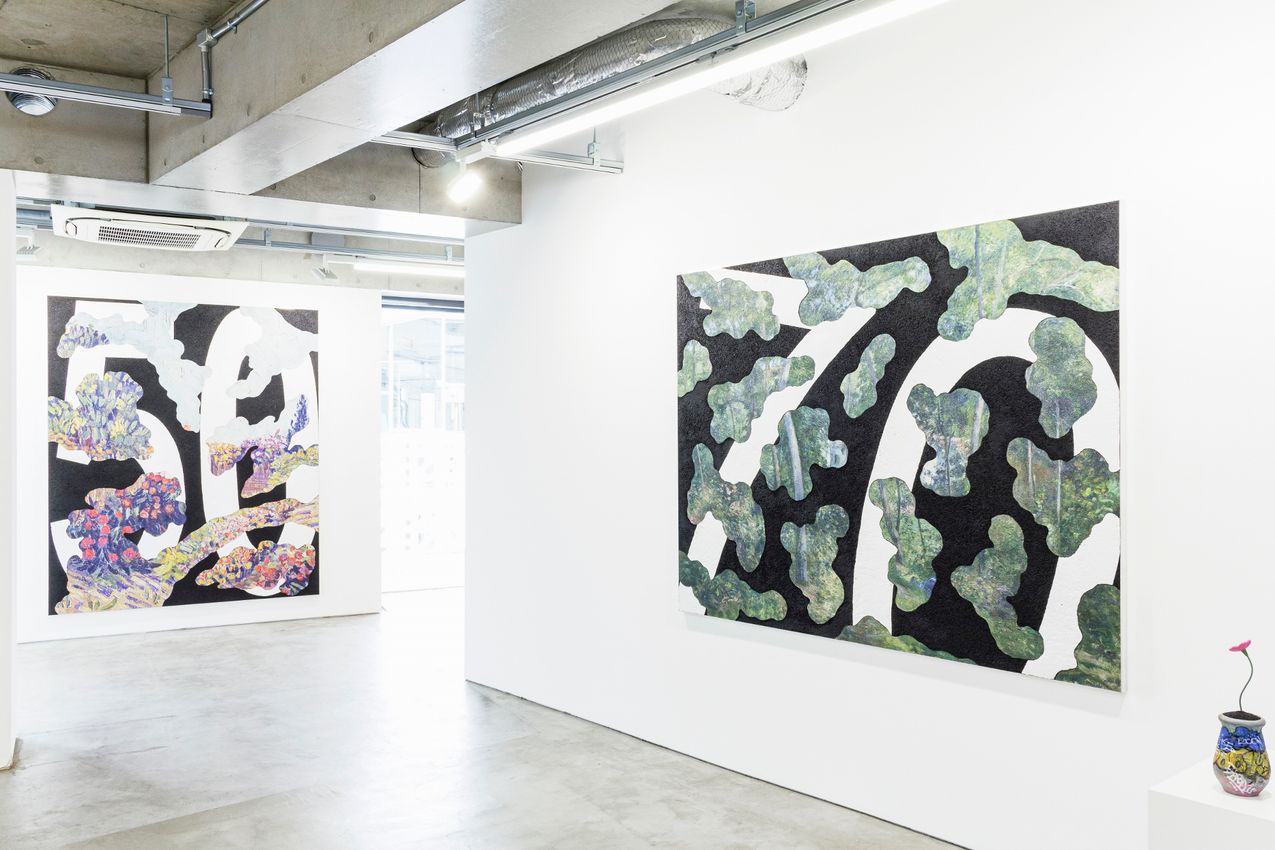
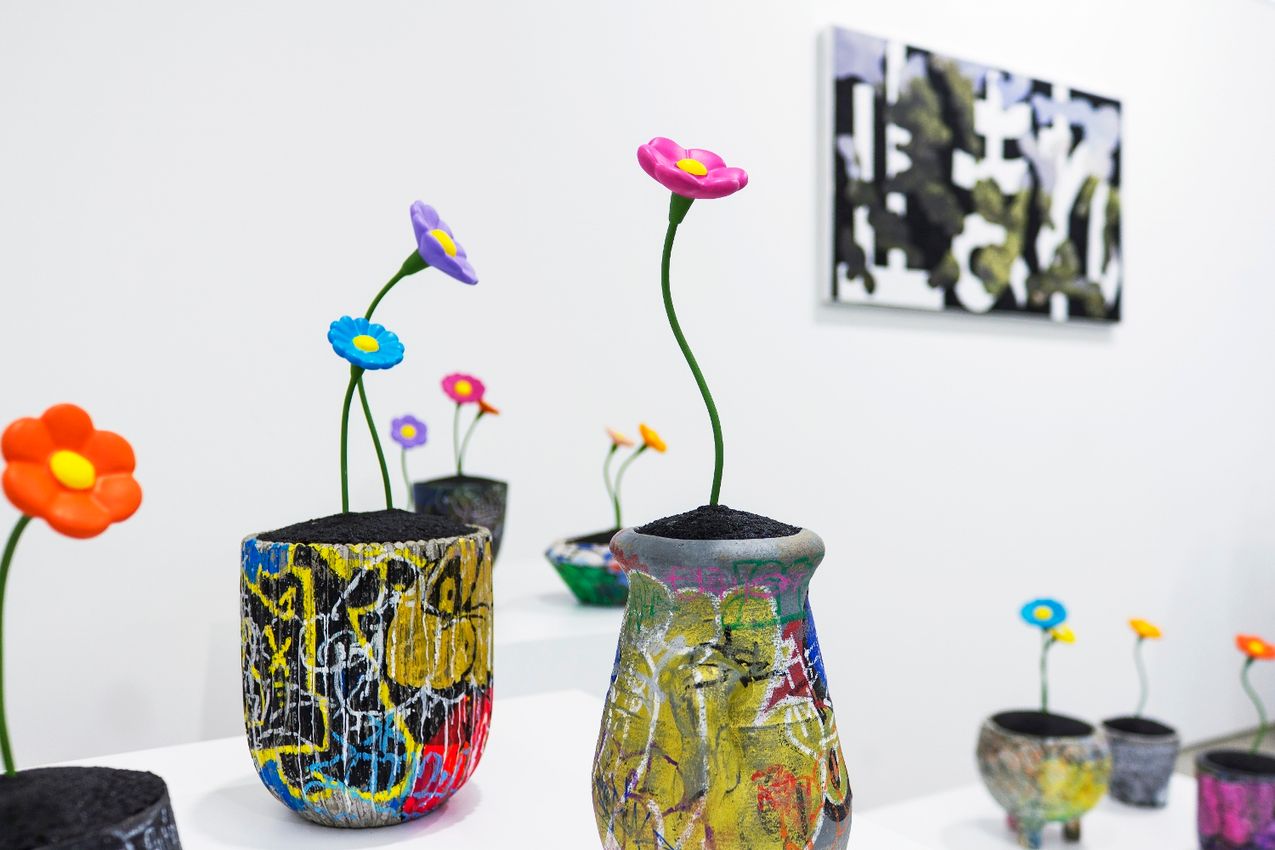
His asphalt paintings, which replicate sections of pavement, complete with road markings, poses the query: How can roads, essential to our infrastructure and commonly recognized on a global scale, be turned into a work of art? As the coordinates in the title of each work suggest, the artist recreates existing roads in locations he himself has visited—reproducing every mark and scuff, while working with the actual materials used to construct a road. As Tamura continued to work with asphalt, he found himself contemplating about the ground underneath. How many plants would be growing if a road had not been paved? The artist began incorporating public domain paintings of still life flowers and landscapes that were created over a hundred years ago, layering asphalt on top and subsequently scraping some areas away to reveal the potential flourishment of nature. With these works, Tamura also attempts to combine two perspectives in one painting: a road seen from a bird’s-eye view and a landscape seen head on. The artist’s Street Flower Pot series—where found planters covered in graffiti hold artificial plants growing from a bed of asphalt—continues exploring the relationship between asphalt and nature and how persistence sometimes prevails. Tamura marveled at how plants still grow from small crevices in roads, despite being smothered by asphalt. Similarly, he observed how graffiti is a perpetual existence on the streets, tenaciously returning and proliferating despite constant efforts to eradicate it. Through his work, Tamura invites the viewer to notice and celebrate these everyday examples of perseverance.
The incessant focus on the “how” pushes the artist to consider his own existence through a critical lens, and in turn, encourages the viewer to take a closer look at their surroundings. How does one capture the collective consciousness and embed the values of our times into a work of art? Tamura’s practice is driven by questions such as these, and he continually expands his own observations and interpretations on the matter. We hope you will take this opportunity to delve into the largest presentation of Tamura’s works to date.
Press release: Courtesy of MAKI.
Born in Osaka in 1989, Takuro Tamura graduated from Kyoto University of the Arts in 2016 and continued developing his practice in Kyoto while working as an assistant at SANDWICH, the multidisciplinary creative platform led by artist Kohei Nawa. He later relocated to Tokyo, where he formally launched his career as an independent artist.
MAKI Gallery was first established in Tokyo in 2003, with the aim of promoting works by seminal avant-garde Japanese artists of the 1950s-60s. The gallery has since gradually shifted its focus to working with emerging contemporary artists. After opening a location in the bustling, high-end shopping district of Omotesando in 2014, MAKI Gallery opened an expansive, museum-caliber space in the growing gallery hub of Tennoz in 2020. Across these two outposts, MAKI Gallery presents a broad range of works by internationally active artists, including Mungo Thomson, Miya Ando, Susumu Kamijo, and Marius Bercea, while also introducing younger Japanese artists, such as Anne Kagioka Rigoulet, Keisuke Tada, and Takuro Tamura, to a global audience. The gallery has also participated in various international art fairs such as Frieze New York, The Armory Show, Asia NOW, and West Bund Art & Design.

A respected voice in contemporary art discourse.
Focusing on ambitious storytelling and insightful art-world commentary. Ocula Magazine publishes in-depth interviews, critical essays and timely analysis on the artists, exhibitions and ideas driving the global art world.
Learn more about Ocula Magazine
Showcasing the best of the art world.
Ocula partners with galleries from around the world to highlight their artists, artworks and exhibitions. Gallery membership is by application and invitation, with each member vetted by an independent panel.
Learn more about Ocula Membership

Specialises in the sale of major artworks.
Led by a team with deep ties to the world’s leading auction houses, galleries and collectors. Ocula’s advisory team offers bespoke services to high-net-worth clients from around the world who are looking to acquire the best of contemporary and modern art.
Learn more about our team and services