Press Release

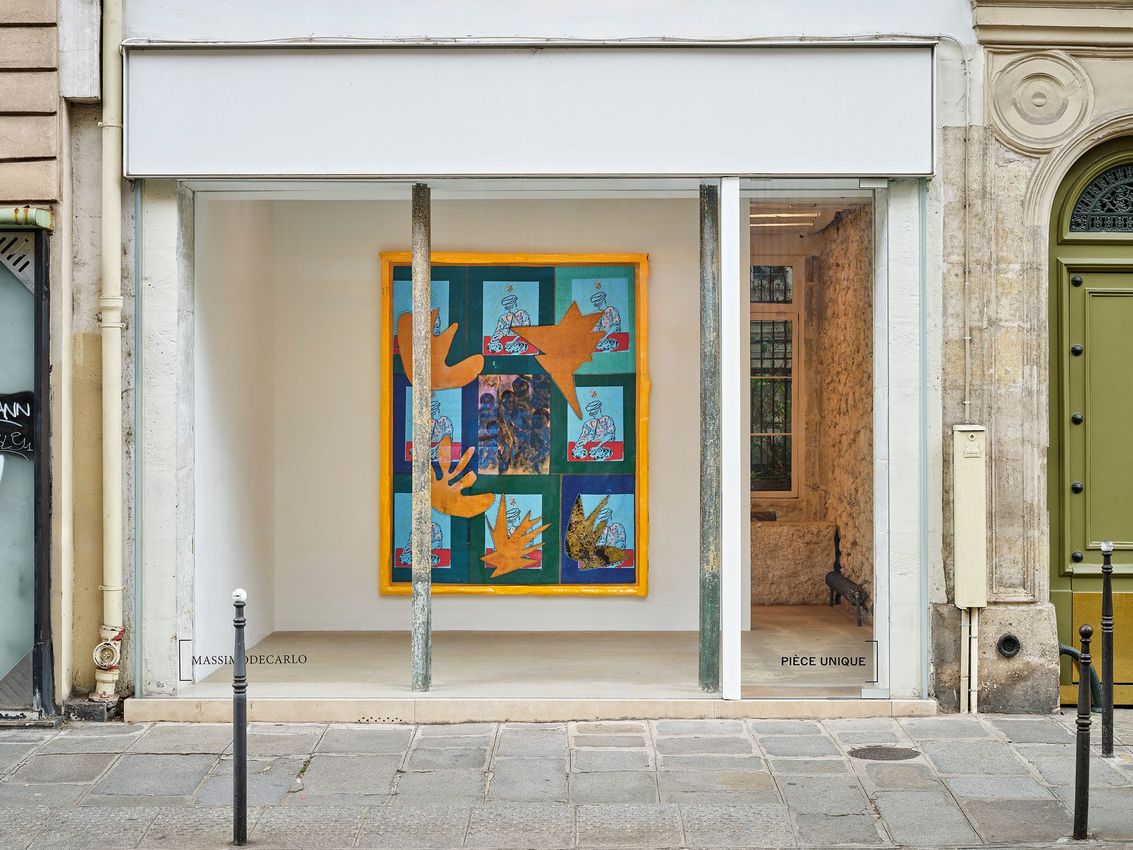
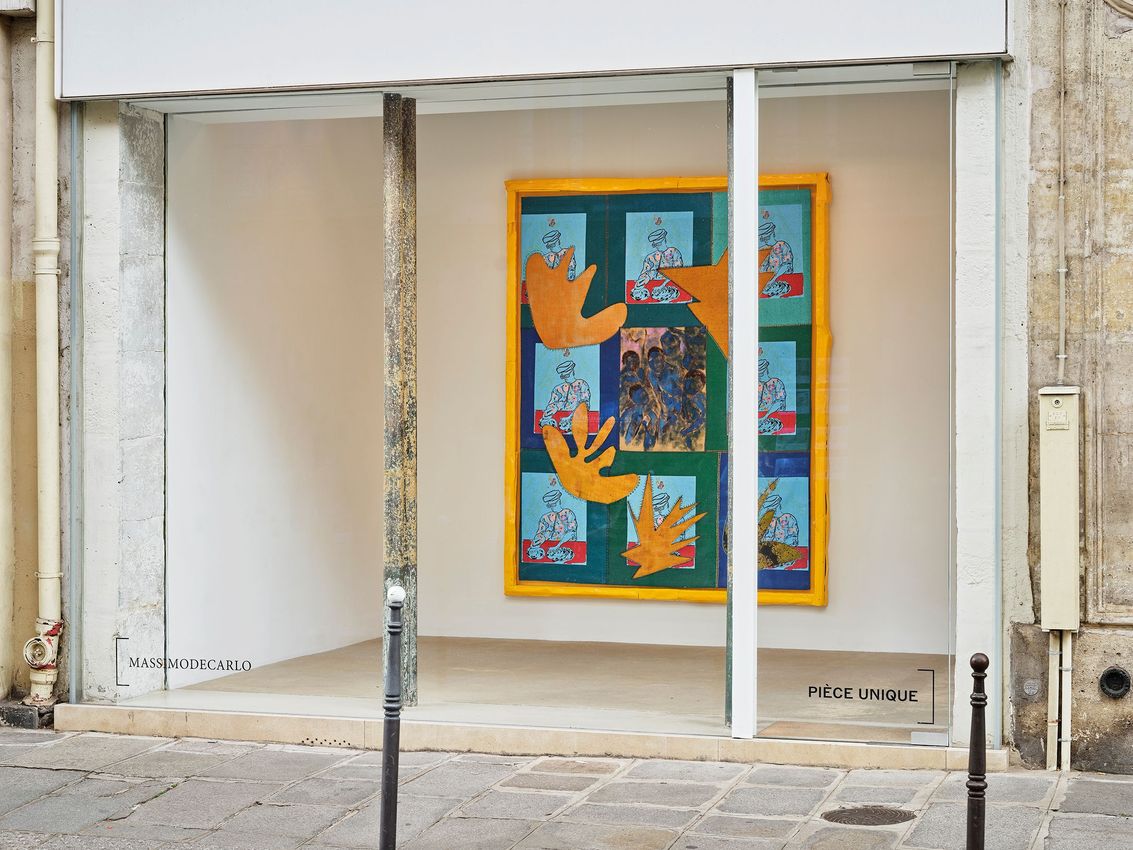
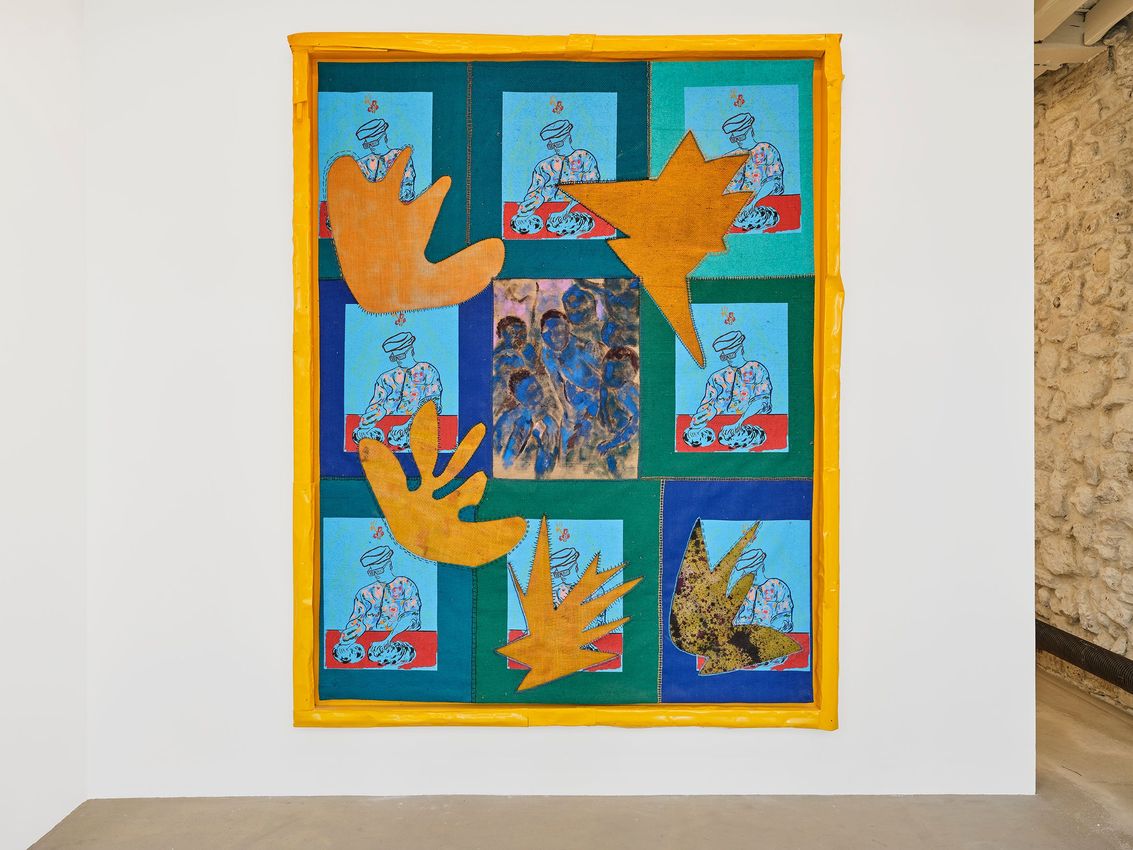
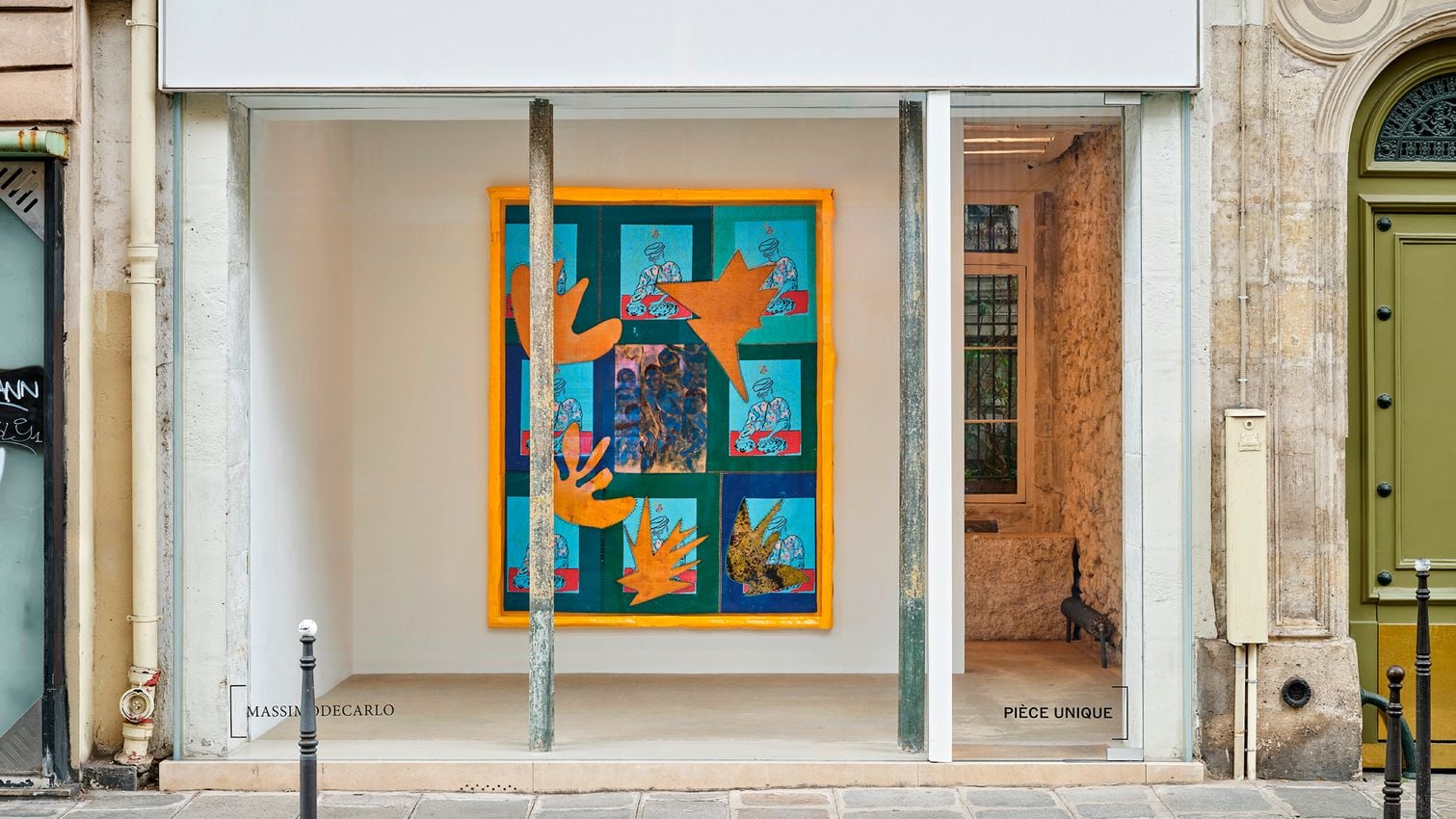
MASSIMODECARLO Pièce Unique is pleased to present Party, 2024–2026, Alvaro Barrington’s first solo presentation at the gallery’s Paris space.

Party belongs to a new body of work which Barrington referes to as ‘cutout paintings’ – works that don’t just reference movement and belonging but enact them. First presented within his landmark 2024 Tate Britain Commission GRACE, the work was subsequently shown at the Mangrove Sound Truck during Notting Hill Carnival in 2025 – moving through the streets of West London as part of a collective ritual – before finding its way to Pièce Unique in Paris.

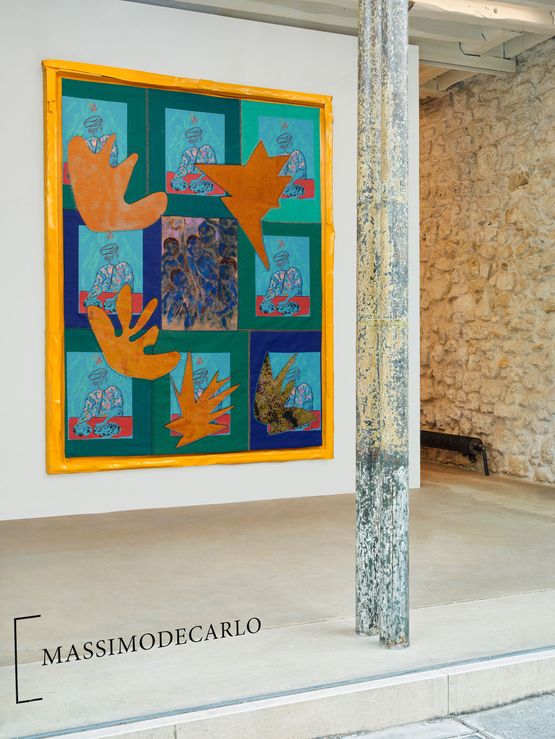
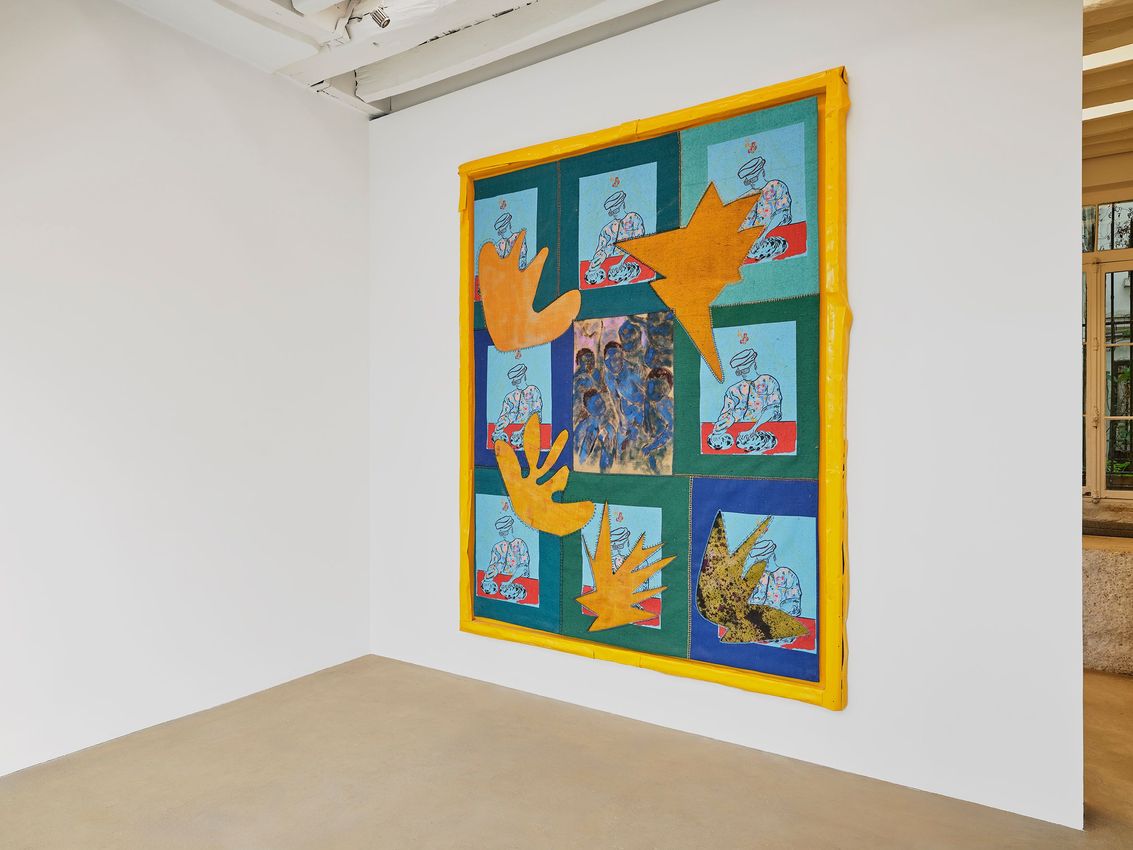
Executed on burlap, the work layers silkscreened images, golden appliquéd cut-outs that carry an echo of Matisse, and stitching techniques passed down through the women in Barrington’s family – all held within a frame of reclaimed wood and corrugated metal that references Caribbean domestic architecture.

Born in Caracas to Haitian and Grenadian parents, raised between the Caribbean and Brooklyn, and now living and working in London, Barrington’s practice has always moved between worlds of painting and textile, art history and hip hop, the institution and the street.

Concurrently, Barrington is presenting Labor Day Parade ‘91 at the 61st Venice Biennale – a truck covered in paintings and yarn works that conjures memories of the West Indian Day Parade in Brooklyn. Across both works, the same questions surface: what it means to carry a culture through space, to celebrate collectively, to make joy out of displacement.

A few questions for Barrington.

  • Party was first shown at Tate Britain, then onto the Mangrove Sound Truck at Notting Hill Carnival, and now in this reworked version here in Paris. That’s an unusual life for a painting. Does a work change when it moves through that many worlds?

Alvaro Barrington: Each time the work was shown it had to live up to an opportunity. For the Tate it was a backdrop painting for the Samantha sculpture. For Mangrove, it was a background for the masqueraders in Notting Hill Carnival and for its last iteration it’s a series in conversation with the history of painting, with Matisse cutouts as a major point of reference.

  • So much of how you make things comes from people who came before you - women in your family, traditions that were never written down, knowledge that lives in the hands. Does that feel like something you carry, or something that carries you?

AB: I feel carried and saved by the traditions I was born into and living in, and now owe it to those traditions to also bring them forward.

  • In a world that feels increasingly heavy, you keep coming back to joy - not as escapism but as something almost defiant. Where does that come from in you, and do you ever have to fight for it?

AB: Joy is an interesting word; it’s kind of gotten overused the way community gets overused, particularly black joy, resistances, etc. It’s not a frame I think about, or I believe applies to me or my life. I’m not a joyful person. I think there is something sinister about that idea, similar to innocence. How I grew up, we would say did I have a good and memorable time, “a time was had” is usually a phrase we say all the time. As Biggie said, “I got a story to tell.” You want a memory that you can tell people about. I try to have memorable encounters. There are memories, stories thats reflects scars, close down curiosities, confidence in yourself, etc., and there are stories that open you up, open up the world around you. I try to have that encounter in my work, encounters that open me/us up? Tragic things can open one up. A breakup with a loved partner can open one up to new love, new experiences, or it can be scarring.

  • In your artist statement, you write that some of the most beautiful things are made by people who are just grieving, and what they produce is joy. Looking at Party and everything it has been through - is that where this work came from?

AB: My artist statement is things I’ve heard that I thought conceptually are interesting. I don’t agree with a lot of it, but it’s something someone has said, and then I think about it. Grieving is usually a moment that one has to deal with; it’s like hunger or tiredness or horniness, you eat or sleep or fuck. One usually remembers when one grieves, so it becomes easy to excavate it in art.

  • If this exhibition had a playlist, where would it start?

AB: Soca mixes from 2016-2021

Courtesy MASSIMODECARLO

Read More

Installation Views

About the Artist

Alvaro Barrington was born in Venezuela (1983, Caracas) to Haitian and Grenadian parents and was raised between the Caribbean and Brooklyn, NY. He currently lives and works in London. His artistic practice is multidisciplinary, reflecting on histories of cultural production and their exchange. Whilst firstly considering himself a painter, his process to image-making is wide-ranging, as his works include the application of diverse non-traditional materials – such as concrete, wood, textiles, yarn, burlap, carboard, clothing, and postcards, prints, drawing, and photography. For the artist, each media has numerous possibilities, and each is a tool to represent both individual as well as collective cultural narratives. Recurrent subject matters are close- ups of faces, parts of the body and equatorial plants. References are seen in his use of imagery such as hibiscus flowers, the 20th century Harlem Renaissance, Marcus Garvey, hip-hop culture of the 90’s such as Tupac, and inspiration from other artists’ practices such as Willem de Kooning, Joseph Beuys and Robert Rauschenberg. His works explore diverse thematics, such as migration, nationality, selfhood, sexuality, time, and the digital realm. Barrington is also actively involved in various community practices such as charities, concerts, performances and shows. Believing that art needs to be accessible to communities in public sites, Barrington has been participating to the organization of the Notting Hill Carnival since 2019. In 2022, he has been the producer of Queen of the Caribbean, the main concert stage at the Notting Hill Carnival.

View Artist Profile

Also Exhibiting at MASSIMODECARLO

About the Gallery

MASSIMODECARLO Pièce Unique opened in a historical building at 57 Rue de Turenne on February 2021. It has been renovated by acclaimed Japanese architect Kengo Kuma in collaboration with PiM.studio Architects. MASSIMODECARLO Pièce Unique offers a flexible, dynamic, and upbeat program of single-work exhibitions, visible day and night through its glass window. The gallery is born from the purchase of the “Pièce Unique” brand, an adventurous space by iconic gallerist Lucio Amelio that he opened in Paris in 1989 designed with Cy Twombly. MASSIMODECARLO Pièce Unique will respect and recast into the 21st Century the legacy of this historical project, renewing its original idea, infusing a new perspective, and offering an alternative exhibition model for the contemporary art system.

View Gallery Profile
Address
57 Rue de Turenne
Paris
France
Opening Hours
Tuesday – Saturday
11am – 7pm
(1)
Paris 57 Rue de Turenne
MASSIMODECARLO Pièce Unique
57 Rue de Turenne, Paris, France
+33 1 4449 0524

Opening hours
Tuesday – Saturday
11am – 7pm
The art world in focus