



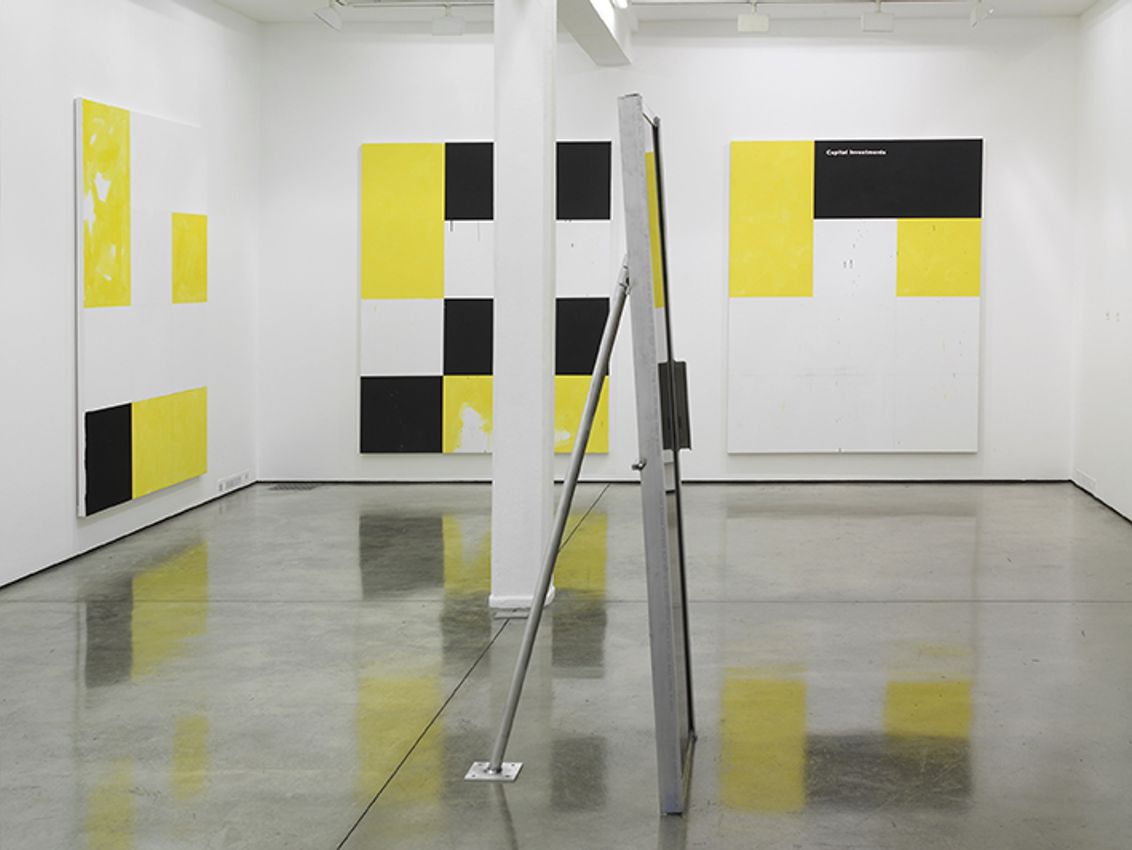
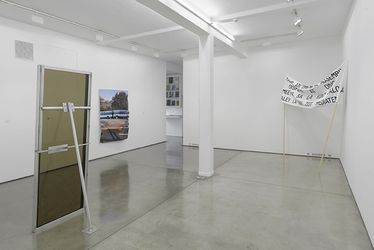
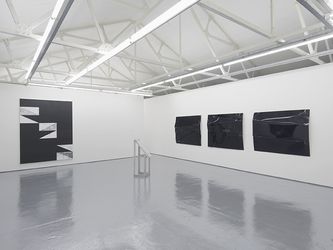
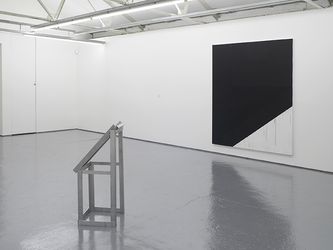
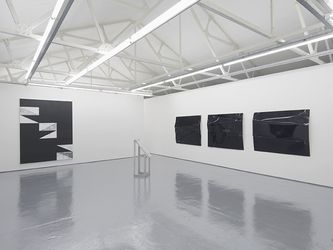
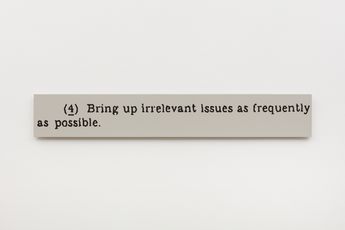
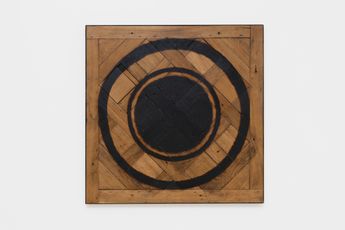
The following text is taken from an exchange between the artists as they discussed their plans for the exhibition:
Gardar Eide Einarsson
I see in both our work as an attempt to use a formal language as a kind of Trojan horse for other discourses. In my work there is a constant levelling of images from disparate sources (details from books, comic books, posters for lectures, long obsolete software manuals, CIA manuals, advertisements) - tearing them from their original context and forcing them to blend into each other, thereby constructing other narratives. This flattening seems problematically inherent in how information is dissipated today (as evidenced in the crossfire of accusations of fake news and alternative facts) but perhaps it is possible to make it serve counter-hegemonic purposes. This way for me to relate to source imagery has always seemed to me parallel to your use of physical materials, hot-wiring them and cobbling them together to create new meaning.
Oscar Tuazon
Editing, like sculpture, is cutting. Working with you, and in response to your work, allows me to experience the power of cutting into the fabric of the present. The contemporary political situation requires urgent response, by everyone, globally, right now. Art is utilitarian, this is a tool anyone can use. Even better, it is something anyone can do. Make a cut. That’s the feeling I have working on this project right now, a fervent and irrational belief in the urgency of art and its utility.
For me that’s what has propelled the works in this show … to cut reality apart and reassemble it. I’ve tried to use what’s in front of me, working with what I’ve got, what I see right now: flags at Standing Rock; game camera photos of hunters walking around my house; protector architecture; weapons and structures of defense against them; my friends, my body. You do that, and it’s why we’ve worked with each other for fifteen years - because in the space between two people words have real meaning. Words write reality, and in that space everything is permitted; anything is possible.


The gallery programme began in 1984 in a Victorian terraced house in London’s East End. Initially named Interim Art the gallery changed its name to Maureen Paley in 2004 as a celebration of its 20th anniversary. Since September 1999 the gallery has been situated in light industrial space in Bethnal Green. In July 2017 Maureen Paley opened a second space in Hove called Morena di Luna. In October 2020 a third space was opened in London called STUDIO M. From its inception the gallery’s aim has remained consistent: to promote great and innovative artists in all media.

A respected voice in contemporary art discourse.
Focusing on ambitious storytelling and insightful art-world commentary. Ocula Magazine publishes in-depth interviews, critical essays and timely analysis on the artists, exhibitions and ideas driving the global art world.
Learn more about Ocula Magazine
Showcasing the best of the art world.
Ocula partners with galleries from around the world to highlight their artists, artworks and exhibitions. Gallery membership is by application and invitation, with each member vetted by an independent panel.
Learn more about Ocula Membership

Specialises in the sale of major artworks.
Led by a team with deep ties to the world’s leading auction houses, galleries and collectors. Ocula’s advisory team offers bespoke services to high-net-worth clients from around the world who are looking to acquire the best of contemporary and modern art.
Learn more about our team and services