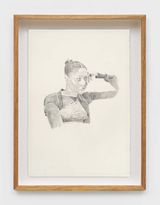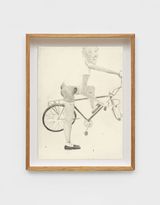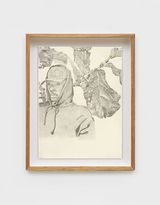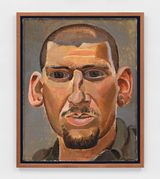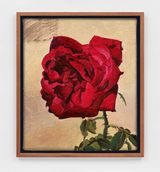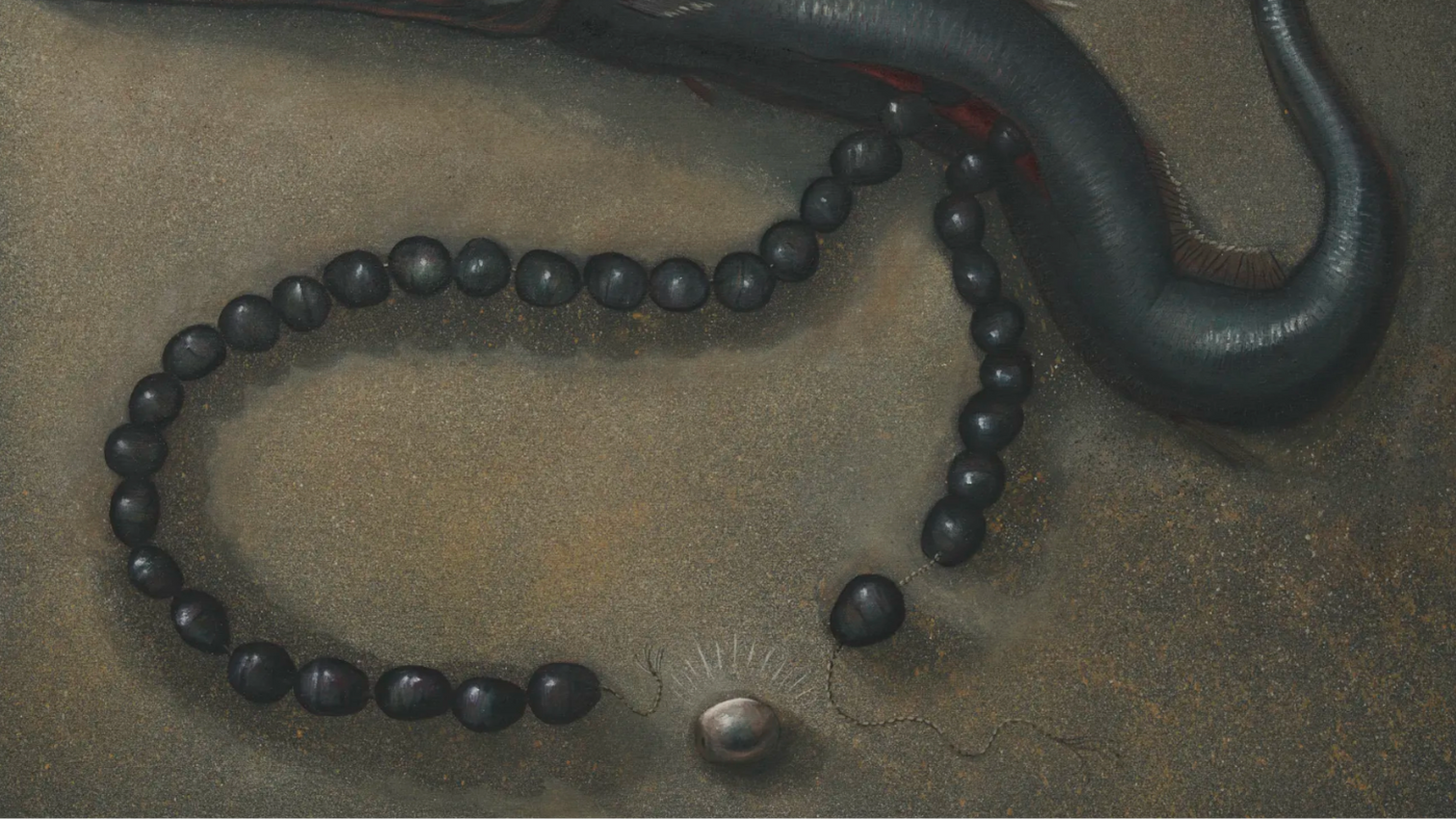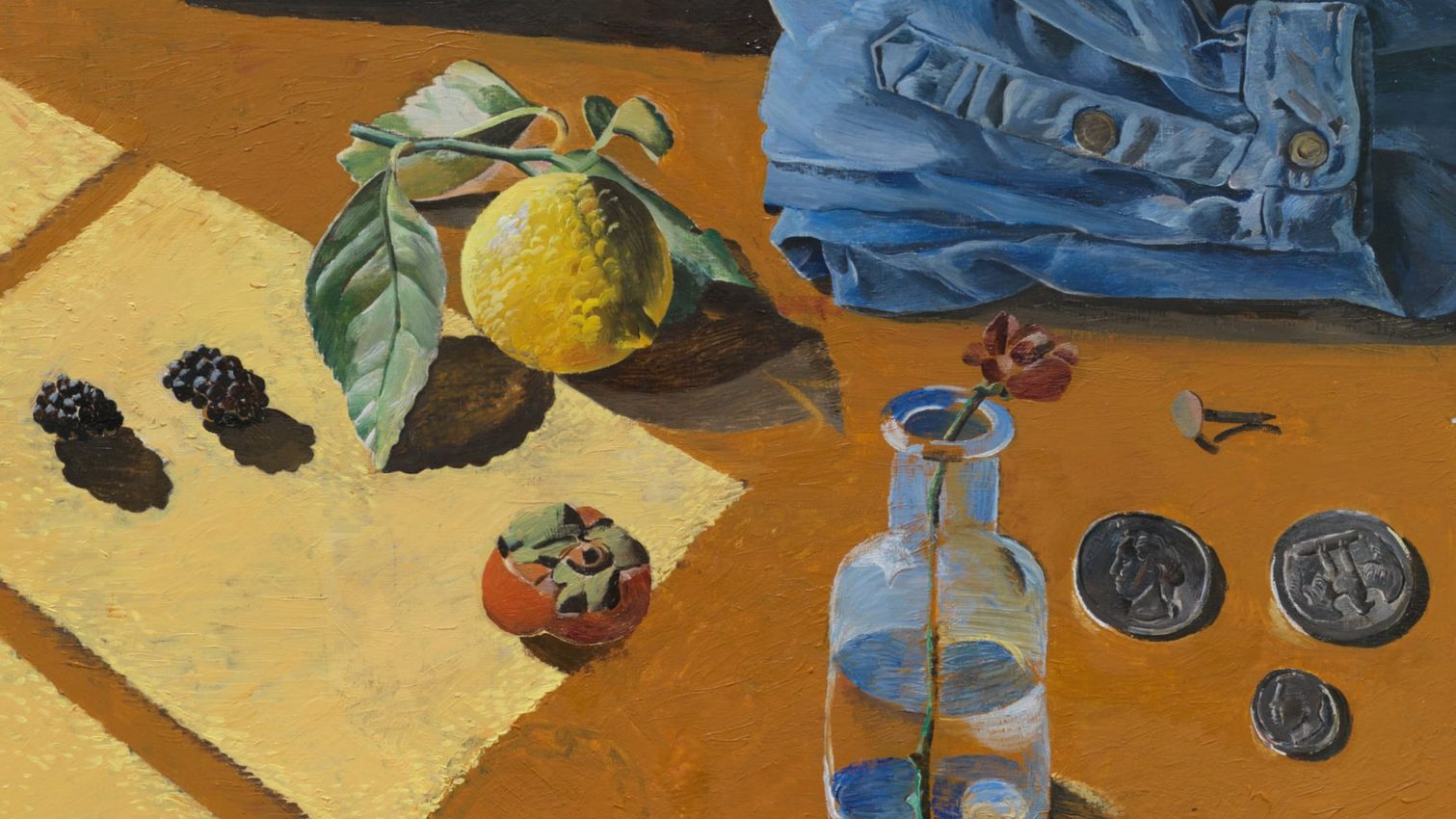
Working from real life has kept Kent O’Connor prone to the unpredictable yet mesmerized by its freedom. For the artist’s first gallery show in Europe, titled In Dialogue, O’Connor presents a body of work that investigates the concept of narrative paintings or”what it means to paint narration.” In landscape scenes, portraits, still lifes, and drawings that are conceptually connected, what the artist refers to as “narrative qualities” emerge through uncanny nuances. Ina fitting coincidence, In Dialogue unfolds in Brussels, barely a stone’s throw away from the iconic museum dedicated to Magritte, an artist whose own work has had a lasting impact on O’Connor’s means of worldmaking.
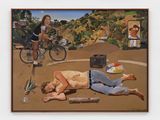
A highlight from the exhibition, the large-scale Figures and Objects in aLandscape (2025) combines elements from the artist’s creative lexicon in onecaptivating scene. Lying on the foreground, we witness a young man sunburnedand exhausted, surrounded by a plethora of arbitrary objects. Behind him,an undeterred cyclist brakes slowly. Finally, a reflected portrait quietly spiesfrom the corner of the canvas. All of this takes place in what appears to be ascorching hot sandy plateau, surrounded by a lush valley from which varioushomes emerge. Painted outdoors, or en plein air, O’Connor responded tothe environment around him while concurrently resisting a singular cohesivedirection. The lying figure, painted again from live observation, is a sitterwell-known to the artist yet kept unknown to the viewer. The intense colorsof the skies, muted by the ochre tones of the earth, are as dystopian as they arerealistic, mirroring realities and mythologies of the Californian landscape. Ideasof California have been consistently molded by culture, such as in the iconic1970s David Hockney paintings to which the artist nods in observance alongside other enduring Hollywood images. Resistant to nostalgia, O’Connor creates hisown suspended tableau, free of received romanticism, alive to the scene in frontof him.
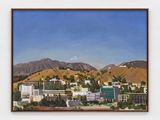
Whereas, in another outdoor painting, Jet Propulsion Laboratory Altadena,California (2025), California appears deprived of figures and home to corporatebuildings, parking lots, and industrial structures. Emerging discreetly is theoutline of NASA’s historic Jet Propulsion Laboratory, a space founded by aman who invested as much effort into science as he did into theories of theoccult. Although such elements are not noticeable at first consideration, theybelong to an underlying leitmotif of tension that hovers above this and othernarratives from the show. Here, the early landscape paintings of Balthus formthe backdrop to dreamlike sensibilities that suffuse the artist’s unconventionalchoices.
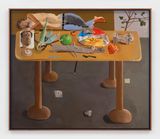
Another recurring theme in O’Connor’s production is revisiting still-lifetraditions. Objects From the Landscape on the Table (2025) is admittedly amocking exercise of what it describes. Miscellaneous objects such as a basketball,a log, a green apple, a fork, a ruler, or a marble statue are arranged on a table notas symbols of an elegant composition or testimony to style, but as characters.According to the artist, objects become characters as they enter this studio,“transformed and gaining a life in the painting that is elevated and greater thantheir previous one.” It is this amalgamation of different perspectives that createssome kind of individuality in the objects, or compartmentalized authority.Many of these objects reappear in other paintings – a deflated volleyball, banalyet technically challenging to depict – as does the sitter, who lingers again inexhaustion behind the table. It is a play of perspective, both literally as in sizeand proportions as in figuratively, emerging through the painter’s own ever present gaze like a Velázquez character standing in the corner a representationalschematic that O’Connor both inherits and builds from.
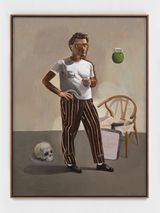
Channeling the Spanish master’s metalinguistic exercise, O’Connor admitsto the pleasure of including himself as a fixture in his paintings. In the workson view, it is both a reflection in the rearview and a photograph gazing backupon its viewers. More evident, Portrait of an Artist (2025) is a rendition ofthe painter himself standing tall and in stylish composure. The signifiers withand around him once again reference the artist’s own cultural baggage, suchas the striped trousers attributed to the zebras he has so often depicted. Freud,an intellectual touchstone for the artist, is hard to avoid: hate-objects, love objects, fetish-objects, and through O’Connor’s work, perhaps the provocativeaccommodation of irrelevant ones?
In the world O’Connor creates, a table spreads like a valley, and a valley isobserved from the same vantage point as a table. Across In Dialogue, objects,arbitrary, banal, and often recurring, sketch a discrete mythology in whichlegibility and opacity are held in equal measure. Like genre painters since theinvention of the form, who composed for viewers fluent in codes as much asthey painted and embedded secrets in a specific table spread or a sitter’s gaze,O’Connor’s macro and micro landscapes carry narrative qualities suspendedbetween cultural legibility and observation.


A respected voice in contemporary art discourse.
Focusing on ambitious storytelling and insightful art-world commentary. Ocula Magazine publishes in-depth interviews, critical essays and timely analysis on the artists, exhibitions and ideas driving the global art world.
Learn more about Ocula Magazine
Showcasing the best of the art world.
Ocula partners with galleries from around the world to highlight their artists, artworks and exhibitions. Gallery membership is by application and invitation, with each member vetted by an independent panel.
Learn more about Ocula Membership

Specialises in the sale of major artworks.
Led by a team with deep ties to the world’s leading auction houses, galleries and collectors. Ocula’s advisory team offers bespoke services to high-net-worth clients from around the world who are looking to acquire the best of contemporary and modern art.
Learn more about our team and services