Press Release
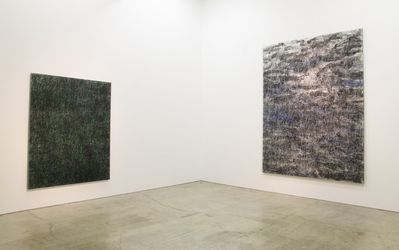
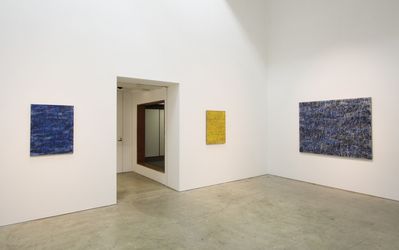
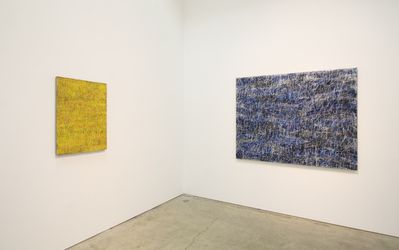
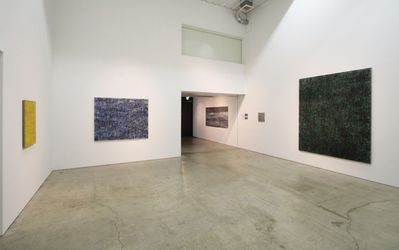
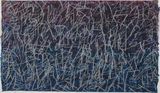
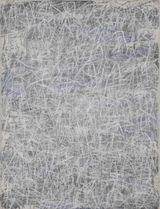
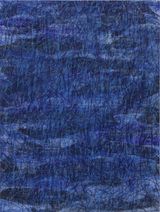
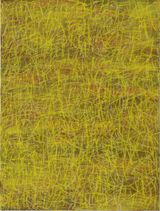
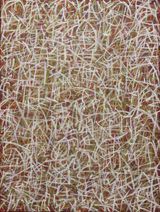
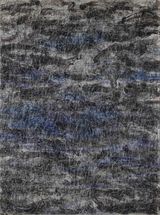
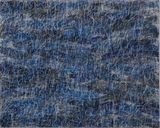
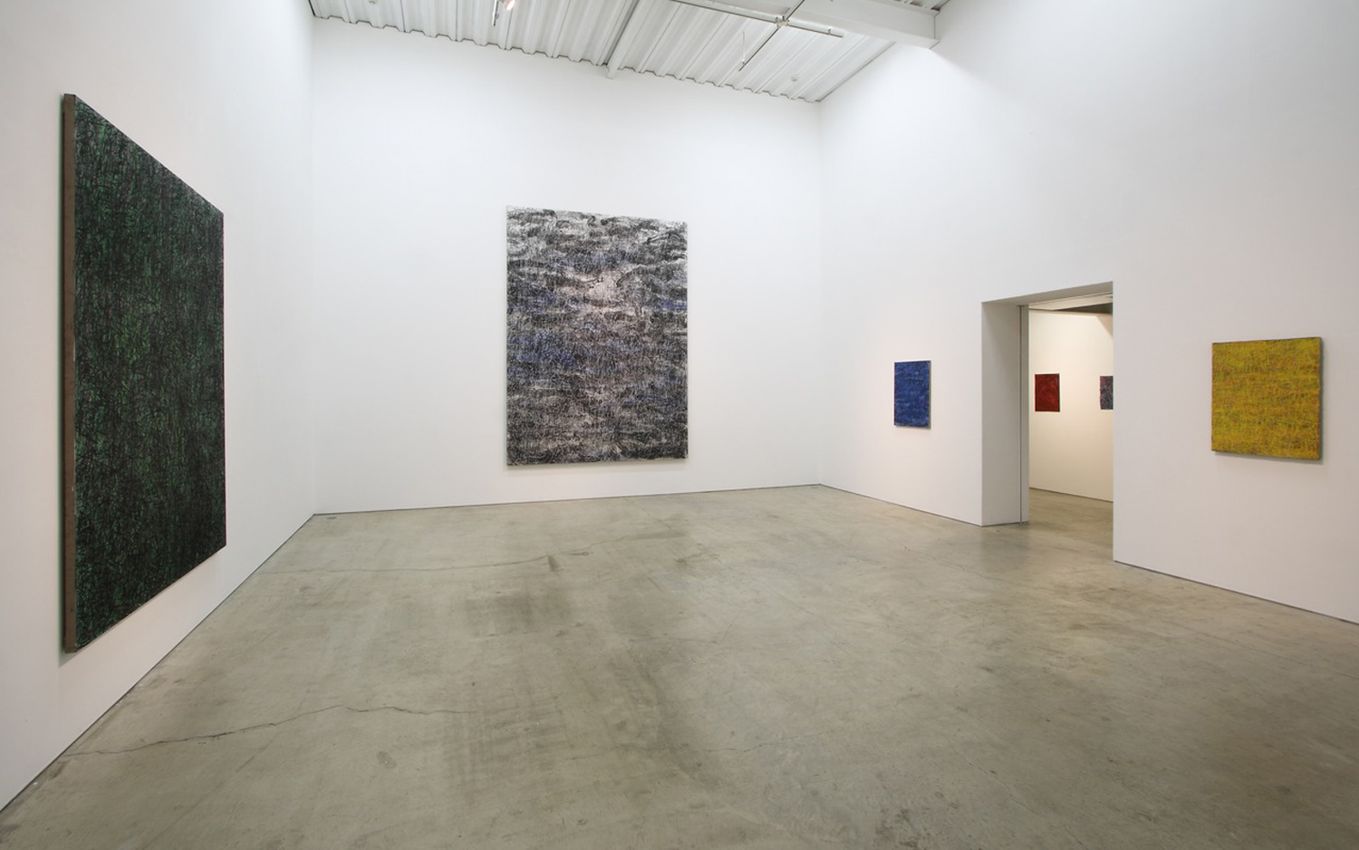
Mizuma Art Gallery is delighted to announce the forthcoming exhibition of Hori Kosai, “The Garden of the Fall and Rebirth”, opening on June 3rd. The exhibition’s main focus is a new development of the series “To Remember”, which Hori created in response to the 2011 earthquake, and comprises new paintings and drawings. In the original “To Remember” series Hori built up layers of the Japanese kanji for kioku suru tame ni (“to remember”) on the surface photographs of the sea at the Yuriage district of Miyagi Prefecture, [which was devastated by the earthquake.] Hori’s previous solo exhibition was in 2011. Thus, it is four years since both his most recent solo show at Mizuma Gallery and since the Great East Japan Earthquake. Within that passage of time, have emerged clearly the two types of ‘phase’ which Hori describes: that of the natural disaster brought about by the earthquake and tsunami, and second the disaster which was brought about by human civilization. Within that juxtaposition lies not only the great division between what is ‘visible’ and ‘invisible’ to the eye, but also, Hori believes, the ‘presence/absence’ of stories which need to be told. The essential meaning of the disaster brought about by civilization-that is, the nuclear accident – was that of encountering both the limitations and the catastrophic inevitability of human civilization. As to scratch out a ’line’, or to inflict a ‘wound’; so, to write is to draw. In Hori’s new works, the ‘words’ overwritten on the image’s surface seem distanced from any meaning or story, and instead the ‘line’ alone is depicted, as if inflicting a wound, like a momentous ‘noise’ within the canvas. According to Hori, a drawing is like ‘taking a deep breath’, and thus in the act of continuing to draw/write the ‘line’ which ‘is graffiti, is noise, is even a prayer’, he is inscribing the traces of ‘living existence’ itself. With regard to the title of this group of works, ‘The Garden of the Fall and Rebirth’, Hori remarks the following: This ‘garden’ which I suppose comes from the biblical tale, and relates to the will of man who, having being cast out, must stand on the side of ‘mortality’. Perhaps the story I wish to create can only be spun from that place of mortality. Or perhaps, this is the place of which I wrote long ago, of not merely standing at the ‘boundary line’; perhaps, this is my “battleground” to continue to revolutionize the act of painting. Not despairing of the inevitability of the fall, but hoping to breathe life into new buds of growth.A “battleground” to revive painting anew: this is Hori’s intention. From his interrogation of the act of painting in the 1970s onwards, Hori has always continued to directly confront what is ‘here and now’. We invite you to witness the unique results of his latest experiments.
The Garden of the Fall and Rebirth (work in progress) 2015. Image courtesy of Mizuma Gallery.

Installation Views

Selected Works

Loading...
About the Artist

In 1967 he entered Tama Art University, and in the same year with the assistance of his peers he staged the performance piece “Self-Burial Ceremony”, with which his career as an artist began.He was also active in the Japanese student demonstrations of the late 1960s, from within which he became one of the founders, and subsequently leader, of a movement known as Bijutsuka Kyoto Kaigi (Artists Joint-Struggle Council) or “Bikyoto”, which sought to interrogate the institutionalized nature of art. The works of his early career tended to overlap with the activities of that movement, created as pieces questioning the foundations of art itself. With the aim of breaking through the boundaries of modernist painting, such works took a retroactive approach to the history of painting and become a process of searching for its origins. Departing from this source, Hori traced the development of painting's formation within Eastern nations and within Japan - and in so doing his own personal pictorial space took form. Meanwhile, he also began zealously developing installation and performances pieces resonating with the many issues and phenomena emerging “on the borderlines” of the society and art of “here and now”. His works have been shown at numerous international exhibitions, including the 1977 Paris Biennale and the 1984 Venice Biennale.

View Artist Profile

Also Exhibiting at Mizuma Art Gallery

About the Gallery

Executive Director Sueo Mizuma established Mizuma Art Gallery in Tokyo in 1994. Since then, the gallery has continuously presented artists from Japan and, increasingly, from the surrounding region whose works demonstrate distinctive sensibilities, unaffected by fleeting stylistic trends.

View Gallery Profile
Address
2F Kagura Building
3-13 Ichigayatamachi
Shinjuku-ku
Tokyo
Japan
Opening Hours
Tuesday – Saturday
12 – 7pm

Closed Sunday, Monday and National holidays
(1)
Tokyo 2F Kagura Building, 3-13 Ichigayatamachi
Mizuma Art Gallery
2F Kagura Building, 3-13 Ichigayatamachi, Shinjuku-ku, Tokyo, Japan

Opening hours
Tuesday – Saturday
12 – 7pm

Closed Sunday, Monday and National holidays
The art world in focus