




MAXIMILIEN LUCE
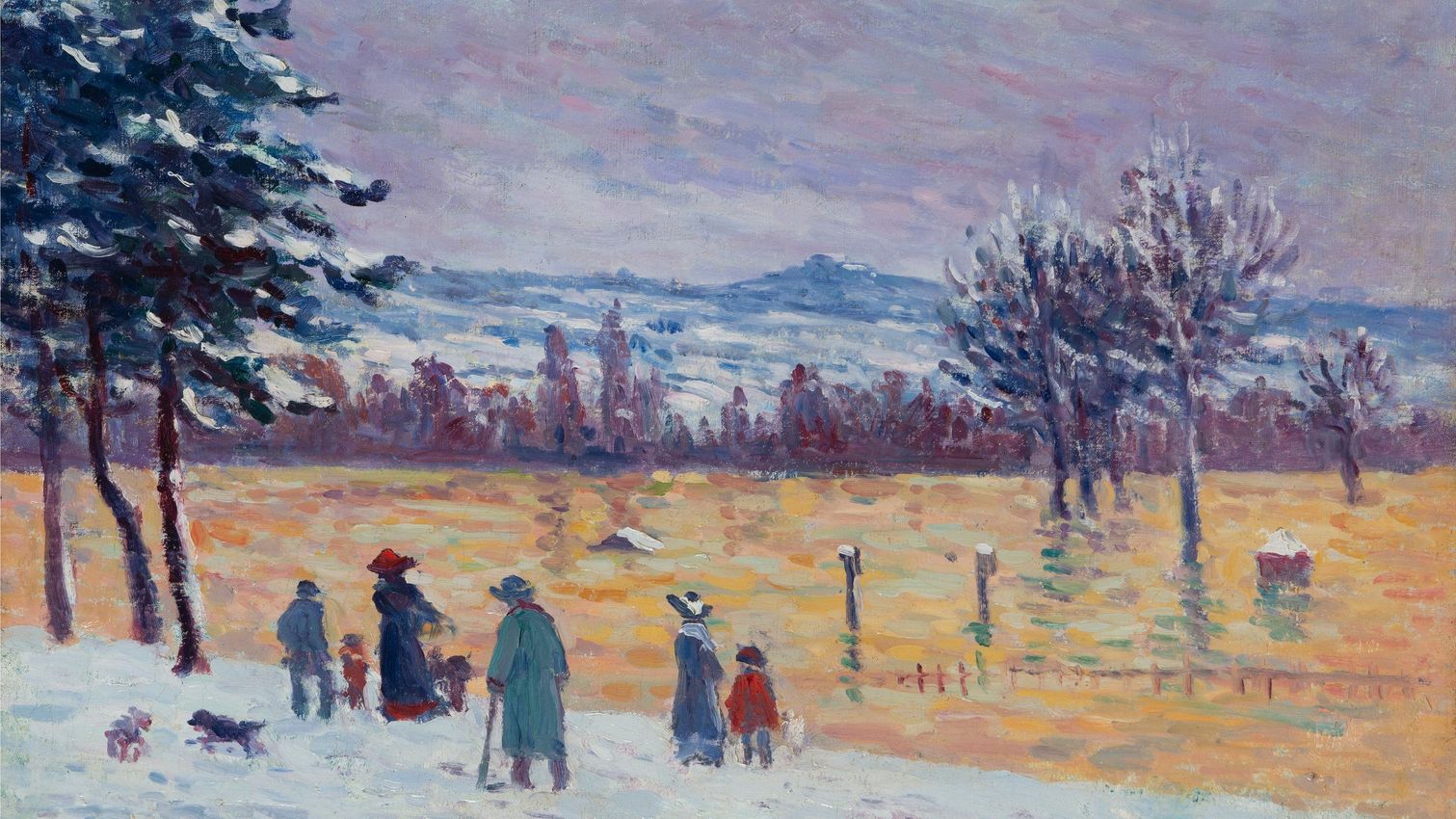
1858-1941, FranceMaximilien Luce (1858–1941) was a French Neo-Impressionist painter, printmaker, and illustrator and a committed anarchist. Associated with the scientifically motivated divisionist painters (such as Georges Seurat), Luce’s paintings retained a passionate sensibility, emphatically depicting labourers, bathers, factories and sunsets.
Where was Maximilien Luce born?
Born in Paris to Charles-Désiré Luce, a railway clerk, and Louise-Joséphine Dunas, Luce grew up in a modest household. At fourteen, he apprenticed as a wood engraver, working for Henri Théophile Hildebrand while attending evening drawing classes. This dual engagement honed his skills in technical engraving and artistic expression. By 1876, Luce contributed engravings to publications such as L’Illustration and London’s The Graphic, collaborating with Eugène Froment. His creative education continued at the Académie Suisse and under the tutelage of portrait painter Carolus-Duran.
What were Maximilien Luce’s artistic influences?
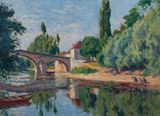
Luce’s artistic trajectory was influenced by his meeting with Camille Pissaro, who introduced him to other Neo-Impressionist painters Georges Seurat and Paul Signac, in 1887. Luce embraced the new divisionist technique, where each brushstroke applied separate, pure colour to the canvas, a method that distinguished the Neo-Impressionist movement. Luce’s works from this period, such as La Marne et le Pont de Fer à Lagny (1888), exemplify his commitment to capturing the interplay of light and colour.
What are the themes present in Maximilien Luce’s work?
Beyond his technical innovations and interest in light, Luce was dedicated to portraying the realities of the working class. His paintings often depicted industrial landscapes, urban construction, and the daily lives of labourers. A committed anarchist, Luce contributed illustrations to socialist publications, using his art to advocate for social justice. He was arrested in 1894 in the aftermath of the 1894 assassination of President Sadi Carnot, but was later released due to lack of evidence.
What is Maximilien Luce’s legacy?
In the early 20th century, Luce’s style evolved, moving away from the regimented pointillist approach and favouring a more fluid Impressionist approach. He continued exploring themes of urban life and industrialisation while capturing serene rural landscapes. He was elected president of the Société des Artistes Indépendants in 1935 but resigned in 1940 in protest of the exclusion of Jewish artists under the Vichy regime. He later passed away in 1941.
What are Maximilien Luce’s most important works?
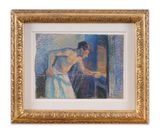
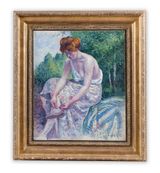
- Morning, Interior (1890). A portrait of Luce’s friend and fellow painter Gustave Perrot, in the process of getting dressed. The painting exemplifies the divisionist technique, with vibrant red, green, blue, and yellow dotted brushstrokes present within even the darkest shadows of this scene. This painting is held by the Metropolitan Museum of Art in New York.
- Factory in the Moonlight (1898). A factory from the industrial Charleroi area illuminated by moonlight is rendered in vibrant purples and blues. The factory here is depicted as quiet and treated like a still-life, which contrasts with other paintings from this period, in which Luce depicted the factories and their Belgian workers in harsh conditions, documenting the hardships associated with industrialisation.
What were Maximilien Luce’s most important exhibitions?
Maximilien Luce’s works have been featured in numerous exhibitions during his lifetime and posthumously. Notable exhibitions include:
- Maximilien Luce, l’instinct du paysage, The Musée de Montmartre, Paris (21 March–14 September 2025).
- Félix Fénéon: The Anarchist and the Avant-Garde—From Signac to Matisse and Beyond, Museum of Modern Art, New York (27 August 2020–2 January 2021).
- Maximilien Luce, Neo-Impressionist. A Retrospective, Musée d’Orsay, Paris (28 July–31 October 2010).
- Group show, Bloom (Fruits & Flowers), Bailly Gallery, Geneva (5 February–3 June 2024).
Hazel Ellis | Ocula | 2025








Explore Maximilien Luce's Exhibitions




Explore and Follow Artists Shaping Contemporary Art
A respected voice in contemporary art discourse.
Focusing on ambitious storytelling and insightful art-world commentary. Ocula Magazine publishes in-depth interviews, critical essays and timely analysis on the artists, exhibitions and ideas driving the global art world.
Learn more about Ocula Magazine
Showcasing the best of the art world.
Ocula partners with galleries from around the world to highlight their artists, artworks and exhibitions. Gallery membership is by application and invitation, with each member vetted by an independent panel.
Learn more about Ocula Membership
Specialises in the sale of major artworks.
Led by a team with deep ties to the world’s leading auction houses, galleries and collectors. Ocula’s advisory team offers bespoke services to high-net-worth clients from around the world who are looking to acquire the best of contemporary and modern art.
Learn more about our team and services