Press Release

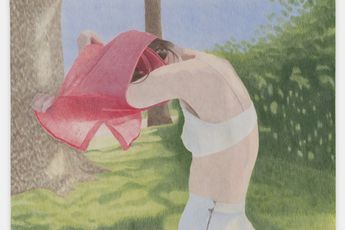
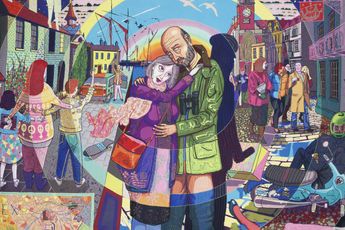
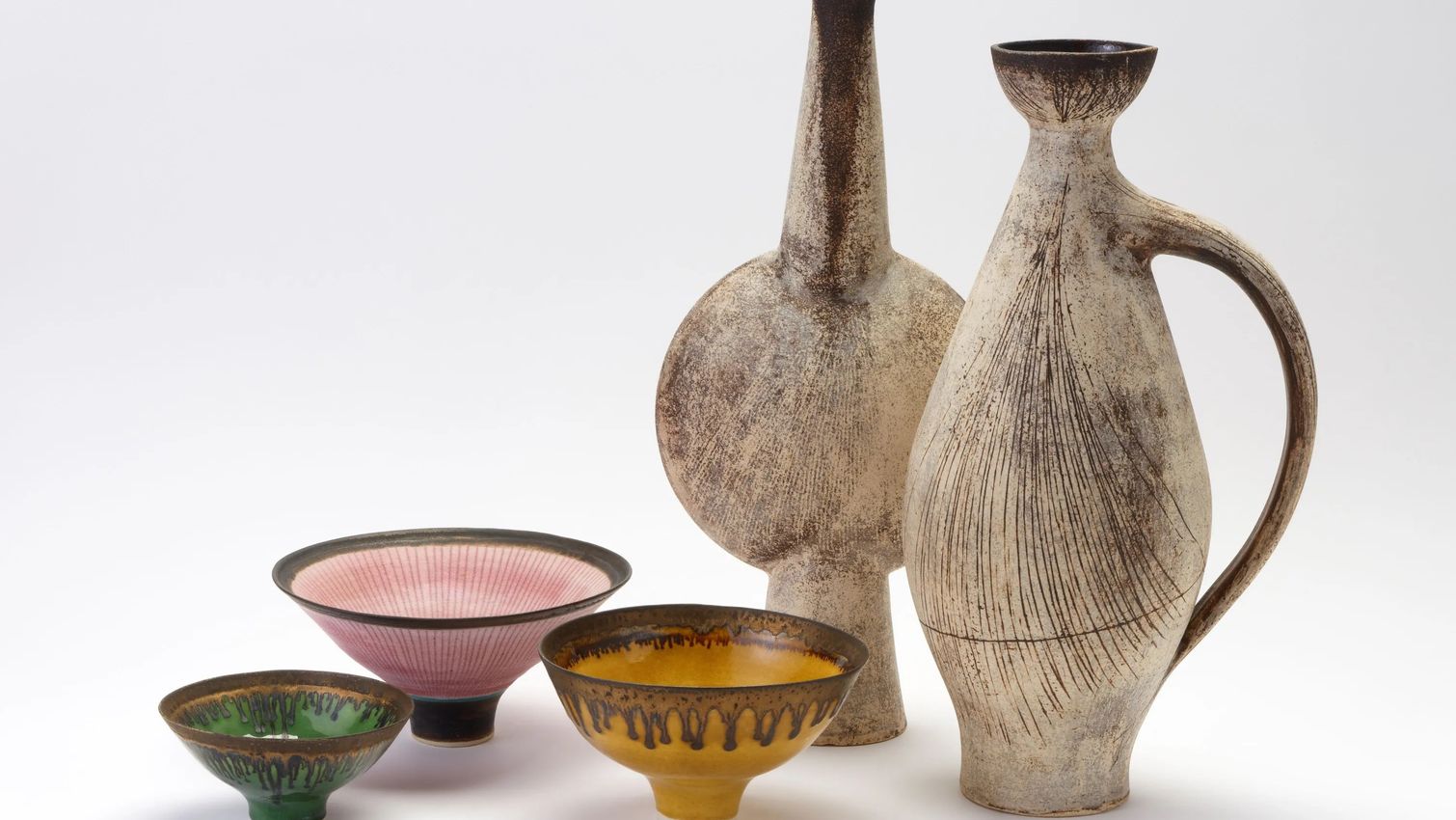
This exhibition brings together modern portraits from the gallery’s inventory, with newer works by represented artists and guest artists who are showing with us for the first time. The portraits date from 1907 to the present and encompass photography, printmaking, drawing, collage, painting and ceramics. While each work has been selected for its individual qualities, when brought together certain emotional themes and conceptual strategies emerge, connecting images made in different times and places.

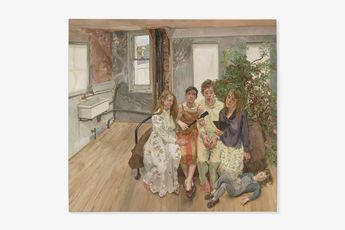
In several pictures the subject is a close relative of the artist. This is unsurprising given that family members are often near at hand and have become tolerant of modelling for their loved ones. We have David Hockney’s affectionate 1972 ink drawing of his father in a bow tie and a more melancholy, yet vividly coloured photo-collage of his mother asleep, made ten years later. Lucian Freud’s daughter Ib has explained how sitting for a picture was the only way she and her siblings got to spend any time with their father, a fact which, once known, adds a feeling of pathos to her portrait; while Tarka Kings’ romantic drawing of her teenage son on a train, commemorates his passage into adulthood.

Other portraits are set in the more professional space of the artist’s studio where paid models might expect to endure increased levels of discomfort. Freud’s etching Man Resting (State II), 1988 shows his model crashed out, face crumpled under the weight of a heavy head. Photos of Freud and Bacon’s studios maintain the mythology of the studio as a heroic space, where paint is wrestled into submission by masterful (male) artists, and yet both artist’s look uncertain and even physically unsteady when the camera is turned on them.

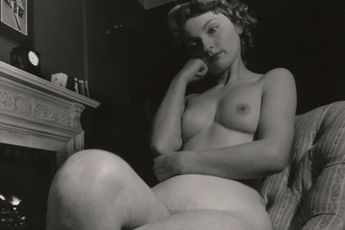
Several of the photographers included here take an experimental approach to the medium. The low angle from which Brandt photographs his nude on a beach, follows an established thread of abstraction in modern photography, but Brandt’s British backdrops offer a more grungy realism than early modernist images originating in Paris and New York. In Hockney’s photo-collages dating from 1982–3 he discovered a new photographic language, analogous to Cubist painting. While Richard Learoyd’s life sized Polaroid print Olya in Yellow, Two, 2010, combines an exceptional level of verisimilitude (as if one might reach into the picture and touch the figure) with a composition indebted to history painting.

The portraits present a range of strong personalities - willing models who have their own need to be seen and heard. The two earliest works in the show are of spirited modern women, both artists, Mary McEvoy (1877–1927) and Iris Tree (1897–1968) one of the first women in London to chop her hair into a bob. The realistic modelling of Augustus John’s 1907 pencil drawing of McEvoy declares her as an equal to the artist, independent of family or husband, although her biography reveals that she gave up her own art for the duration of her marriage.

The process of drawing is foregrounded in many of these portraits. There are many ways to make a drawing and several pictures suggest an intense level of observation and recording. Gallery artist Kings builds up her images using a range of intricate marks. Her unfinished portrait of Lily echoes the delicate coloured pencil in Hockney’s portrait of Mo and the obsessive cross-hatching in Freud’s etchings. John’s beautifully observed drawing of McEvoy is mirrored a century later in Diarmuid Kelley’s portraits, which are always made from life and where a flash of orange, or patch of lilac paint, perfectly captures an ear or eyelid.

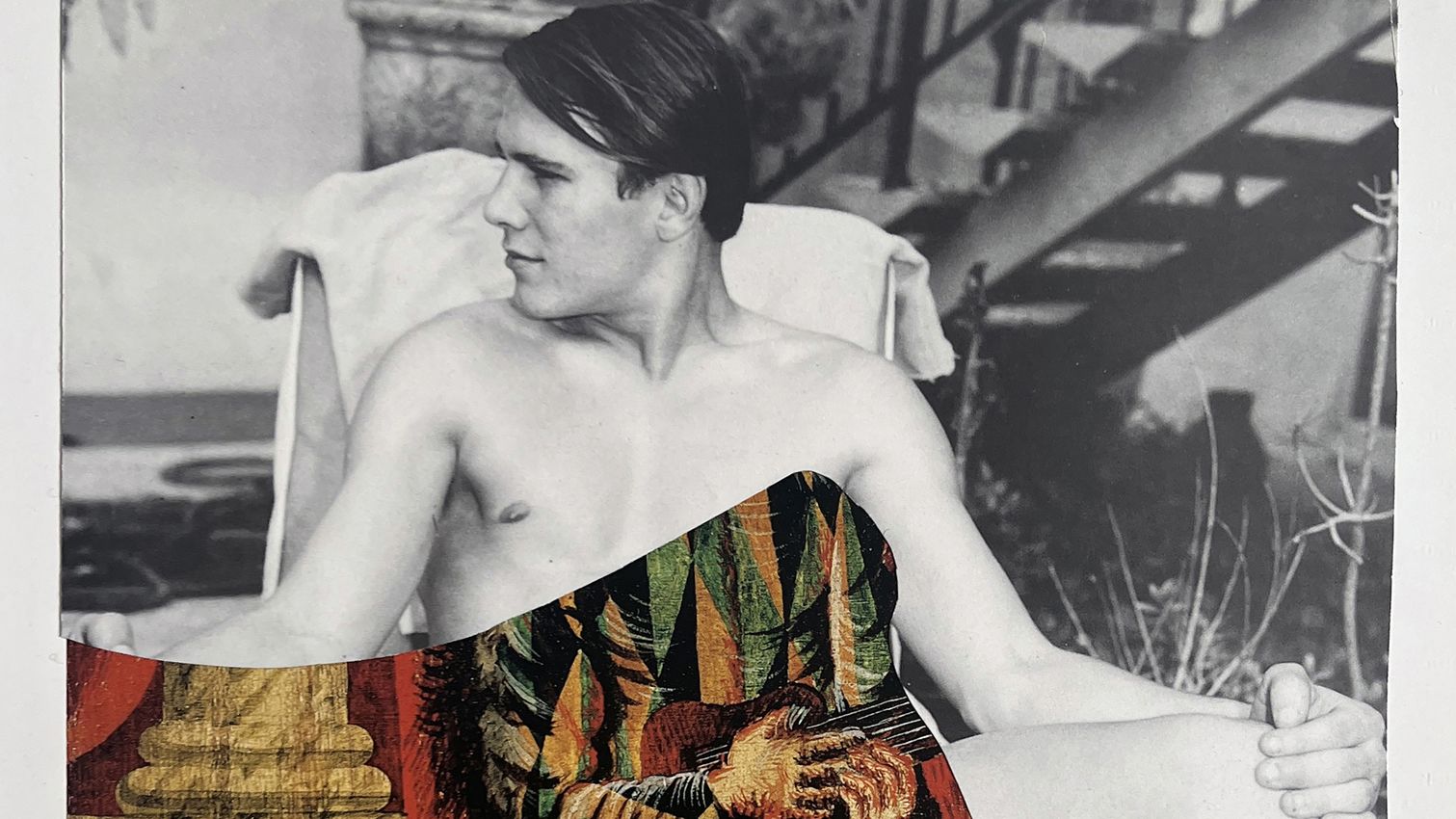
Collage and collage processes are a natural vehicle for expressing ideas of duality and fragmentation. Rose Finn-Kelcey’s trick photo, and Perry’s densely decorated pot, each present two images of the artist within one work. By questioning the notion of a coherent self, they raise further questions regarding gender and sexuality, positioning their multiple identities as a strength. In Stezaker and Moretti’s traditionally made collages surreal juxtapositions also disturb the surface of things. Stezaker’s Mask series - where postcards of landscapes are placed over the faces of film stars - suggest the unfathomable forces nature, while Moretti’s collages which splice together gay pin ups and paintings by Picasso are part homage and part critique of the artist’s aggressively heteronormative masculinity.

This event is part of a series of exhibitions taking place across London to celebrate the reopening of the National Portrait Gallery on 22 June 2023. For more information about participating galleries, please visit www.npg.org.uk and search Portrait Mode.

With thanks to Andree Cooke, Simon Moretti and Tom Rowland.

Read More

Artists Exhibiting

About the Gallery
Offer Waterman opened his first gallery in Chelsea, London in 1996. Now based in a five-storey Georgian townhouse in Mayfair, the gallery has developed an international following for its exceptional 20th Century and Contemporary art. Previously the historic William Morris & Co showroom, the gallery at 17 St. George Street provides a relaxed and understated exhibition space across three floors, with a library and research centre on the fifth.

The gallery’s experienced and approachable team are dedicated to helping collectors, at all levels, develop remarkable and individual art collections. Offer Waterman is known for its historical exhibitions including, Frank Auerbach, Early Works (2012), David Hockney, Early Drawings (2015), Robert Rauschenberg: Transfer Drawings from the 1960s and 1970s (2016) and William Turnbull, Centenary Exhibition (2022). In 2023 we collaborated with fashion designer Jonathan Anderson on the exhibition On Foot, which placed 20th century British art in dialogue with Anderson’s own designs and works by contemporary artists and makers. Most recently, in the autumn of 2024, Frank Auerbach: Portraits of London, produced in collaboration with Francis Outred, presented 25 major landscapes from private and museum collections and attracted more than 5,000 visitors.

Offer Waterman is an established benefactor of museums and arts organisations and the gallery has supported numerous museum exhibitions including the Tate’s most recent David Hockney retrospective (2017); the Royal Academy of Arts exhibitions Lucian Freud: The Self-portraits (2019) and David Hockney: The Arrival of Spring, Normandy, (2020) and Barbara Hepworth: Art and Life at the Hepworth Wakefield (2021-22). In 2023, the gallery sponsored exhibitions by two leading female artists - the beautifully curated Lucie Rie: The Adventure of Pottery at Kettle’s Yard, Cambridge and the equally compelling Gwen John: Art and Life in Paris and London at Pallant House Gallery, Chichester.
View Gallery Profile
Address
17 St George Street
London
United Kingdom
Opening Hours
Tuesday – Friday, 11am–5pm
Saturday 11am–4pm

The show will be closed for the holidays on Good Friday and Easter Saturday.
(1)
London 17 St George Street
Offer Waterman
17 St George Street, London, United Kingdom
+44 (0)20 7042 3233
https://www.waterman.co.uk/

Opening hours
Tuesday – Friday, 11am–5pm
Saturday 11am–4pm

The show will be closed for the holidays on Good Friday and Easter Saturday.
The art world in focus