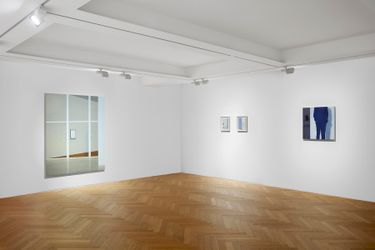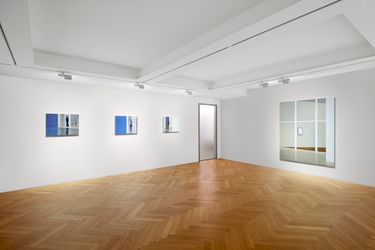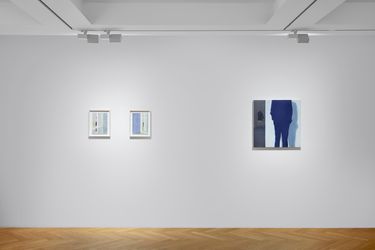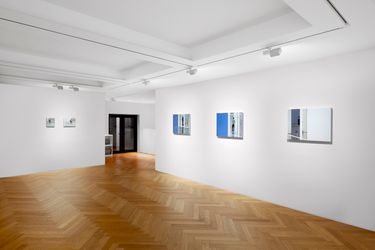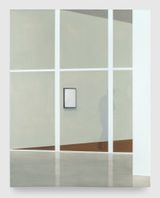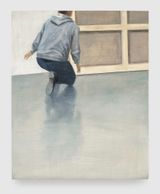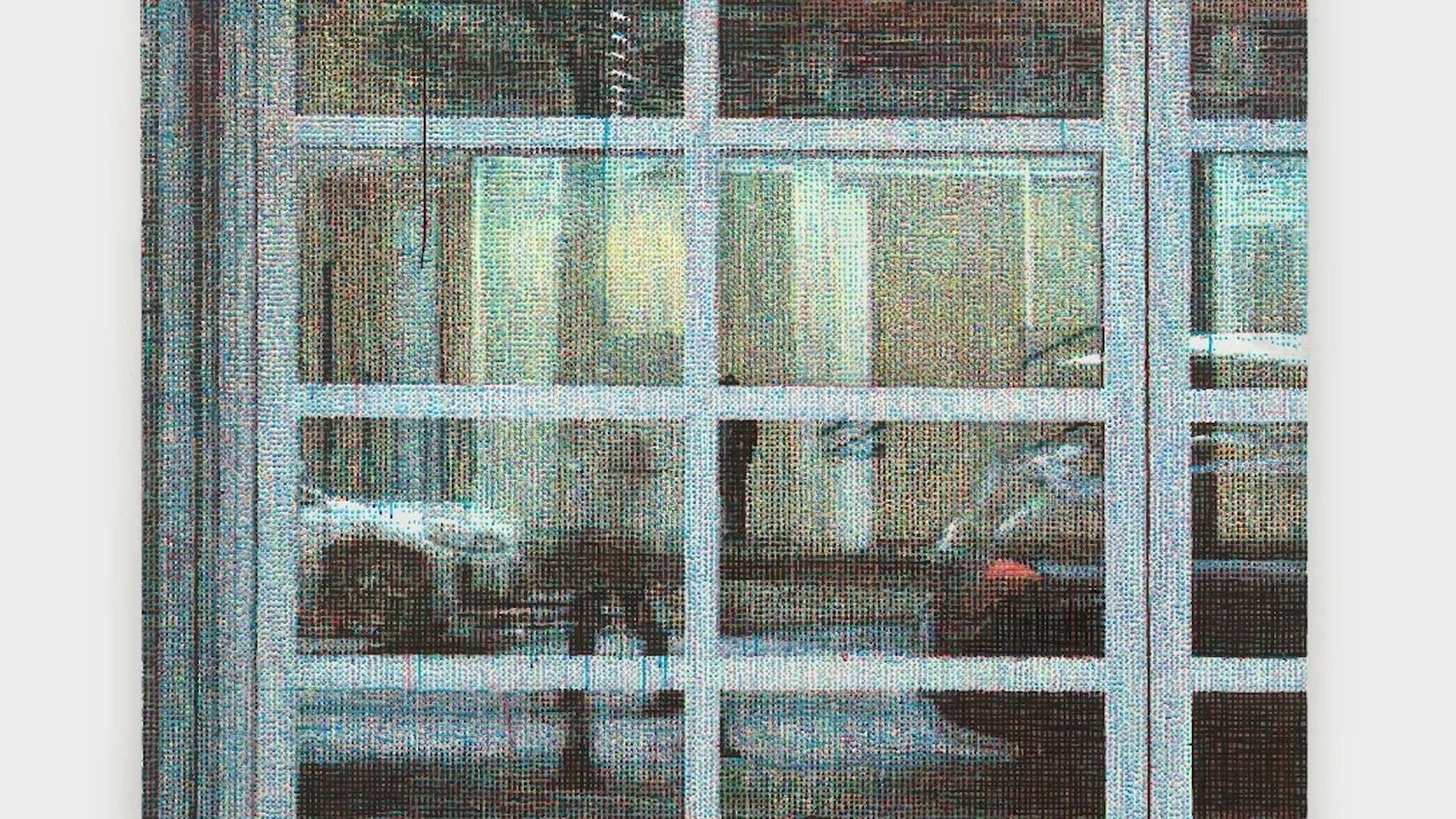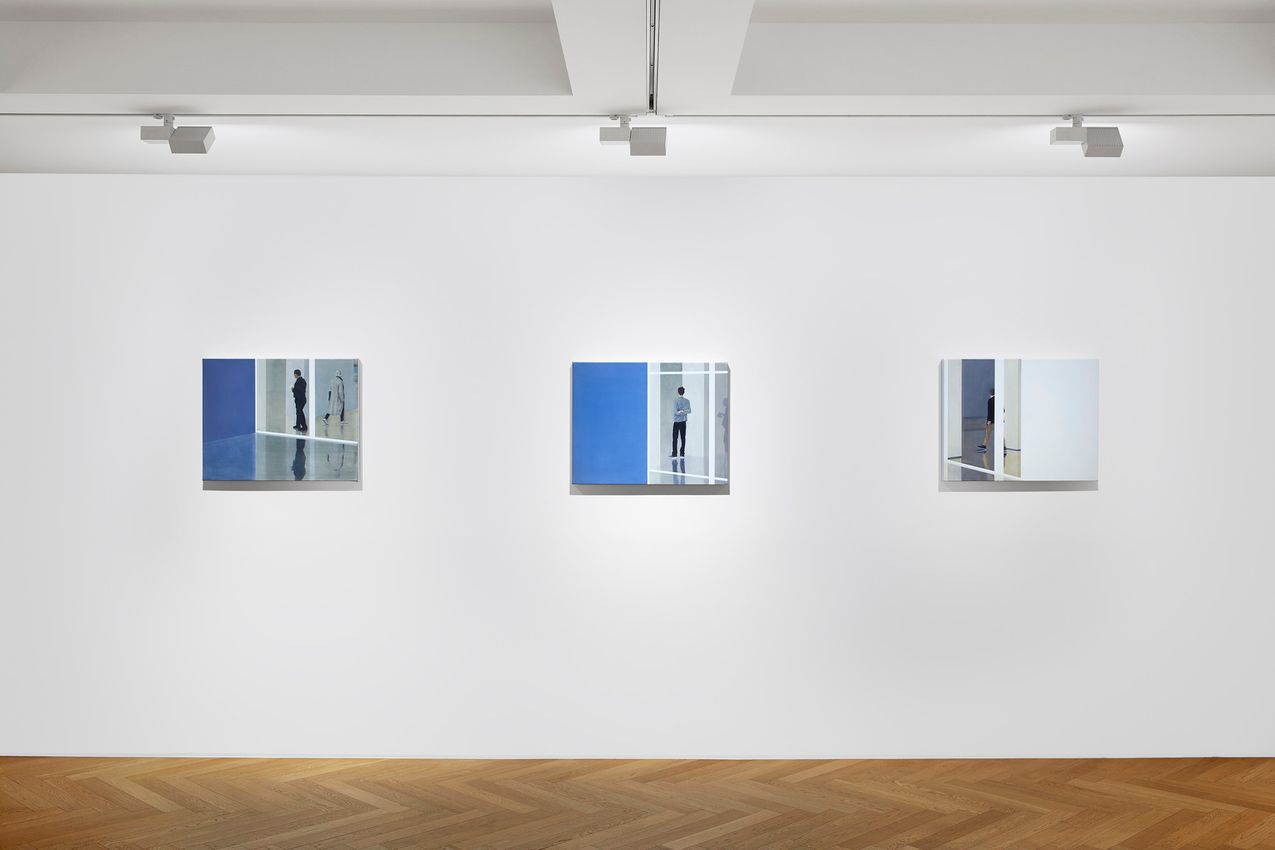
Seoul–Pace Gallery is pleased to present Untitled (Interior), an exhibition of new oil paintings and watercolours by leading German contemporary painter Tim Eitel. Eitel is celebrated for his open-ended pieces that mirror or reframe our reality to invite considerations of individual and collective perception. His depictions of isolated figures in contemporary public spaces are, on one hand, subjective windows onto our own experience, and, on the other, objective scenes relayed through overt compositional or formal conceits such as the modernist grid: another kind of window.
Expanding upon themes of partition and connection present in recent solo exhibitions including _tim eitel_untitled (2001–2020) at the Daegu Art Museum in South Korea, Tim Eitel: Sites and Attitudes at Pace in Beijing, and Tim Eitel: Open Walls at Museum der bildenden Künste in Leipzig, Germany, Untitled (Interior)_ takes Eitel’s psychological portraits into the space of the modern art museum. His painted portrayals of lone figures in arts venues turn our vision toward human interiority itself. The show will run from November 25, 2020 to January 16, 2021 at Pace in Seoul.
Eitel, who works in Paris, rose to acclaim as a member of the New Leipzig School, a group of figurative painters that coalesced at the Leipzig Academy of Fine Arts in post-reunification Germany. After studying painting under Arno Rink, Eitel moved to Berlin and co-founded the cooperative gallery Liga in 2002, cementing the prominence of the group globally. For the past two decades, the artist has culled and simplified elements from a rich repository of photographs and memories to formulate his atmospheric paintings. Methodically layered and meticulously composed, his work is a matter of utmost precision.
The works in Untitled (Interior), all made in 2020, take place in an unspecific modern art museum painted using flat planes of pure colour and horizontal and vertical lines that abut, intersect with, layer, and mirror one another. The result, which approaches abstraction, is a dreamscape that recalls the lived experience of being in arts spaces, by virtue of its photorealist elements, but is distinct from it, in terms of its emptying or vacating of the space, which places emphasis on perception and reflection as phenomena. Unnecessary details that might tip these paintings too far toward narrative specificity are pared back to direct the viewer’s attention to the theatres of contemplation in which art is housed, spaces dedicated not only to the objects of our gaze, but at the same time to the act of gazing itself, movement in thought and attention in between stimulus and events.
The works on view range in size from Packing/Unpacking, an intimately scaled image of an art handler kneeling before the back of a stretched canvas, to Interior (Ghost), which measures over six feet or nearly two meters in height and depicts a phantom imprint of a man walking through an art museum, viewed through a large, gridded window. The individuals in these images are unreachable. Seen from behind or from the side, they deflect the viewer’s gaze and conjure up a sense of alienation or strangeness in a simulacrum of reality. The artworks that the figures behold, too, are inaccessible to us as viewers: we observe these artworks from the back, or blotted out by the glare of the sun, or, as in Interior (Shadow) and Interior (Passage), just beyond our field of vision. As we mentally follow the museumgoer through painted space, it is in fact that suggestion of time as also evidenced by the attention Eitel commands to the quality of surfaces and scenes he constructs, that leads to an open-ended proposal for the relevance of signifiers as a counterpoint to the aesthetic material qualities innate to environment, as drivers of the understanding of these interior spaces depicted if not our individual perspective.


Tim Eitel is a leading figure in contemporary art, celebrated for his psychologically charged figurative paintings that distil the complexities of modern life into serene, contemplative scenes. As a prominent member of the New Leipzig School, Eitel’s art bridges the traditions of European painting with a distinctly contemporary sensibility, making him one of the most influential painters of his generation.


A respected voice in contemporary art discourse.
Focusing on ambitious storytelling and insightful art-world commentary. Ocula Magazine publishes in-depth interviews, critical essays and timely analysis on the artists, exhibitions and ideas driving the global art world.
Learn more about Ocula Magazine
Showcasing the best of the art world.
Ocula partners with galleries from around the world to highlight their artists, artworks and exhibitions. Gallery membership is by application and invitation, with each member vetted by an independent panel.
Learn more about Ocula Membership

Specialises in the sale of major artworks.
Led by a team with deep ties to the world’s leading auction houses, galleries and collectors. Ocula’s advisory team offers bespoke services to high-net-worth clients from around the world who are looking to acquire the best of contemporary and modern art.
Learn more about our team and services