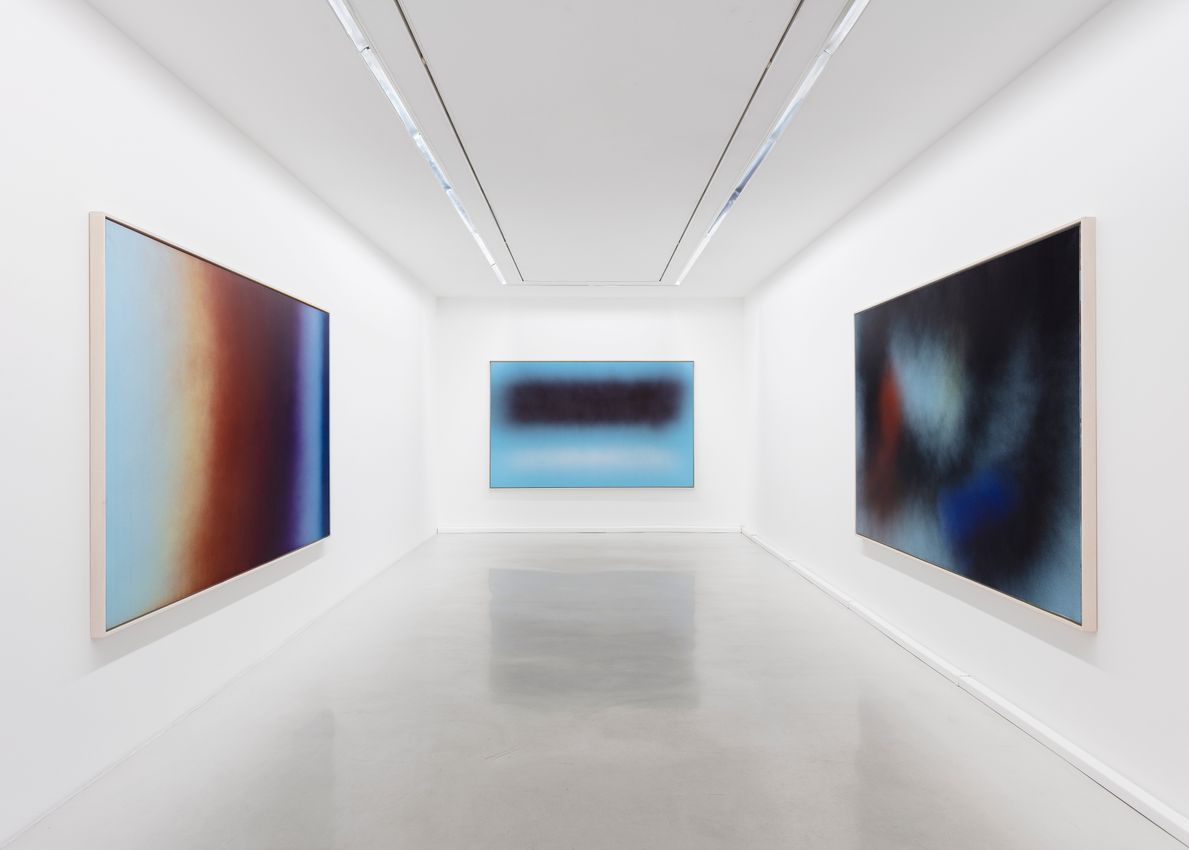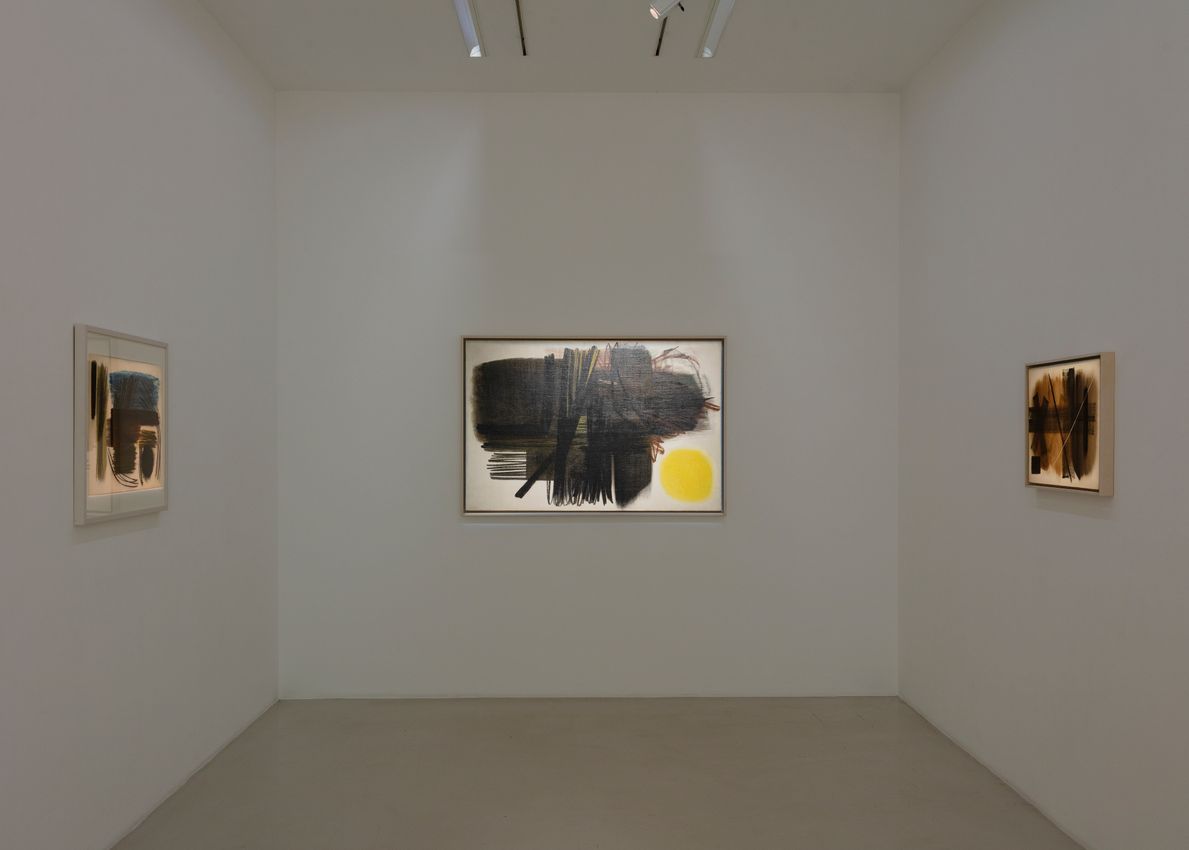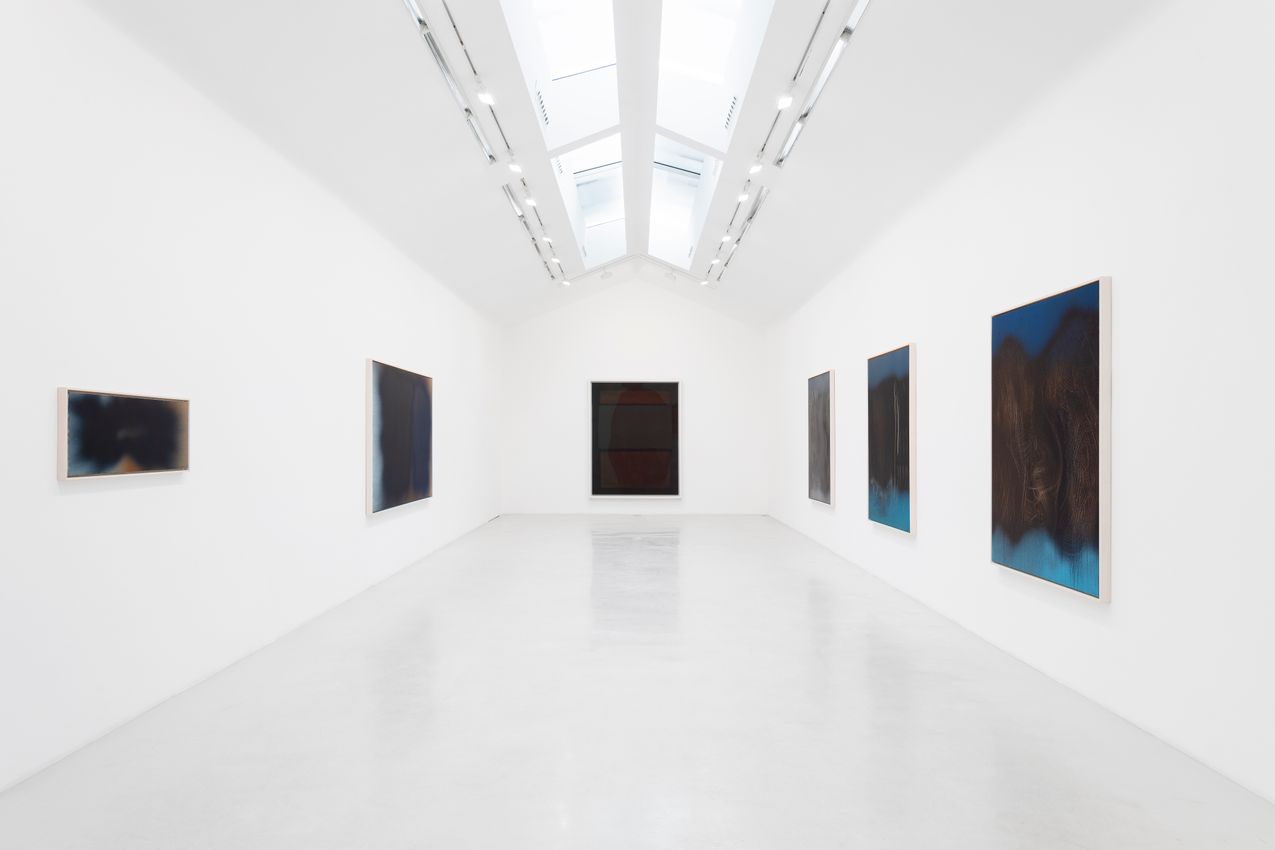
Perrotin hosts a crucial event from June 12 to July 31, 2021. For the first time, a Rothko-Hartung encounter will be the focus of a fullfledged exhibition: a brand new subject, one that is essential to understanding part of the art of the twentieth century. Indeed, while Europe and the United States competed to dominate the art scene after World War II, Rothko and Hartung forged a discreet yet friendly—and, above all, very fruitful—bond.
As of April 1950, Rothko visited Hartung’s studio in Paris, although he was himself exhibiting work in New York then, where collectors began vying for his oeuvre in the 1930s. Rothko and Hartung shared a lot in common: born, respectively, in the Russian Empire in 1903 and in Germany in 1904, they were both exiled and deeply moved by history. They saw, in abstract painting, a way of ridding themselves of what haunted them and a means of accessing the sublime. They shared common passions: Rembrandt, as well as the music of the 18th century (Hartung idolised Bach, while Rothko venerated Mozart).
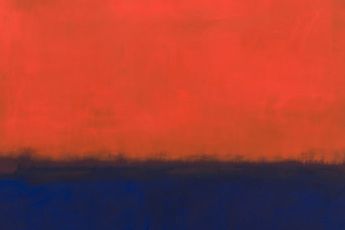
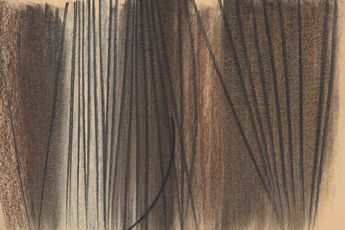
What did Rothko encounter in Hartung’s atelier? This exhibition enlightens the viewer on this discovery. Moreover, it conveys the Rothko ‘lesson’... Because, in addition to expressing esteem for his FrancoGerman comrade, Rothko dispensed shrewd advice: ‘leave floating surfaces of color, without adding to them graphically.’ Hartung would try this thirteen years later, just after seeing the retrospective dedicated to the American painter in 1962–1963 in Paris. The year 1963 is the decisive moment around which Galerie Perrotin will exhibit four paintings by Hartung, face-to-face with N014 Browns over Dark by Mark Rothko, which was painted concurrently, and which the Musée national d’art moderne-Centre Pompidou- has, exceptionally, lent.
The exhibition will also show the photographic portraits that Hartung made of Mark and Mary Alice Rothko during his visit to New York in 1964: rare archival pieces. Among the paintings, there is a unique work from 1982—never before presented. The exhibition will also include a documentary, featuring Christopher Rothko (the artist’s son) and the art historians David Anfam, Pauline Mari and Pierre Wat, who recount alternative genealogies to those we think we know. As early as the 1940s, Clement Greenberg—the inventor of the concept of colour-field painting—himself considered Hartung a model of spontaneity and freedom for painters of his generation.
Perrotin and Hartung-Bergman Foundation thank warmly the Musée national d’art moderne - Centre Pompidou for its exceptional loan.


Emmanuel Perrotin founded his first gallery in 1989 at the age of 21. He has opened since then over 17 different spaces, with the aim of continuing to offer increasingly vibrant and creative environments to experience artists work. He has worked closely with his roster of artists, some since more than 25 years, to help fulfil their ambitious dreams and projects.

A respected voice in contemporary art discourse.
Focusing on ambitious storytelling and insightful art-world commentary. Ocula Magazine publishes in-depth interviews, critical essays and timely analysis on the artists, exhibitions and ideas driving the global art world.
Learn more about Ocula Magazine
Showcasing the best of the art world.
Ocula partners with galleries from around the world to highlight their artists, artworks and exhibitions. Gallery membership is by application and invitation, with each member vetted by an independent panel.
Learn more about Ocula Membership

Specialises in the sale of major artworks.
Led by a team with deep ties to the world’s leading auction houses, galleries and collectors. Ocula’s advisory team offers bespoke services to high-net-worth clients from around the world who are looking to acquire the best of contemporary and modern art.
Learn more about our team and services