



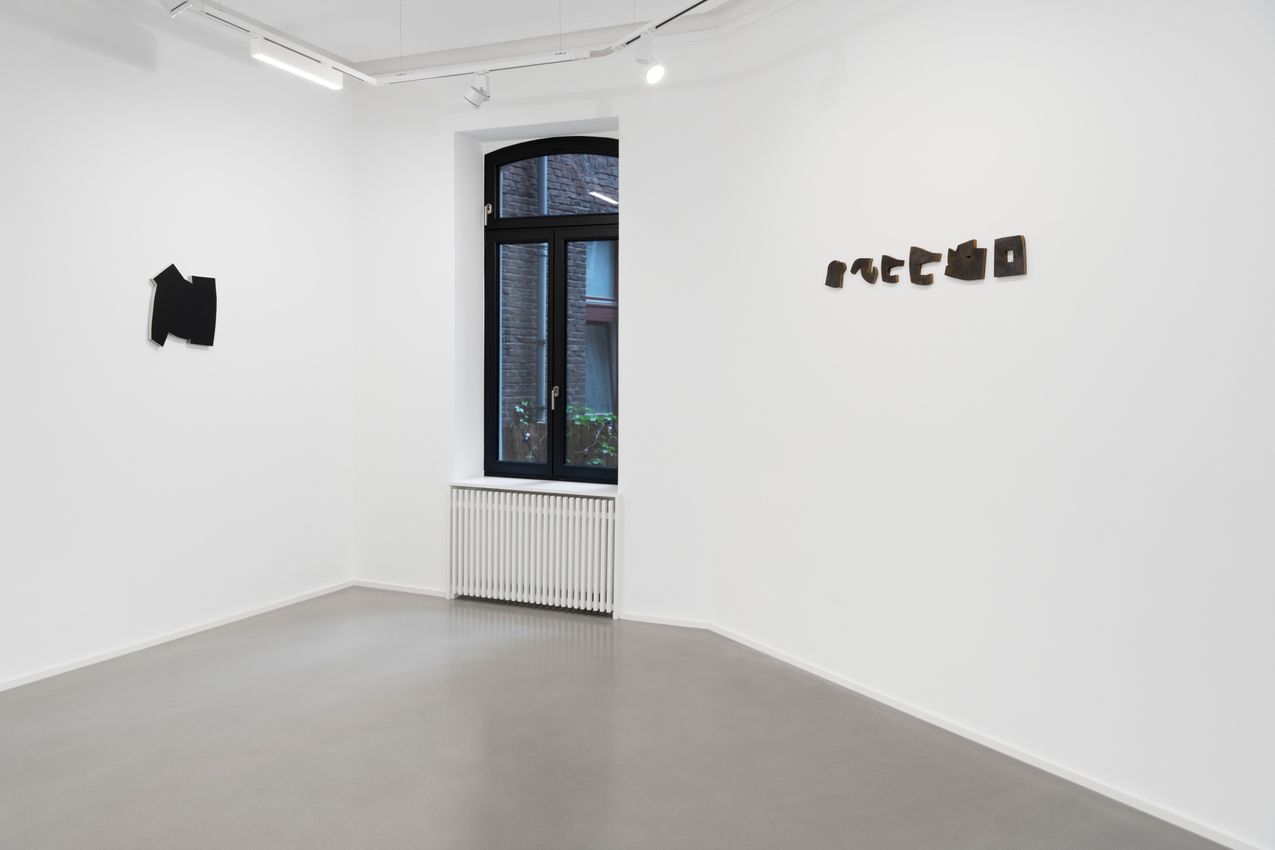
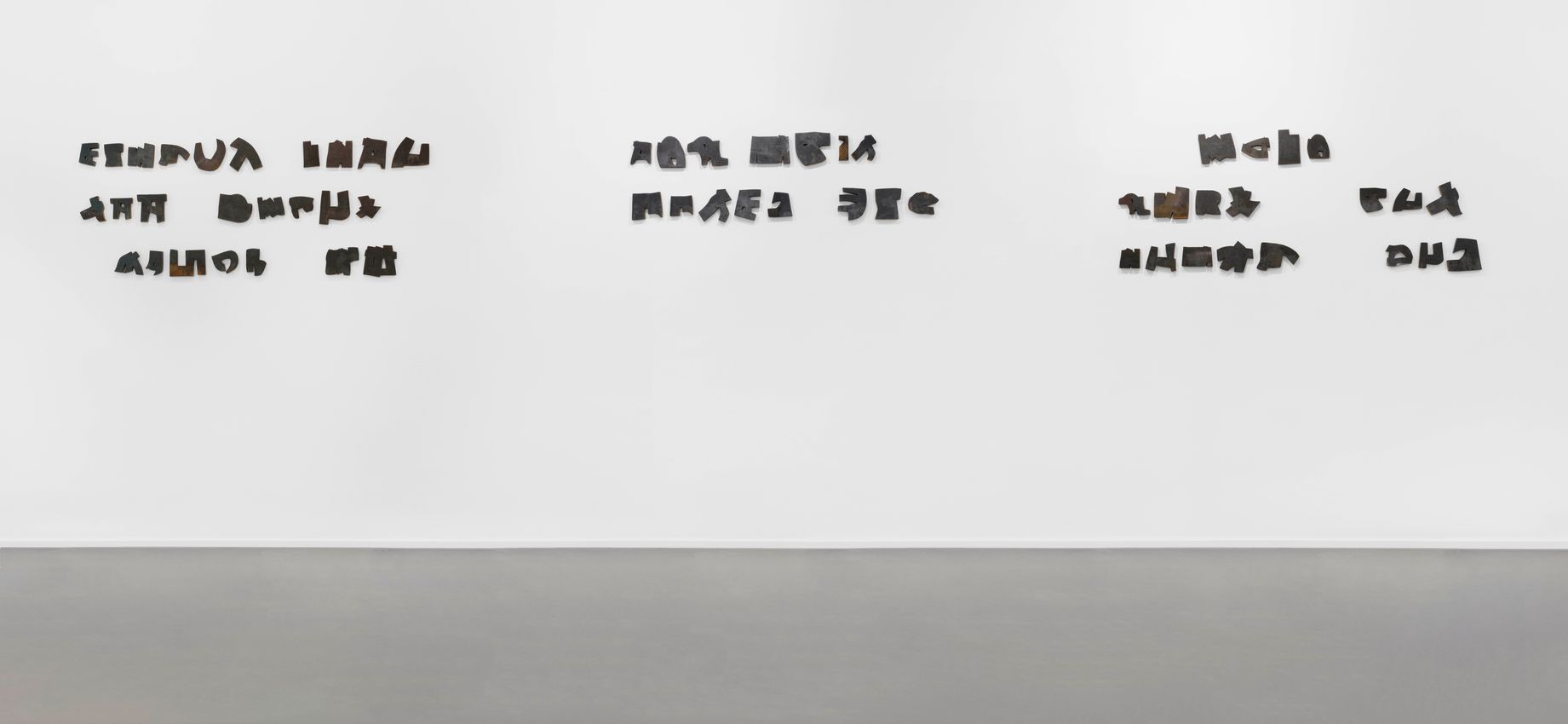
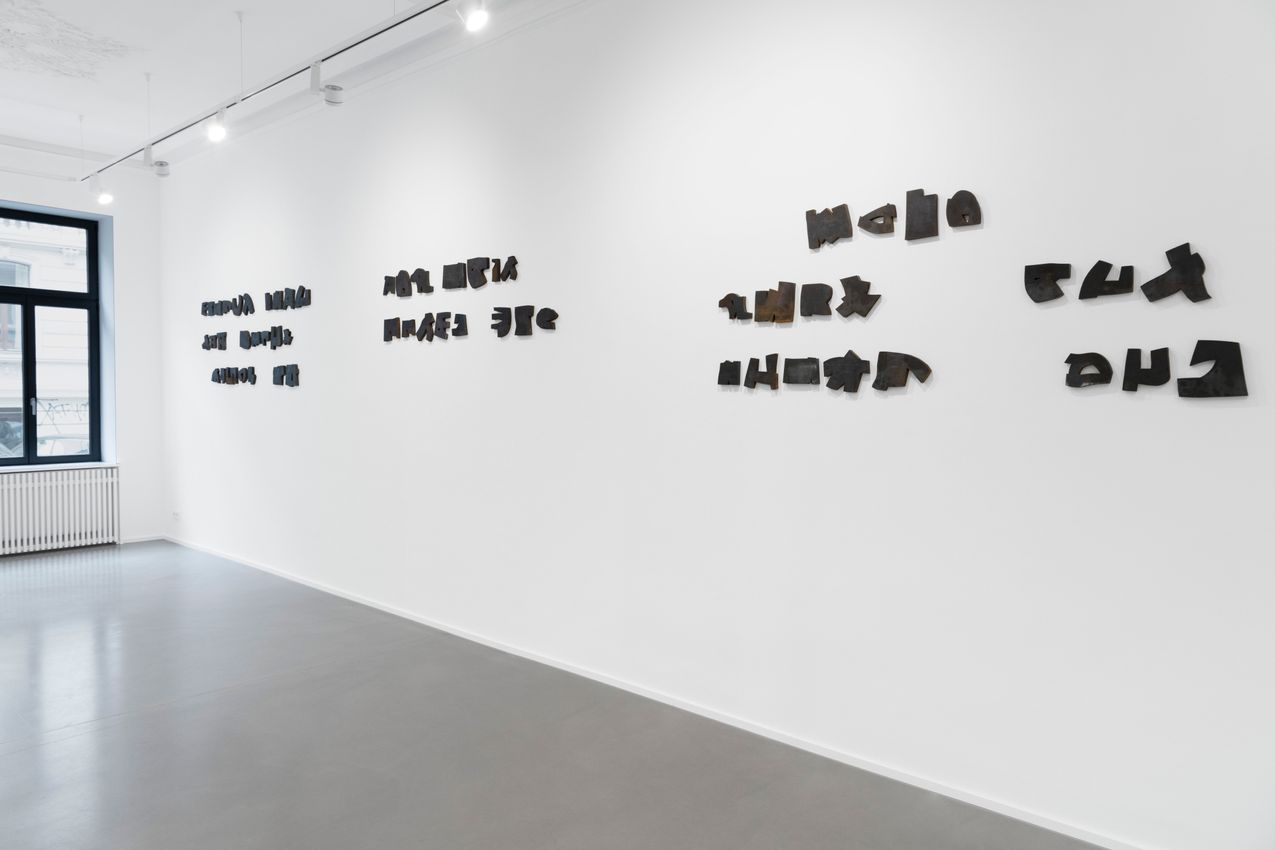
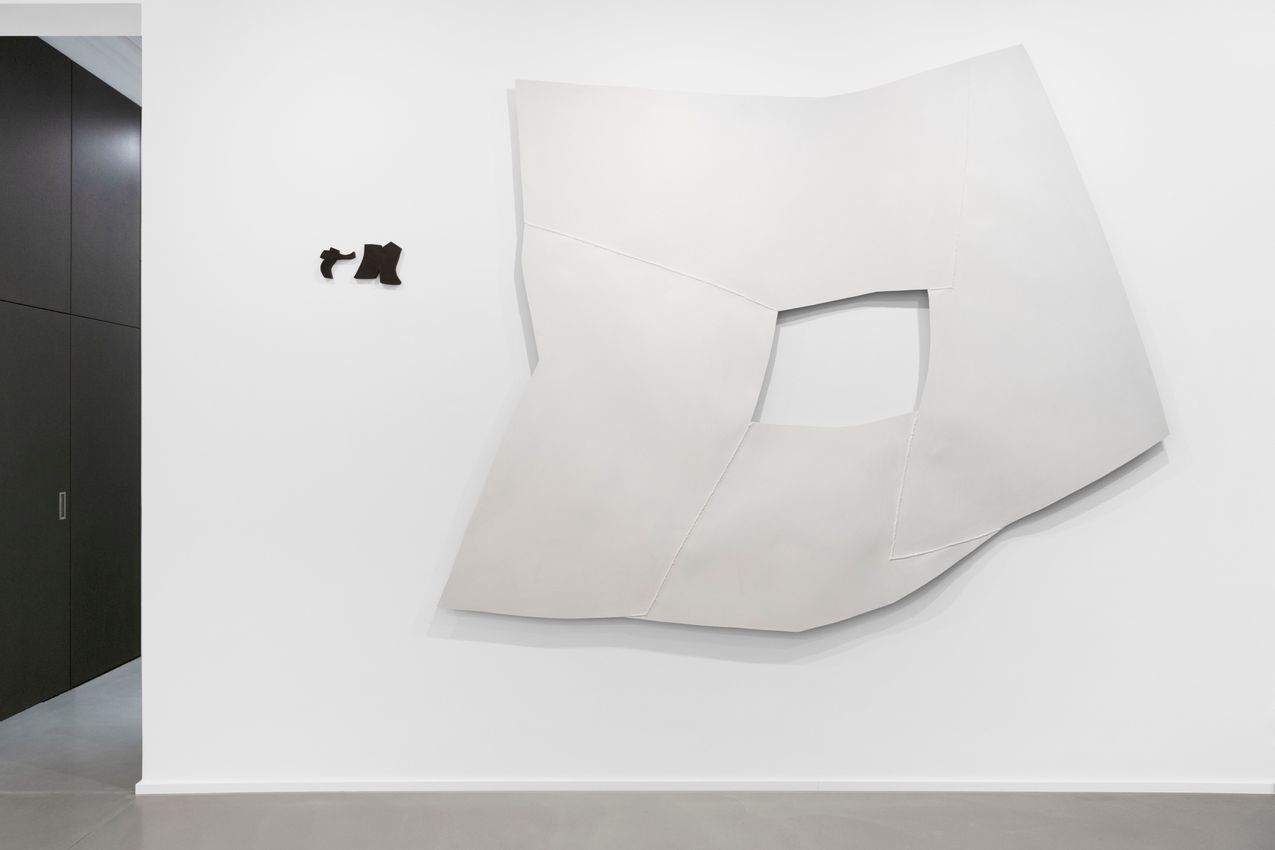
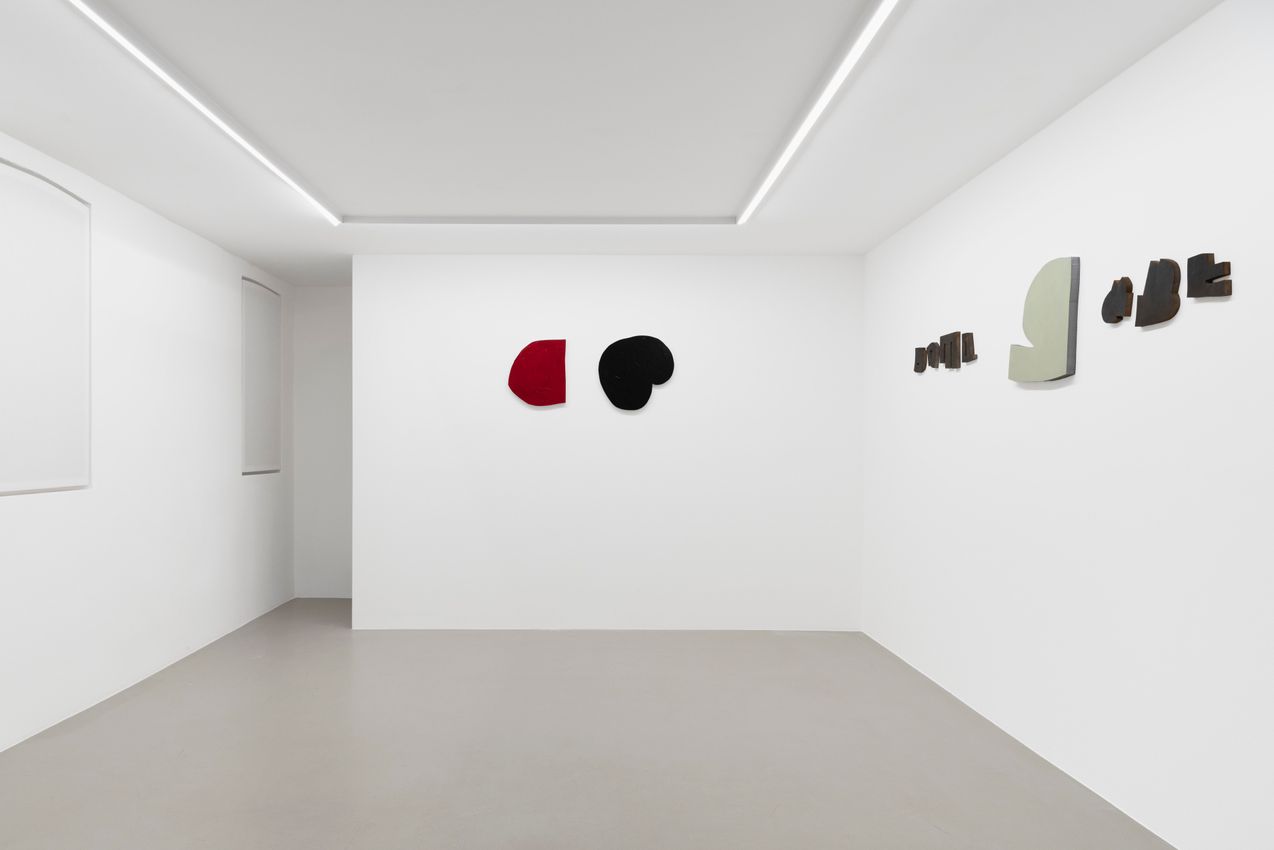
Imi Knoebel presents works from his new series: a large-format painting made of welded aluminum, individual »Zeichen«, and multipart works titled »Poem« and »Ligatur« made of Corten steel.
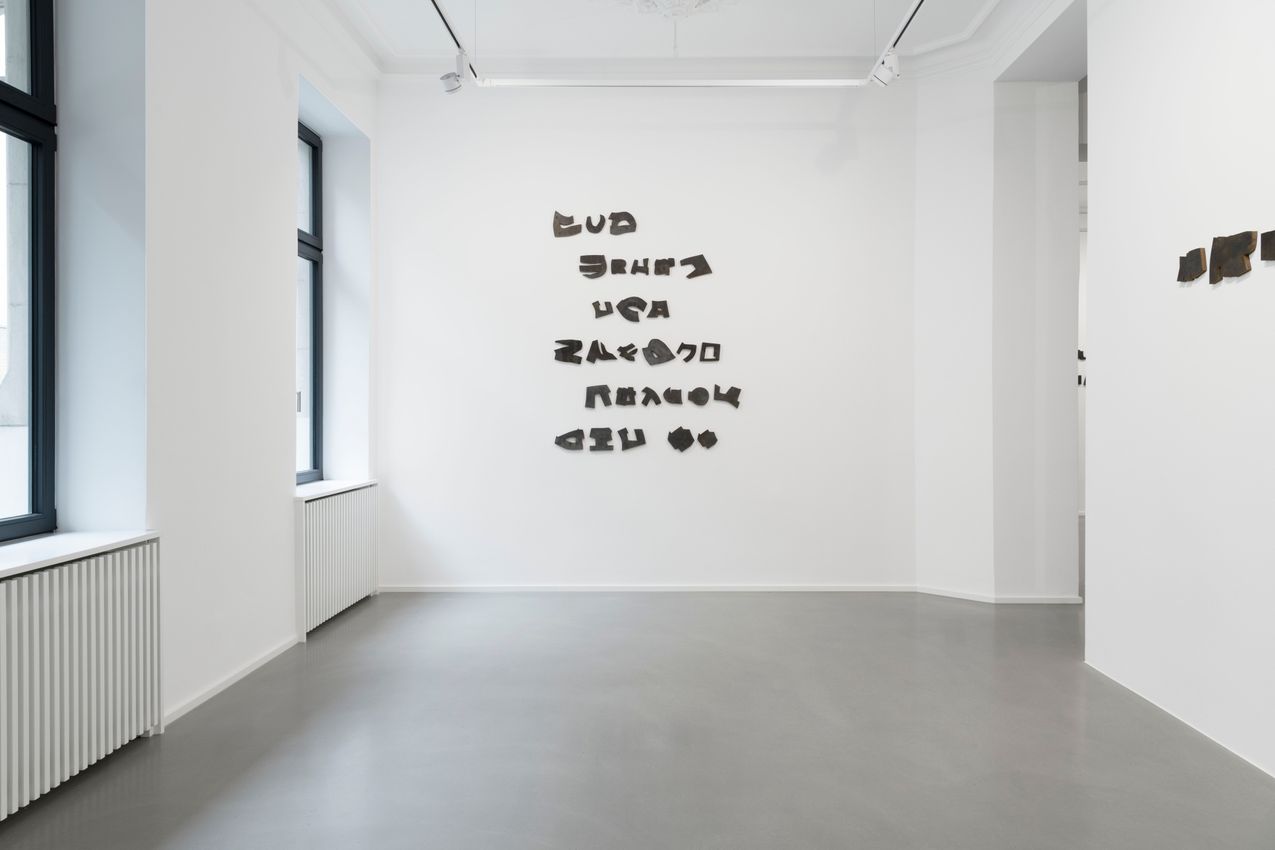
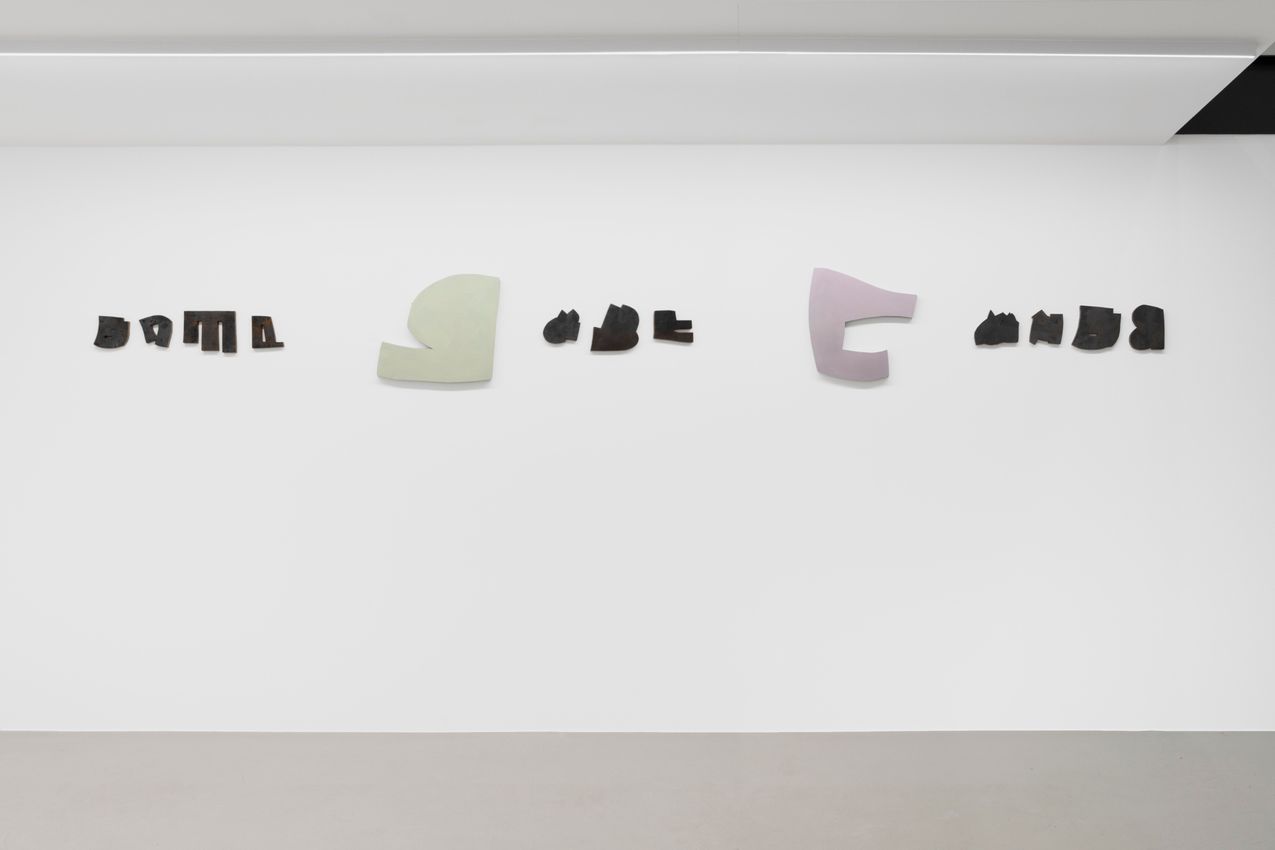
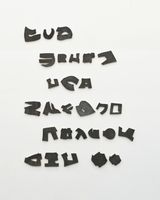
In the rear room, the first works one notices are the »Poem« pieces, whose individual parts run across the nearly 10-meter-long wall like letters and, when joined together, like words in lines. The wall serves as their pictorial ground, as a white sheet of paper. The free forms and the material—Corten steel—evoke associations with letters or printing types. They come together and interact yet follow no code and cannot be deciphered; they seek “only” to be image, with a universal, generally valid claim to communication.
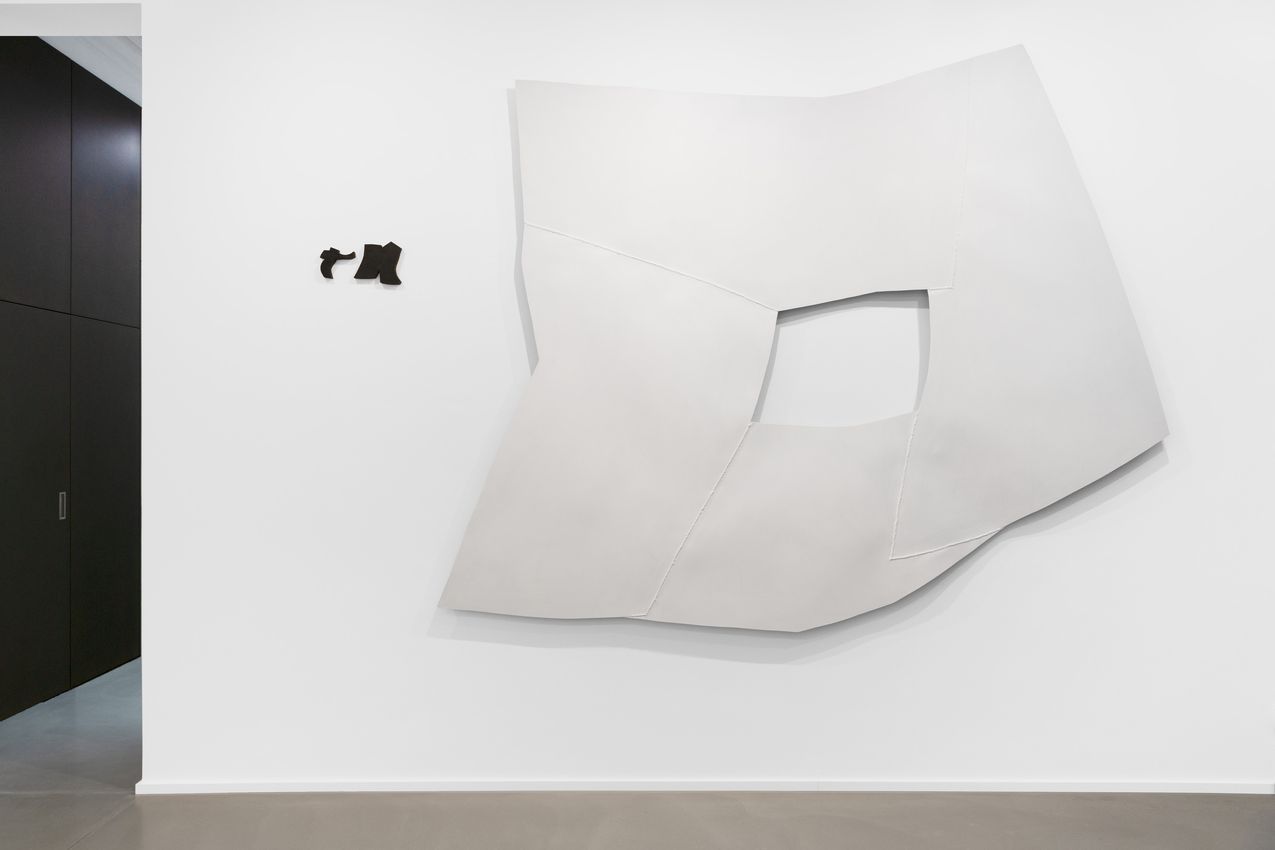
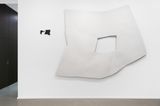
The large-format painting »IMI 2026-01« features visible weld seams that join four thin, slightly undulating aluminum plates around an opening at the center. This opening allows the viewer to see the wall behind it, above which the work appears to hover. The brushstrokes are clearly visible in the monochrome white application of paint. Next to the work hangs a two-part »Ligatur«, much smaller in scale, but the materiality of the rough Corten steel lends weight to the composition while also creating a compelling juxtaposition.
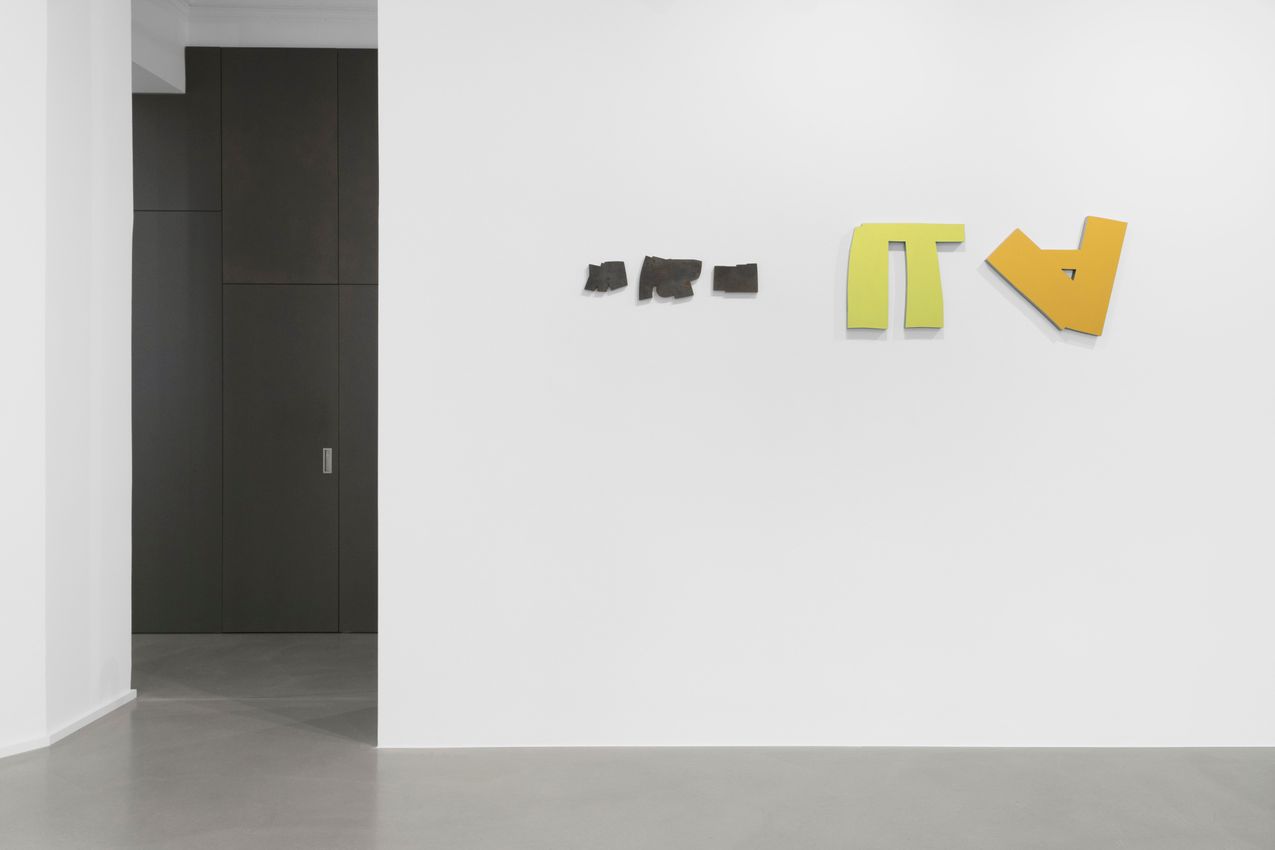
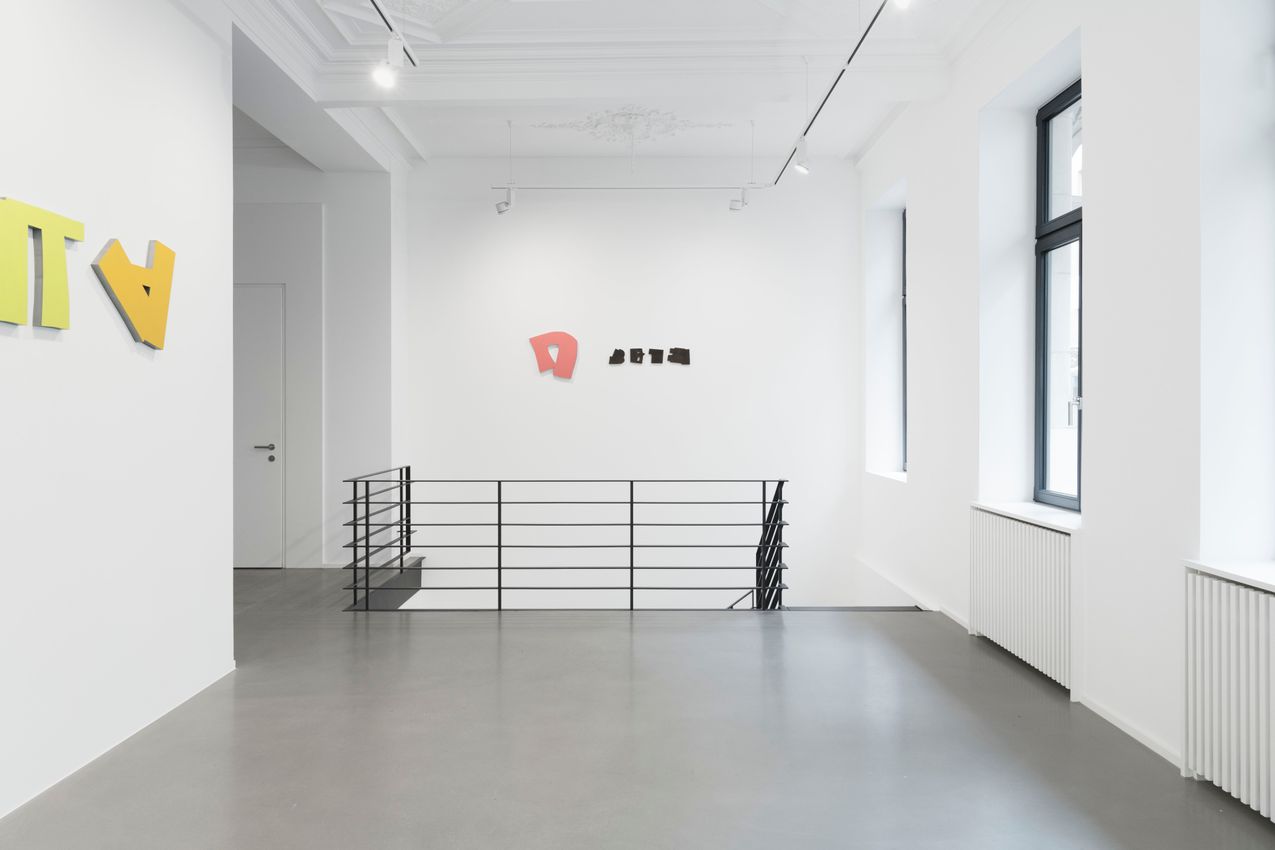
Cut, solid aluminum serves as the artist’s painting ground for the »Zeichen«, which are likewise monochrome and painted with visible brushwork in deep dark as well as light shades of pink and yellow. The free, individual forms are mounted flat against the wall and project into the space. Spread throughout all the rooms, they are hung individually or alongside a smaller »Ligatur«. Working in series shifts the focus away from the individual object and toward the relationships among objects.
The foundations of painting and sculpture are explored, in the artist’s characteristically radical manner, through form, color, and material. The exhibition offers no easily readable answers, but rather manifold experiences.


Imi Knoebel belongs to the group of artists that have developed a radical, minimal form vocabulary in the 1960s. Since the beginning of his artistic career, Kasimir Malewitsch has always been a very important reference point. Avoiding any figuration, his mostly serial work is characterised by a virtuosic use of colour and a geometric form language.

The gallery was founded by Christian Lethert in August 2006 in Cologne and focuses on a contemporary abstract-minimalist program.

A respected voice in contemporary art discourse.
Focusing on ambitious storytelling and insightful art-world commentary. Ocula Magazine publishes in-depth interviews, critical essays and timely analysis on the artists, exhibitions and ideas driving the global art world.
Learn more about Ocula Magazine
Showcasing the best of the art world.
Ocula partners with galleries from around the world to highlight their artists, artworks and exhibitions. Gallery membership is by application and invitation, with each member vetted by an independent panel.
Learn more about Ocula Membership

Specialises in the sale of major artworks.
Led by a team with deep ties to the world’s leading auction houses, galleries and collectors. Ocula’s advisory team offers bespoke services to high-net-worth clients from around the world who are looking to acquire the best of contemporary and modern art.
Learn more about our team and services