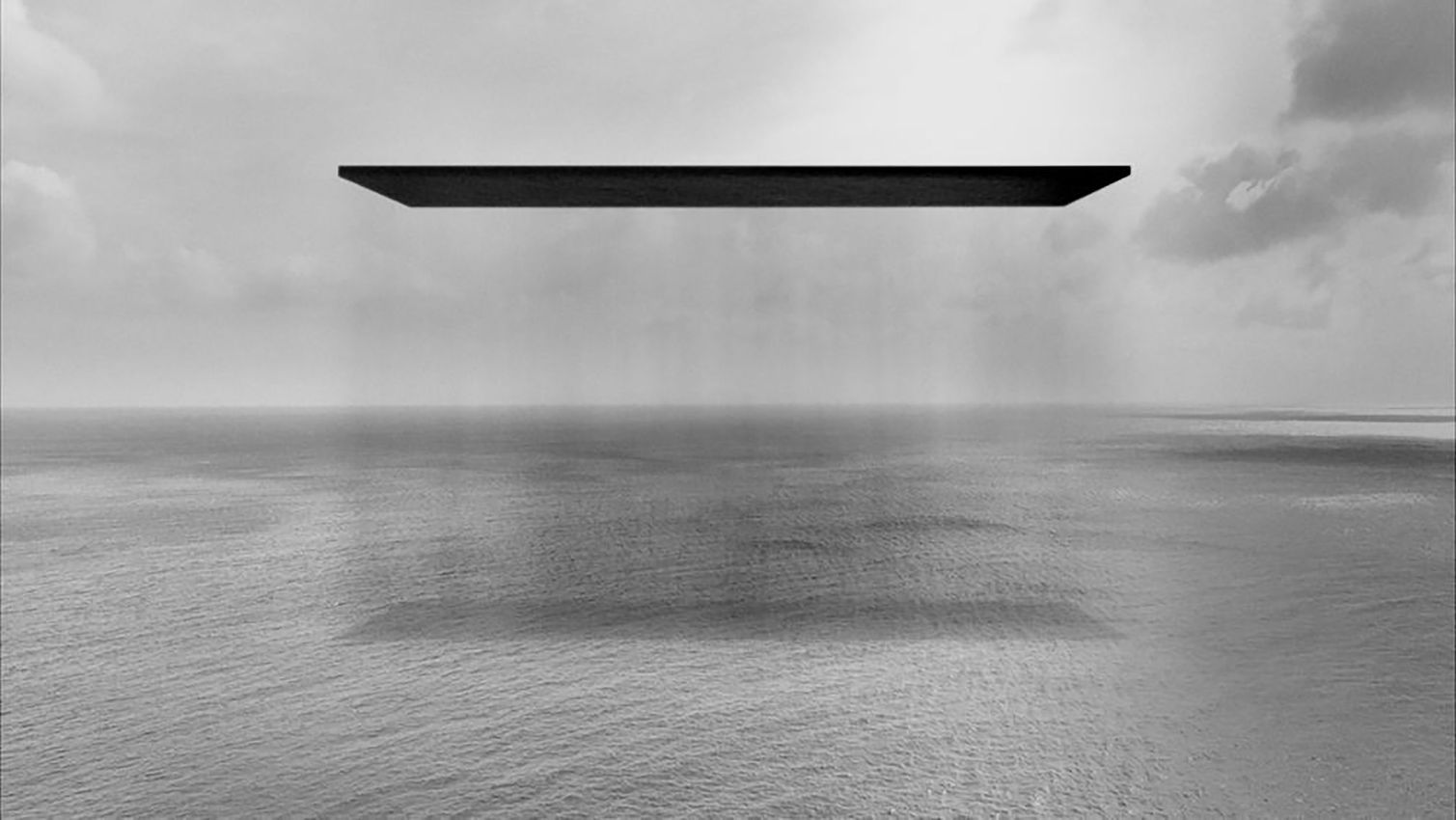
Perrotin is delighted to present the first solo exhibition by LaurentGrasso at the gallery’s London space. Winner of the prestigious Marcel Duchamp Prize (2008), Grasso is internationally renownedfor his immersive works that merge history, science, and fiction.
At the center of the exhibition is the film Orchid Island (2023), shot inremote sites off the coasts of Taiwan. Rendered entirely in black andwhite, lush tropical landscapes are overshadowed by the apparition ofa vast, levitating black rectangle. At once abstract, alien, andsupernatural, this enigmatic form unsettles our perception of time andplace. Suspended between archival imagery and science fiction,and accompanied by a hypnotic score by Nicolas Godin (from Air), thefilm embodies Grasso’s ability to transform landscapes intometaphysical experiences. Beneath the apparent beauty of theimages, Orchid Island reveals the invisible strata of a history markedby contemporary forms of dispossession. By almost entirely erasinghuman presence, the film—oscillating between utopia and dystopia,also questions the construction of a fantasized exoticism seen throughthe eyes of early explorers.
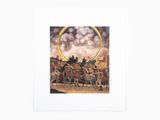
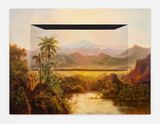
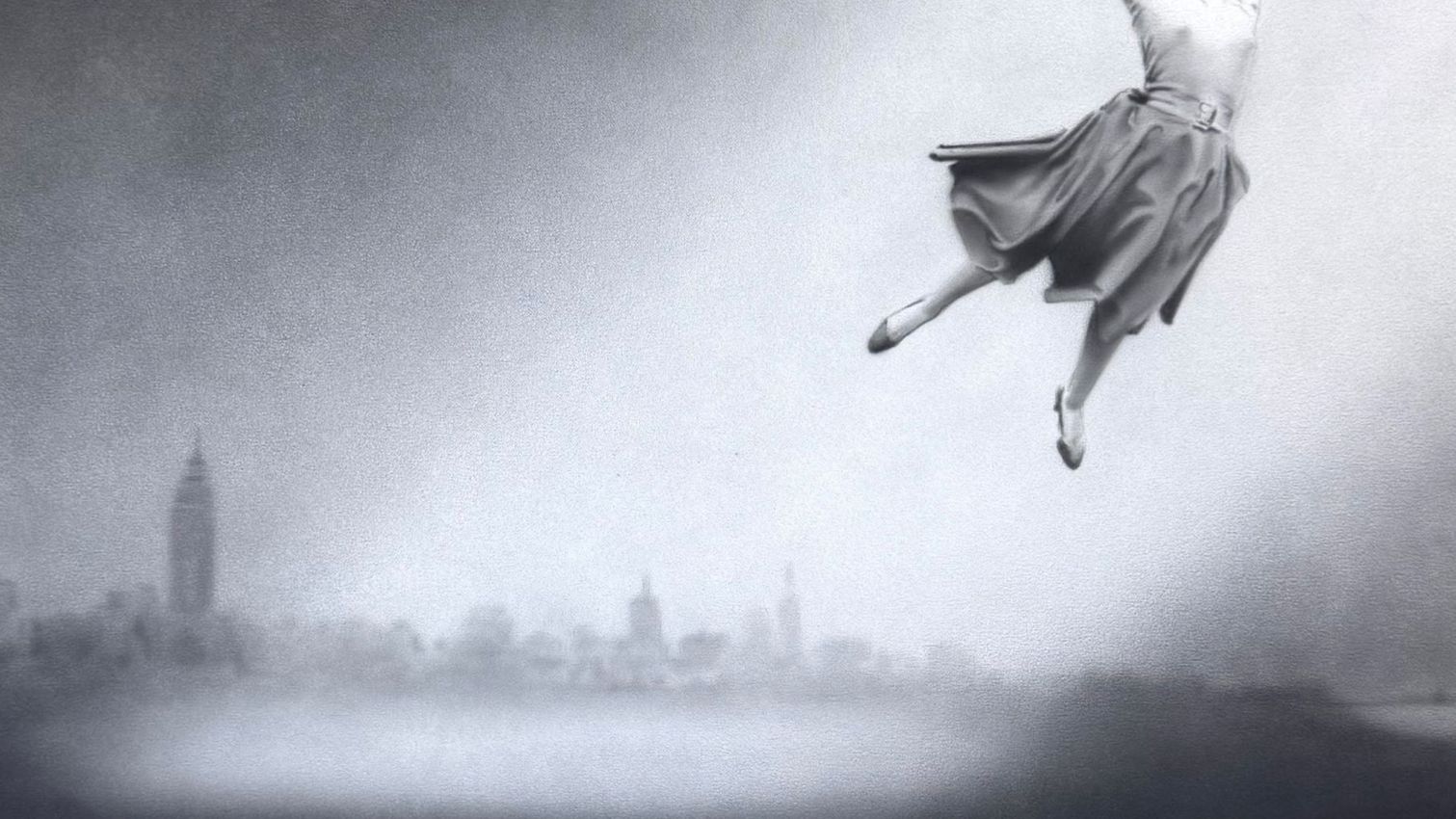
As is often the case in Laurent Grasso’s work, the same motifreappears in his painting from the series Studies into the Past, where idyllic historical landscapes are disrupted by the intrusion of the blackrectangle, a disturbing anomaly that haunts the scene like a memoryof the future. In Tropical Scene, this form is materialized through asheet of dark plexiglass embedded in the painting, creating a physicalpresence that obscures and reframes the composition.
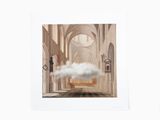
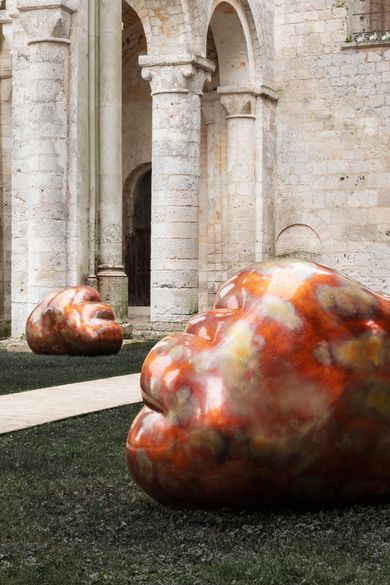
The exhibition also presents a cloud from the Anima series, heretranslated into a palladium foil painting and a constellation of neonworks. For Grasso, the cloud is not a simple meteorological motif buta threshold between the earthly and the celestial, a mutable form thatabsorbs projections of both fear and desire. Its palladium surfaceshimmers with an almost cosmic intensity, while the neon outlineevokes a gaseous, unstable state. Both ethereal and toxic, the cloudspeaks to the ambiguity of our time, where the sublime beauty of thesky coexists with the looming threat of environmental catastrophe.
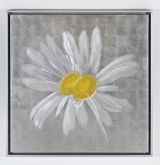
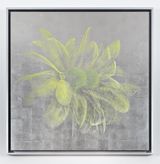
Pursuing his reflection on time and on the possibility of travelingthrough time, the series Future Herbarium is executed in the mannerof 18th-century botanical herbariums. It records imaginary mutationsof a post-disaster flora. Conceived in parallel with the making of hisfilm ARTIFICIALIS (presented in the central nave of the Muséed’Orsay in 2021), these works recall the special effects of flowers that appear superimposed on certain shots in the film. Between scienceand speculation, the series proposes a future archive of nature markedby catastrophe, mutation, and survival.
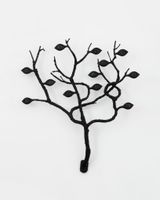
Finally, the eyes of the Panoptes series return in a new sculptural form:a tree-like organism where each branch ends in an eye. At onceorganic and technological, this hybrid being recalls ancient theories ofvision, animist cosmologies, and contemporary surveillance systems.
Together, these works articulate Laurent Grasso’s singular artisticvocabulary. By mobilizing motifs that are both familiar and strange, hecreates an expanded field of vision where history coexists withprojection, science with myth, and the real with the artificial.
The artist currently has a solo exhibition at Heredium in Daejon, SouthKorea and will have a major solo exhibition at MASS MoCA in 2026,his largest in the United States to date.

At the crossroad of heterogeneous temporalities, geographies and realities, Laurent Grasso’s films, sculptures, paintings and photographs immerse the viewer in an uncanny world of uncertainty. The artist creates mysterious atmospheres in which the boundaries of what we perceive and know are challenged. Anachronism and hybridity play an active role in this strategy, diffracting reality in order to recompose it according to his own rules. Fascinated by the way in which various powers can affect human conscience, Laurent Grasso tries to grasp, reveal and materialise the invisible. Ranging from collective fears to politics, through electromagnetic or paranormal phenomenon, the artist reveals what lies behind the commonly perceived and offers us a new perspective on history and reality.


A respected voice in contemporary art discourse.
Focusing on ambitious storytelling and insightful art-world commentary. Ocula Magazine publishes in-depth interviews, critical essays and timely analysis on the artists, exhibitions and ideas driving the global art world.
Learn more about Ocula Magazine
Showcasing the best of the art world.
Ocula partners with galleries from around the world to highlight their artists, artworks and exhibitions. Gallery membership is by application and invitation, with each member vetted by an independent panel.
Learn more about Ocula Membership

Specialises in the sale of major artworks.
Led by a team with deep ties to the world’s leading auction houses, galleries and collectors. Ocula’s advisory team offers bespoke services to high-net-worth clients from around the world who are looking to acquire the best of contemporary and modern art.
Learn more about our team and services