Press Release

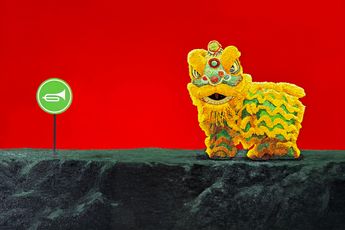
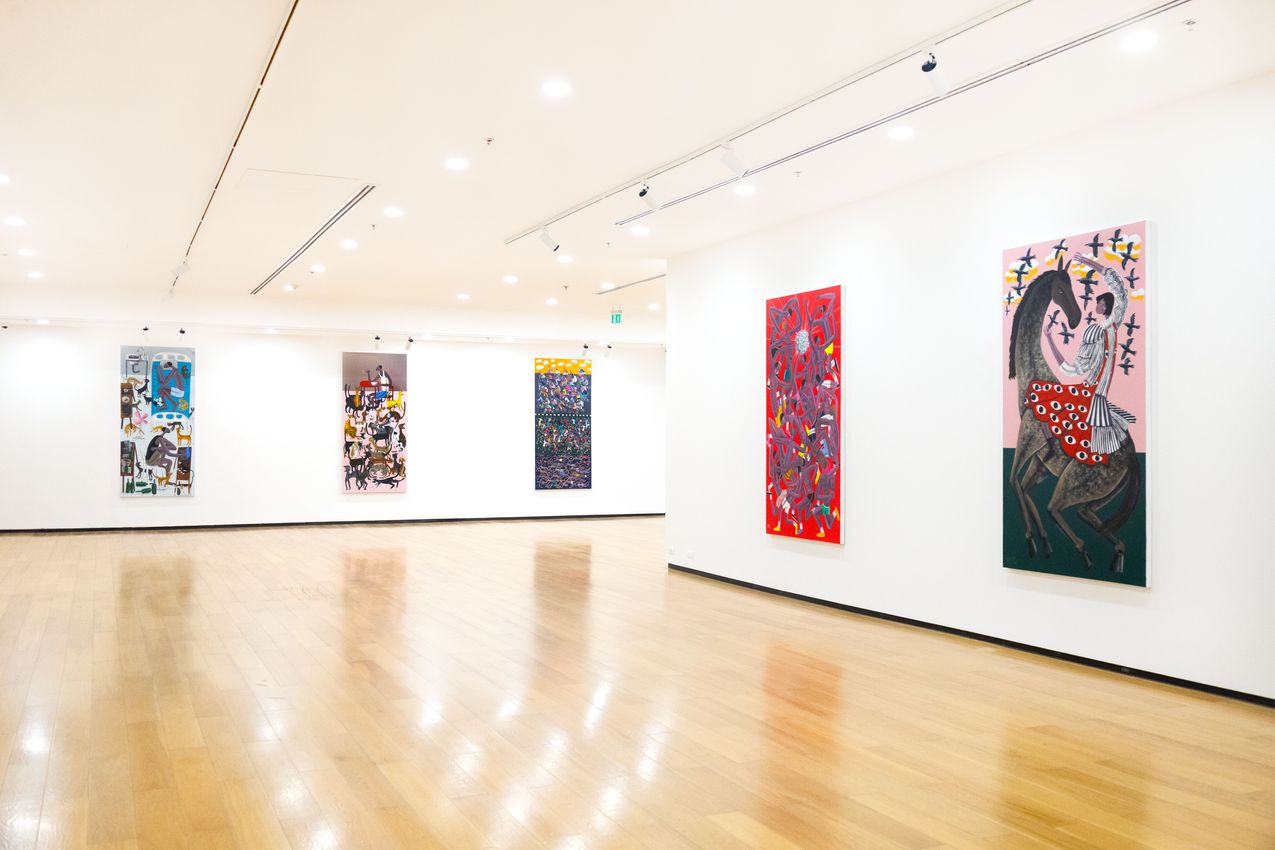
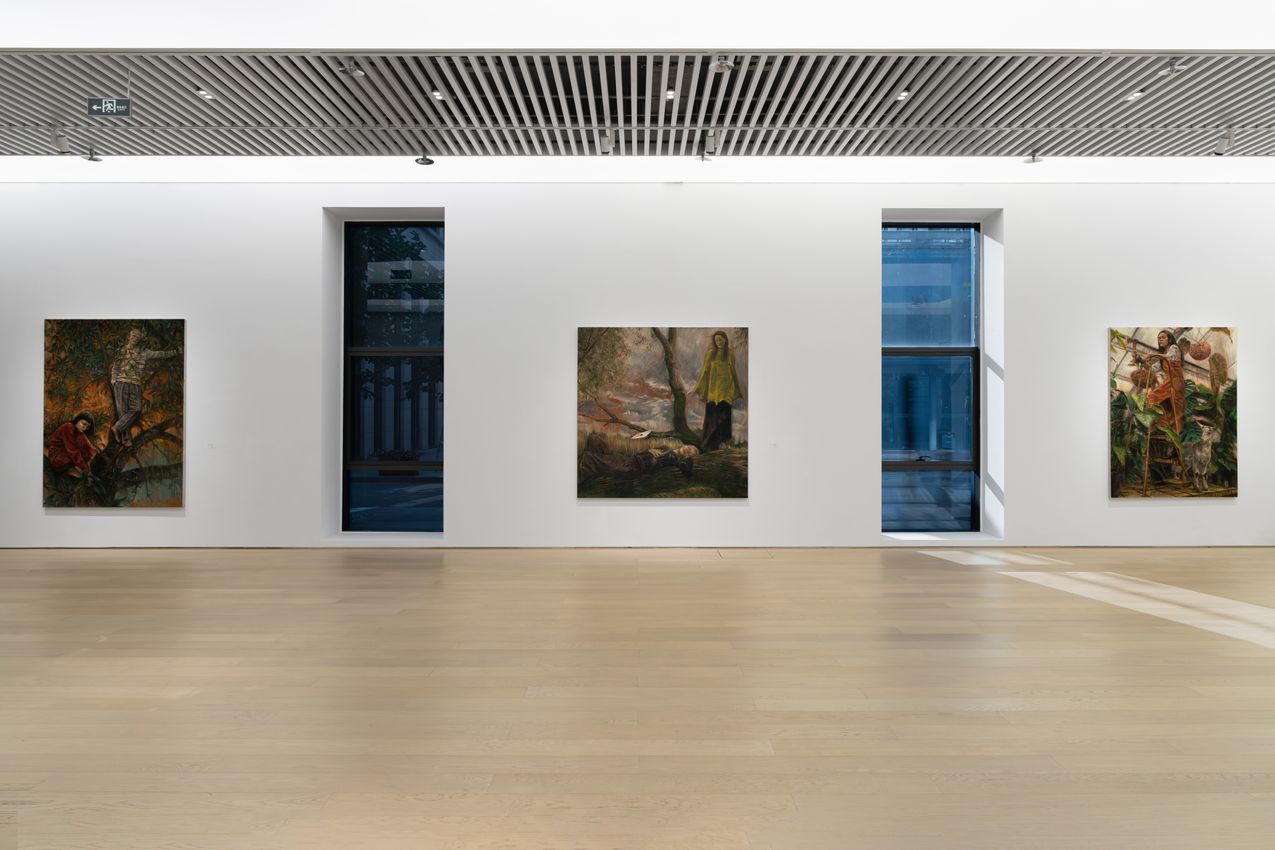
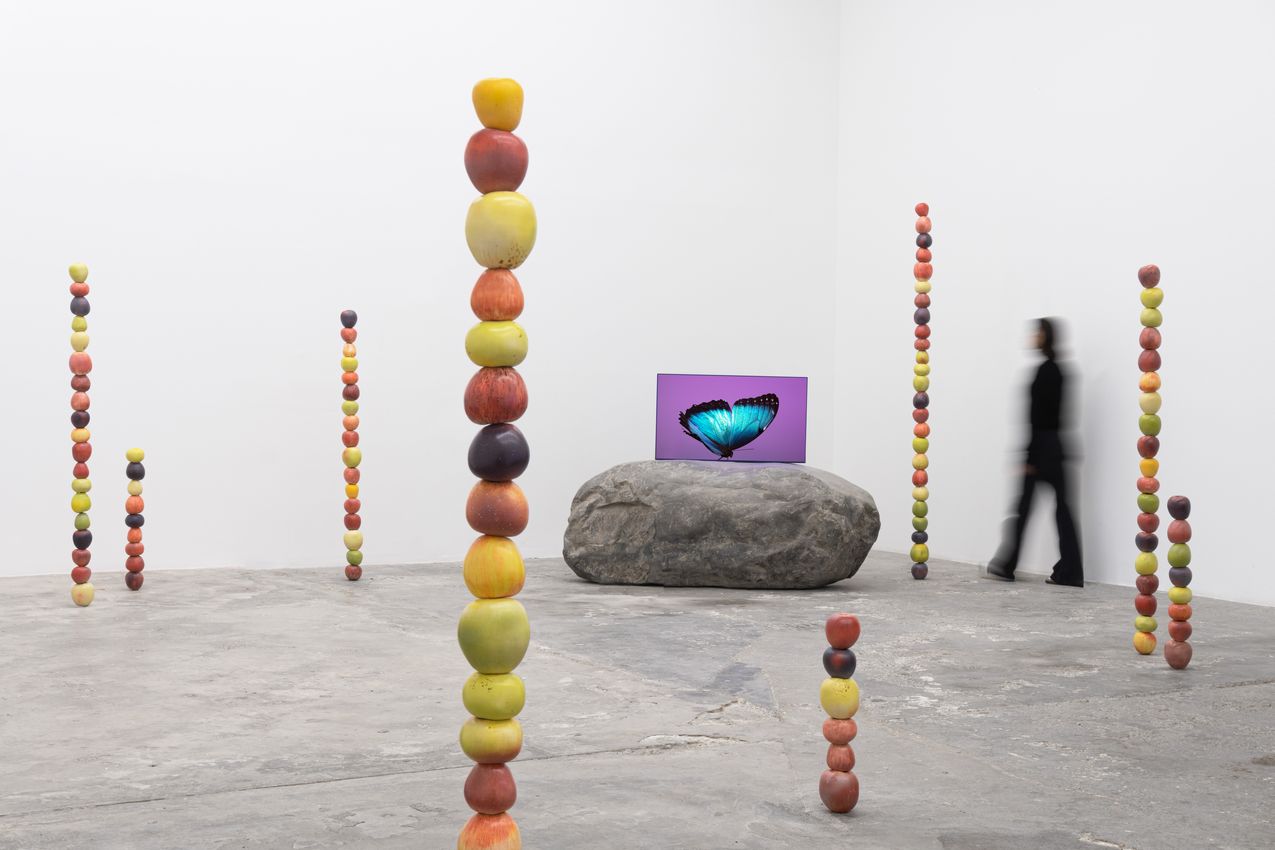
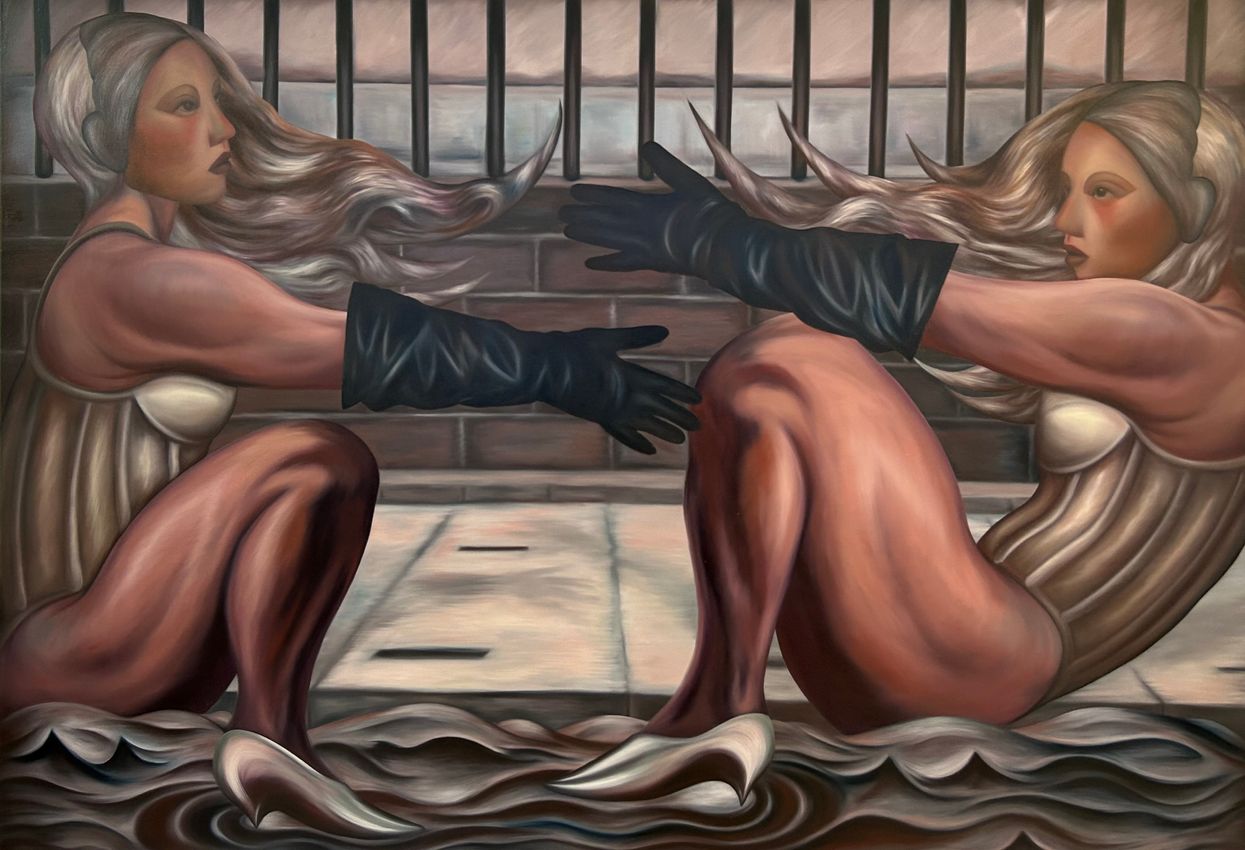
Tang Contemporary Art Bangkok presents Turbulent Boundary, a group exhibition featuring works by Chen Qin, Shi Yanliang, Wei Qi, Wu Wei, Xiang Nan, Yu Xuan, and Zhou Song, on view at Tang Contemporary Art Bangkok from 8 August to 27 September 2026. Bringing together seven contemporary Chinese artists, the exhibition explores the fluid boundaries between different visual orders, where reality and imagination, nature and technology, materiality and perception continually intersect, dissolve, and transform. Through diverse artistic practices, Turbulent Boundary invites viewers to reconsider boundaries not as fixed divisions, but as dynamic sites of encounter, exchange, and new possibilities.
When a ship reaches the mouth of a river, no sign tells you that you have arrived at sea. The yellow river water and the blue seawater twist into patterns, then shatter upon impact into countless eddies, slipping from order into chaos. As Donna Haraway has suggested, the “wet boundary” is never a hard wall built to separate and defend; it is semi-permeable, folded. There is no territory belonging absolutely to the river, nor any frontier belonging absolutely to the sea — all beings adhere and grow together in a soft, saturated state. The most vital places have never lain at the center of pure order, but in transitional zones filled with vortices: neither fully inside nor fully outside, where suspended encounters release emergent energies, and new forms arise from non-teleological meetings.

The artists in this exhibition anchor their practices precisely within this soft, turbulent band: heterogeneous experiences are transduced and intermingled inside the vortex. No one conquers, no one replaces; new perceptions slowly take shape, slowly nourishing a vivid reality — salted with the damp sea wind — that could never grow out of order itself.

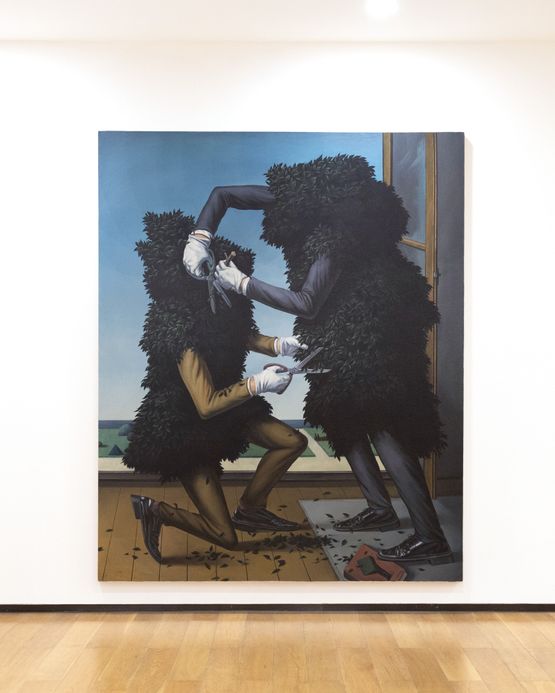
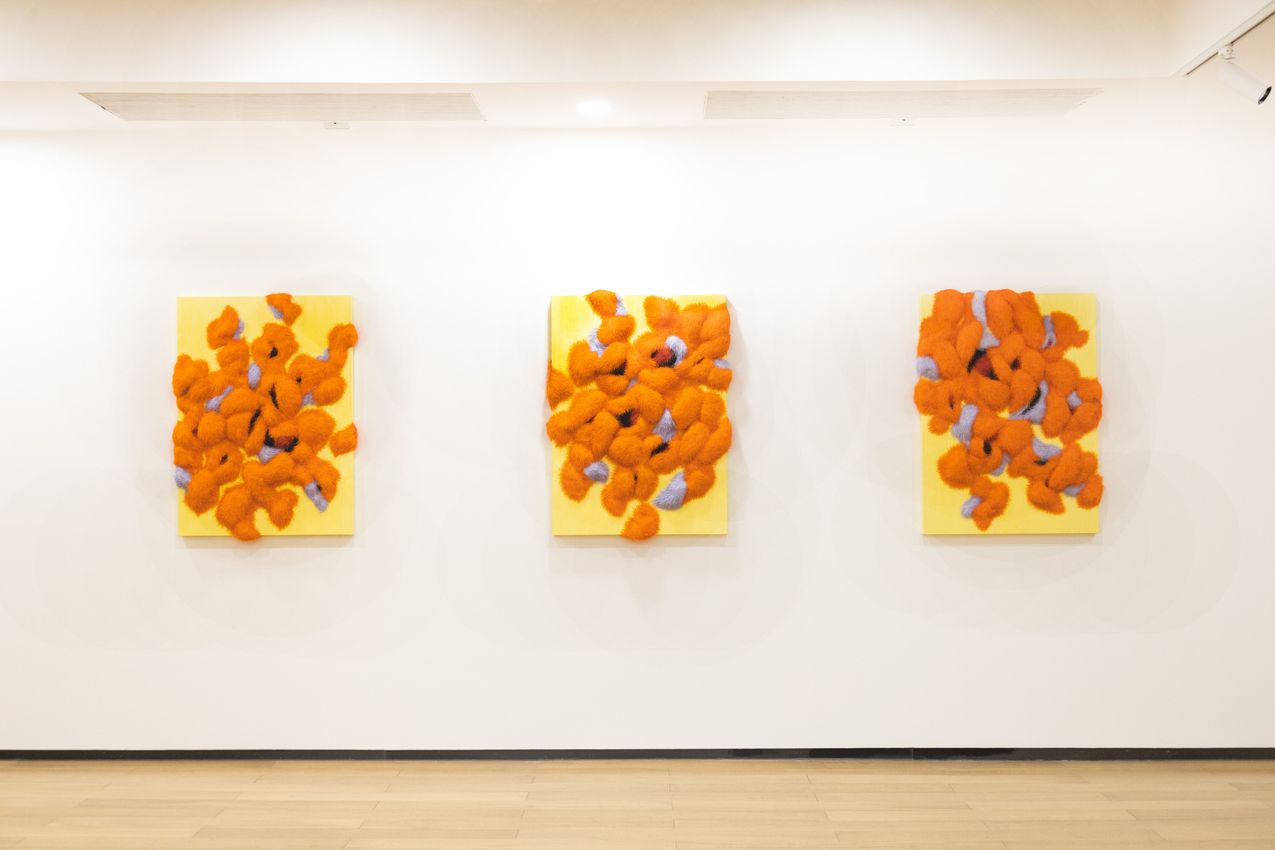
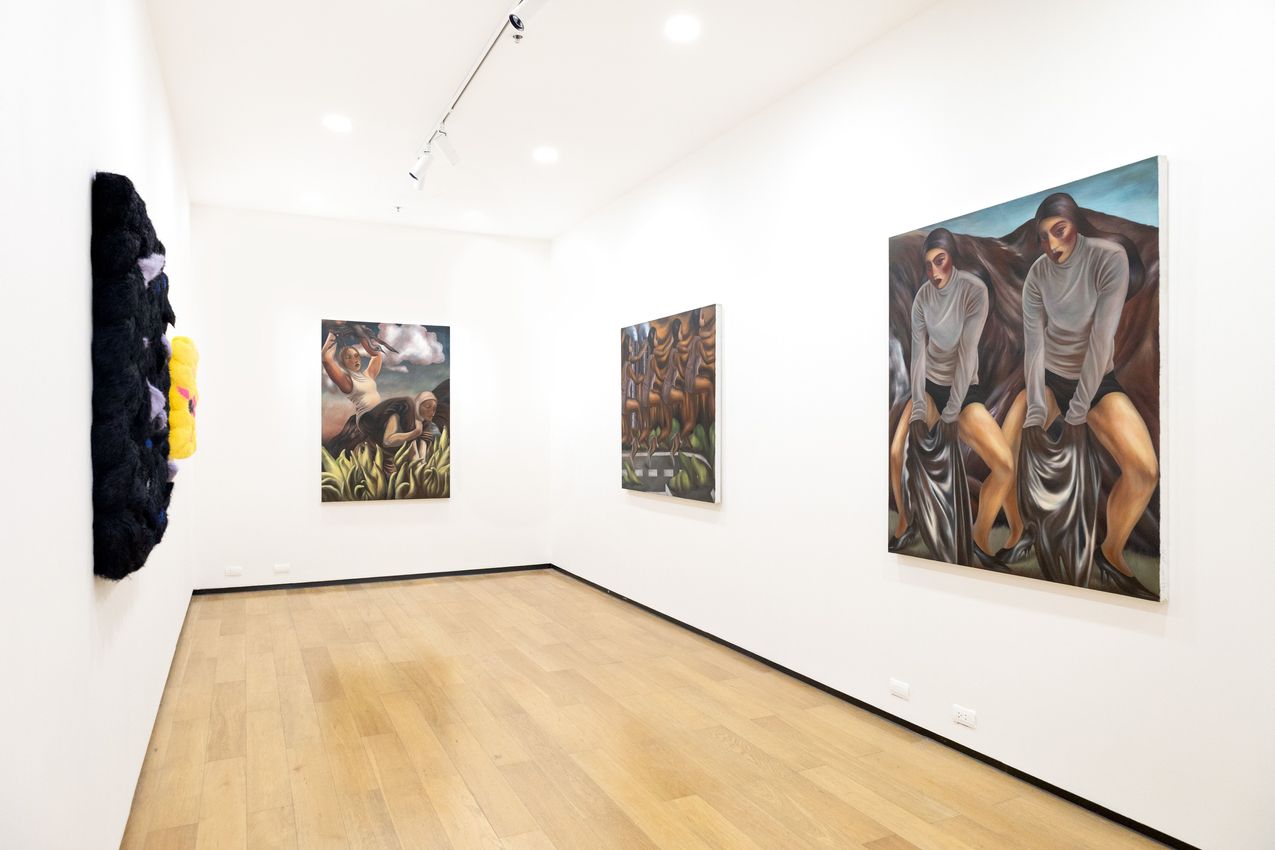
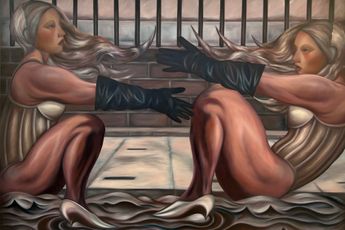
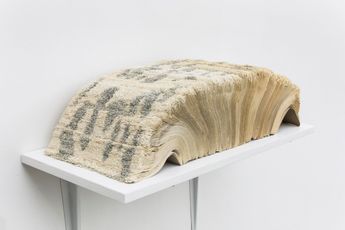
Chen Qin, who grew up by the sea in Fujian, carries the rhythm of the tides in her body. In Diving, the water slipping through the figure’s fingers resembles the aerial roots of mangroves dropping into the tidal flats, weaving female bodily experience and the growth logic of plants into a single linear narrative. The pictorial rhythm produced by repetitive motion points to the fusion of intimacy and bodily experience; all binary relations permeate one another across semi-transparent surfaces of contact, just as mangrove propagules disperse with the tide and form new living connections in the mudflats. If Chen Qin’s boundary is like softness within water, Wu Wei’s boundary is closer to the wildness of animals. In the works on view, Continuous Stripes-1 and Pelage 24-7, he takes the most civilized of materials — paper — and cuts it, blade stroke by blade stroke, into the grain of animal hides that should belong to the wilderness. This “fur” appears to carry a primal warmth, as if trembling with each breath, yet to the touch it offers only the fibrous texture of paper. From the wooden panel — a vehicle of civilization — untamed stripes grow; the interlaced patterning is itself the visual shape of turbulence. Hard wood and soft paper, disciplined civilization and undomesticated primal vitality: through cutting and mending, a metastable tension forms on the work’s surface, and through juxtaposition a new perceptual form emerges, somewhere between civilization and wilderness.

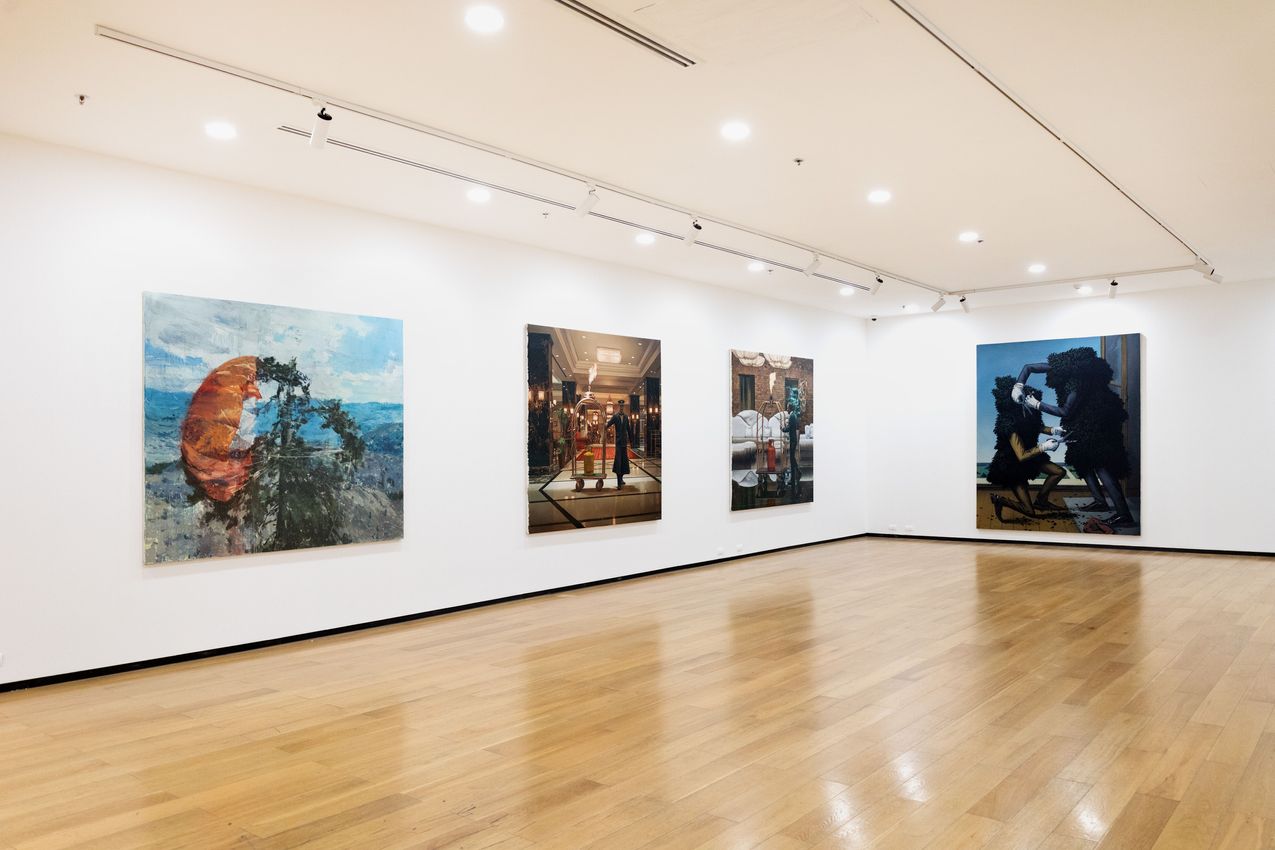
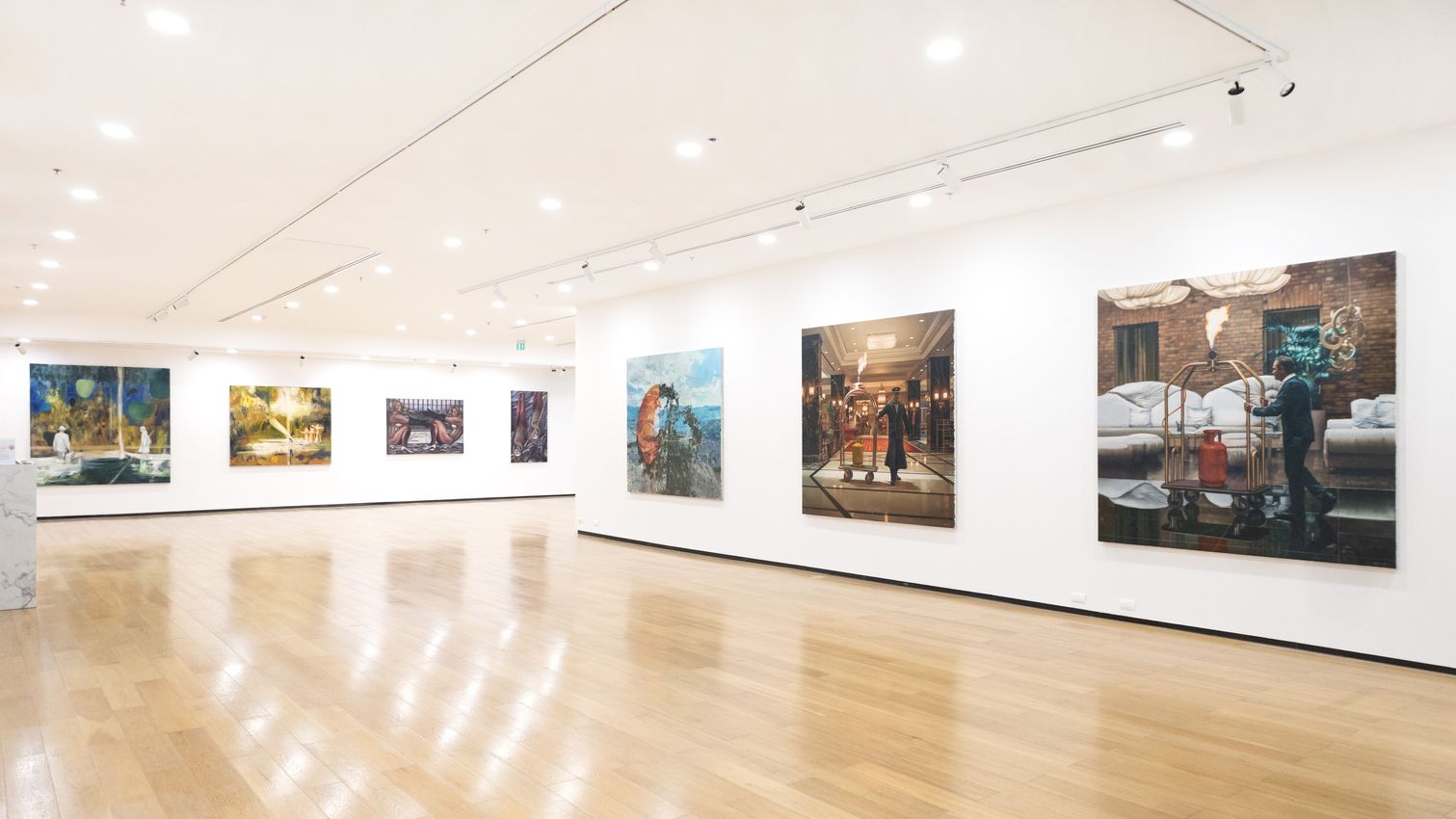
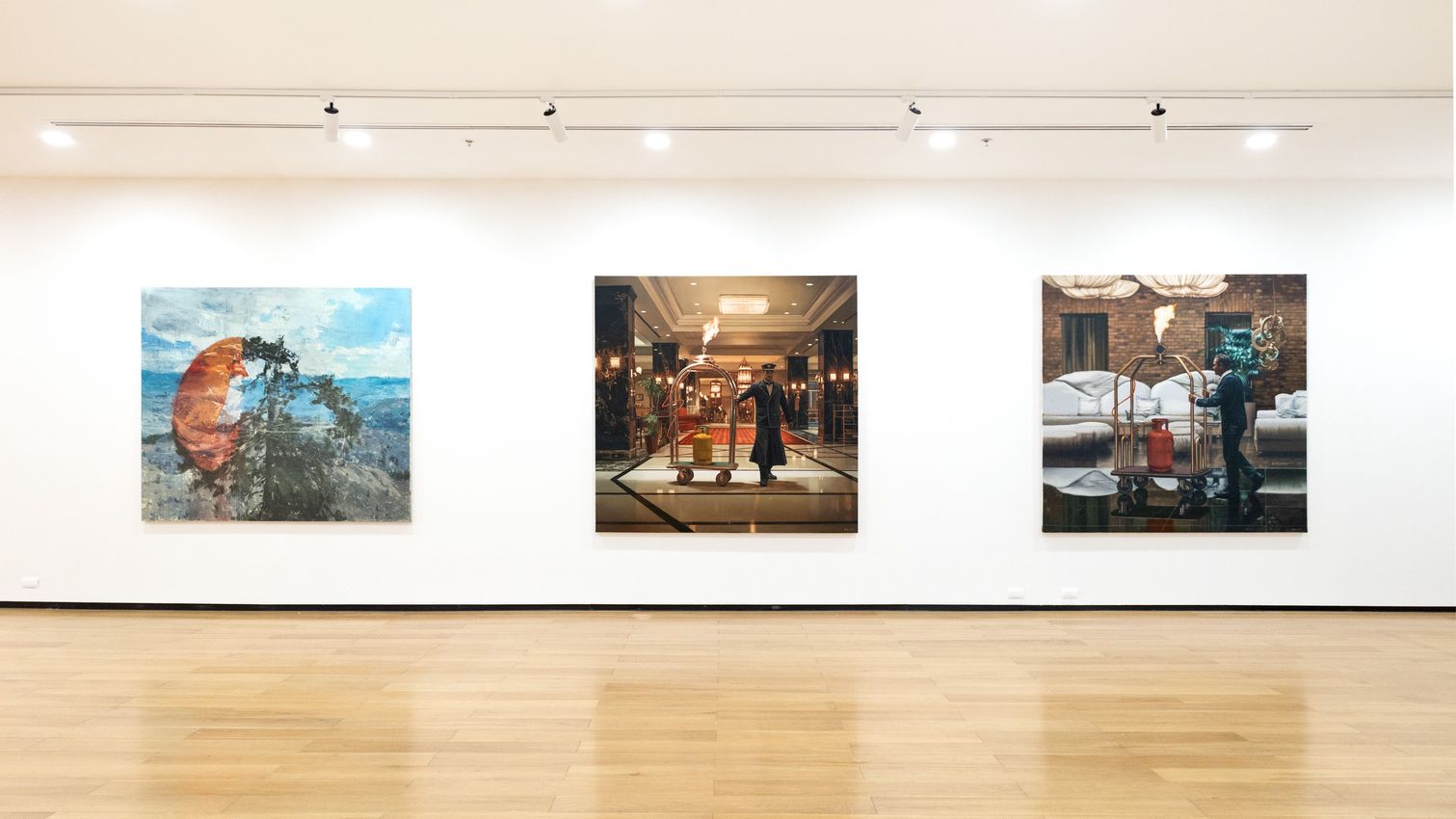
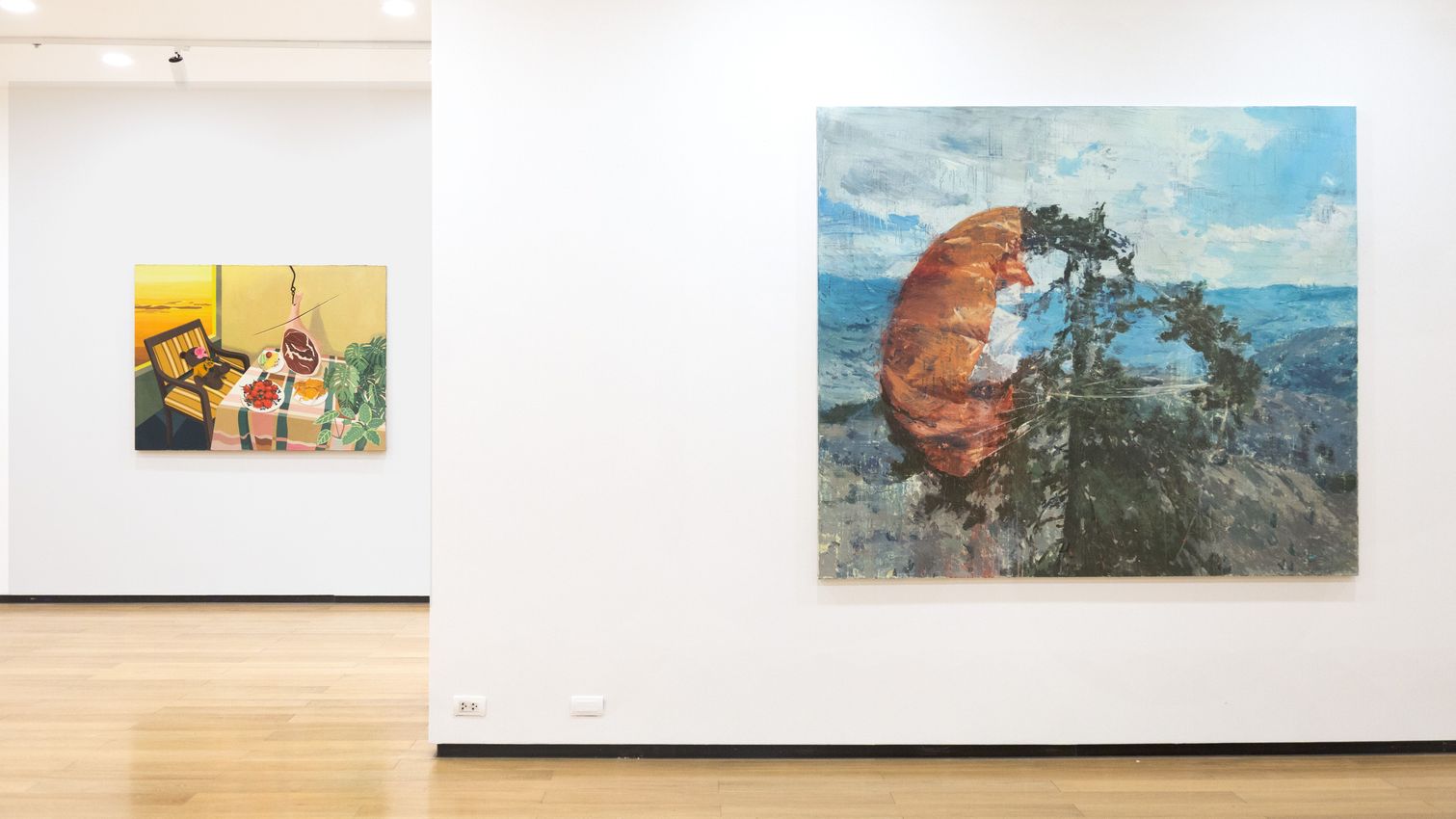
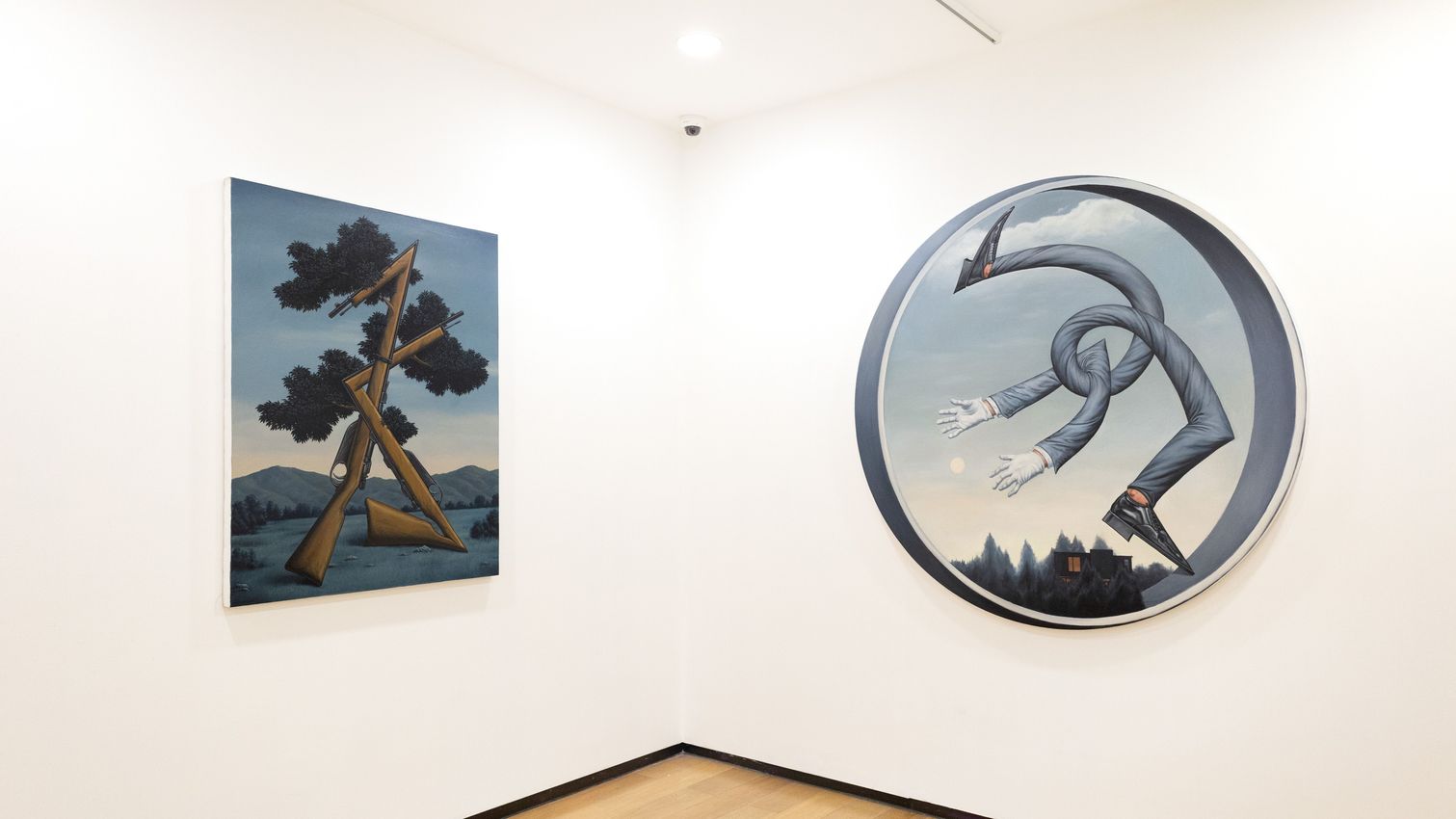
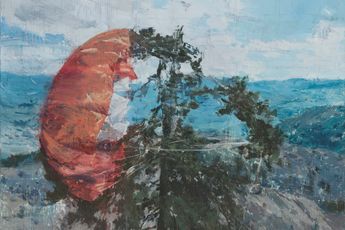
Zhou Song’s hyperrealist painting reaches directly into the critical point at which matter undergoes phase transition. The order of the machine and the order of life are completely fused within a single contour; one can no longer tell whether this is a weapon of slaughter or a living body. In the circular An Escape to the Moon, ancient mythological imagery and posthuman mechanical structures are kneaded into one rotating vortex, and the boundaries of all matter turn semi-permeable in the high-speed spin. In his work, matter has no fixed form: “tree,” “pencil,” “human body,” and “machine” are merely provisional shapes conferred by the times; at the critical point of phase transition, new material forms self-organize without any external design.In Xiang Nan’s monumental Doorman series, meticulously rendered figures—down to every individual strand of hair—gradually dissolve into landscapes that could never exist in reality. A uniformed doorman stands at one end of the panoramic composition and appears to move toward the other. Along the way, the contours of the figure slowly soften, merging with blades of grass, drifting clouds, and rolling waves. It becomes impossible to identify the precise moment where the body ends and the landscape begins. In The Favoring Winds and the Promised Land No. 4, a towering pine tree by the sea intertwines with a descending parachute, twisting the logic of reality and fantasy into a visual vortex where unexpected encounters give rise to an unruly poetic sensibility. Xiang Nan excels at gradually fusing two visual systems that would ordinarily belong to entirely different orders. Within a delicate balance between the familiar and the uncanny, he dissolves the boundary between reality and fiction into a continuously shifting landscape.

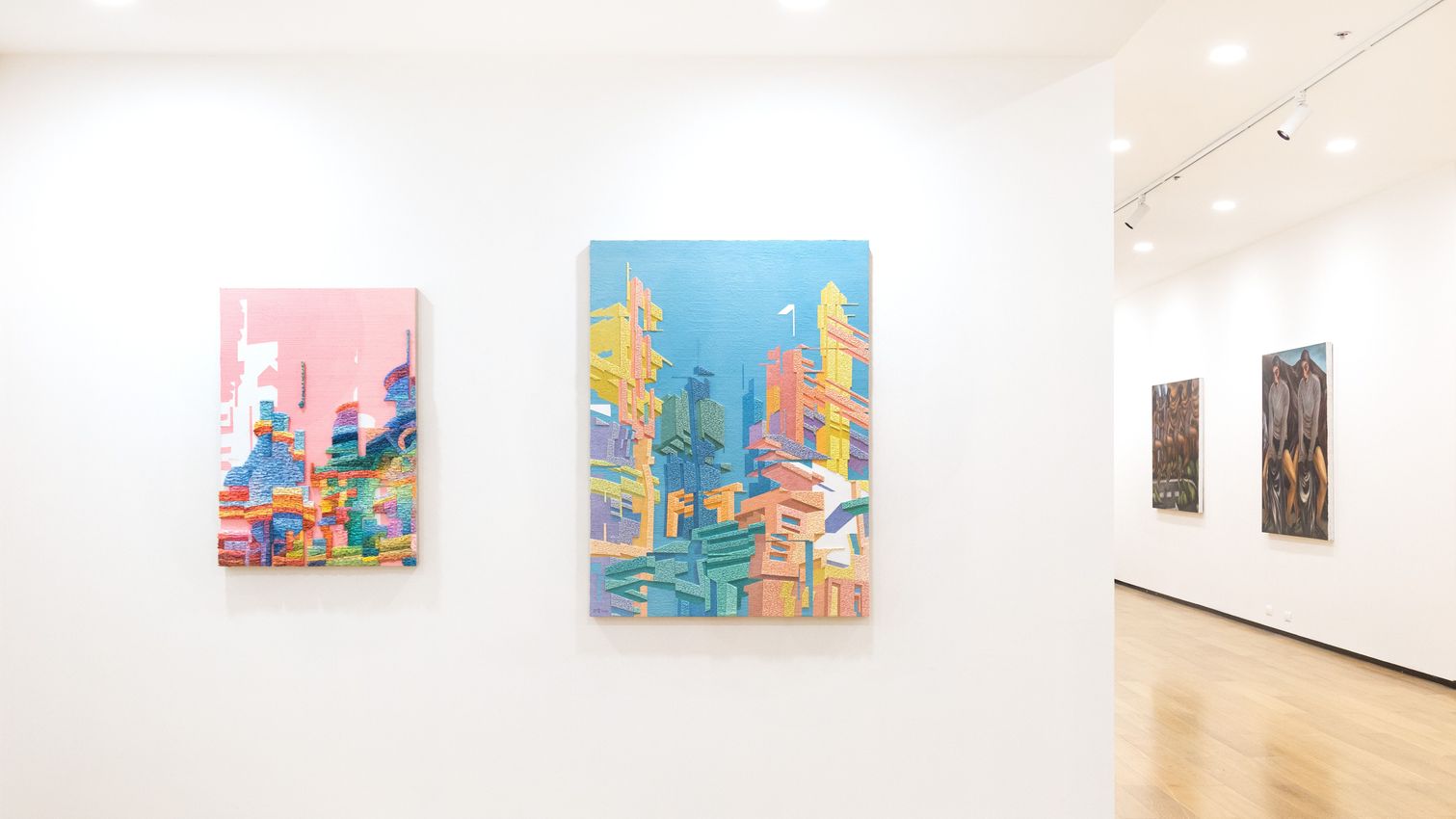
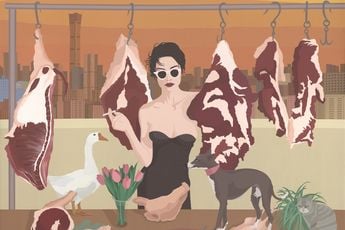
Yu Xuan’s Blocks series juxtaposes two entirely heterogeneous visual orders on the same canvas: smooth, sharp-edged blocks with the cold feel of industrial design collide with bodies built up in thick impasto, still warm with body heat; the flatness of vector graphics and the thickness of oil paint form, along the picture’s shear lines, an unconventional, dazzling world. He offers no critique of consumerism — he simply lays out, directly, the condition of contemporary existence in which artifacts and natural life interpenetrate, generating a visual tension between the surreal and the everyday. Wei Qi’s Within Sight and Jungle Adventure take unknown contingency as their point of departure, deducing and growing a complete pictorial order out of fine, random details. Relying on various algorithmic modeling software, he constructs virtual worlds with their own terrains, climates, and operating rules, letting these worlds iterate and grow autonomously; he then commits these fleeting digital images to canvas through an embodied practice of painting from life. The order of code and the warmth of the hand, the virtual landscape and the real brushstroke, interpenetrate within the picture — a fitting confirmation that, in the age of digital intelligence, those parts of painting’s spirituality that can be neither coded nor replicated remain forever the most vital currents within the turbulence.

Shi Yanliang’s painting probes the boundary of value between the secular and the transcendent. A golden stratum of light, like the glow of sunset, floods over every object like water: the sheen of material desire, the warmth of bodies, the swan of myth, the still life on the dining table — all their boundaries blur within the translucent gold. There is no absolute secularity, and no absolute transcendence, only the existence of the modern subject within a complex network of relations. The flow of light soaks every hard boundary soft; seeing and being seen, object and self, the worldly and the sacred — all occur reversibly within the golden turbulence.

The paintings in the exhibition continually approach, and continually recede. Oscillating violently at the confluence of different orders, they self-organize, through mixture, into new perceptual realities. Turbulent Boundary is not a description of a visual language, but a way of seeing — no longer standing inside a single order in an attempt to grasp the whole, but accepting mixture, accepting oscillation, accepting the transformation of form at the confluence. No given reality is shattered; only, in those few seconds when one’s breath falls into rhythm with the works, the world acquires one more layer of connection that only those present can touch — and together, they raise this turbulence.

Wang Shiying

Read More

Selected Works

Loading...

Artists Exhibiting

Also Exhibiting at Tang Contemporary Art

About the Gallery

Tang Contemporary Art was established in 1997 in Bangkok, later establishing galleries in Beijing and Hong Kong. Tang Contemporary Art is fully committed to producing critical projects and exhibitions to promote Contemporary Chinese art regionally and worldwide, and encourage a dynamic exchange between Chinese artists and those abroad.

View Gallery Profile
Address
Room. 201–206, River City Bangkok
23 Soi Charoenkrung 24
Talad noi, Sampantawong
Bangkok
Thailand
Opening Hours
Tuesday – Sunday
11am – 7pm

Closed on Public Holidays.
(1)
Bangkok Room. 201–206, River City Bangkok, 23 Soi Charoenkrung 24
Tang Contemporary Art
Room. 201–206, River City Bangkok, 23 Soi Charoenkrung 24, Talad noi, Sampantawong, Bangkok, Thailand

Opening hours
Tuesday – Sunday
11am – 7pm

Closed on Public Holidays.
The art world in focus