Perrotin is pleased to present the gallery’s second exhibition with London-based painter Oli Epp, titled Fire the Menu. Presenting a new suite of surrealist paintings, he depicts opulence as performance and captures the unsaid paradoxes the inhabit our lavish desires.
Oli Epp’s kitchen is a microcosm of his imaginative universe. Between the collectible Bill Bell McDonald’s plates and cat-shaped and designer teapots, there is a delicate wooden pantry filled floor to ceiling with candy. The shelves overflow with kiwi Hi-Chews, gummy ropes, bite-sized chocolate bars, and even a gumball machine containing peanut M&M’s. Smiling through straight, white teeth—a testament to his mother’s profession as a dentist—Epp eagerly invites visitors to take as much as they want. This scene is emblematic of Epp’s artwork, where the allure of glistening sweets serves as a potent symbol. The candy, with its bright colors and immediate gratification, mirrors the seductive surfaces and tantalizing details of his paintings. Yet, beneath this sugary exterior lies a deeper commentary on desire, consumption, and the fleeting pleasures of contemporary life.
Born in 1994 in London, Oli Epp studied at the City & Guilds of London Art School. His unique artistic process involves meticulous planning— from initial sketches to the final layers of paint, creating works that blend humour and critique. Epp’s paintings start as instinctive drawings and pass through digital manipulation before being realised on canvas with oil, acrylic, and airbrush. His works pop with vivid colour and sharp lines, creating a pleasing visual experience that belies the underlying anxiety about the human condition.
The show’s title, Fire the Menu, references the restaurant terminology for ordering an entire menu, connoting a lavish yet gluttonous event. In the series, Epp prepared a feast for the senses, a visually opulent and surreal exploration of extravagance and contradiction. Epp’s paintings, with their oneiric quality, can be read as a dialectic of the visible and the concealed, a commentary on the interplay between the superficiality of appearances and the depth of human experience. His works engage with the absurdity of excess and the spectacle of performance, presenting a reality that is at once heightened and splintered.
Drawing on the aesthetics of popular media and the omnipresent digital landscape, Epp’s canvases are a theatre of desire and consumption, manifesting in sumptuous sushi rolls, sleek pop-star body mics, and glamorous silk gloves. His art captures the frenzied, kaleidoscopic essence of contemporary life, embedding human and animal forms within a fragmented narrative that oscillates between fascination and unease, intimacy and alienation. By distorting reality, Epp reveals deeper truths, challenging viewers to question the veracity of their perceptions in an era where fact and fiction are constantly interwoven by technology and media.
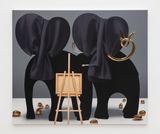
In contrast to his earlier works, which often featured modern technology, in Fire the Menu technology is conspicuously absent. Instead, Epp employs symbols of classical technique—string instruments, wooden easels, acrobatics, and the faint footlights of a stage. This shift in focus underscores a deeper exploration of the tools and performances that shape contemporary culture. By omitting direct references to modern technology, Epp brings attention to the enduring and performative aspects of human expression, creating a dialogue between past and present methods of producing and consuming art. This transition from high-tech to classical forms emphasises the timeless nature of artistic practice and its role in defining cultural narratives.
Epp’s process reflects the dialogue of technique in a sort of material ballet, incorporating digital and traditional media, his brushstrokes are precise, lines are sharp, and colours are bold. His large-scale canvases juxtapose the hyper realistic textures and sheen of matte acrylics with elongated forms and conjoining or sprouting members. The paintings appear to be in a state of transition between liquid and solid, transparent and opaque, and this dynamic interplay is reflected in the compositions themselves, as they veer into the deep end of his consciousness.
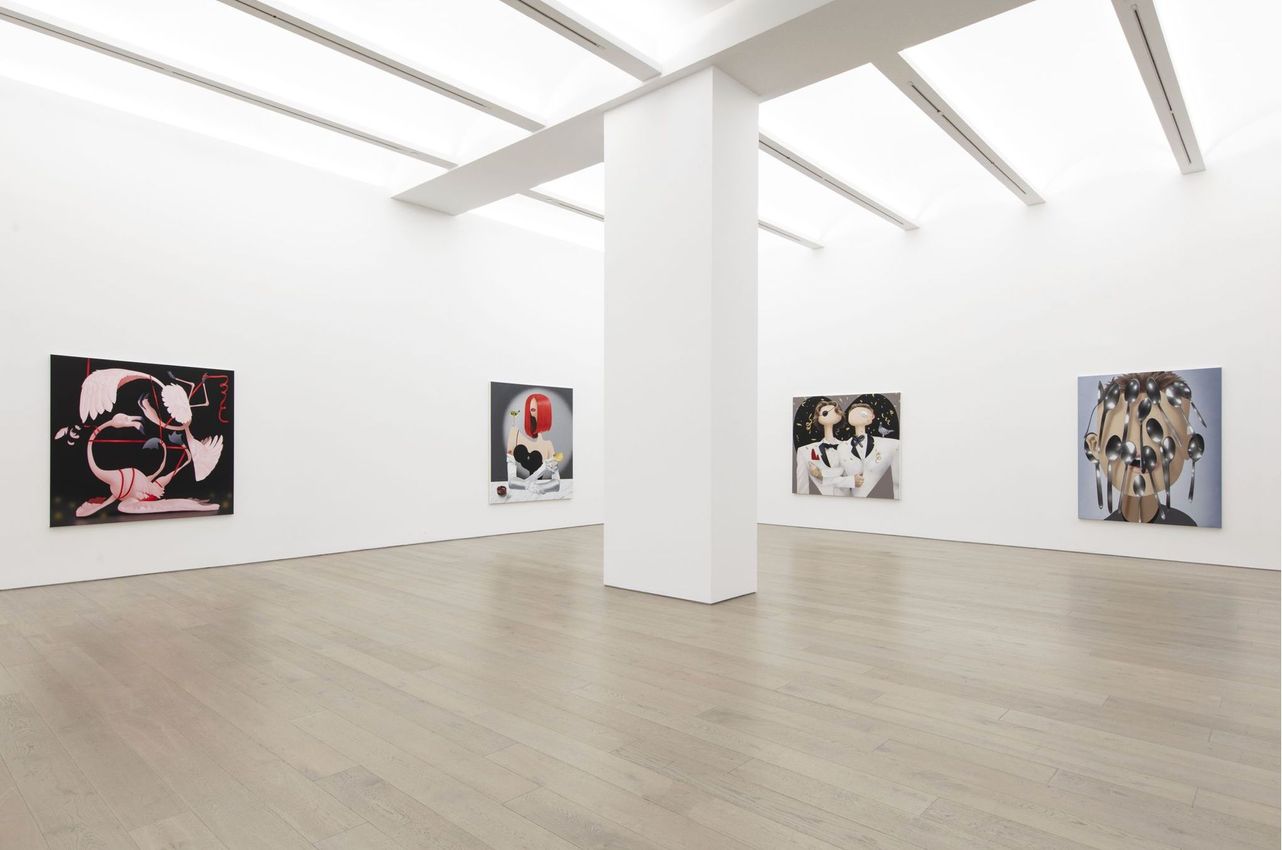
Epp describes the paintings in this exhibition as gentle struggles and quiet suffering, presenting images that are simultaneously alluring and uncanny. Each painting tells a different tale, creating contemporary allegories that celebrate and critique consumer culture. In Rivalry, two flamingos are depicted tangled in a red ribbon. Their eyeless faces, perhaps devoid of soul, struggle to perform their signature grace and exoticism but are ensnared by their adornments. The contorted birds are a cautionary tale of the impossibility of equilibrium and the futile efforts to maintain appearances in a world obsessed with spectacle.

A respected voice in contemporary art discourse.
Focusing on ambitious storytelling and insightful art-world commentary. Ocula Magazine publishes in-depth interviews, critical essays and timely analysis on the artists, exhibitions and ideas driving the global art world.
Learn more about Ocula Magazine
Showcasing the best of the art world.
Ocula partners with galleries from around the world to highlight their artists, artworks and exhibitions. Gallery membership is by application and invitation, with each member vetted by an independent panel.
Learn more about Ocula Membership

Specialises in the sale of major artworks.
Led by a team with deep ties to the world’s leading auction houses, galleries and collectors. Ocula’s advisory team offers bespoke services to high-net-worth clients from around the world who are looking to acquire the best of contemporary and modern art.
Learn more about our team and services