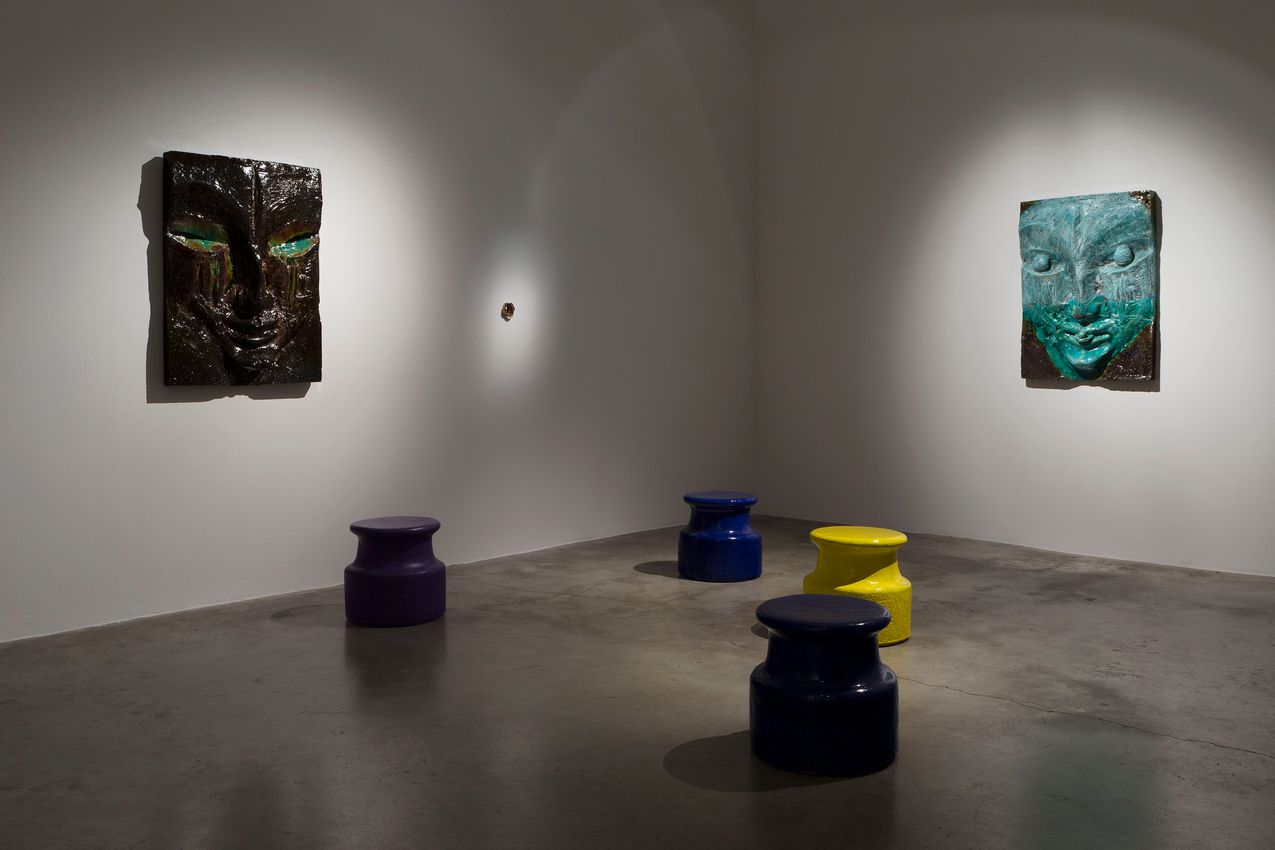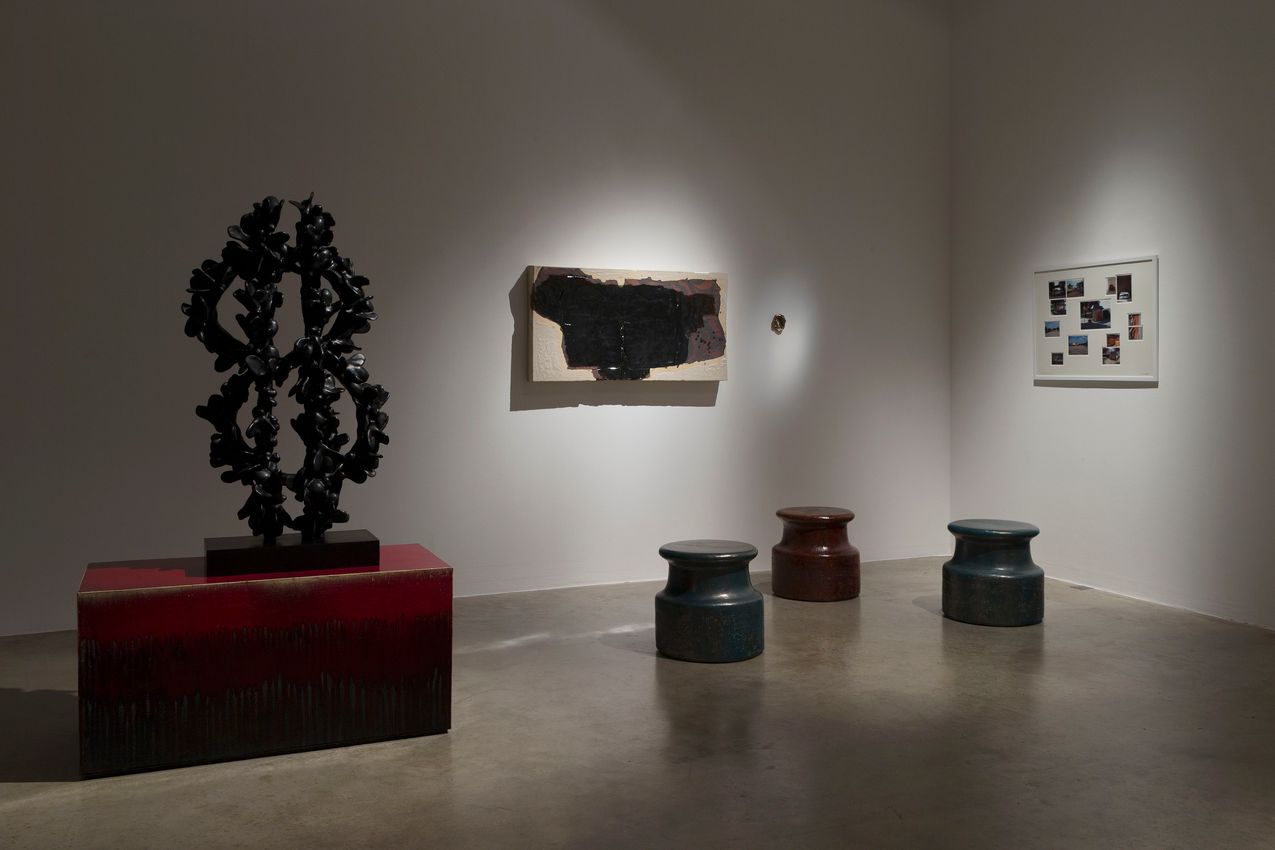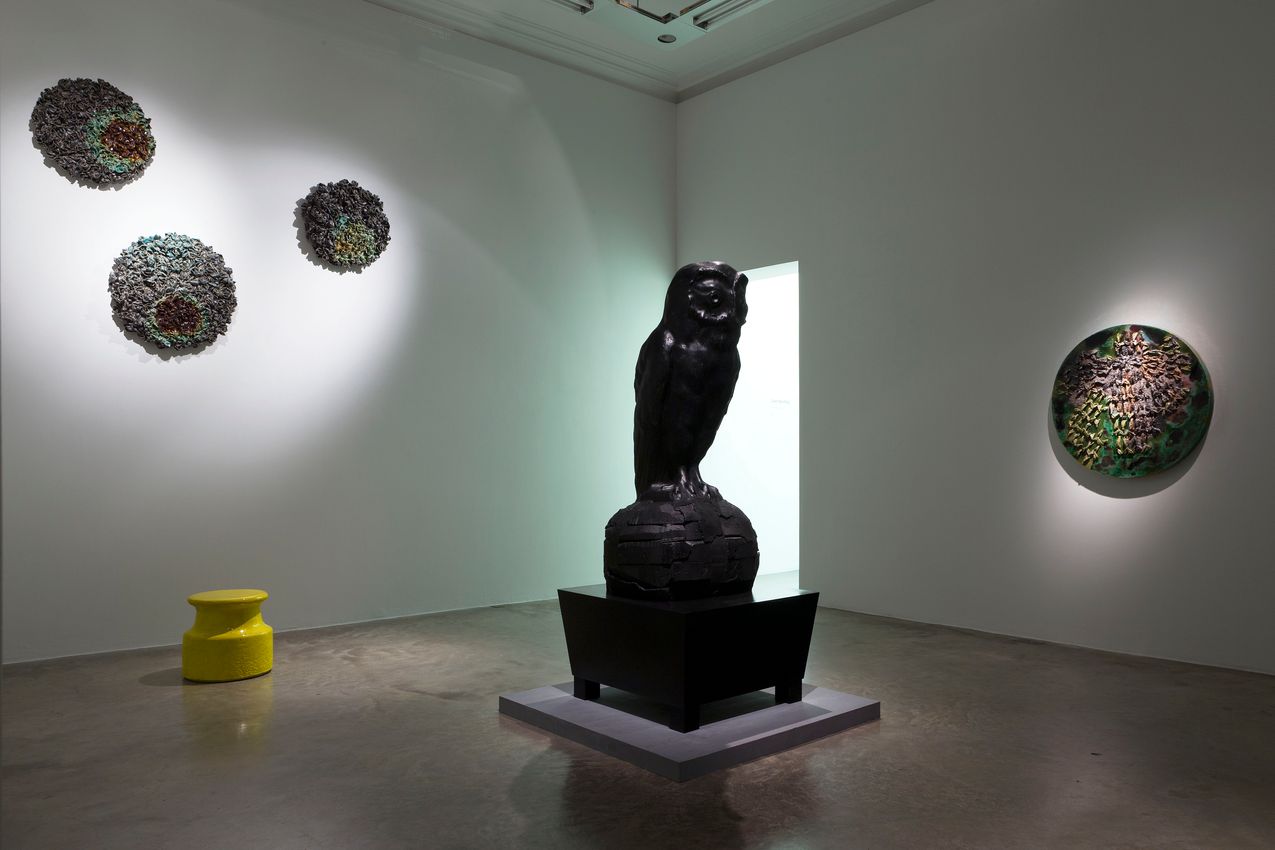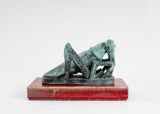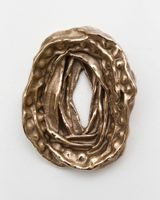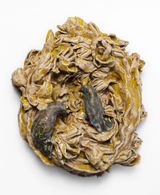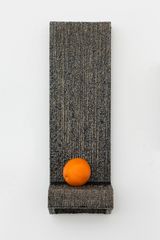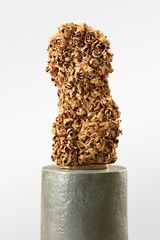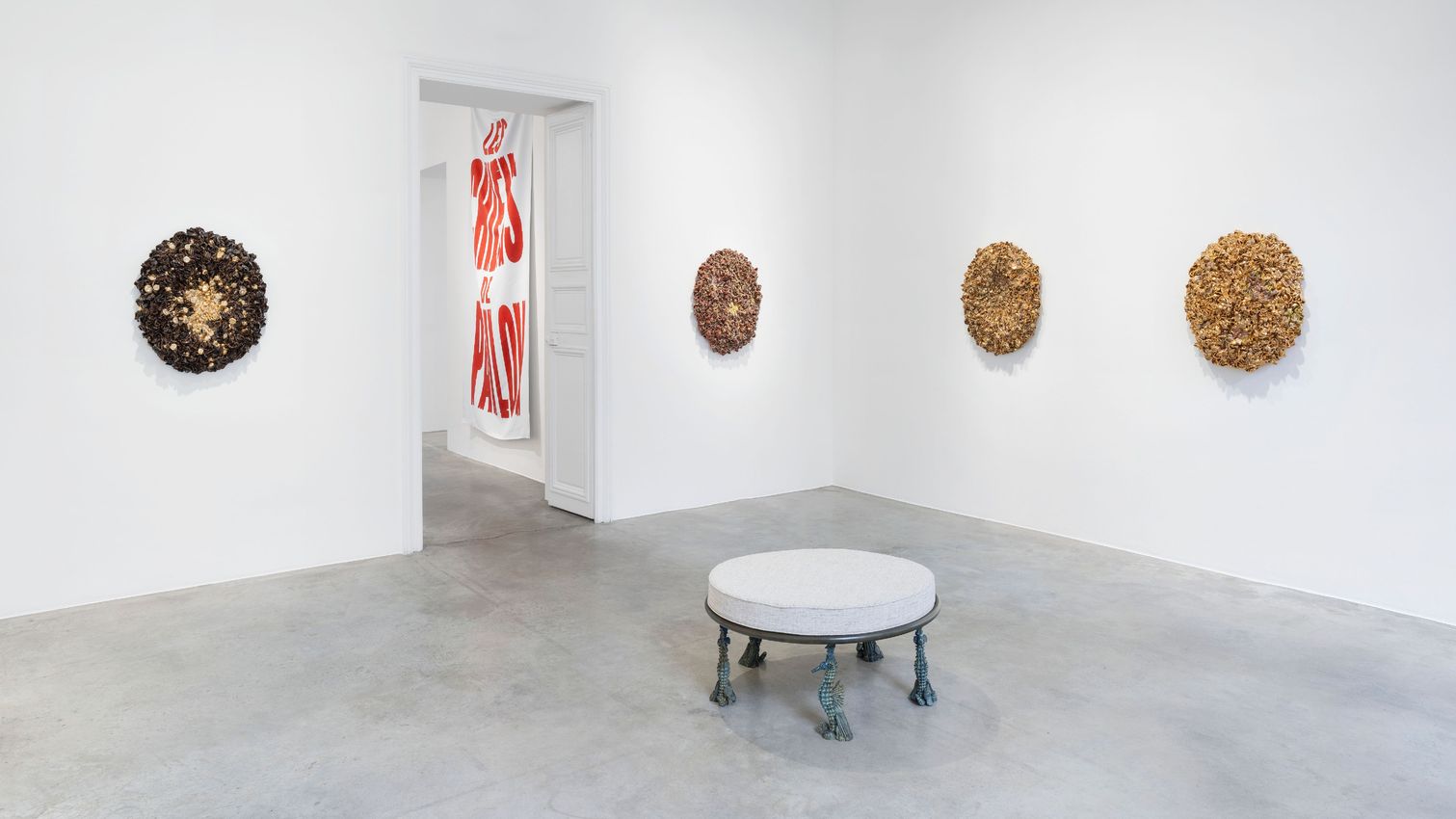
Johan Creten is considered a precursor of the ceramics revival in contemporary art, alongside Thomas Schütte and in the wake of Lucio Fontana. Through his use of clay, his proven knowledge of the materials, his careful attention to glazing, and his thoroughly physical grasp of the medium, he restored ceramics to majestic grace and paved the way for many young contemporary artists. The work of Johan Creten raises ceramics from a poor relation to a noble art.
Johan Creten’s œuvre is not governed by Venusian beauty alone. As a result, some of his major pieces, in darker, murkier tones, like the enchanting Odore di Femmina, betray the political bent of his work, filled with a desire to probe the ambivalences and tragedies of History, the hours of darkness and days of gloom. As such, two recent and ambitious exhibitions—CERAMIX at La Maison Rouge in Paris, and La Traversée/The Crossing at the CRAC (Regional Center for Contemporary Art) in Sète—focused on these more politically motivated pieces produced from the late eighties up to the present, tackling the social sphere and confronting the viewer with the immensity of our shared sorrows.
For his exhibition at Perrotin, new monumental bronzes will dialogue with some of his early pieces like The Gate, 2001 or C’est dans ma Nature, 2001. Alongside Madame Butterfly, 1991, an especially political piece produced in the United States, several eloquent photographs will be presented of these projects conceived to bandage the wounds and explore the city, in the ancient and modern sense of the word.
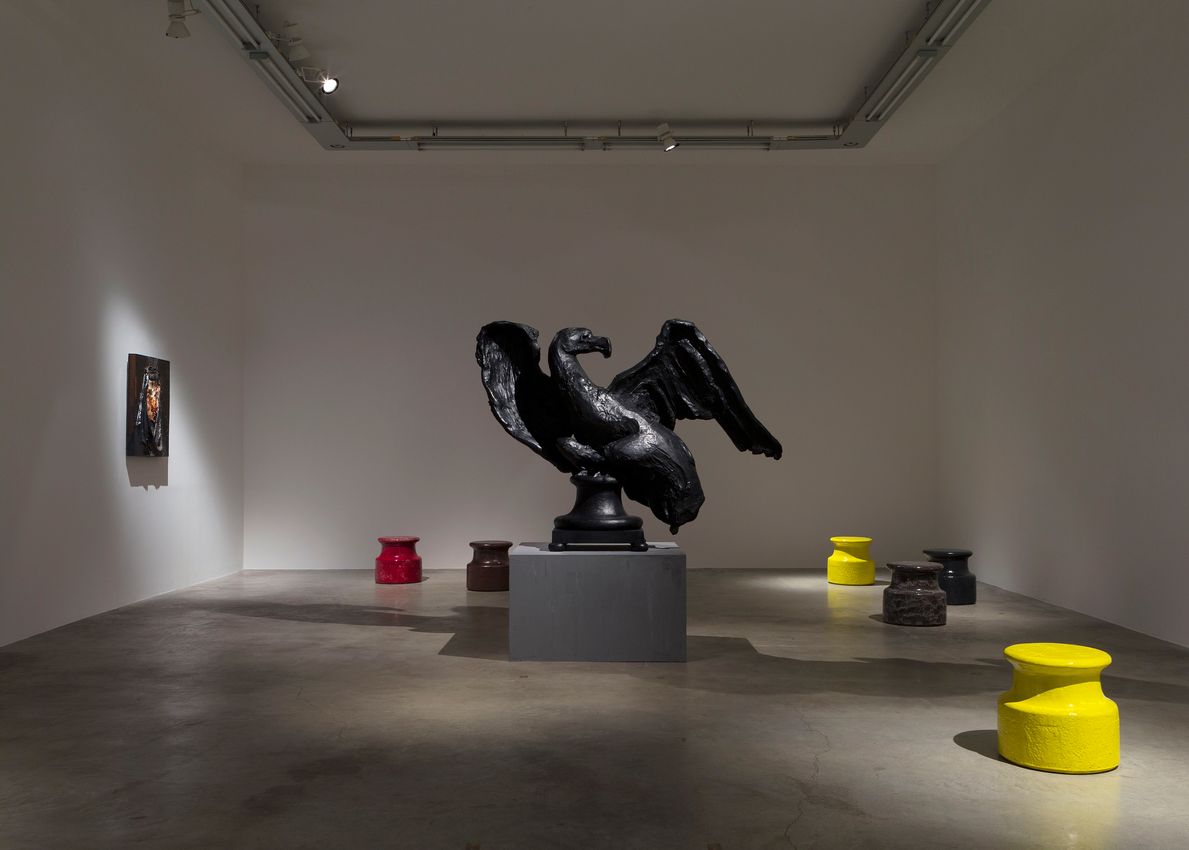
Presented for the first time in New York in 2015, The Price of Freedom will be a centerpiece of the Parisian exhibition. The monumental bronze takes on full meaning, or at least a different meaning, when placed alongside the recent series of portraits Creten created as a set with incredible intensity and coherence. Filled with mysterious ambiguity and “disturbing strangeness” (Sigmund Freud), the veiled women (Vierge d’Aleppo, 2014-2015) evokes confinement and the permanency of age-old preoccupations. In taking up Mozart’s theme of Aus dem Serail, 2016-2017, does Creten not mean to show the extent to which the polysemy of the East has always been a motive of dreams, a machine churning out projections and fascinations?
As an admirer of Antiquity, the silence of marble and the mystery of bronze, Johan Creten is a champion of “Slow Art”; his works reveal themselves slowly, they require time. They must be visited thoroughly, supremely, using both the eyes and the feet. Contemplation and convolution are crucial, as we are reminded by his Points d’observation/Viewpoints, which, much like bollards or mooring posts, anchor the viewers and demand time, hindsight and distance—both visual and critical.
The exhibition will present spectacular pieces such as the monumental bronze De Gier, 2015-2017, alongside more intimate, confidential works like Vulvas or the series of photographs C’est dans ma nature. From Wargames to The Strip, each artwork is an exploration of our relationships with the world—physical and mental, real and imaginary— filled with fantasies, obsessions and flashes of brilliance.
Sunrise / Sunset will move us by its solar beauty. This new presentation of Johan Creten’s œuvre will show us a committed and lucid artist—lucid because he is committed—whose works are epiphanies of deep-seated beauty. For that is the risk of any aesthetic and political project: staring straight into the sun often burns the eyes and skin.
Frontrunner in the revival of ceramics in contemporary art, the Paris based artist Johan Creten has been working on the move for almost forty years, from Mexico to Rome, from Miami to The Hague.


Emmanuel Perrotin founded his first gallery in 1989 at the age of 21. He has opened since then over 17 different spaces, with the aim of continuing to offer increasingly vibrant and creative environments to experience artists work. He has worked closely with his roster of artists, some since more than 25 years, to help fulfil their ambitious dreams and projects.

A respected voice in contemporary art discourse.
Focusing on ambitious storytelling and insightful art-world commentary. Ocula Magazine publishes in-depth interviews, critical essays and timely analysis on the artists, exhibitions and ideas driving the global art world.
Learn more about Ocula Magazine
Showcasing the best of the art world.
Ocula partners with galleries from around the world to highlight their artists, artworks and exhibitions. Gallery membership is by application and invitation, with each member vetted by an independent panel.
Learn more about Ocula Membership

Specialises in the sale of major artworks.
Led by a team with deep ties to the world’s leading auction houses, galleries and collectors. Ocula’s advisory team offers bespoke services to high-net-worth clients from around the world who are looking to acquire the best of contemporary and modern art.
Learn more about our team and services