




THORNTON DIAL
1928-2016, United StatesPioneering American artist Thornton Dial is known for his large-scale assemblages and paintings that reflect on the Black experience through coded and allegorical visual language.
Life
Thornton Dial was born in 1928 in Emelle, Alabama, to a sharecropping family. Born into the Great Depression, Dial experienced both harsh racial segregation and burgeoning civil rights movement during the course of his life. He worked as a welder in the Pullman train plant for 30 years, where he learned many of the welding and building skills he would employ in his work.
After the plant closed in 1981, Dial made assemblages—notably fishing lures—for both his own pleasure and to sell. While he did not consider his creations as works of art, he began to be recognised as an artist in the late 1980s when Birmingham-based artist Lonnie Holley introduced him to the collector William Arnett. Arnett, who was also the founder of the Souls Grown Deep Foundation, an organisation committed to the preservation of the legacy of African American artists from the Southern U.S., helped to show Dial’s work in museums. Today, many of the artist’s works continue to be well documented on the Foundation website.
Dial mentored several younger artists in the Birmingham/Bessemer region, including Holley, Ronald Lockett, and Joe Minter. Dial passed away in 2016, aged 87.
Thornton Dial Artworks
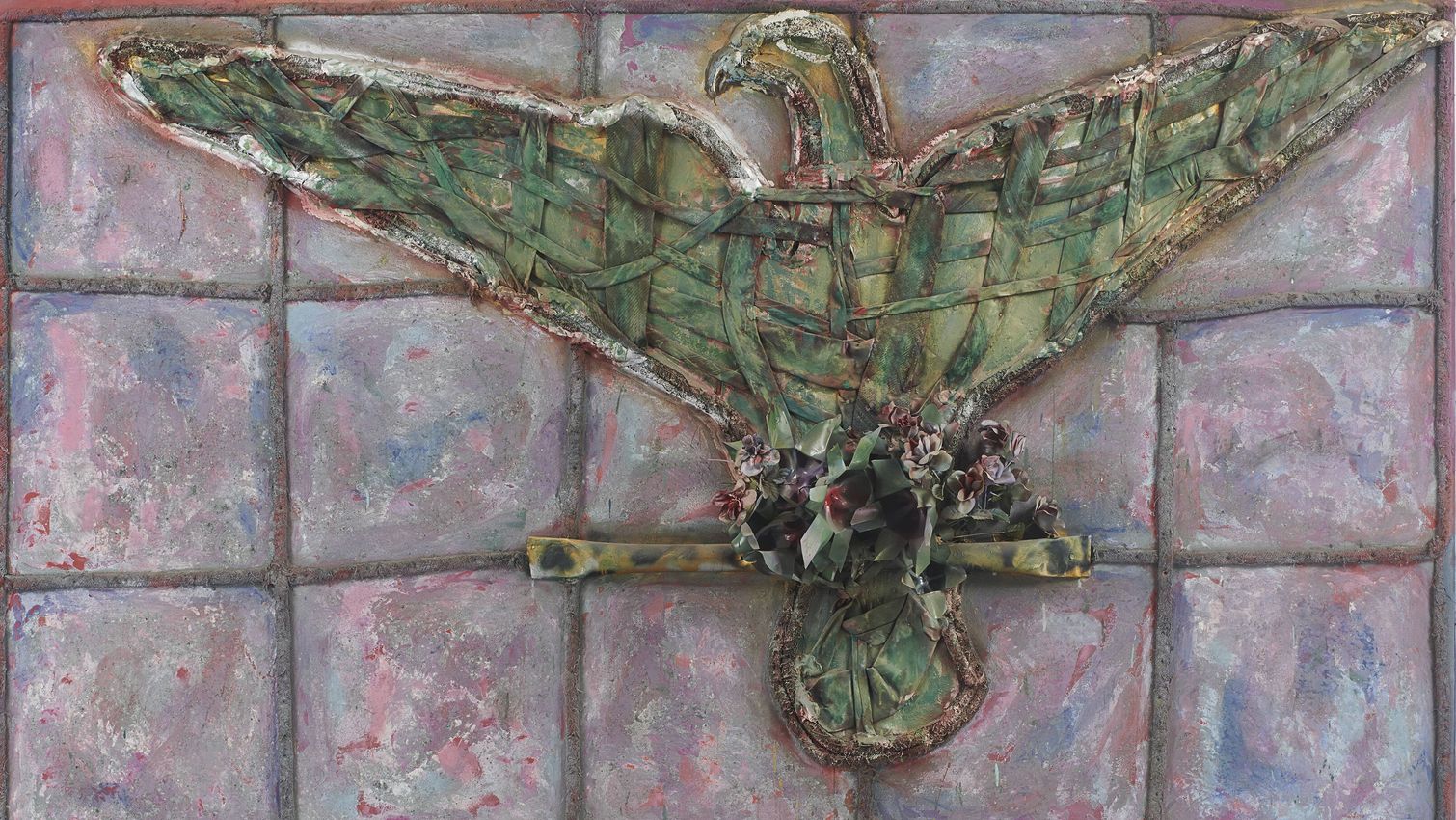
Dial was a self-taught artist known for his large-scale assemblages that merge painting and sculpture. His work is densely textured and multilayered, often integrating found and used objects.
Across his practice, Dial spoke through an allegorical visual language with abstracted but narrative imagery, coupled with loose depictions of animals. Through materials such as scrap metal, bones, rags, rope, and oil paint, the artist drew on his own experiences while shedding light on the collective experience of Black labourers and communities in Alabama. Of his work, Dial once said, ‘All my pictures somehow be mostly about freedom [...] People have fought for freedom all over the world. I try to show that struggle. It is a war to be fought. We’re trying to win it.’
Dial is a pioneer of a form of assemblage that references yard shows, a tradition in the Southern U.S. where Black families decorate their yards, often with found and everyday objects. In The Art of Alabama (2003), Dial questions the construction of high and low art through a towering sculpture comprising wooden and metal parts, bottles, paper collage, and a female figure in the style of Classical art, painted in bright yellow.
Allegory and coded language
Through coded language and allegory, Dial created sharp and hidden commentaries about American society throughout his career. The tiger is a recurring motif he used to represent strength and survival, as well as the continued struggle faced by African Americans.
The Last Day of Martin Luther King (1992) features a tiger formed from twisted mop strings, its imagery and the title making parallels between the biblical story of Christ’s death and King’s assassination. The painting Tiger on the Run (1993) depicts what appears to be a tiger escaping both the clutches of a seated human and a pit of snakes made out of rope beneath it, while the feline figure in another painting Scratching for Life (1998) gazes at the viewer with its claws out.
Environmental destruction
In 2011, Dial created a series of works depicting natural disasters, including the assemblages Nuclear Condition, which reflects on the Fukushima nuclear accident, and Tuscaloosa, referencing the recent tornadoes that had swept across Alabama.
Exhibitions
Thornton Dial’s first major solo exhibition, Thornton Dial: Image of the Tiger, was jointly presented by the Museum of American Folk Art and The New Museum of Contemporary Art in New York in 1993. Hard Truths: The Art of Thornton Dial, a major retrospective of Dial’s work, was organised by the Indianapolis Museum of Art in 2011 and travelled to New Orleans Museum of Art; Mint Museum of Art, Charlotte, NC; and High Museum of Art, Atlanta. His works have been included in group exhibitions at the Whitney Biennial 2000; National Gallery of Art, Washington, D.C.; Philadelphia Museum of Art; Memphis Brooks Museum of Art; Metropolitan Museum of Art, New York; and the Royal Academy of Art, London.
Arianna Mercado | Ocula | 2024





Explore and Follow Artists Shaping Contemporary Art
A respected voice in contemporary art discourse.
Focusing on ambitious storytelling and insightful art-world commentary. Ocula Magazine publishes in-depth interviews, critical essays and timely analysis on the artists, exhibitions and ideas driving the global art world.
Learn more about Ocula Magazine
Showcasing the best of the art world.
Ocula partners with galleries from around the world to highlight their artists, artworks and exhibitions. Gallery membership is by application and invitation, with each member vetted by an independent panel.
Learn more about Ocula Membership
Specialises in the sale of major artworks.
Led by a team with deep ties to the world’s leading auction houses, galleries and collectors. Ocula’s advisory team offers bespoke services to high-net-worth clients from around the world who are looking to acquire the best of contemporary and modern art.
Learn more about our team and services