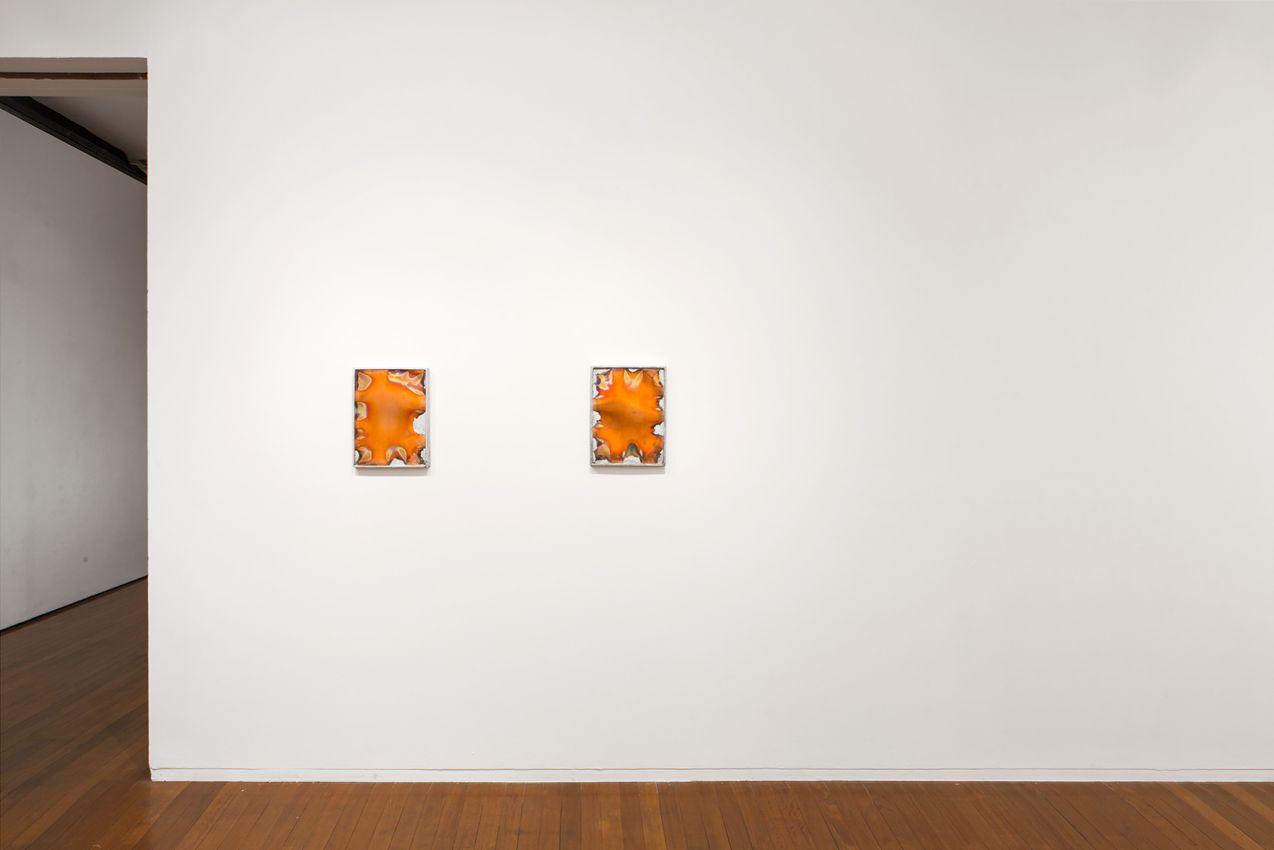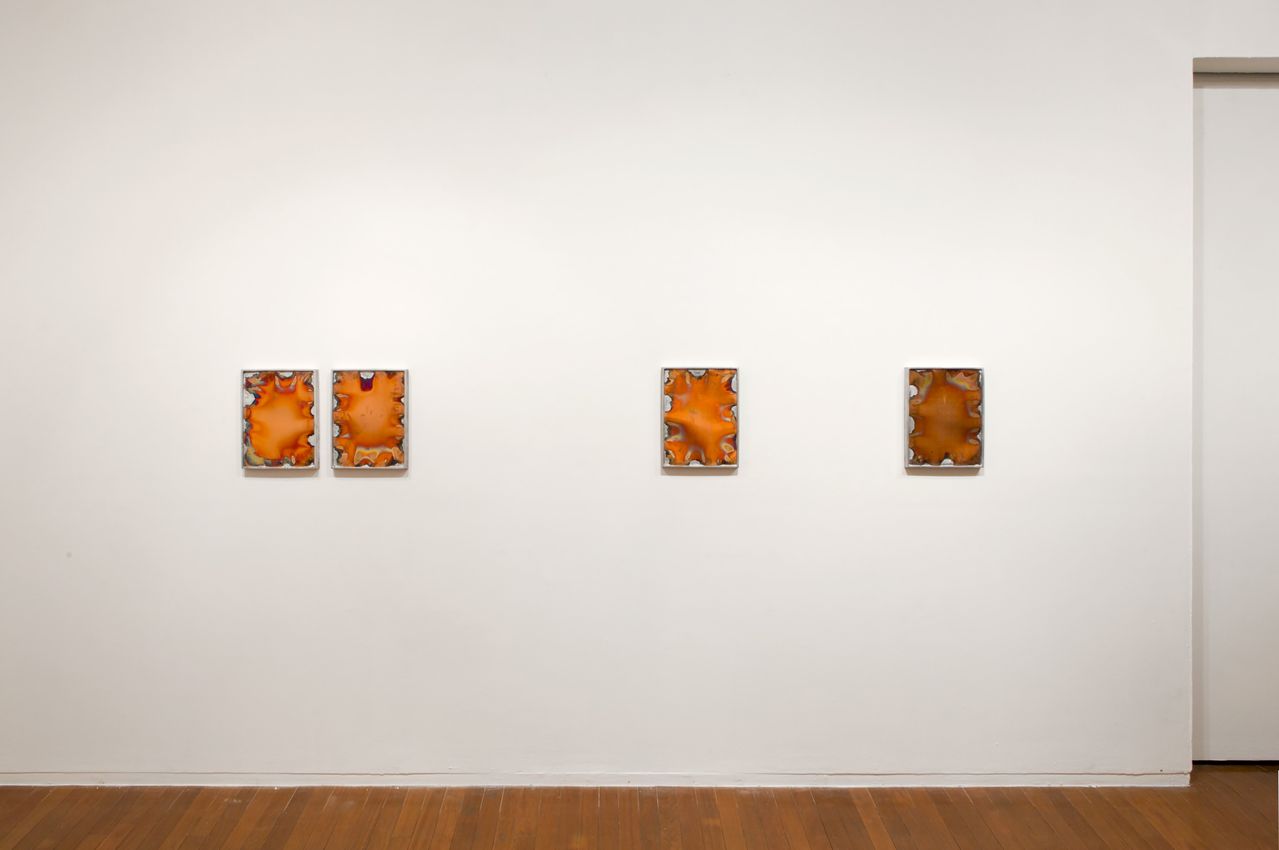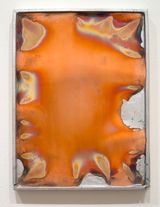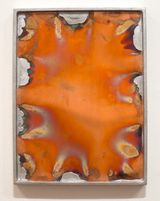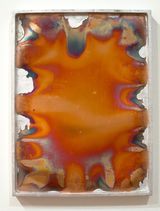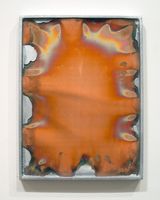




Palethorp is a meditation on place and labour in North Philadelphia, the area of the city that Marley Dawson lives and works in. The neighborhoods that comprise this area are loud, dirty, and sustained by alternative economies. It is rare to see anything unbroken. Close attention and a shift in perception is required to observe moments of stillness and beauty.
Dawson’s work often exhumes the hidden activity and systems that make a thing what it is. In his practice he oscillates between concerns of what is valued and what is valuable. Palethorp was seeded by Dawson’s research of the artist-made support structures hidden behind some of the masterpieces of French impressionism held in the Phillips Collection in Washington DC. This research was in turn informed by the incessant labour of the North Philadelphia ‘scrappers’, an informal group of people who comb the streets for metal that has not been adequately secured that they exchange for money at the local scrap yards. The scrappers work on a 24-hour rotation and the commodity laden constructions they create as they work have a raw, manic, non-objective essence.
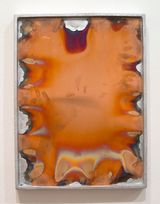
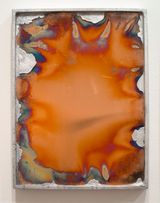
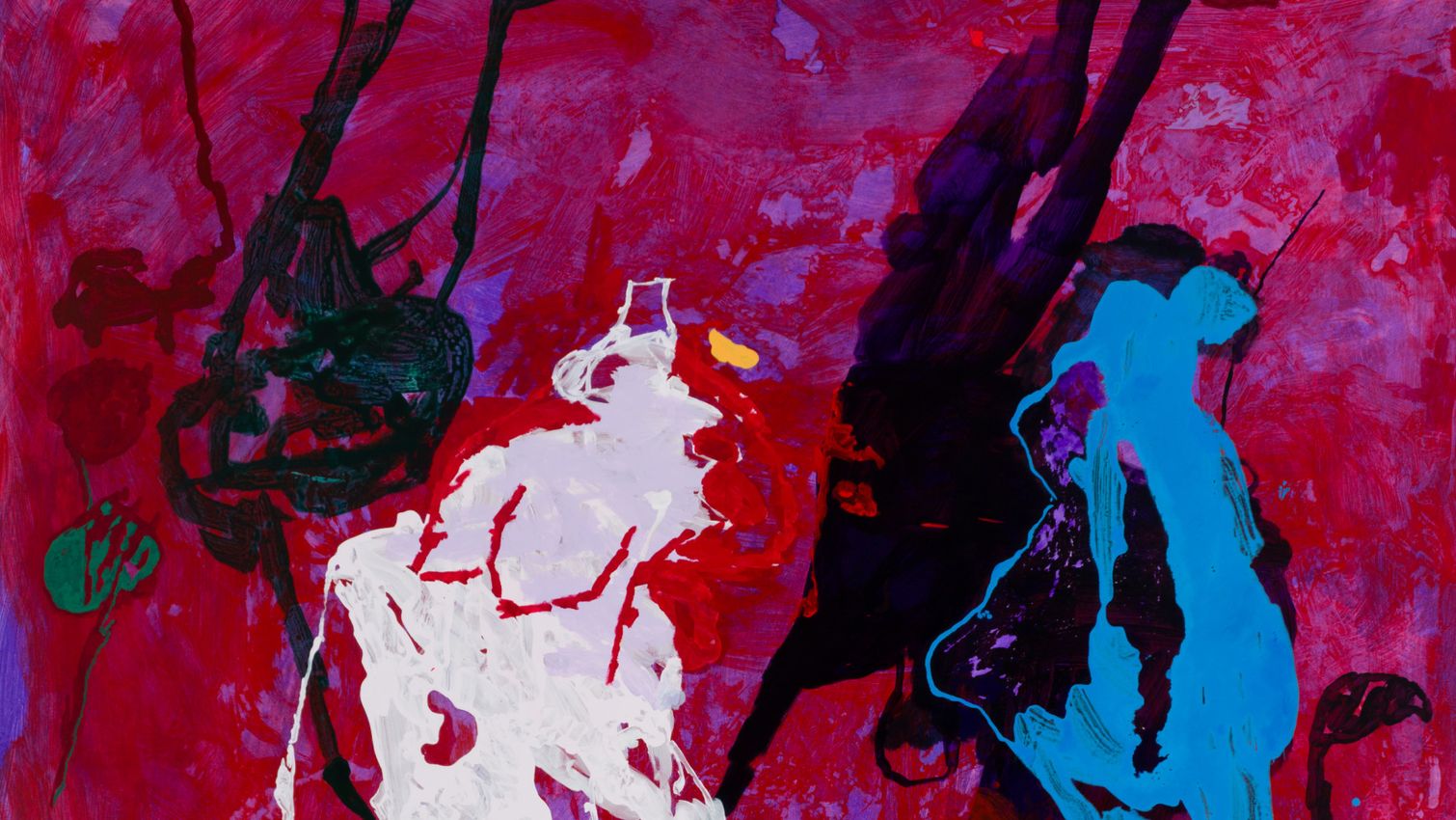
Dawson hand-fabricated the complete system necessary to make the Palethorp series: foundry, tooling (crucible, lifters, pouring handles, skimmers, stands), green sand mould (cope and drag, rammer, sieve, muller and green sand). This is an elaborate, meticulously researched and controlled making system. Dawson set his foundry up in a fenced lot owned by a Philadelphia artist on Palethorp Street at the fringe of an area commonly known as ‘The Badlands’, notorious for its resilient open air drug markets. Here, people are on edge. The Palethorp series represents the nexus at which Dawson’s extreme control of the making process is ruptured by the chaos of the process of amalgamation that ultimately defines each work. Scrap aluminium (from Dawson’s studio) is heated in the foundry until molten and poured into the green sand mould. The heat shocks the copper plate causing the coloration, depressions and searing marks of the process (fingerprints, smudges, imperfections) into the surface. The work is scaled to the limit of Dawson’s capacity to manage the weight of the sand mould. Each is named for a bar in North Philadelphia, only one of which - The Monkey Club - tolerates outsiders.
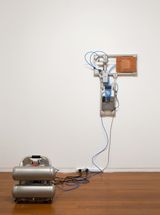
Wildflowers don’t care where they grow, (2016) is a computer-programmed pneumatic system that polishes a section of a copper etching plate. The polished section reflects the machine’s limits. The up/down and left/right motions continue until they hit limit switches. Wildflowers don’t care where they grow (2016) is a stand in for the artist, an outsourcing of labor that replicates the hand-polishing process he undertook for his Landscape/Constellation series, the rejects of which were cut up and melted for the Palethorp series.
- Marley Dawson
Marley Dawson has been exhibiting with Roslyn Oxley9 Gallery since 2009. Dawson has exhibited extensively in Australia and presented work internationally in group exhibitions in Paris, Hong Kong and the USA.
In 2014, Dawson exhibited Construction as part of the 5X5 Public Art Project, curated by Justine Topfer, Washington, D.C. This same year Dawson presented solo exhibitions: Explosion/Resolution at the Julio Fine Arts Gallery, Loyola University Maryland, Baltimore and Marley Dawson (Performance) at the Kreeger Museum, Washington, DC. Other solo exhibitions include: Big Feelings (going nowhere), Hillyer Art Space, Washington D.C (2013); MCR (with Christopher Hanrahan), Museum of Old and New Art, Hobart (2011); Purliey, Awesome Arts Festival, Perth (2009); Box of Birds, Roslyn Oxley9 Gallery, Sydney (2009) and ECR (with Christopher Hanrahan), Performance Space, Sydney (2008). Recently, Dawson was included in a group exhibition Solid State at the Casula Powerhouse, Sydney (2015). This will be Marley Dawson’s fourth solo exhibition at Roslyn Oxley9 Gallery.
Dawson received a Bachelor of Visual Arts (Hons) and a Masters of Visual Arts from Sydney College of the Arts in 2003 and 2007 respectively. He has exhibited widely in artist-run-spaces, mostly in Sydney since 2001. Solo exhibitions include Trick Shop at Locksmith Project Space, Sydney (2009) and Marley Dawson (shed) at Chalkhorse, Sydney (2008).

Established in Sydney by influential Australian art dealer and gallerist Roslyn Oxley and her husband Tony Oxley in 1982, Roslyn Oxley9 Gallery is one of Australia’s leading commercial galleries.

A respected voice in contemporary art discourse.
Focusing on ambitious storytelling and insightful art-world commentary. Ocula Magazine publishes in-depth interviews, critical essays and timely analysis on the artists, exhibitions and ideas driving the global art world.
Learn more about Ocula Magazine
Showcasing the best of the art world.
Ocula partners with galleries from around the world to highlight their artists, artworks and exhibitions. Gallery membership is by application and invitation, with each member vetted by an independent panel.
Learn more about Ocula Membership

Specialises in the sale of major artworks.
Led by a team with deep ties to the world’s leading auction houses, galleries and collectors. Ocula’s advisory team offers bespoke services to high-net-worth clients from around the world who are looking to acquire the best of contemporary and modern art.
Learn more about our team and services