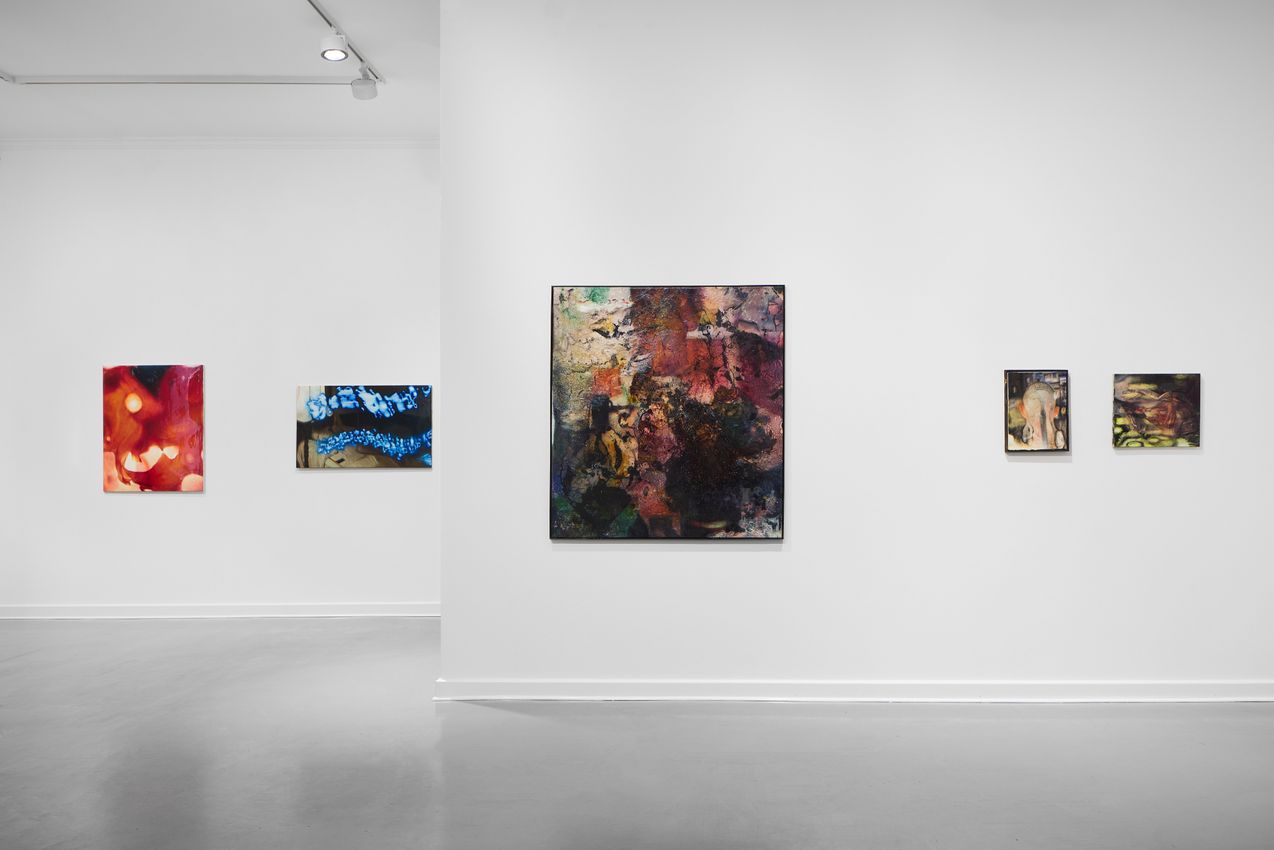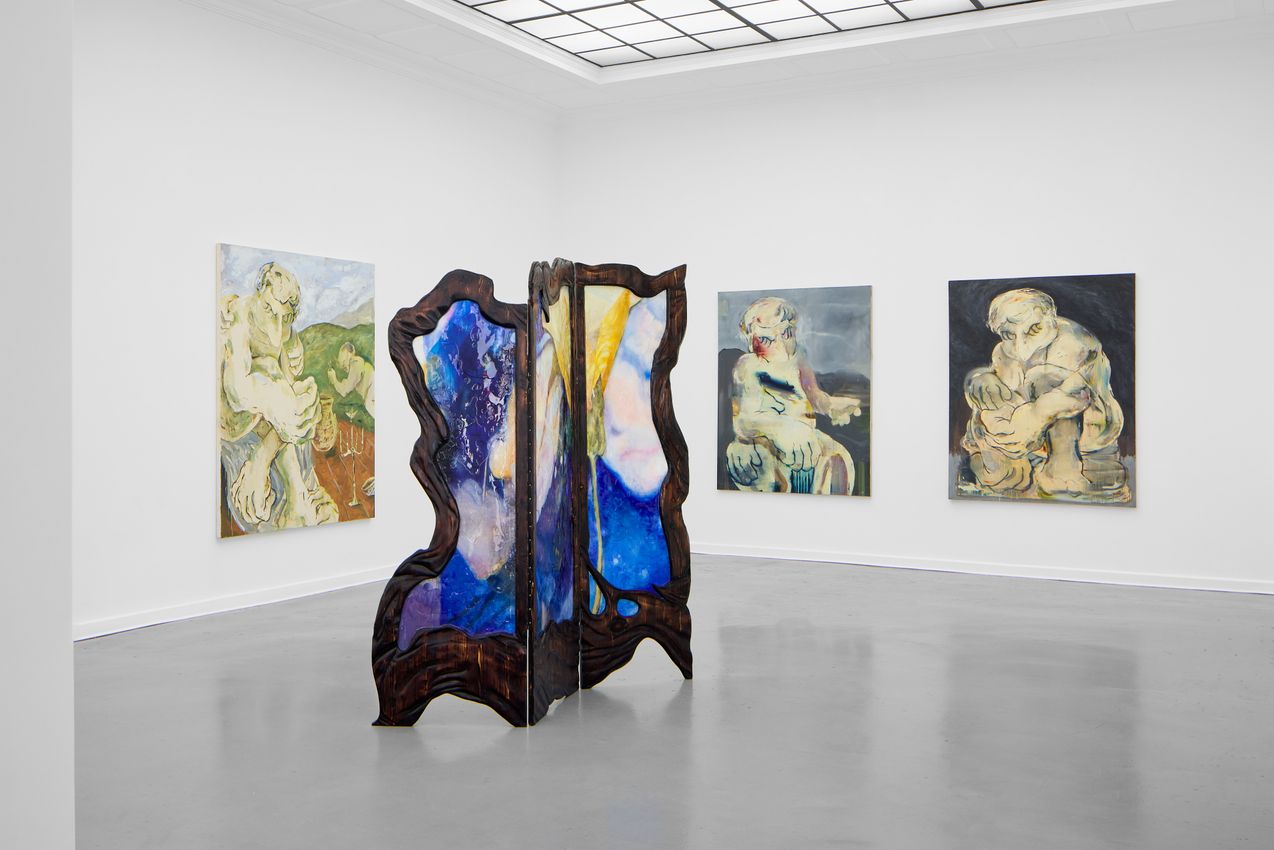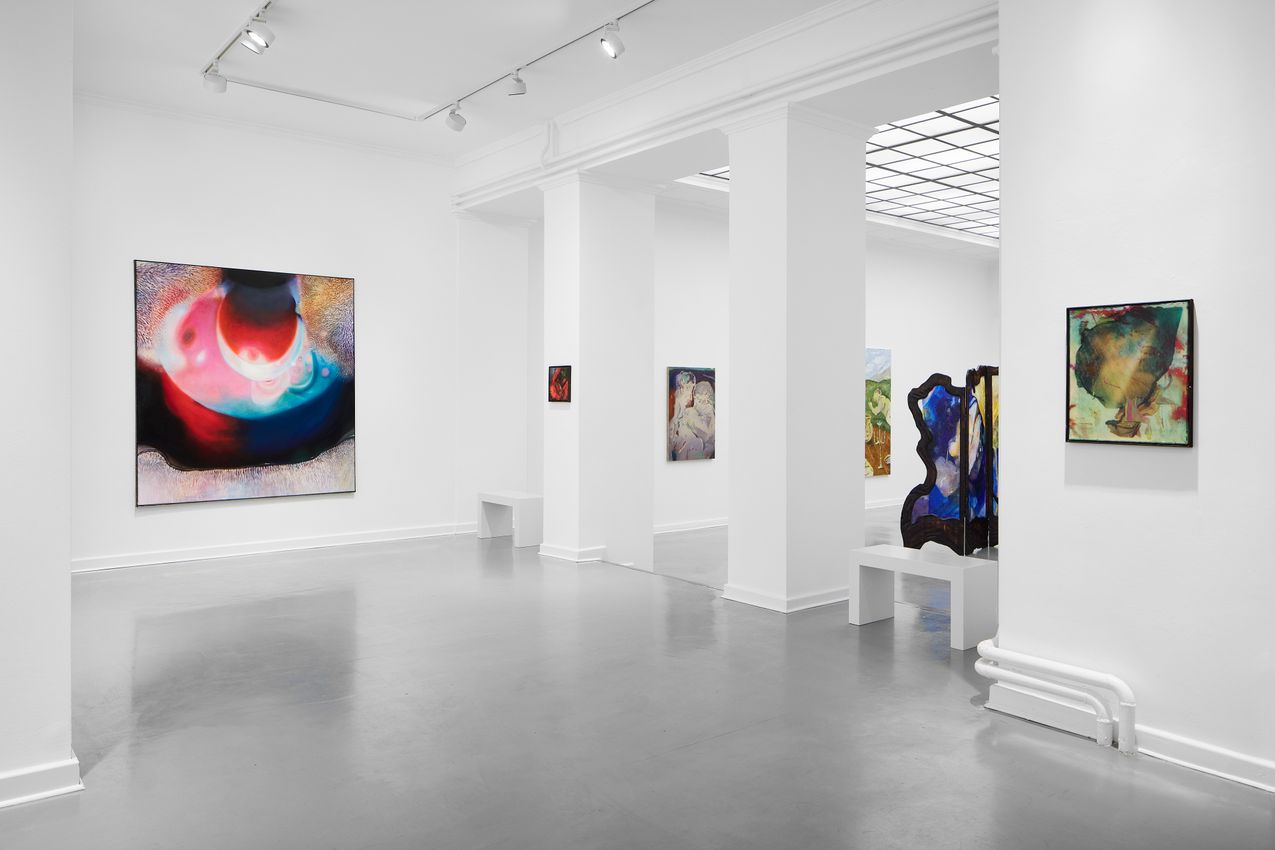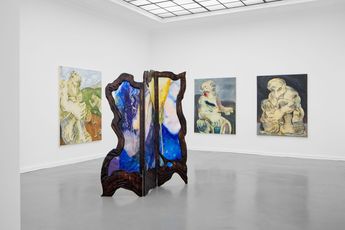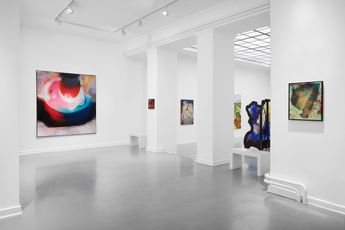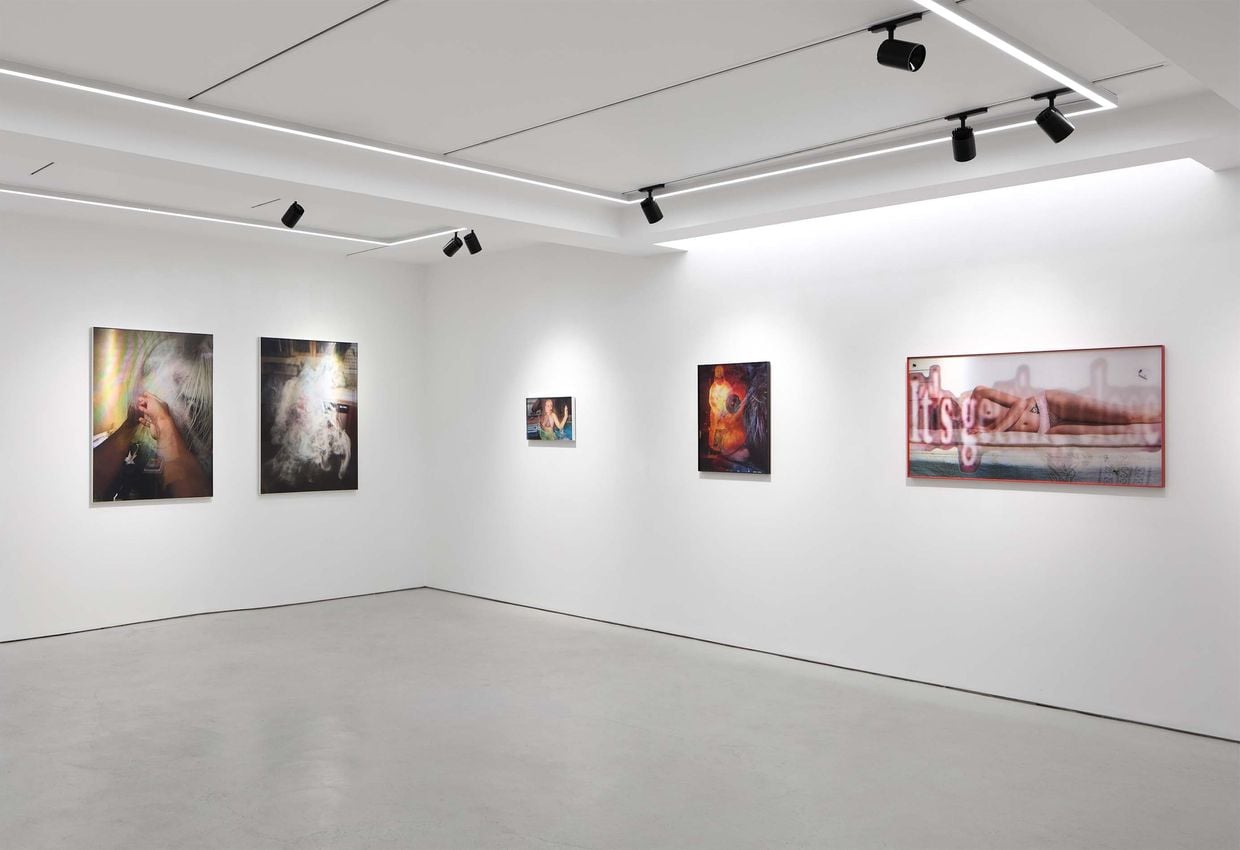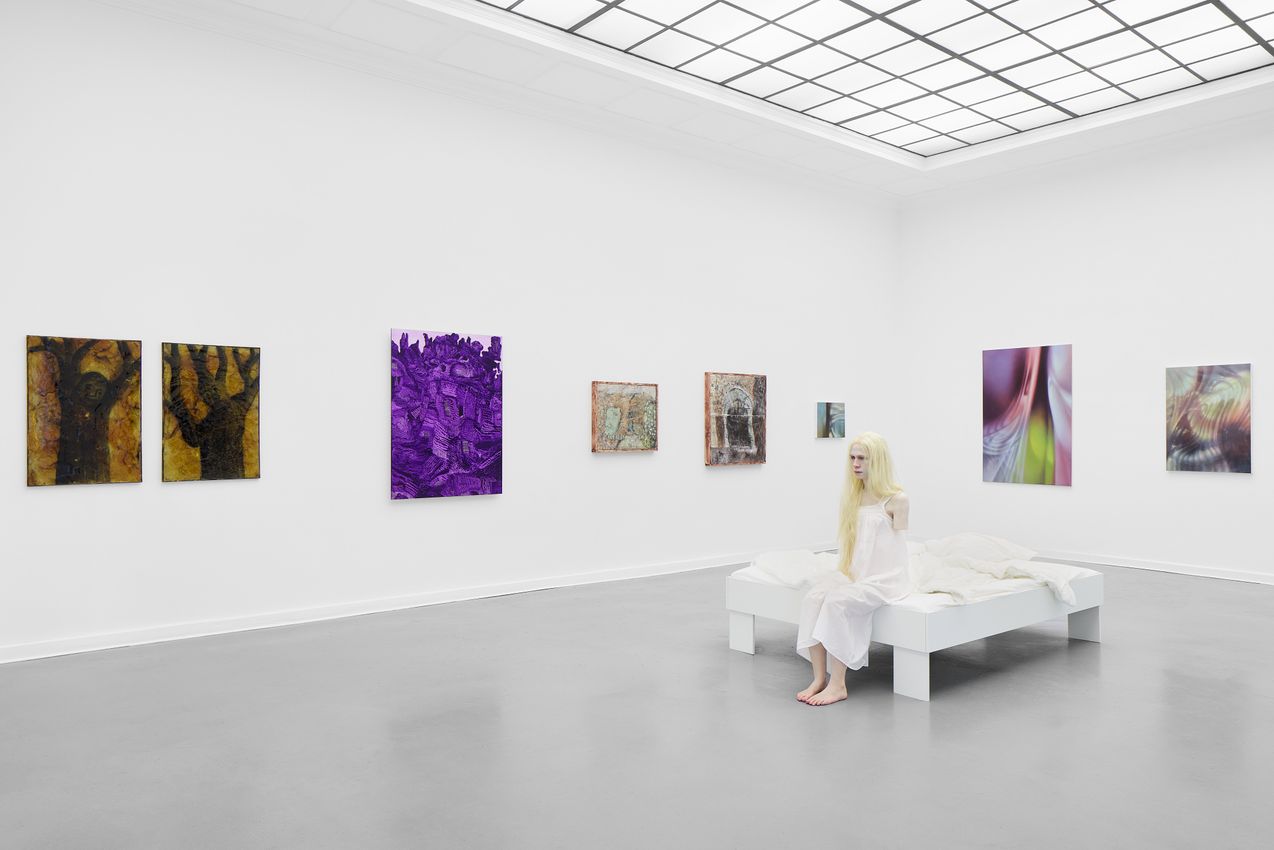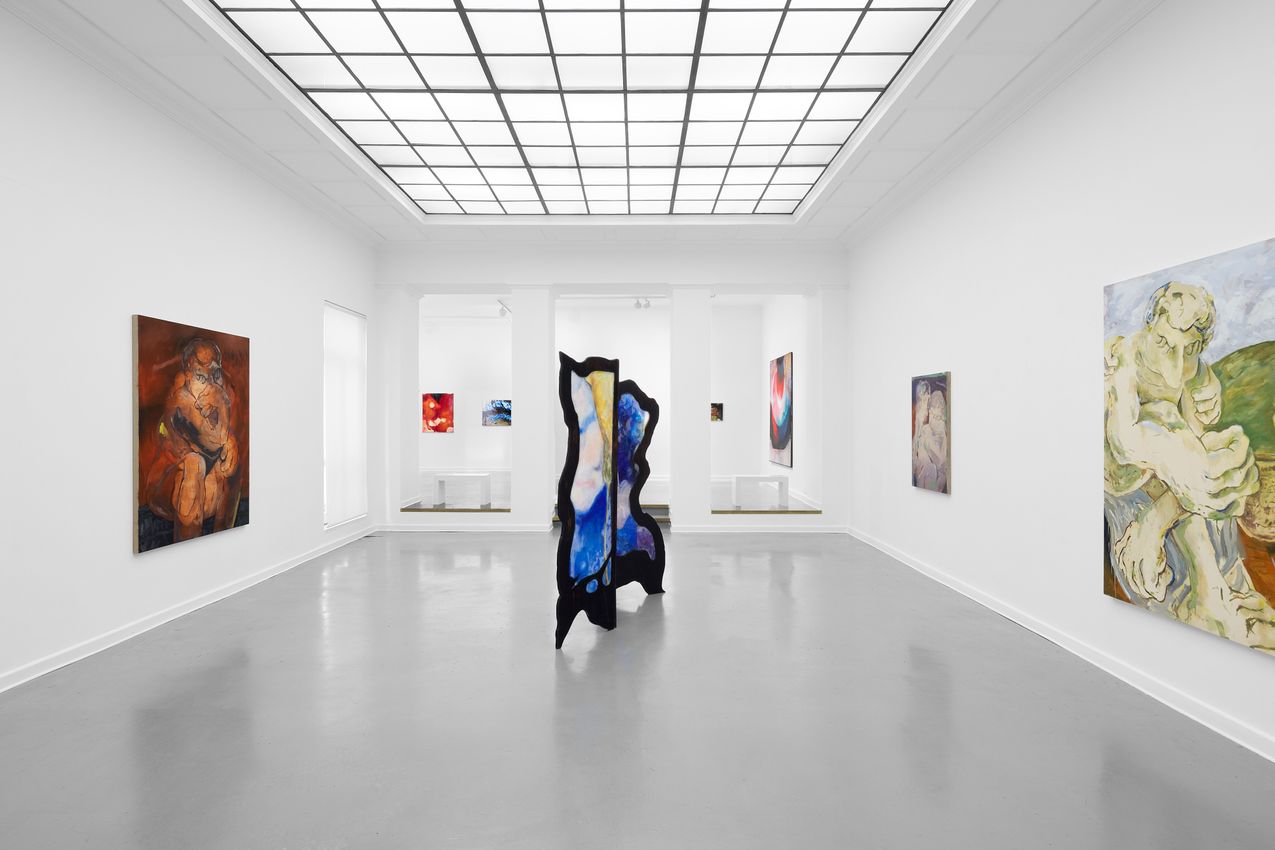
SETAREH is thrilled to announce the group show, Narratives of Transformation. Three New Positions.
Narratives of Transformation. Three New Positions stages three distinct responses to a single question: how do form and surface carry change — cultural, personal, psychological — from the inside out? Jordan Rubio’s repeated figures trace subtle shifts in human experience; Johannes Seluga’s built-up and scraped-back layers allow memory-like shapes to press through the paint; Allistair Walter’s fragments lie beneath irregular resin: shimmering, dissolving, recombining. Together, they make transformation palpable, inscribed directly onto the skin of the work.
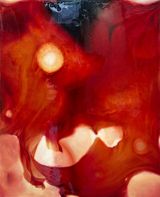
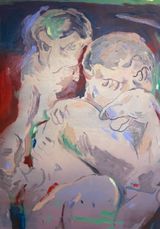
Jordan Rubio paints through an insistently figurative imagination that resists a settled story. His recurring characters behave like dream residues, insistent presences that return and mutate with each work. These works evoke identity in flux: people rooted in past intimacies, rooms half-remembered, a gentle disquiet hovering beneath the surface. Rubio’s compositional tempo sets hope against reality; the figure becomes a measure of longing, memory and social circumstance at once.
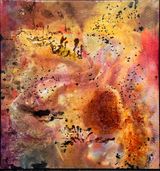
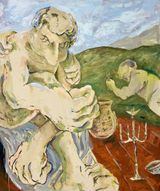
Johannes Seluga’s practice treats surface as language. Paint is applied and scraped through cycles of accretion and erasure until elusive shapes begin to rise. Forms gather and dissolve like recollections assembling and slipping away; interiors blur toward landscape; figures emerge as archetypes, ghosts, emotional architectures briefly held in place. This ambiguity speaks to Seluga’s interest in the threshold between perception and the subconscious.
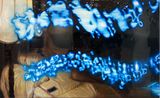
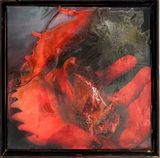
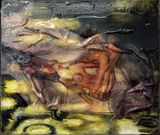
Allistair Walter approaches transformation through both memory and material. His works layer drawn and collaged fragments, often pulled from lived experience: friendship, intimacy, self-formation. These images are distorted and then submerged beneath uneven pours of resin that render the surface luminous and unstable. Meaning won’t stand still: the works appear, dissolve, reconfigure as light shifts or the viewer moves. Portraits and gestures become spectral, half-held, half-lost.
Across all three practices, the image rests on the surface, but the surface never settles. Meaning lives in that tension, a place where change remains visible.


A respected voice in contemporary art discourse.
Focusing on ambitious storytelling and insightful art-world commentary. Ocula Magazine publishes in-depth interviews, critical essays and timely analysis on the artists, exhibitions and ideas driving the global art world.
Learn more about Ocula Magazine
Showcasing the best of the art world.
Ocula partners with galleries from around the world to highlight their artists, artworks and exhibitions. Gallery membership is by application and invitation, with each member vetted by an independent panel.
Learn more about Ocula Membership

Specialises in the sale of major artworks.
Led by a team with deep ties to the world’s leading auction houses, galleries and collectors. Ocula’s advisory team offers bespoke services to high-net-worth clients from around the world who are looking to acquire the best of contemporary and modern art.
Learn more about our team and services