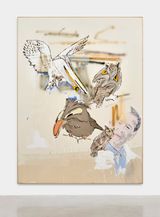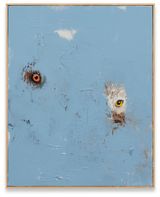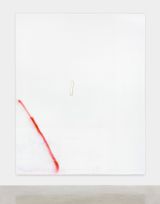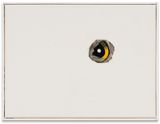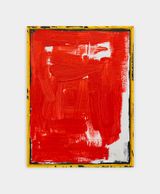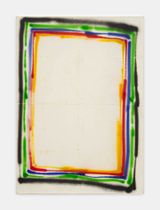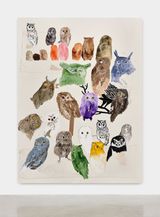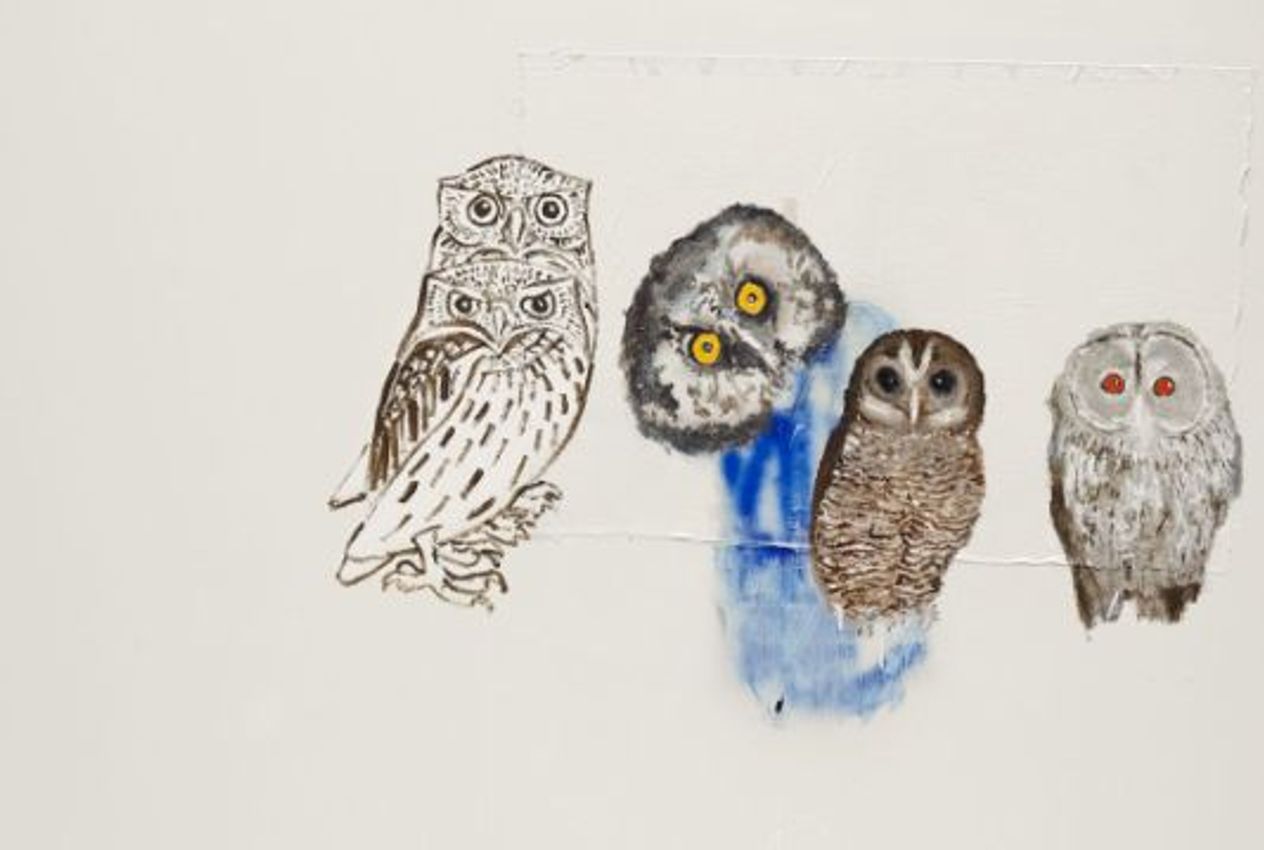
In David Ostrowski’s paintings, minimal gestures create maximum tension. His spray-painted lines break apart monochromatic backgrounds, both emphasizing and negating the painting’s flatness. Surfaces sometimes built from plain house paint reveal underlayers of studio detritus that complicate the presumed emptiness of his abstract compositions. Monika Sprüth and Philomene Magers are pleased to present Parliament, Ostrowski’s first exhibition at the New York gallery, which furthers the artist’s relentless questioning of the medium of painting and its constitutive elements via the recurring figure of the owl.
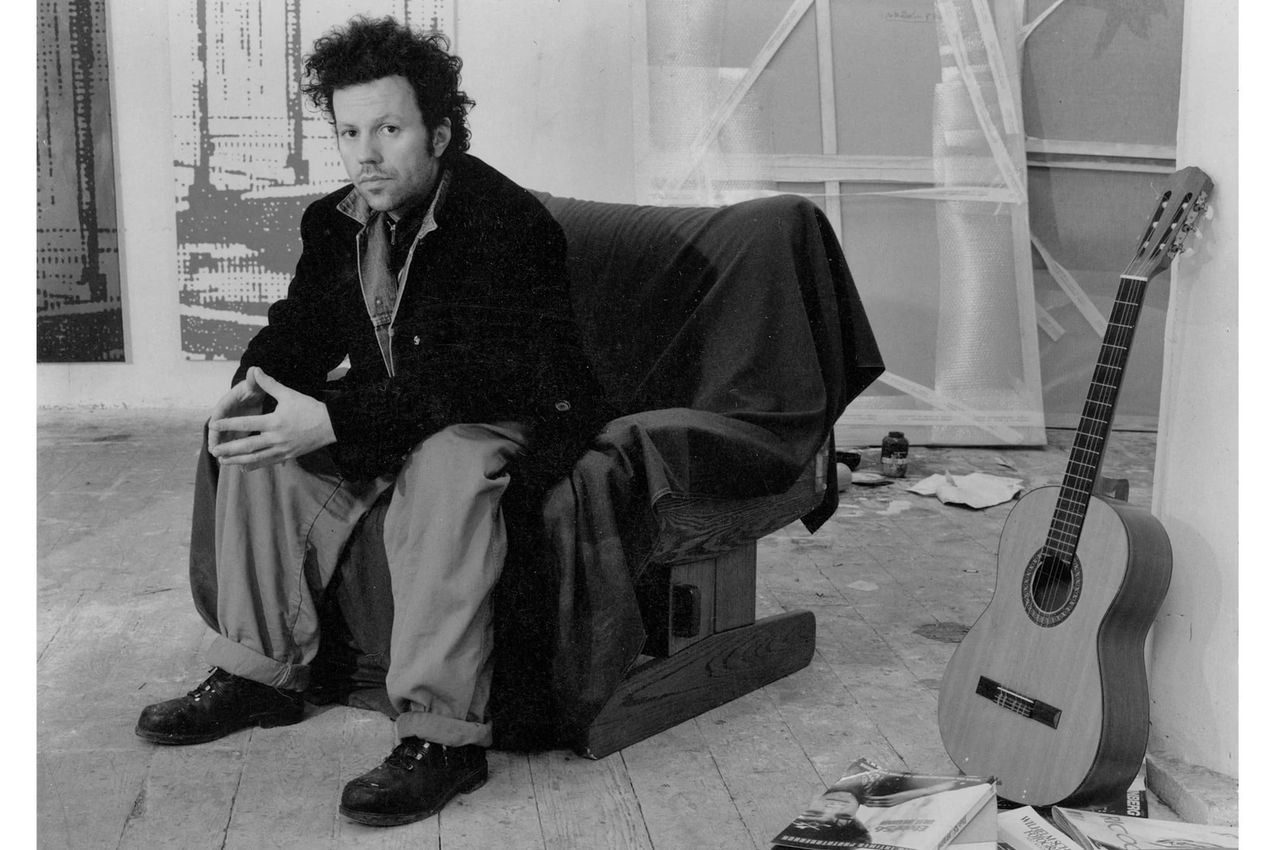
David Ostrowski produces large abstract canvases in manic moments of artistic instinct. He believes that the medium of painting has a relentless life cycle, and by bringing painting into conversation with contemporary artistic practice, he challenges the powerful role that technology plays in current artistic trends. Ostrowski studied painting at the Kunstakademie in Düsseldorf under Albert Oehlen, who siginificantly influenced the young artist and prompted him to explore Abstract art in depth. A serious fire at Ostrowski’s studio in 2005 gave the artist a new perspective on how to approach his work, by revealing the power that chance plays in producing art. This ideology persists in his practice and allows him to explore the boundaries of painting in its production and perception. To achieve artworks that are formed as a result of chance, many of Ostrowski’s techniques involve speed of application, incorporating spray paint and fast-drying lacquers. The process builds up multiple layers on the canvas as the artist repeatedly paints over certain parts of each composition. Speed, immediacy and impulse are integral to the editing process as they drive him to make quick decisions. Paint is not the only mediun that Ostrowski incorporates into his large artworks: found objects from his studio such as newspaper, scraps of wood and bits of dirt are glued to the canvas, creating a sense of depth, texture and a sculptural element to the composition. The accumulation of layers exemplifies how each canvas is constantly subject to consideration and revision. The installation and presentation of artworks is an equally important factor in the production process for Ostrowski. He rejects conventional gallery-hangs – exhibiting works on the wall at eye level. Instead, Ostrowski hangs his canvases from the ceiling in the middle of the gallery space, sometimes hanging works back-to-back.

A respected voice in contemporary art discourse.
Focusing on ambitious storytelling and insightful art-world commentary. Ocula Magazine publishes in-depth interviews, critical essays and timely analysis on the artists, exhibitions and ideas driving the global art world.
Learn more about Ocula Magazine
Showcasing the best of the art world.
Ocula partners with galleries from around the world to highlight their artists, artworks and exhibitions. Gallery membership is by application and invitation, with each member vetted by an independent panel.
Learn more about Ocula Membership

Specialises in the sale of major artworks.
Led by a team with deep ties to the world’s leading auction houses, galleries and collectors. Ocula’s advisory team offers bespoke services to high-net-worth clients from around the world who are looking to acquire the best of contemporary and modern art.
Learn more about our team and services