



GÜNTHER UECKER
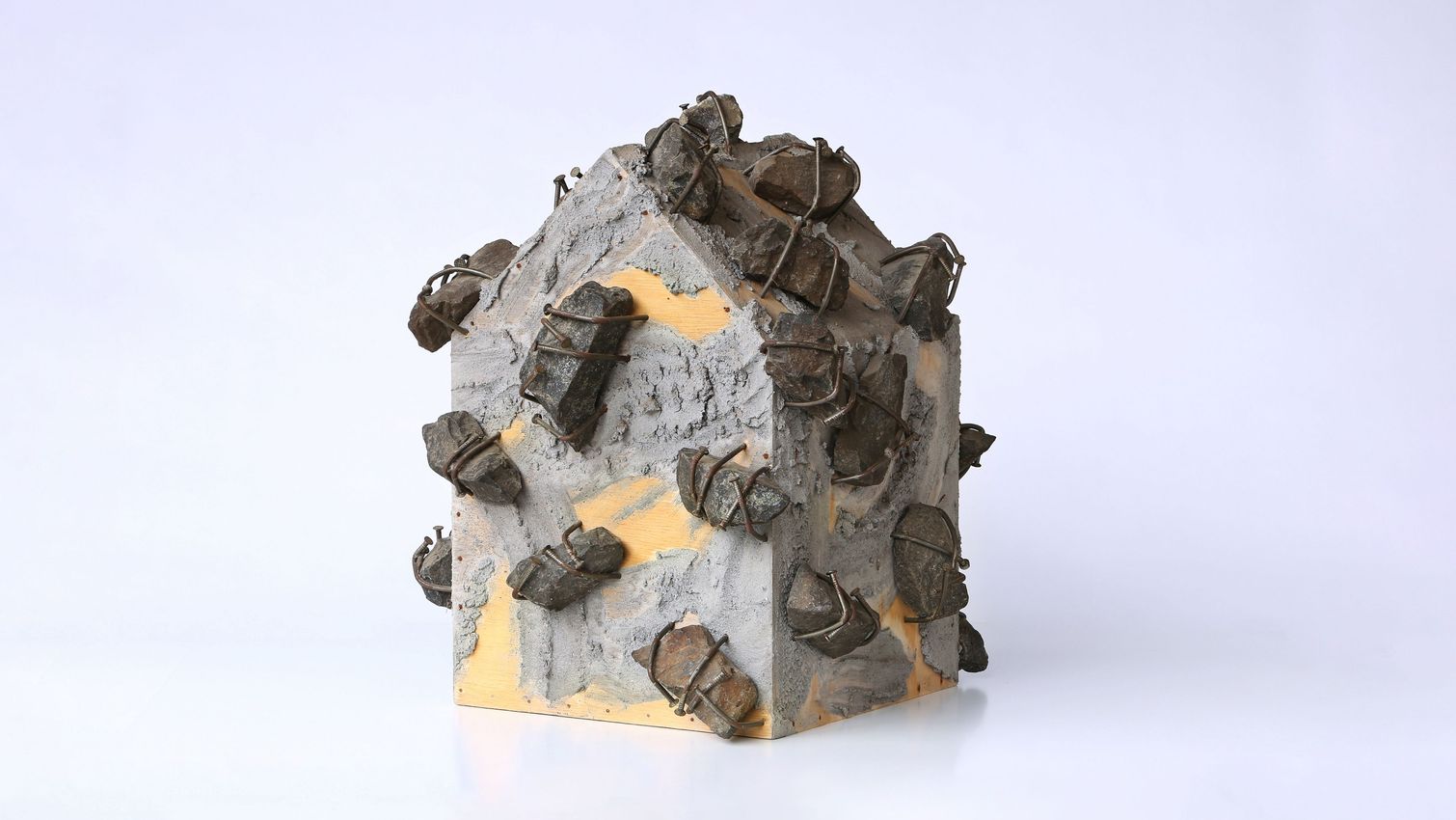
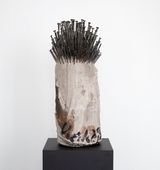
1930-2025, GermanyGünther Uecker’s artworks traverse painting, sculpture, performance, installation, and film, unified by a lifelong exploration of energy, perception, and transcendence through material form. Known for his signature use of nails, Uecker’s practice turns repetition into ritual, embedding tactile intensity into his meditative art objects.
Artworks
Nail Reliefs and Optical Fields (Late 1950s–1960s)
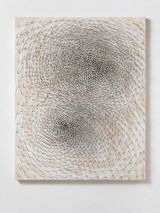
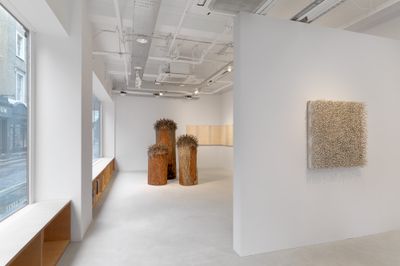
Uecker’s first experiments with nails began in the late 1950s, when he began driving nails into painted white boards to create pulsating, light-reactive surfaces. Works such as Field (1964) and White Structure (1966) reveal his early mastery of spatial rhythm. Influenced by optical and kinetic art, Uecker did not use the nails symbolically but as physical tools to channel energy and light. Their placement, density, and angle produce shifting shadows and patterns that change with the viewer’s movement, activating the artwork as a perceptual field.
These works helped define Uecker’s contribution to the ZERO movement—a collective seeking purity in form and a spiritual rebirth of art after the trauma of World War II. With their clean surfaces and elemental geometry, Uecker’s nail reliefs sit at the intersection of painting and sculpture, gesture and grid, intuition and structure.
Light, Movement and Participation (1960s)
Throughout the 1960s, Uecker expanded his exploration of light and movement through kinetic sculptures and participatory installations. His Light Nails (1960s) incorporated motorised elements and rotating lights that heightened the optical dynamism of the nails. In New Living Spaces (1967), he constructed environments that invited viewers to walk among and interact with his works, encouraging a sensory experience of space and perception. Uecker’s commitment to audience engagement echoed his belief in art as a transformative encounter rather than a static object.
Political and Performative Art (1970s–1980s)
In the 1970s and 1980s, Uecker turned increasingly toward politically engaged art. Reacting to global crises such as the Vietnam War and environmental degradation, he produced installations that conveyed a sense of protest, mourning, and remembrance. In Terrororchester (1983), he built a chaotic assemblage of instruments and scrap metal, transforming sound into a visceral expression of destruction. Uecker’s actions and installations from this period often used found materials, fire, and elemental substances to create visceral environments that resonated with contemporary anxieties.
He also worked in film and performance. His collaborations with German experimental filmmaker Werner Nekes resulted in films such as Hört auf zu atmen (‘Stop Breathing’), which document his performative approaches to process and ritual.
Wounds and Ash Works (1990s–Present)
From the 1990s onwards, Uecker began creating artworks that addressed physical and psychological trauma through scorched, burned, and fragmented materials. His Wounds (Verletzungen) series consists of works made from ashes, soot, sand, and distressed fabrics. These minimalist yet emotionally charged assemblages evoke landscapes marked by war, violence, and spiritual endurance. Rather than dwell in despair, they point toward renewal and healing through the act of making.
Notable works include Wundmal (1993), a large-scale installation of scorched canvas embedded with nails, and Aschebilder (Ash Pictures), in which charred textures allude to memory and loss while maintaining a solemn beauty.
Public Commissions
- Tribute to Peace, United Nations Plaza, New York (1996)
- Prayer room design, rebuilt Reichstag, Berlin (2000)
- The Fall Wall, commemorative installation for Berlin Wall victims (1990)
Awards and Accolades
- Kaiserring Goslar Award (1983)
- Officer of the Order of Arts and Letters, France (2000)
- Honorary Doctorate, Heinrich Heine University Düsseldorf (2005)
- Praemium Imperiale Award for Painting, Japan Art Association (2015)
Exhibitions
Günther Uecker has been the subject of both solo exhibition and group exhibitions at important institutions. A selection of important exhibitions are provided below.
Solo Exhibitions
- Günther Uecker: Verletzungs-Zeichen (Traces of Injury), Kunstsammlung Nordrhein-Westfalen, Düsseldorf (1993)
- Günther Uecker: Notations, Lehmbruck Museum, Duisburg (2013)
- Günther Uecker: Verletzungen – Verbindungen, State Hermitage Museum, St. Petersburg (2015)
- Günther Uecker, Museum Tinguely, Basel (2021)
Group Exhibitions
- Documenta III, Kassel (1964)
- Venice Biennale, German Pavilion (1970)
- ZERO: Countdown to Tomorrow 1950s–60s, Guggenheim Museum, New York (2014)
- Art and China after 1989: Theater of the World, Guggenheim Museum, New York (2017)
Critical Reception
Günther Uecker’s practice has been the subject of extensive writing in major publications including Apollo, ARTnews,
In Ocula, critic Laura Bannister noted: “Uecker’s nail reliefs are not merely minimalist artefacts, but sensory machines—interfaces between body and light, ritual and repair.”
Ocula | 2025























Explore and Follow Artists Shaping Contemporary Art
A respected voice in contemporary art discourse.
Focusing on ambitious storytelling and insightful art-world commentary. Ocula Magazine publishes in-depth interviews, critical essays and timely analysis on the artists, exhibitions and ideas driving the global art world.
Learn more about Ocula Magazine
Showcasing the best of the art world.
Ocula partners with galleries from around the world to highlight their artists, artworks and exhibitions. Gallery membership is by application and invitation, with each member vetted by an independent panel.
Learn more about Ocula Membership
Specialises in the sale of major artworks.
Led by a team with deep ties to the world’s leading auction houses, galleries and collectors. Ocula’s advisory team offers bespoke services to high-net-worth clients from around the world who are looking to acquire the best of contemporary and modern art.
Learn more about our team and services