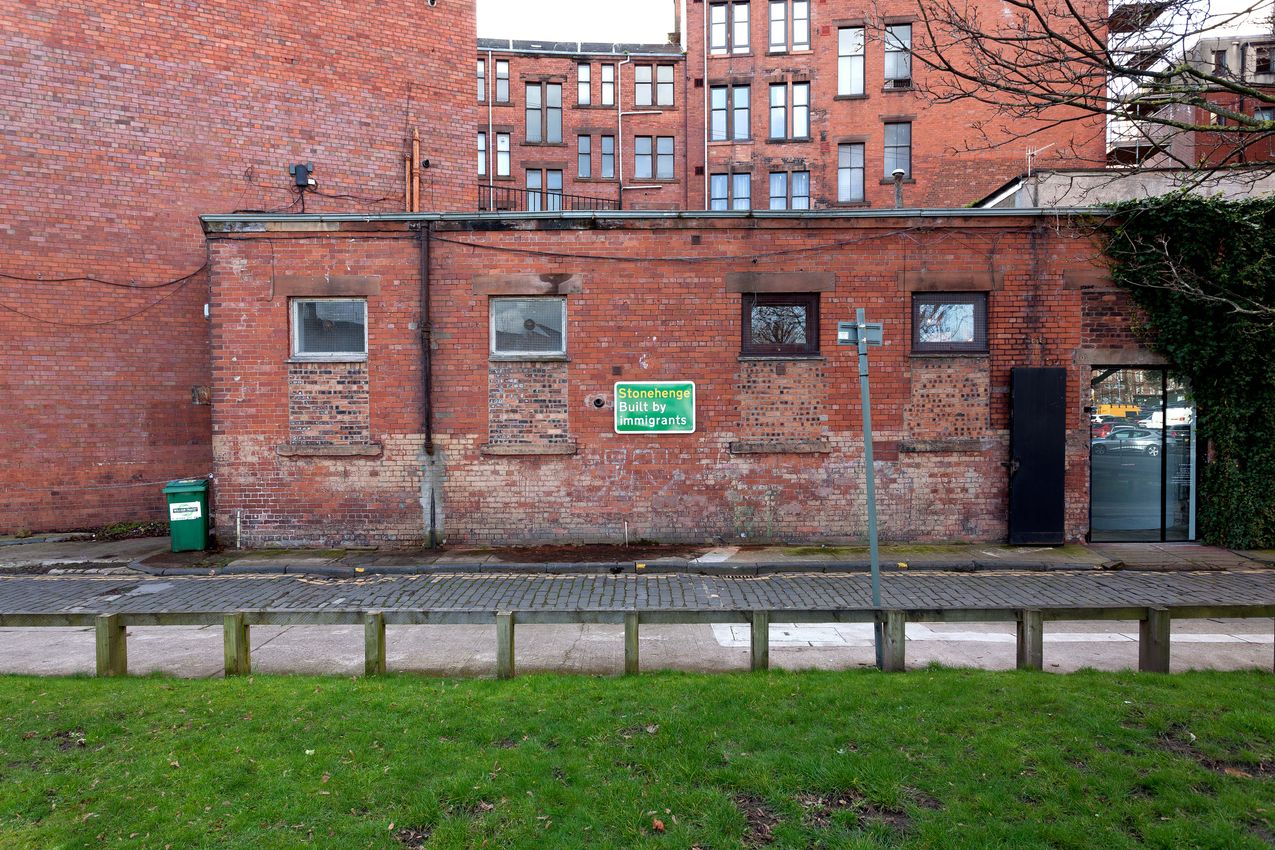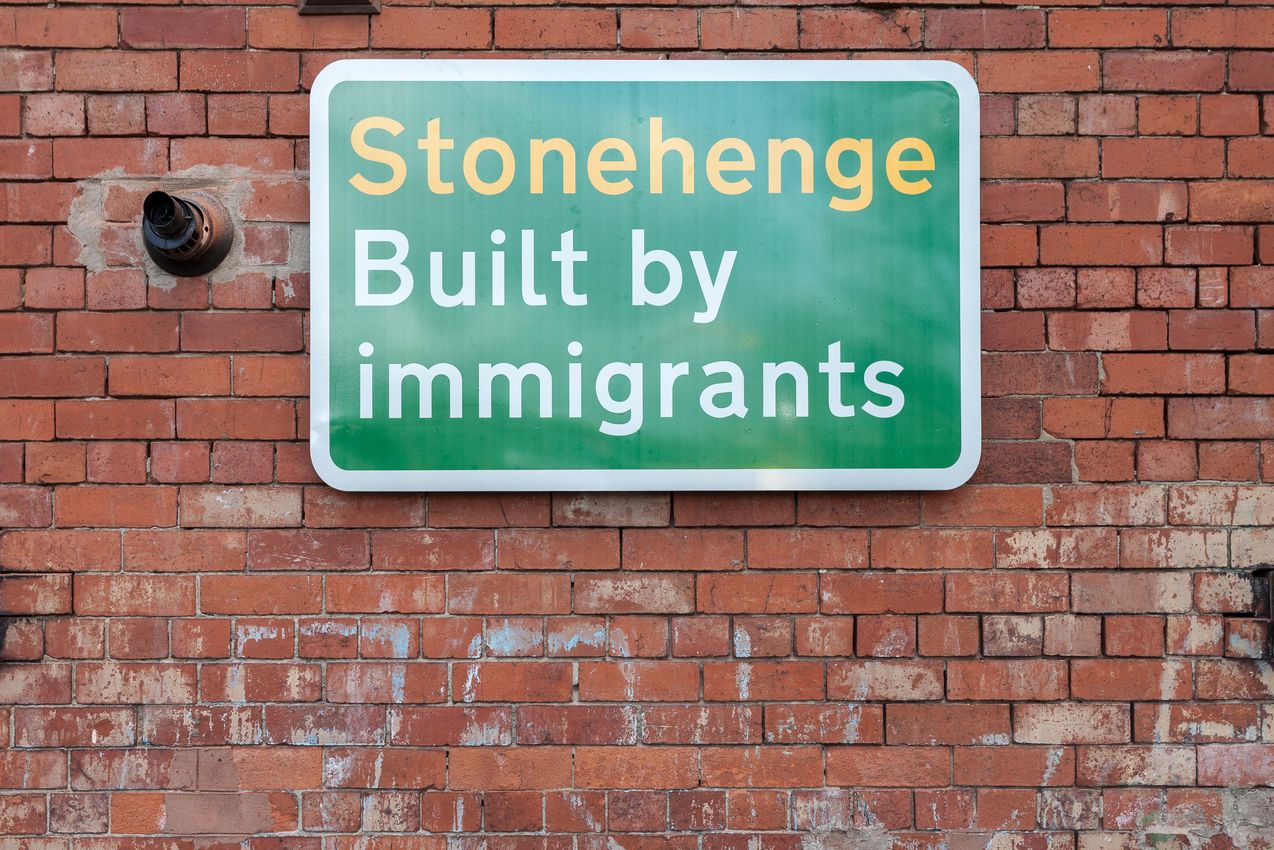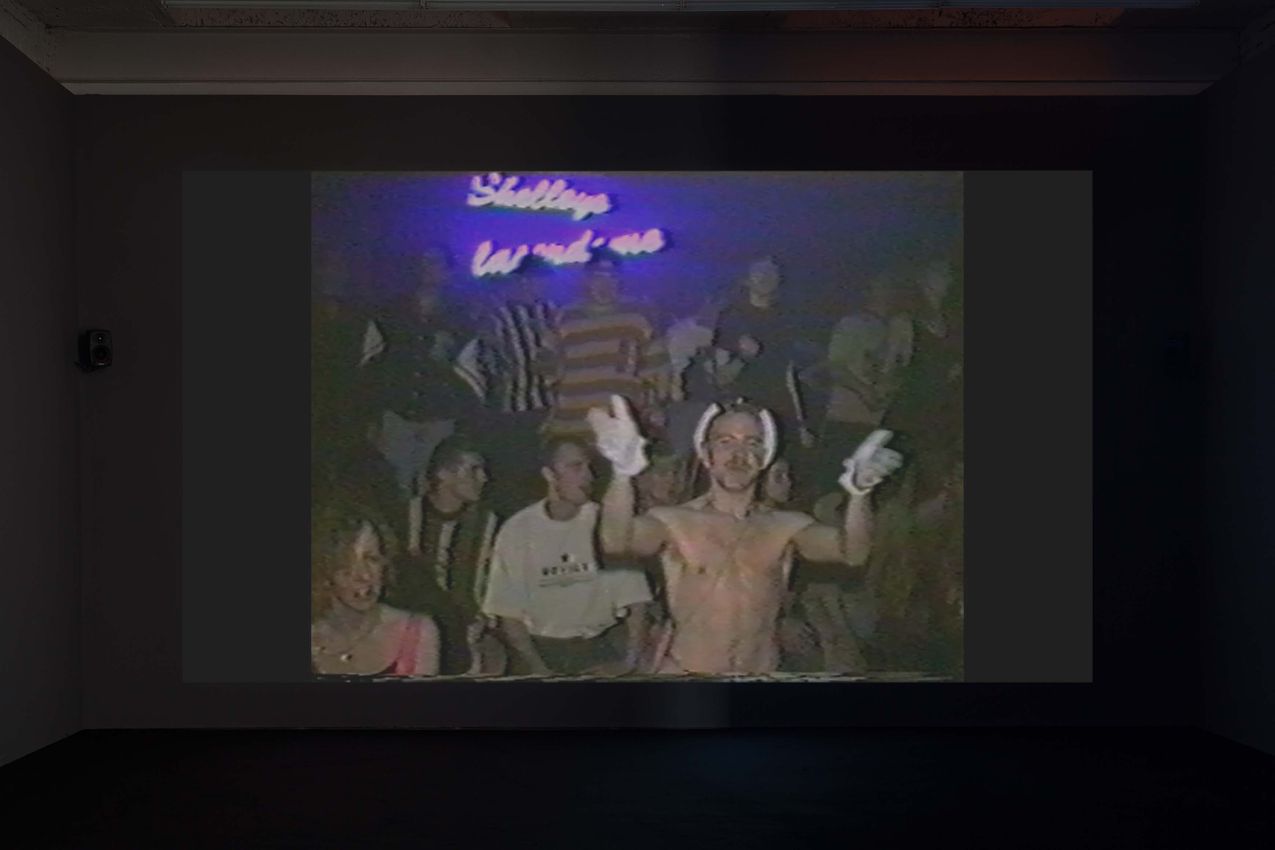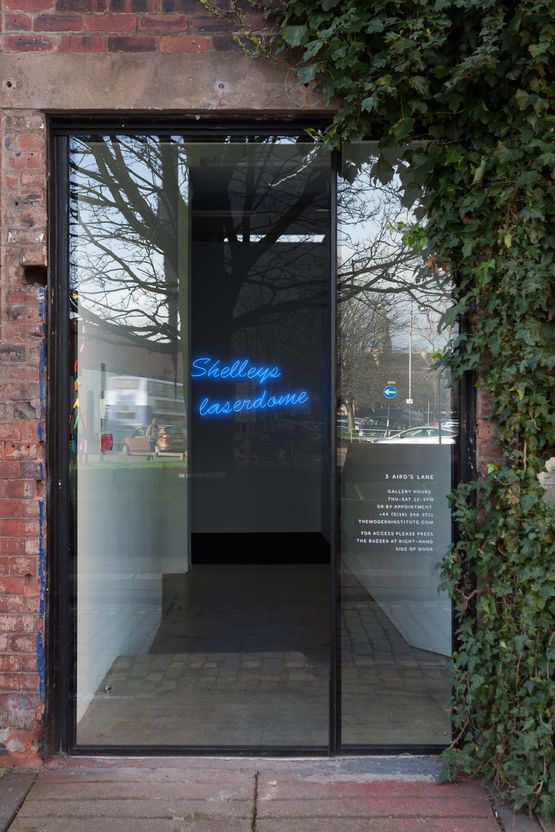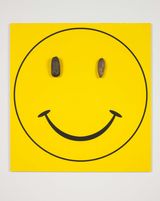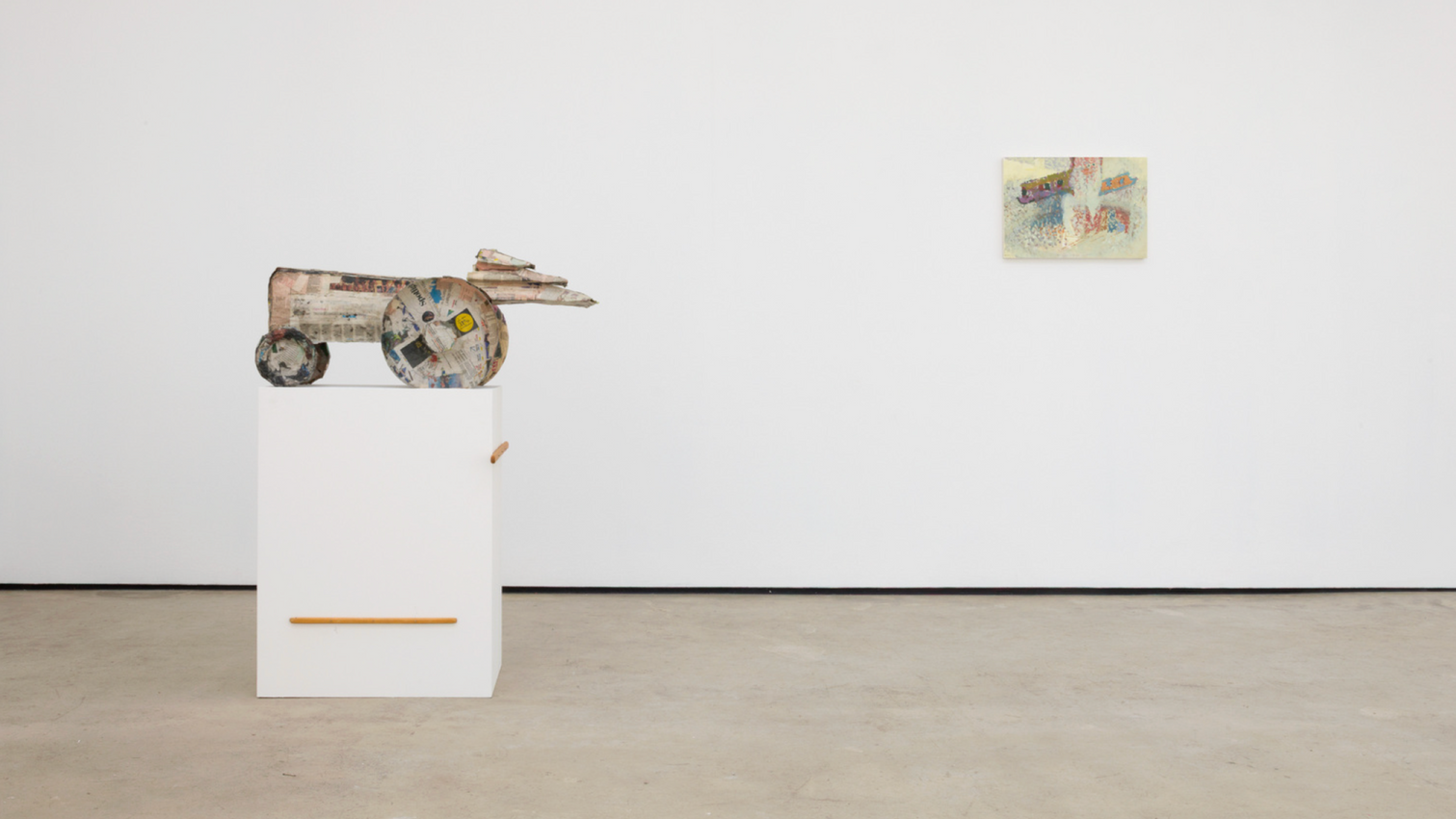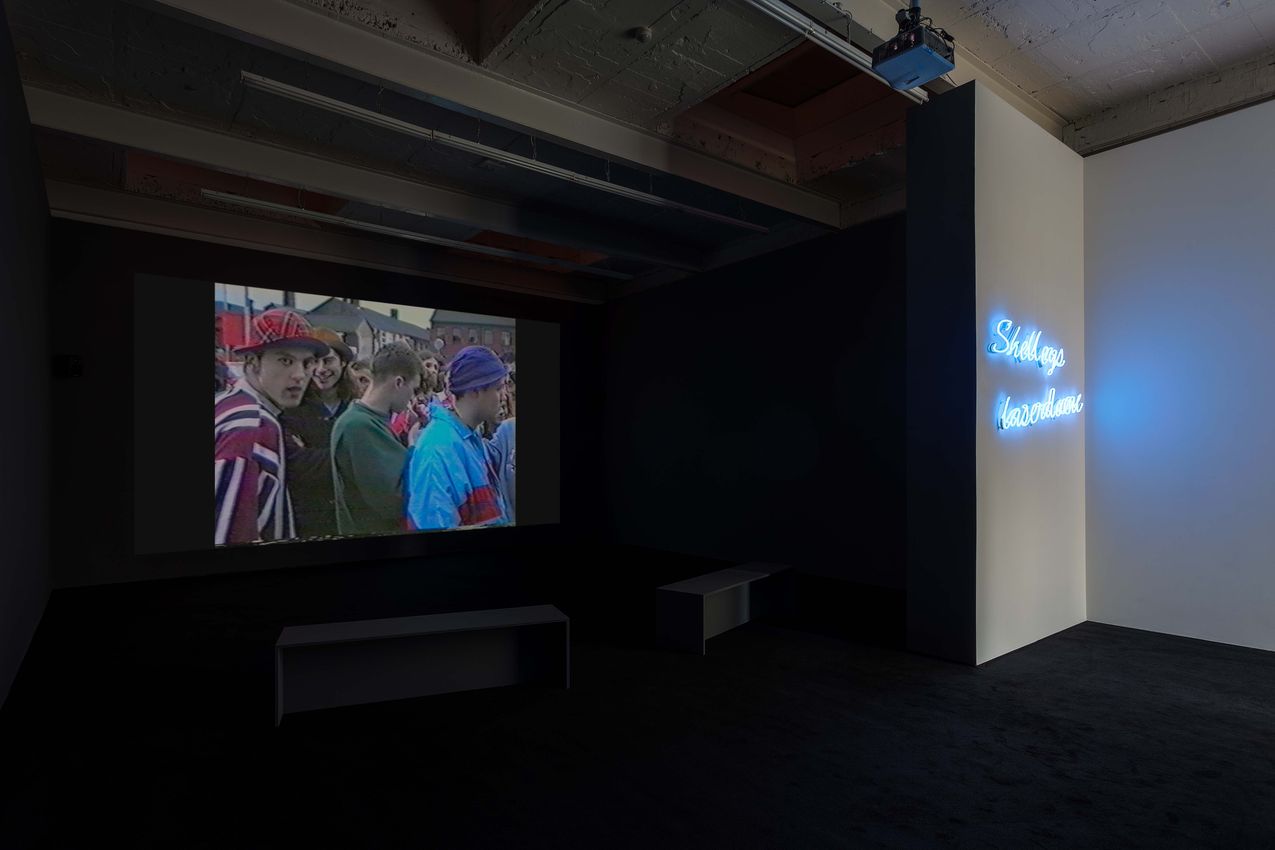
Jeremy Deller’s latest exhibition at Modern Institute’s Aird’s Lane presents a selection of new sculptural works alongside a screening of Everybody in The Place: An Incomplete History of Britain 1984–1992 (2018), in which Deller explores the socio-political history and contemporary legacy of the Second Summer of Love. Based on a real-life lecture he delivered to a class of A-level Politics students, Deller utilises rare and unseen archive footage to illustrate his telling of this significant cultural movement.
From the genesis of house music in the gay clubs of Chicago and the Post-Industrial wasteland of Detroit, through sound systems of British-Caribbean communities to the Beleric bliss of Shroom, Deller charts the momentum that exploded from illicit underground dance floors, cementing acid house and rave music in the mainstream conscious.
As the Second Summer of Love dawned, Deller explains how for a down-trodden nation recovering from the wounds of the Miners’ strike, the liberal inclusivity of this new music–and drugs–offered a much-needed opportunity for collective catharsis. Ultimately, the proliferation of this counterculture laid bare the stagnation of cultural production in a society constrained by boundaries of class, identity and geography–a moment of seismic change born out of necessity but driven by music.
Deller’s film looks in detail at the social makeup of Britain in the mid to late 1980s, from the initial wave of hysteria and vilification that greeted acid house, to its rebirth through the prodigiously attended raves of 1988–1990 and ultimately its demise as a revolutionary force by the end of 1993.
Jeremy Deller (b. 1966 in London; lives and works in London) studied Art History at the Courtauld Institute and at Sussex University. Deller won the Turner Prize in 2004 for his work Memory Bucket and represented Britain in the 55th Venice Biennale in 2013. He has been producing projects over the past two decades which have influenced the conventional map of contemporary art. He began making artworks in the early 1990s, often showing them outside conventional galleries.
Deller has exhibited extensively worldwide with selected solo exhibitions including: Skulptur Projekte Münster (2017); The Infinitely Variable Ideal of the Popular, CA2M, Madrid (2015), touring to MUAC, Mexico City, Fundación Proa, Buenos Aires and Azkuna Zentroa, Bilbao (2016); English Magic, British Pavilion, 55th Venice Biennale, Venice (2013), touring to William Morris Gallery, London, Bristol Museum and Art Gallery, Bristol and Turner Contemporary, Margate (2014–2015); Joy in People, Hayward Gallery, London (2012), touring to the Institute of Contemporary Art, University of Pennsylvania and the Contemporary Art Museum St Louis; It Is What It Is: Conversations About Iraq, New Museum, New York (2009), touring to Hammer Museum, Los Angeles, and Museum of Contemporary Art, Chicago; Procession, Cornerhouse, Manchester (2009); Kunstverein, Munich (2005); Folk Archive with Alan Kane Palais de Tokyo, Paris and Barbican Art Gallery, London (2004); After the Goldrush, Wattis Institute, San Francisco (2002); and Unconvention, Centre for Visual Arts, Cardiff (1999).
Deller has curated numerous projects, recent exhibitions include: Iggy Pop Life Class, Brooklyn Museum (2016); Love is Enough: William Morris and Andy Warhol, Modern Art Oxford (2014); and All That is Solid Melts Into Air, Manchester Art Gallery, Manchester (2014), touring to Nottingham Castle, Nottingham, Mead Gallery, University of Warwick and Laing Art Gallery, Newcastle.


Jeremy Deller (b.1966, London; lives and works in London) studied Art History at the Courtauld Institute and at Sussex University. Deller won the Turner Prize in 2004 for his work ‘Memory Bucket’, and represented Britain in the 55th Venice Biennale in 2013. He has been producing projects over the past three decades which have influenced the conventional map of contemporary art.


The Modern Institute was founded in Glasgow in 1997. The gallery works with 45 internationally established and emerging artists including Martin Boyce, Jim Lambie, Richard Wright, Anne Collier, Cathy Wilkes, Simon Starling, Urs Fischer, Luke Fowler and Nicolas Party.

A respected voice in contemporary art discourse.
Focusing on ambitious storytelling and insightful art-world commentary. Ocula Magazine publishes in-depth interviews, critical essays and timely analysis on the artists, exhibitions and ideas driving the global art world.
Learn more about Ocula Magazine
Showcasing the best of the art world.
Ocula partners with galleries from around the world to highlight their artists, artworks and exhibitions. Gallery membership is by application and invitation, with each member vetted by an independent panel.
Learn more about Ocula Membership

Specialises in the sale of major artworks.
Led by a team with deep ties to the world’s leading auction houses, galleries and collectors. Ocula’s advisory team offers bespoke services to high-net-worth clients from around the world who are looking to acquire the best of contemporary and modern art.
Learn more about our team and services