




LEIKO IKEMURA
b. 1951, JapanLeiko Ikemura is a Japanese Swiss contemporary artist known for poetic paintings, sculptures, drawings, and glass works that merge human, animal, and landscape forms into hybrid, transitional figures. Her artworks explore themes of cross-cultural identity, ecology, femininity, and the fragile relationship between humans, nature, and cosmic space, often through spectral girl-like bodies and rabbit–human beings.
Born in Tsu, Japan, in 1951, Ikemura has lived and worked in Europe for more than five decades and is primarily based in Cologne and Berlin, Germany, with a significant international exhibition profile across Europe, Asia, and the United States.
Early life and Education of Leiko Ikemura
Leiko Ikemura was born in 1951 in Tsu, Mie Prefecture, Japan, and studied languages at Osaka University of Foreign Studies between 1970 and 1972. In 1973 she relocated to Spain, completing art studies at the Escuela Superior de Bellas Artes de Santa Isabel de Hungría (also referred to as the Real Academia de Bellas Artes de Santa Isabel de Hungría) in Seville between 1973 and 1978, before moving to Zürich to begin her career as an artist.
Since the mid-1980s Ikemura has been based in Germany, living in Cologne and Berlin and developing a transnational practice that bridges Japanese and European artistic traditions. From 1990 she served as a professor at the Berlin University of the Arts (Universität der Künste Berlin), shaping generations of younger artists while producing an internationally recognised body of work.
Leiko Ikemura Artworks and Style
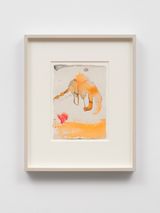
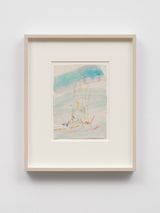
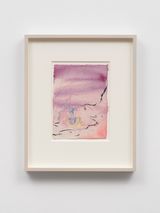
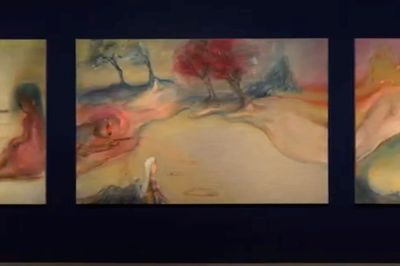
Leiko Ikemura’s artworks encompass painting, sculpture, ceramics, glass, drawing, photography, and installation, with an emphasis on metamorphosis, spiritual states, and the interconnectedness of humans, animals, plants, and celestial worlds. Across these media she develops a distinctive vocabulary of elongated girls, androgynous figures, rabbits, and amorphous landscapes that appear to hover between visibility and disappearance.
Early works and developments, 1980s–1990s
Ikemura’s early works of the 1980s and early 1990s include expressive, sometimes disquieting figurative paintings and drawings that reflect her experience of migration between Japan and Europe and the tension between vulnerability and resilience in the female body. During this period she began to develop the recurring motif of solitary, often adolescent figures set against vast, atmospheric grounds, gesturing to psychological landscapes rather than literal narratives.
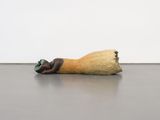
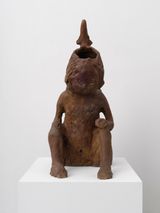
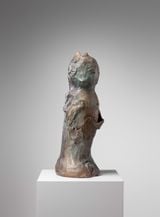
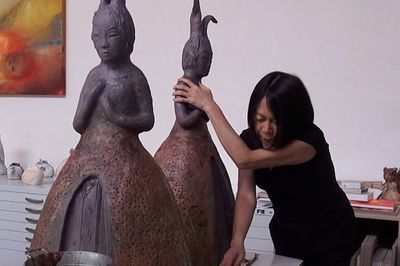
Ceramics and small-scale sculptural forms also emerged in her practice in these decades, introducing hybrid beings that blur the boundaries between human, animal, and plant, often with rough, hand-formed surfaces and muted, earthy glazes. These early sculptures laid the groundwork for later monumental bronzes and terracotta figures that expand her intimate imagery into public and architectural contexts.
Mature practice and key series, 2000s–2010s
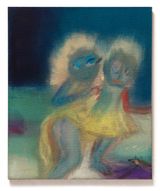
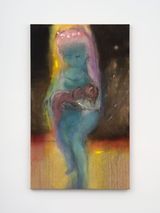
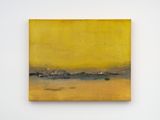
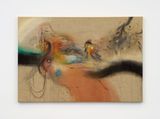
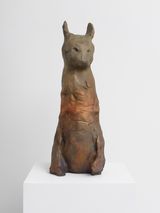
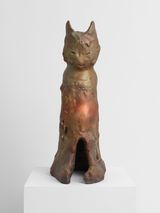
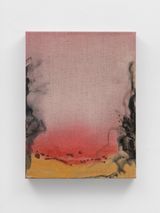
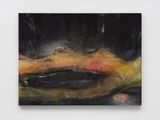
From the 2000s Ikemura’s mature practice consolidated around luminous, often large-scale paintings in oil and tempera, sculptural terracotta figures, and works on paper that merge landscape and body into continuous fields of colour. Feminine spirits and child-like figures appear as hovering silhouettes, their eyes sometimes absent or oversized, heightening a sense of spectral presence and interiority. Ikemura’s recurring rabbit–girl motif, which fuses a long-eared animal with a standing or crouching female form, embodies transformation, fertility, and vulnerability, and has been realised in media ranging from glazed terracotta to monumental bronze.
Institutional exhibitions such as As Long as I’m Walking at the Sainsbury Centre in Norwich in 2021 and Year of the Usagi at MAZ Museo de Arte Zapopan in Guadalajara in 2023 have highlighted her sustained engagement with nature, myth, and global cultural crossings. These shows emphasise how her figures operate both as personal icons and as allegories for planetary interdependence and environmental precarity.
Recent projects and ongoing themes, 2010s–2020s
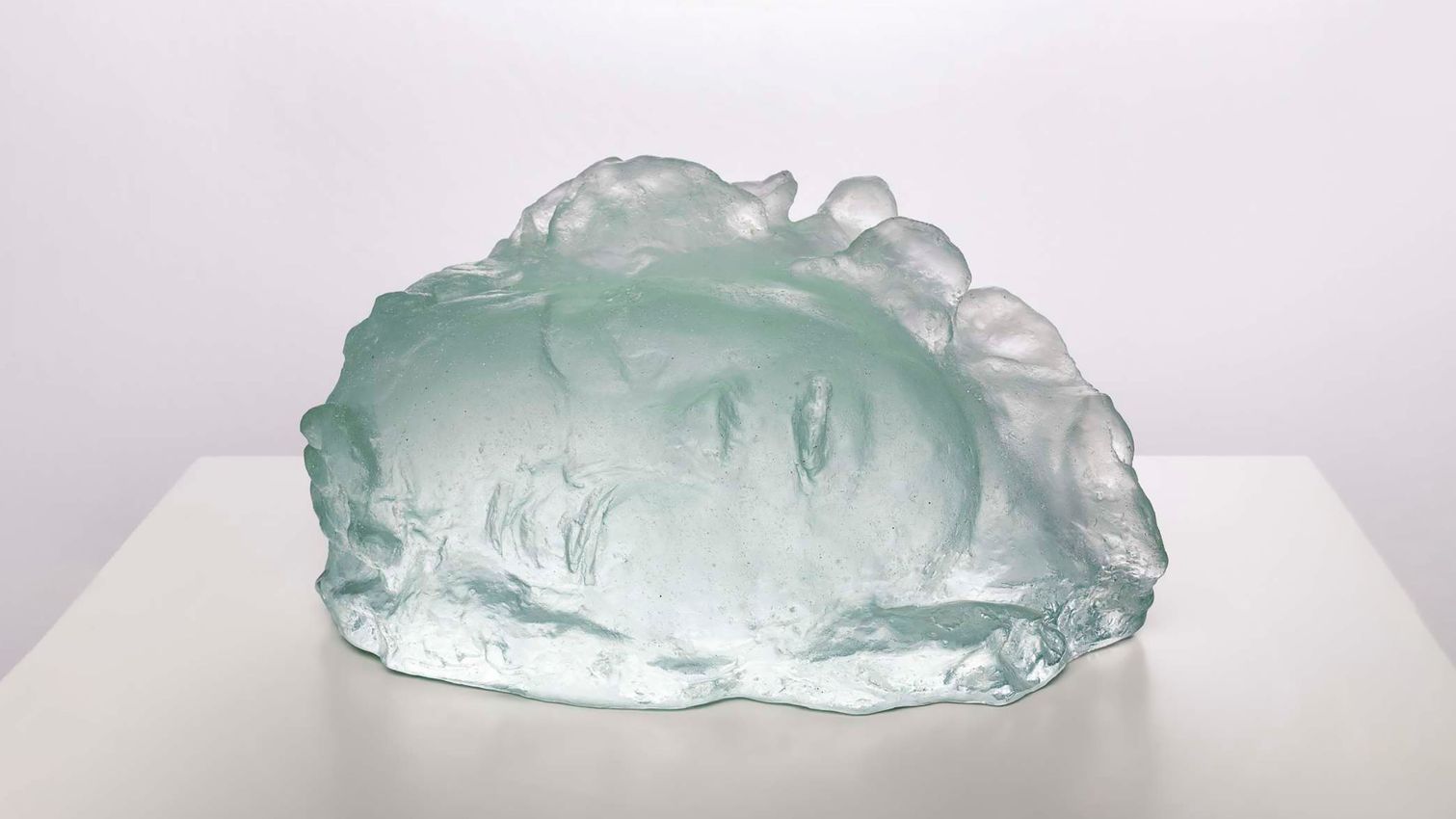
In the 2010s and 2020s Leiko Ikemura has expanded her practice through glass, installation, and large-scale sculpture, often staging works as immersive environments that foreground the relationship between the female body, landscape, and cosmic space. Glass sculptures and translucent forms extend her longstanding interest in fragility and transformation, with hybrid figures and animal shapes emerging from luminous colour fields and suspended volumes.
Museum and gallery projects in the mid-2020s, including the ALBERTINA Museum exhibition Motherscape in Vienna (14 November 2025–6 April 2026) and Lisson Gallery shows in New York and Los Angeles, have underscored her focus on horizons and thresholds—spaces where sky and sea, interior and exterior, and human and non-human worlds meet. These presentations bring together tempera paintings, bronzes, glass works, and architecturally scaled elements, presenting Ikemura’s hybrid beings as guides through states of uncertainty, care, and renewal.
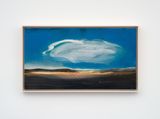
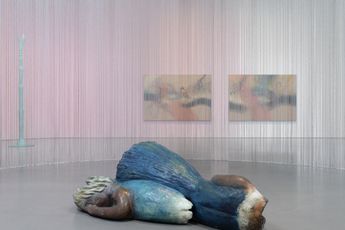
For her first exhibition in Los Angeles, Leiko Ikemura: Riding Horizon at Lisson Gallery (24 February–28 March 2026), Leiko Ikemura presents a body of work from the past decade that centres on the horizon as ‘the place where two worlds come together’. Installed at 1037 N. Sycamore Avenue, the show features a new metallic mesh wave that cuts through the gallery like an artificial shoreline, large-scale bronzes of reclining girls and women, and hybrid figures such as a girl whose head becomes a cluster of birds, alongside oil and egg-tempera paintings that explore the charged space between sky and ocean. Across this constellation of sculptures and paintings, Ikemura extends her ongoing inquiry into the relationship between the female body, landscape, and cosmic time, conjuring an otherworldly environment in which humans and nature coexist within a ‘melting vastness’ between the heavens and the sea.
Awards and honours of Leiko Ikemura
- 2019, 70th Art Encouragement Prize of the Minister of Education, Culture, Sports, Science and Technology (MEXT), Agency for Cultural Affairs, Japan.
- 2014, Cologne Fine Art Prize (Kölner Kulturstiftung der Kreissparkasse Köln), Cologne, Germany.
- Earlier awards and recognitions from European cultural institutions acknowledging her contribution to contemporary painting and sculpture.
Exhibitions of Leiko Ikemura
Leiko Ikemura has been widely exhibited in solo and group exhibitions at museums and contemporary art galleries in Europe, Asia, and the Americas, with a particular presence in Germany, Switzerland, Japan, the United Kingdom, and the United States. Her works are held in major public collections including mumok – Museum moderner Kunst Stiftung Ludwig Wien in Vienna, the Centre Pompidou in Paris, and the Hara Museum of Contemporary Art in Tokyo, underlining her international significance.
Select solo exhibitions
- 2026, Leiko Ikemura: Riding Horizon, Lisson Gallery, Los Angeles, United States, 24 February–28 March 2026, 1037 N. Sycamore Avenue.
- 2026, Leiko Ikemura – El Jardín Nocturno, Lisson Street, Lisson Gallery, London, United Kingdom, 18 February–9 May 2026 (presentation coinciding with Los Angeles and ALBERTINA shows).
- 2025–2026, Leiko Ikemura (retrospective-style exhibition), ALBERTINA Museum, Vienna, Austria, 14 November 2025–6 April 2026.
- 2025, Talk to the sky, seeking light, Lisson Gallery, New York, United States, 1 May–1 August 2025.
- 2024–2025, Floating Spheres, Kunsthalle Emden, Emden, Germany, 23 November 2024–11 March 2025.
- 2023, Year of the Usagi, MAZ Museo de Arte Zapopan, Guadalajara, Mexico, 4 February–25 June 2023.
- 2021, As Long as I’m Walking, Sainsbury Centre, Norwich, United Kingdom, 18 July–12 December 2021.
Group Exhibitions and Collections
Leiko Ikemura’s work has also been included in group exhibitions at The National Museum of Modern Art, Tokyo; Museum on the Seam, Jerusalem; and the Princessehof National Museum of Ceramics, Leeuwarden. Her work has been collected by renowned institutions such as the mumok — Museum moderner Kunst Stiftung Ludwig Wien, Vienna; the Centre Pompidou, Paris; and the Hara Museum of Contemporary Art, Tokyo.
Website and Further Reading
Leiko Ikemura’s website can be accessed here and her Instagram can be found here.
For more in-depth discussion of the artist’s ideas, readers can explore the Ocula Magazineconversation ‘Leiko Ikemura: ‘I prefer to leave unfinished traces...’, which examines her approach to materials, glass sculpture, and the poetics of incompletion. View artworks, exhibitions, and related editorial by Leiko Ikemura on Ocula to see how museums and contemporary art galleries present her practice internationally.
About this profile
This profile of Leiko Ikemura has been prepared using verified sources including museum publications, the artist’s galleries, and Ocula editorial content to ensure accuracy and currency. It follows Ocula’s artist profile guidelines and draws on materials compiled for Ocula by contributing editor Anna Dickie and colleagues.
Leiko Ikemura FAQs
Who is Leiko Ikemura?
Leiko Ikemura is a Japanese Swiss contemporary artist born in Tsu, Japan, in 1951, known for paintings, sculptures, ceramics, and glass works that explore hybrid figures, landscapes, and spiritual states across European and Japanese contexts. Ikemura lives and works mainly in Cologne and Berlin and has taught at the Berlin University of the Arts, building a significant international exhibition history.
What type of art does Leiko Ikemura make?
Leiko Ikemura makes paintings, sculptures, drawings, ceramics, and glass artworks that merge human, animal, and landscape elements into dreamlike, often feminine figures set within atmospheric environments. Her work addresses themes of transition, cross-cultural identity, childhood, ecological awareness, and the emancipation of the female body from conventional art-historical representation.
Where does Leiko Ikemura live and work?
Leiko Ikemura lives and works primarily in Cologne and Berlin, Germany, after earlier periods in Spain and Switzerland following her move from Japan in the 1970s. This transnational background informs her art, which fuses Eastern and Western visual languages and circulates widely in European, Asian, and American institutions and galleries.
What themes does Leiko Ikemura explore in her artworks?
Leiko Ikemura explores themes of transition, hybridity, cross-cultural experience, ecology, and the psychic and spiritual dimensions of girlhood and femininity through ethereal figures, rabbits, and landscape forms. Her works frequently suggest a porous boundary between humans, animals, plants, and cosmic space, inviting viewers to consider interconnectedness and collective responsibility.
Where can I see work by Leiko Ikemura?
Work by Leiko Ikemura can be seen in public collections such as mumok in Vienna, the Centre Pompidou in Paris, and the Hara Museum of Contemporary Art in Tokyo, as well as in exhibitions at institutions across Europe, Asia, and North America. Collectors and viewers can also encounter her artworks through contemporary art galleries including Lisson Gallery and Galerie Peter Kilchmann, and via online viewing rooms and exhibitions listed on Ocula. In 2026, work by Leiko Ikemura can be seen at the ALBERTINA Museum in Vienna in the exhibition Motherscape (to 6 April 2026), at Lisson Gallery Los Angeles in Leiko Ikemura: Riding Horizon (24 February–28 March 2026), and at Lisson Street, London, in Leiko Ikemura – El Jardín Nocturno (18 February–9 May 2026). These shows complement ongoing access to her work in museum collections such as mumok in Vienna, the Centre Pompidou in Paris, and the Hara Museum of Contemporary Art in Tokyo.
What is Leiko Ikemura’s relationship with Lisson Gallery?
Leiko Ikemura is represented by Lisson Gallery, which presented her first exhibition with the gallery, Talk to the sky, seeking light, at its New York space from 1 May to 1 August 2025. Lisson Gallery highlights her long-standing exploration of transition, cross-culturalism, and the emancipated female body across paintings, bronze sculptures, ceramics, and glass works.
Has Leiko Ikemura received major awards?
Leiko Ikemura has received major awards including the Cologne Fine Art Prize in 2014 and the 70th Art Encouragement Prize of Japan’s Agency for Cultural Affairs in 2019, recognising her contribution to contemporary art. These honours reflect decades of sustained innovation in painting and sculpture and a prominent role in the cultural exchange between Japan and Europe.
Ocula | 2026

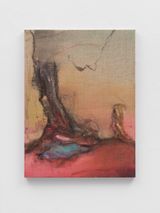
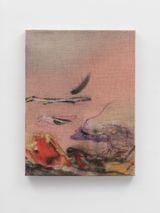
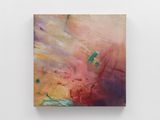
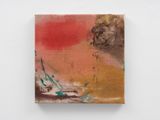
View Leiko Ikemura's Artworks




















Explore Leiko Ikemura's Exhibitions






Leiko Ikemura in Ocula Magazine








Explore and Follow Artists Shaping Contemporary Art
A respected voice in contemporary art discourse.
Focusing on ambitious storytelling and insightful art-world commentary. Ocula Magazine publishes in-depth interviews, critical essays and timely analysis on the artists, exhibitions and ideas driving the global art world.
Learn more about Ocula Magazine
Showcasing the best of the art world.
Ocula partners with galleries from around the world to highlight their artists, artworks and exhibitions. Gallery membership is by application and invitation, with each member vetted by an independent panel.
Learn more about Ocula Membership
Specialises in the sale of major artworks.
Led by a team with deep ties to the world’s leading auction houses, galleries and collectors. Ocula’s advisory team offers bespoke services to high-net-worth clients from around the world who are looking to acquire the best of contemporary and modern art.
Learn more about our team and services