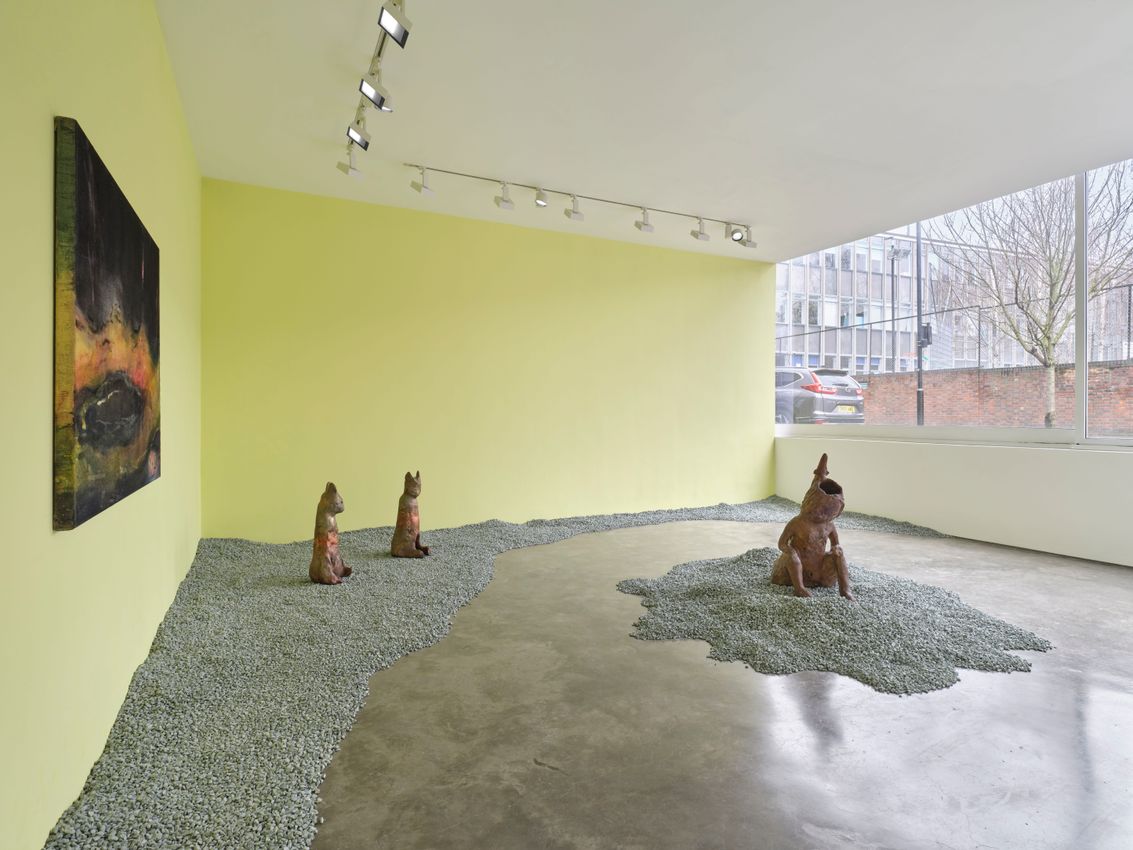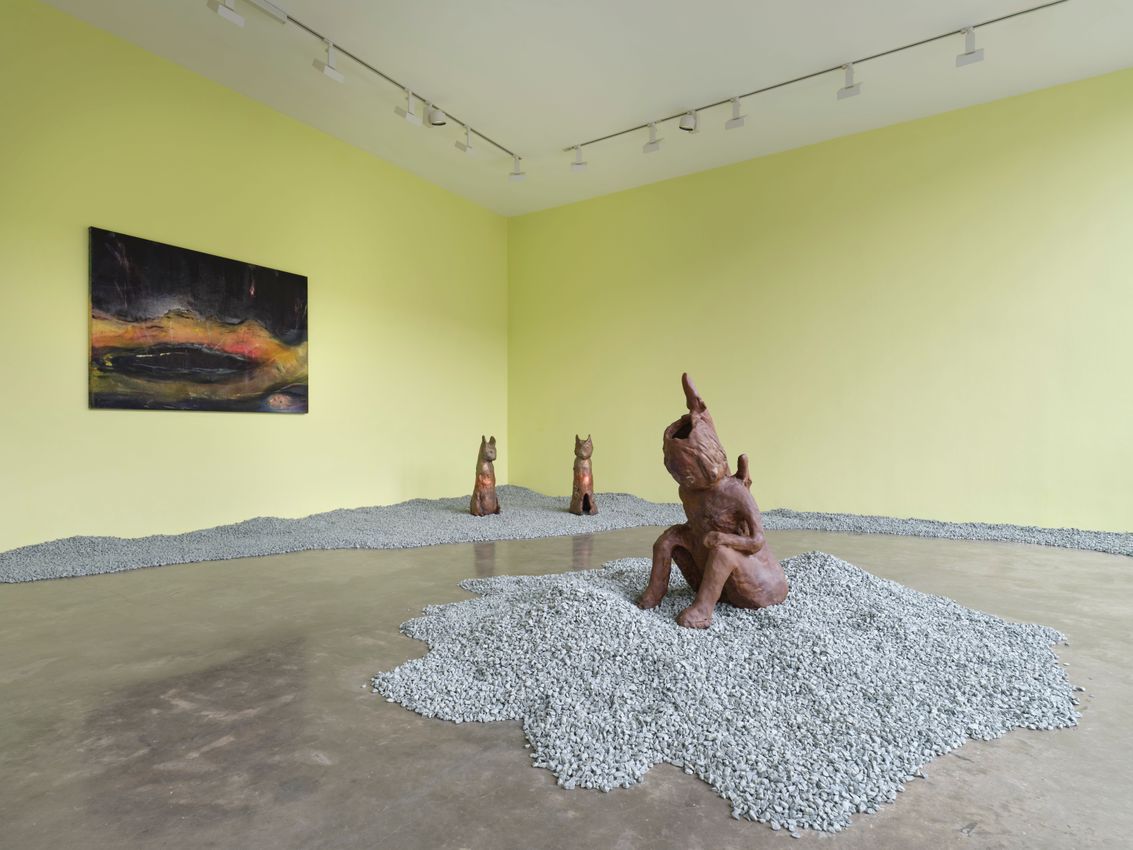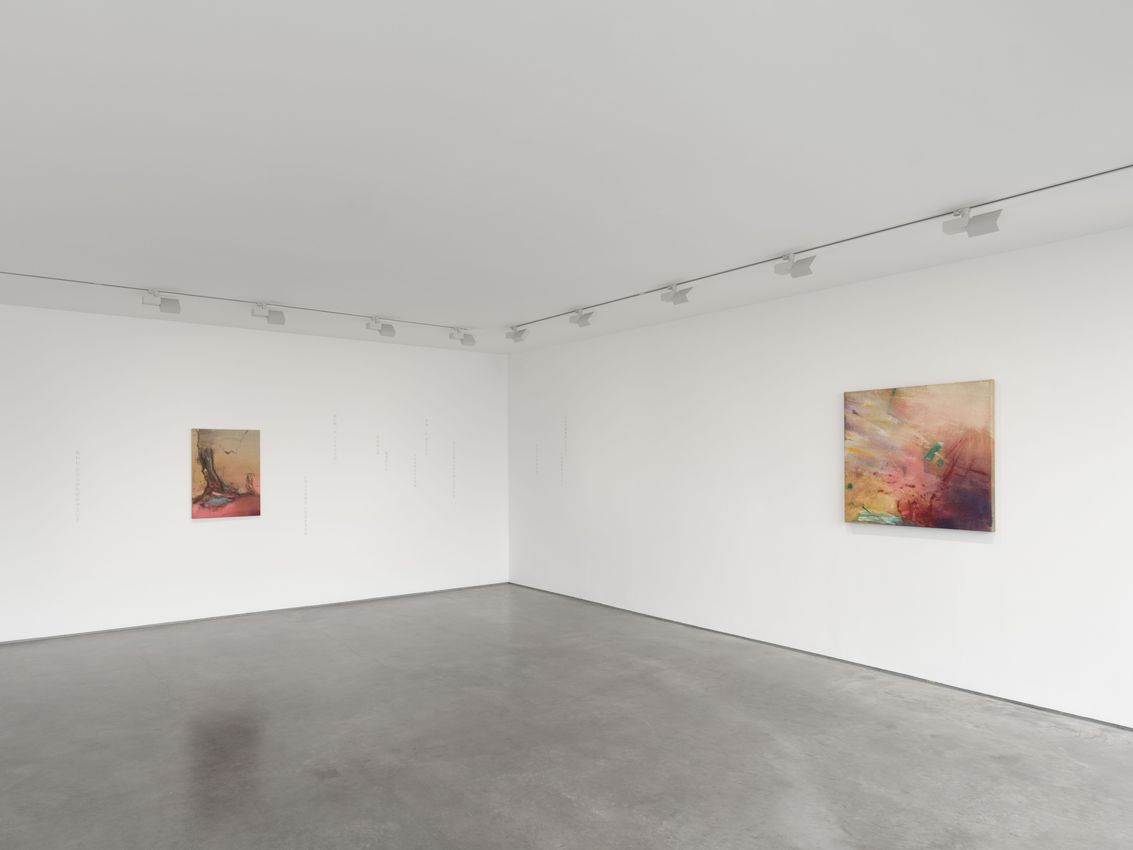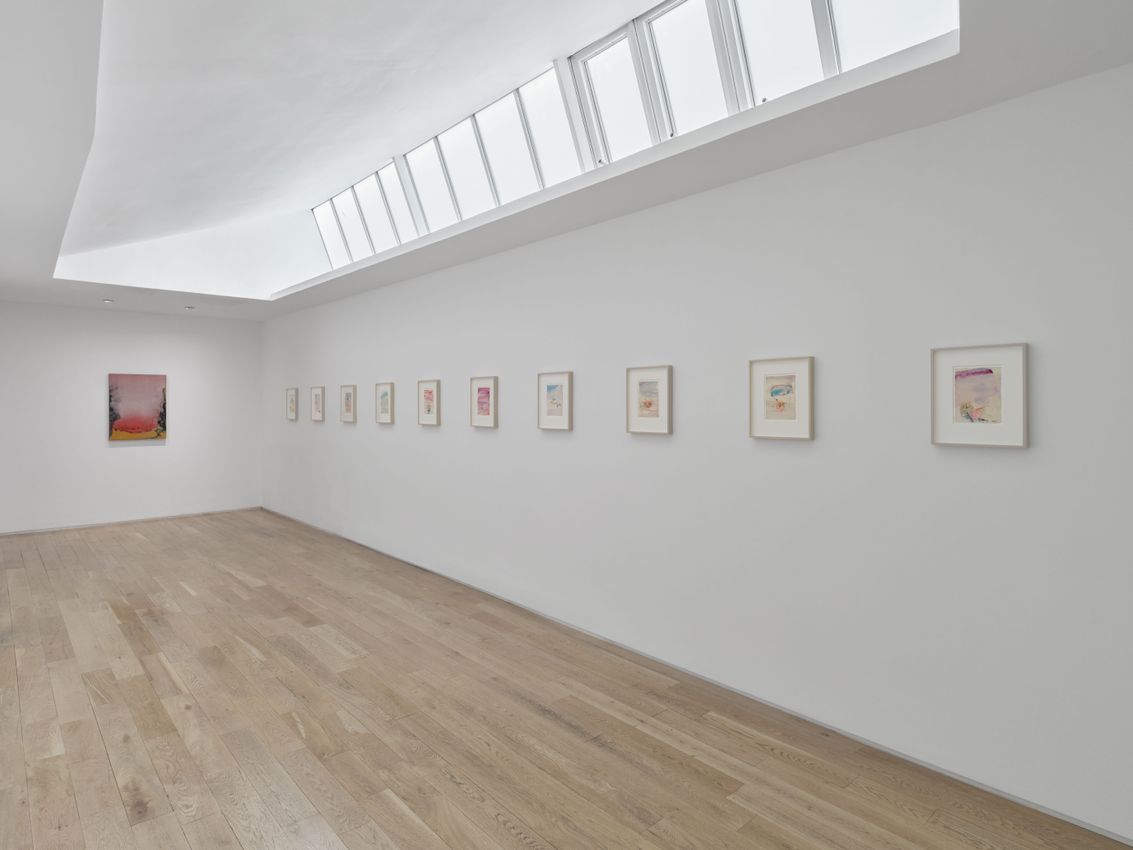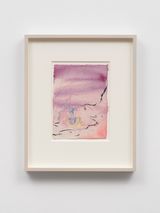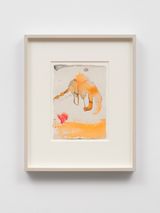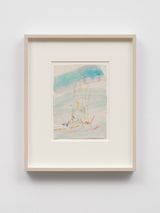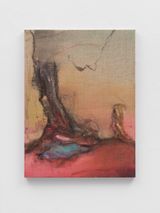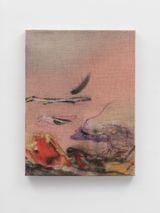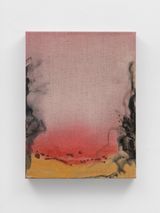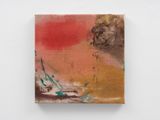




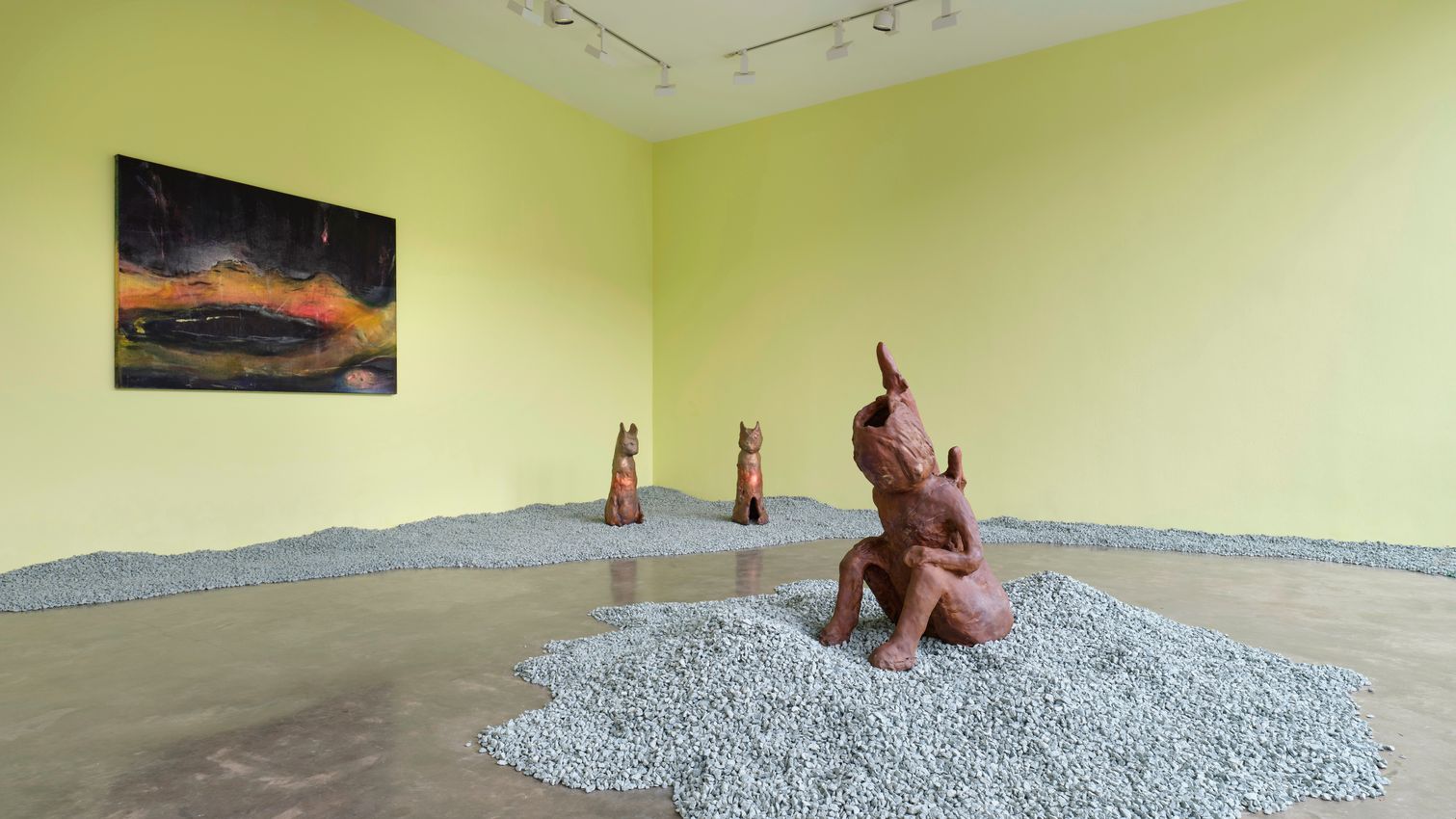
Leiko Ikemura’s Lisson Street presentation coincides with major shows at both Lisson Los Angeles and at the Albertina museum in Vienna. Following the London gallery’s seasonal theme of Landscope – artistic responses to the natural world through varied lenses and viewpoints – Ikemura presents a nocturnal garden, El Jardín Nocturno, through a variety of sculptures, paintings, works on paper and poems.
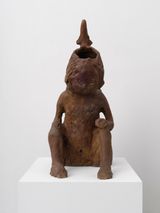
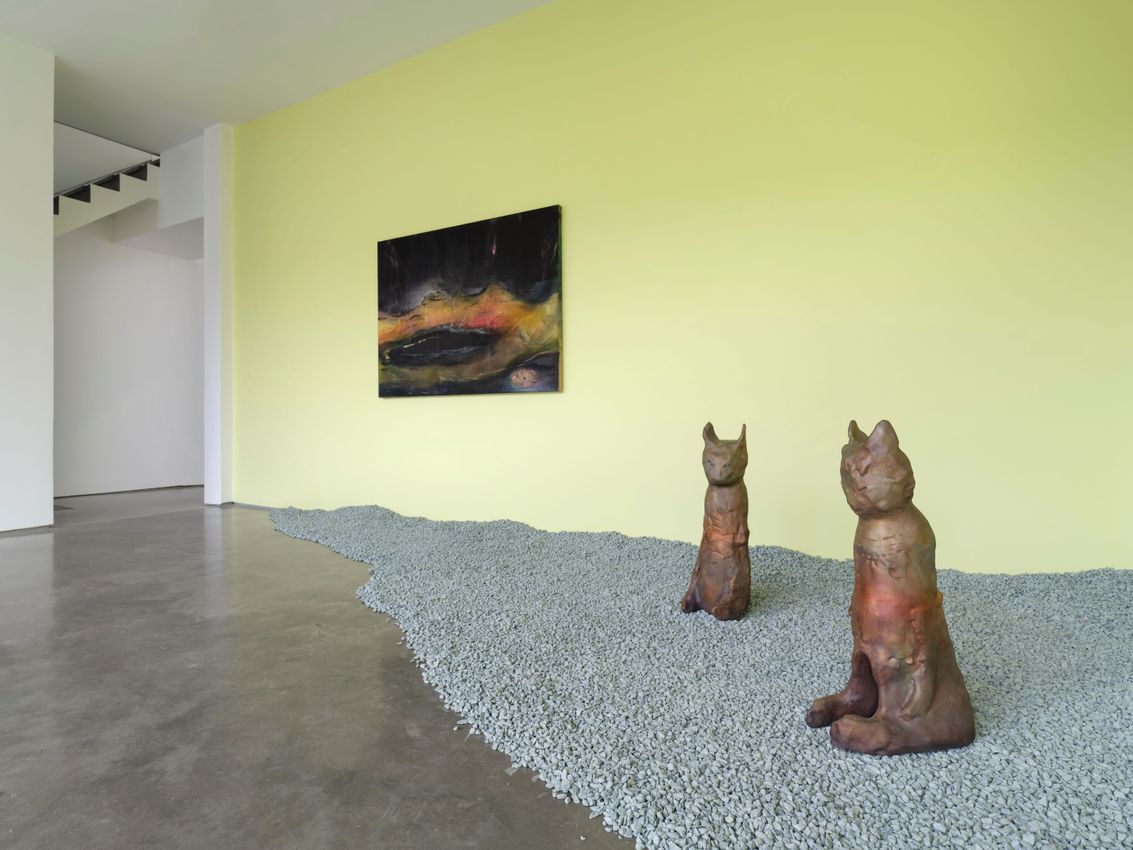
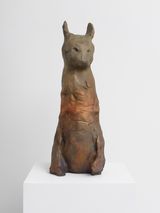
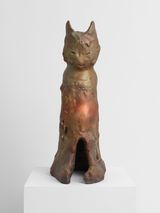
The viewer enters the garden on the ground floor, where three sculptures are nestled in an undulating field of green stone. Ikemura’s central and imposing Rocket Girl (2024) squats menacingly, being at once a symbol of chaotic, destructive forces, but also a figure for protective good, here guarding the two cat-like statues of Miko and Mikolina in the corner. Existing between genders and species, these three bronzes are also seemingly emerging from their terrain, sculpted through the primordial energy of the earth.
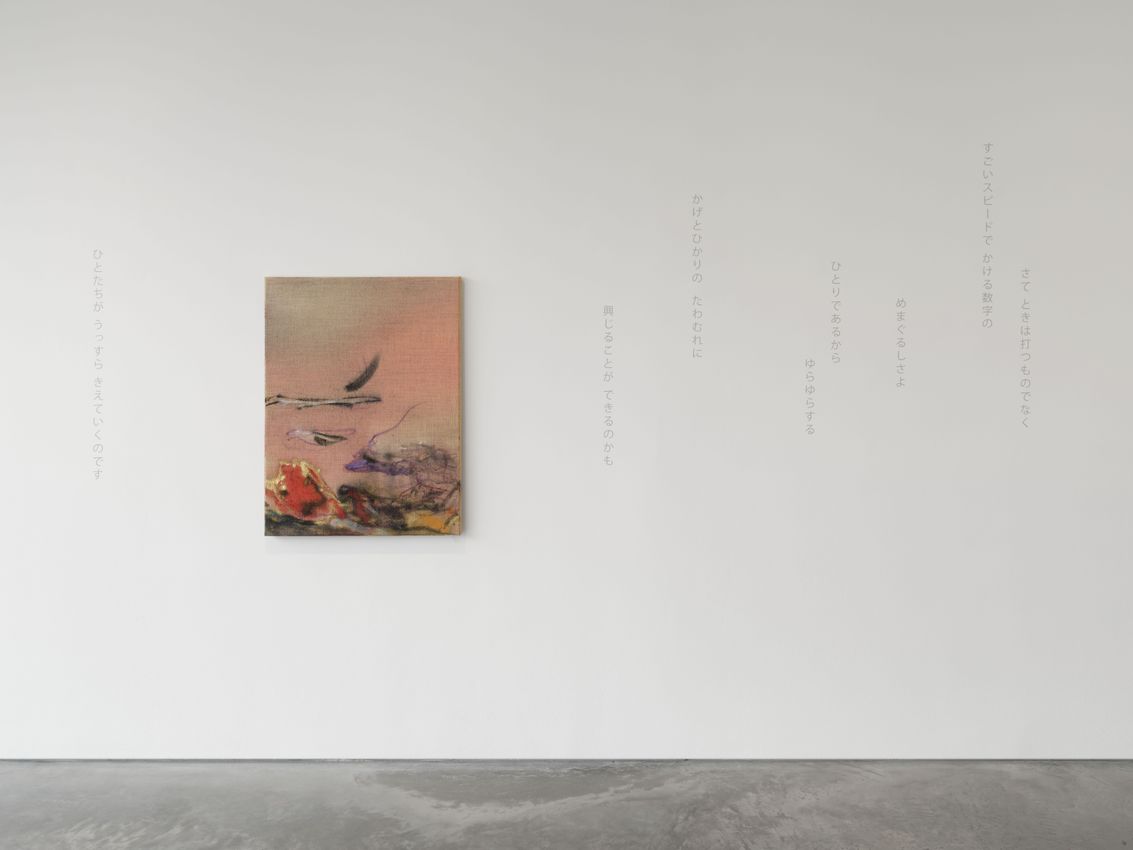
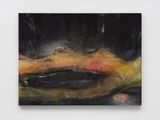
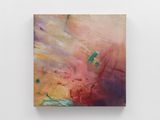
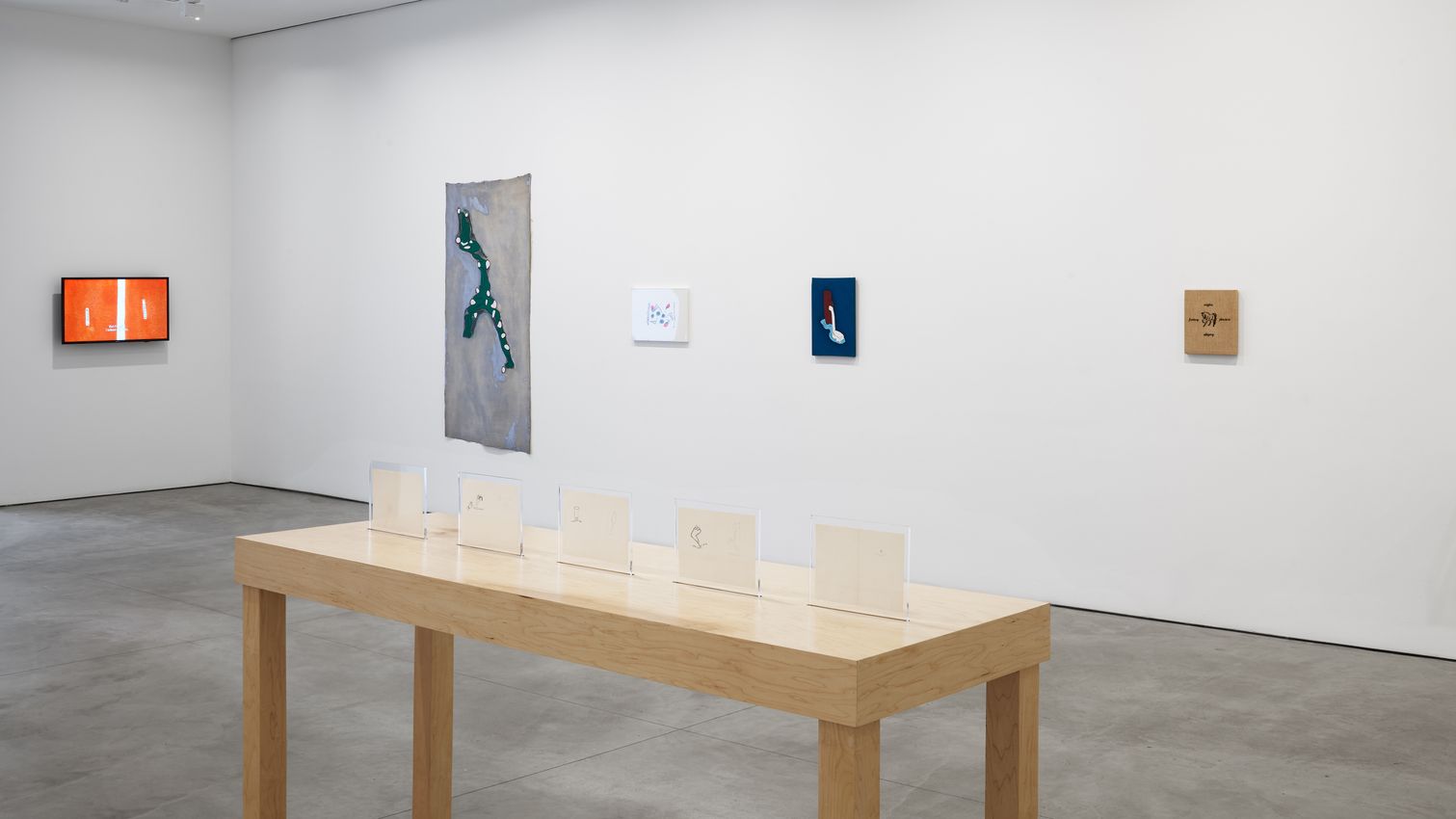
A sense of prehistoric time also bubbles up from the inky depths of a lake in the nearby painted Nightscape (2024), while upstairs the twilit garden flowers into daytime with pink blooms in a suite of rose-tinted canvases and gesture-filled fields of marks that coalesce into magical, light-filled landscapes, punctuated by Ikemura’s cascading haikus in Japanese script. These poems have been translated into English below, running right to left from the doorway.
dawn light
sleeping / I have become quite an isolated island
drifting aimlessly like flotsam
__
time isn’t something to be struck
numbers racing by at incredible speed / the dizzying whirl
__
being alone / the swaying
play of shadow and light
perhaps I can delight in it
__
people fade away faintly
changing everything / ruins of things tumble
light lingering
__
the bonds between people break unstoppable
darkness or light
then what comes after that?
__
vanishing into / such forms and air / everyday things
rhododendrons blooming in the garden
__
only the echoes of life’s voices remain
the tenderness of that withered flower
Courtesy Lisson Gallery.


Leiko Ikemura is a Japanese Swiss contemporary artist known for poetic paintings, sculptures, drawings, and glass works that merge human, animal, and landscape forms into hybrid, transitional figures. Her artworks explore themes of cross-cultural identity, ecology, femininity, and the fragile relationship between humans, nature, and cosmic space, often through spectral girl-like bodies and rabbit–human beings.


Established in 1967 in London, Lisson Gallery is one of the most well-known galleries operating globally. Boasting an influential and continuing legacy, including playing a pivotal role in the careers of many pioneers of historically important art movements, the gallery works with some of the most significant contemporary artists today.

A respected voice in contemporary art discourse.
Focusing on ambitious storytelling and insightful art-world commentary. Ocula Magazine publishes in-depth interviews, critical essays and timely analysis on the artists, exhibitions and ideas driving the global art world.
Learn more about Ocula Magazine
Showcasing the best of the art world.
Ocula partners with galleries from around the world to highlight their artists, artworks and exhibitions. Gallery membership is by application and invitation, with each member vetted by an independent panel.
Learn more about Ocula Membership

Specialises in the sale of major artworks.
Led by a team with deep ties to the world’s leading auction houses, galleries and collectors. Ocula’s advisory team offers bespoke services to high-net-worth clients from around the world who are looking to acquire the best of contemporary and modern art.
Learn more about our team and services