Press Release

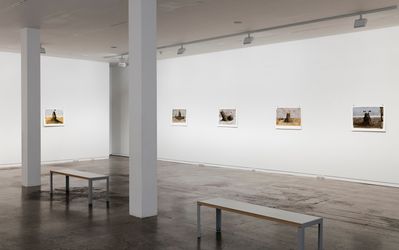
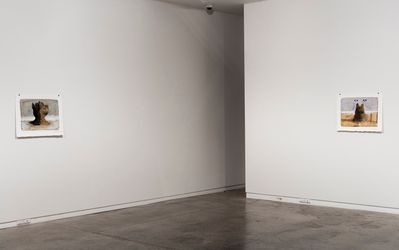
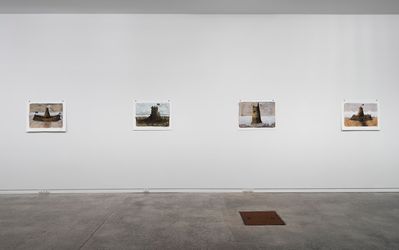
The latest exhibition at Two Rooms, Keep, sees Michael Shepherd taking a new direction with medium in his use of sand, inert polymers, acrylic and an orbital sander. In relation to subject matter however, the show continues with Shepherd’s interest in New Zealand history while also engaging with a current political controversy: the two binding referendums on the future of the country’s flag.

The pending flag referendum has been heralded by some political commentators as a “rebranding exercise,” which raises questions around exactly what it is that we are trying to rebrand. Many more have lambasted the flag as a “colonial relic,” but it is worth reflecting on the point that this is perhaps something to be embraced since New Zealand is, in many ways, just that - a “colonial relic.” Indeed, the country is legally, ethically, philosophically and morally connected to the loose power block of the Commonwealth, which is an historic alliance, that has typically served us well. Furthermore, our national image and rhetoric is redolent with vestiges of colonialism that are yet to undergo a rebranding. For example, our National Anthem honours the British Monarchy, as does our currency, we follow Westminster Law, and vast swathes of the population proudly guard their genealogical ties to the United Kingdom.

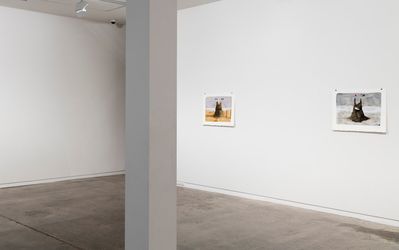
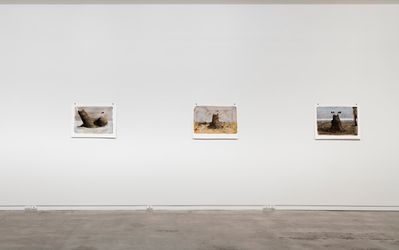
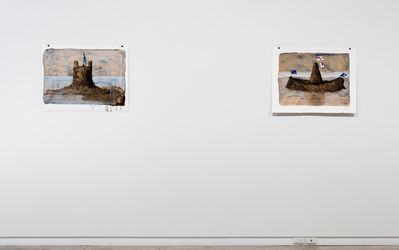
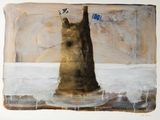
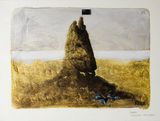
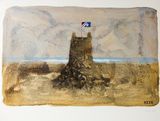
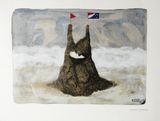
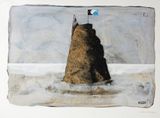
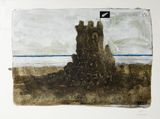
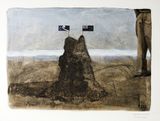
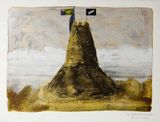
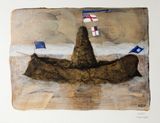
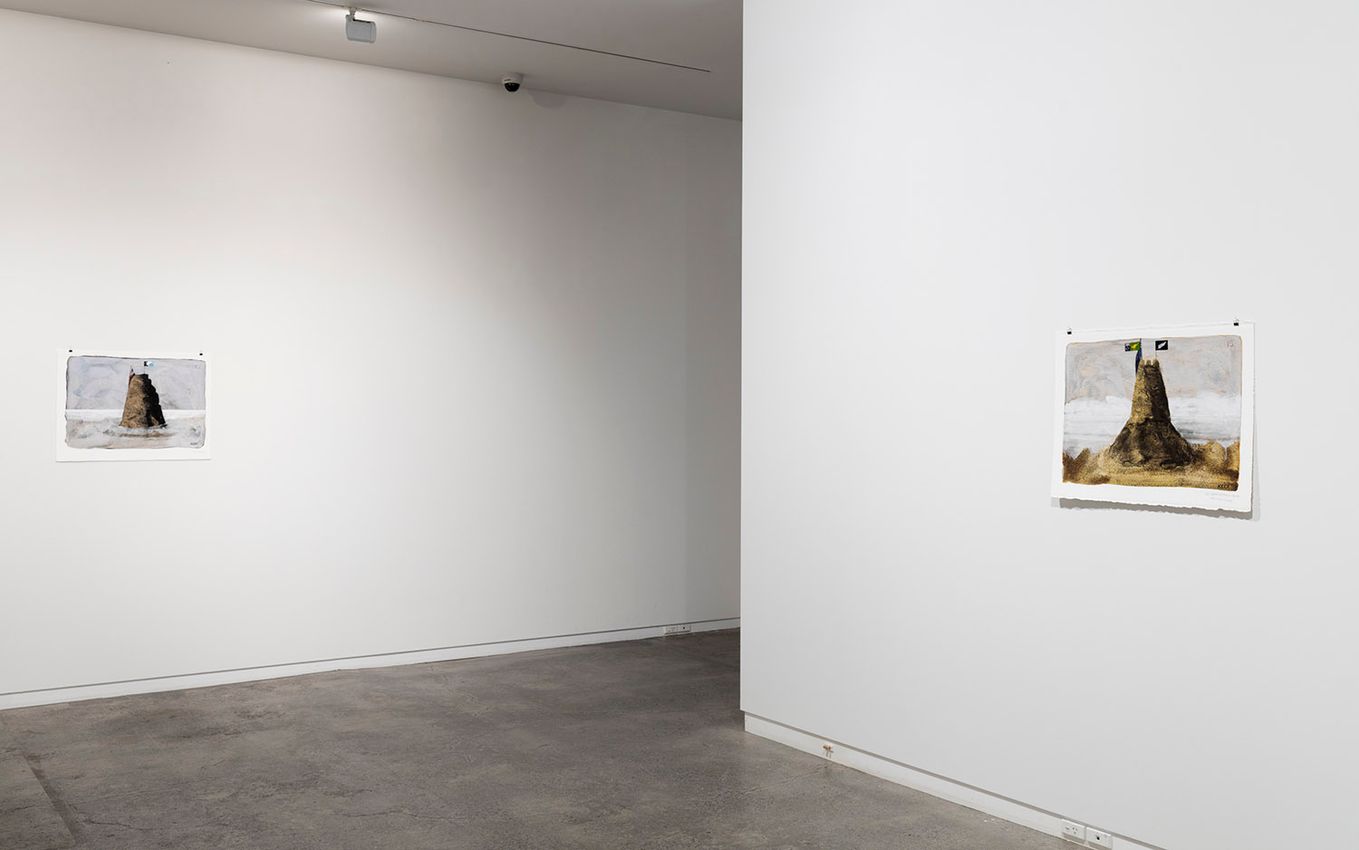
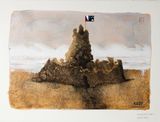
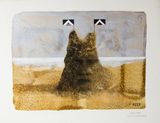
It is these questions, opinions and debates that have given risen to Shepherd’s latest exhibition. Delving into the murky depths of New Zealand’s military, maritime, and colonial past, Shepherd has investigated the origins, emblems, and uses of the national flag. As a form readily associated with flags and the beach of childhood memories, the universal sandcastle is well served as the vehicle upon which to showcase some of the historic transmutations and future possibilities of the New Zealand flag. The compositional centrality of the sandcastles is reflected in the title of the show, and each of the 14 works in the exhibition is branded with the word “keep,” harking back to one of the more historic uses of the word as a noun designating “the innermost and strongest structure or central tower of a medieval castle.”[1] It also extends to the medium of the works, for each of them is constructed using a mixture of white and iron sand that people sent Shepherd from all over New Zealand. After a significant period of experimentation, the artist has arrived at a unique process whereby the sand dictates the rise and fall of the castes with the flags being meticulously added at a later date.

Throughout the suite of paintings, Shepherd details many of the flags that have come and gone throughout New Zealand’s history. In OHMS (Naval Gaze), for instance, five different naval flags that were flown throughout the nineteenth century are seen fluttering across the composition. Indeed, New Zealand’s present flag has a slightly shadowy history, being first drawn in 1833 by the Englishman Henry Williams during his time with the Church Missionary Society in Northland. By 1869 it was being used as a naval ensign, and, with only slight adjustments being made in 1902, it has remained a forceful national symbol over the course of 113 years. Perhaps most poignantly, it symbolised New Zealand through the tumults of two world wars, and it should be remembered that when the Maori Battalion was finally awarded the right to fight for their country, their suffering and sacrifice was carried out under the current flag.

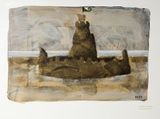
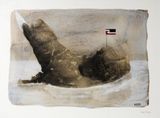
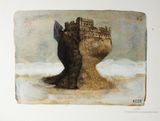
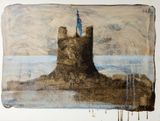
Tribute to a specific piece of that military history is found in Onward. Here, a ghostly monastery teeters precariously atop a mountainous pile of sand, which steadily erodes under the incessant movement of the sea. The painting acknowledges the brutal battle waged by New Zealand troops, including the 28th Maori Battalion, for Monte Cassino in Italy at the beginning of 1944. Topped with a Benedictine monastery, the rocky hill of Monte Cassino rises some 500 meters where it overshadows the passage through the Liri Valley into Rome. This was the site of steady and devastating fighting with the Maori Battalion sustaining particularly significant losses. Importantly, throughout the campaign, the extensive suffering endured by Pakeha and Maori soldiers occurred under the banner of the current flag, while their hats typically sported the standard “Onward” badge, from whence the painting draws its title. The high level of thought, research and aesthetic refinement that is apparent in Onward is characteristic of every piece in the show. While each work chronicles different historic flags and/or contemporary designs, they all encourage the viewer to reflect on the purpose, uses, and meanings of the signs and symbols that we have used throughout our history, and continue to use as an expression of identity.

Dr Jemma Field

[1] “keep, n.” Oxford English Dictionary Online, December 2015.

Read More

Installation Views

Selected Works

Loading...
About the Artist

Michael Shepherd (b. Hamilton, Aotearoa New Zealand) one of Aotearoa New Zealand’s most distinguished contemporary artists. Shepherd spent his early years in Ngaaruaawahia and this youthful proximity to the sites of pivotal events in New Zealand’s nineteenth-century history fuelled a decades-long fascination with the complexities of the colonial era and its legacies. Shepherd graduated with a Diploma of Fine Arts (Honours) from Elam, the School of Fine Arts, University of Auckland (1979) and in 1982 he was awarded a Queen Elizabeth Arts Council travel grant, which he used to study 17th century Dutch painting materials and techniques in Amsterdam. Since then, has been producing intricate, painterly works, often in series, that engage history and memory, forging connections between present and past. Shepherd has exhibited throughout New Zealand since his first solo show at the Denis Cohn Gallery, Auckland, in 1980. Most recently, the major survey exhibition of his work Michael Shepherd: Reinventing History Painting, was developed by the Waikato Museum, curated by Elizabeth Rankin (2019). Further recent exhibitions include; Te Ahi Ka Roa, Te Ahi Katoro, Taranaki War 1860–2010: our legacy — our challenge, Puke Ariki, New Plymouth, (2010), SCORE (Upon the electronic works of Douglas Lilburn), Auckland (2009), Land Wars part 2: build, Te Tuhi Centre for the Arts, Manukau City (2008). Traveller to an Antique Land – an aspect of war in North Africa, Army Museum, Waiouru (2007). Michael Shepherd The Early Years 1975-1931, The Sarjeant Gallery, Wanganui (2005), Small World Big Town: Contemporary Art from Te Papa, City Gallery, Wellington (2005), Bright Paradise: Exotic history and sublime artifice, 1st Auckland Triennial, Auckland City Art Gallery (2001). His work is held in all major collections throughout Aotearoa New Zealand.
View Artist Profile Michael Shepherd contemporary artist
About the Gallery

Two Rooms is a contemporary art exhibition venue located in a converted warehouse in Central Auckland, New Zealand. Opened in August 2006, Two Rooms presents a program of residencies and projects by leading International and New Zealand contemporary artists. The building houses two exhibition spaces, the Project Room and the Long Room.

View Gallery Profile
Address
16 Putiki Street
Newton
Auckland
New Zealand
Opening Hours
Tue - Fri, 11am - 6pm
Sat, 11am - 3pm
(1)
Auckland 16 Putiki Street, Newton
Two Rooms
16 Putiki Street, Newton, Auckland, New Zealand
+64 9 360 5900
http://www.tworooms.co.nz

Opening hours
Tue - Fri, 11am - 6pm
Sat, 11am - 3pm
The art world in focus