Press Release

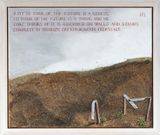
Suppose the future fails

Suppose, instead of failing, it never comes,
This future, although the elephants pass and the blare,
Prolonged, repeated and once more prolonged,
Goes off a little on the side and stops.
Yet to think of the future is a genius,
To think of the future is a thing and he
That thinks of it is inscribed on walls and stands
Complete in bronze on enormous pedestals.

Wallace Stevens, excerpt from Stanza IV, Owl’s Clover, 1937 [1]–

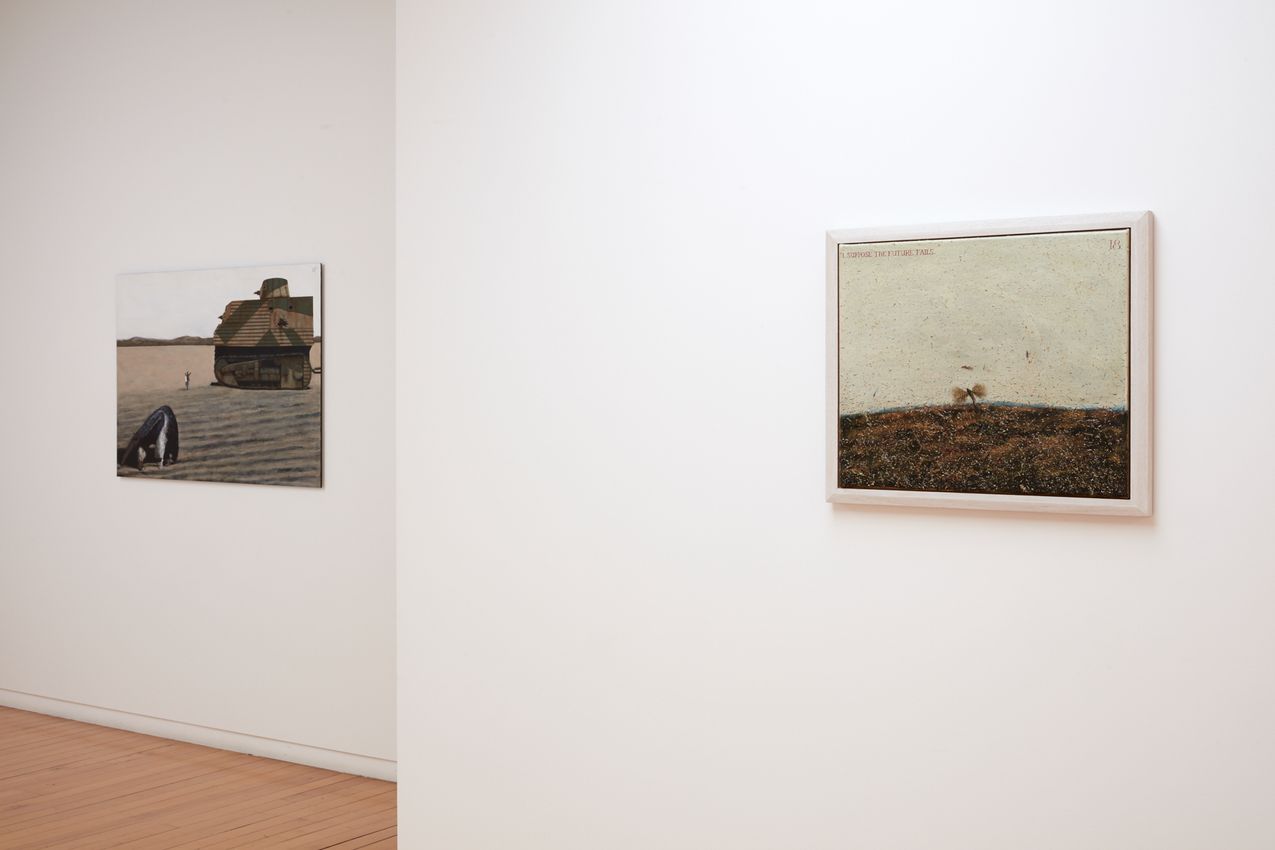
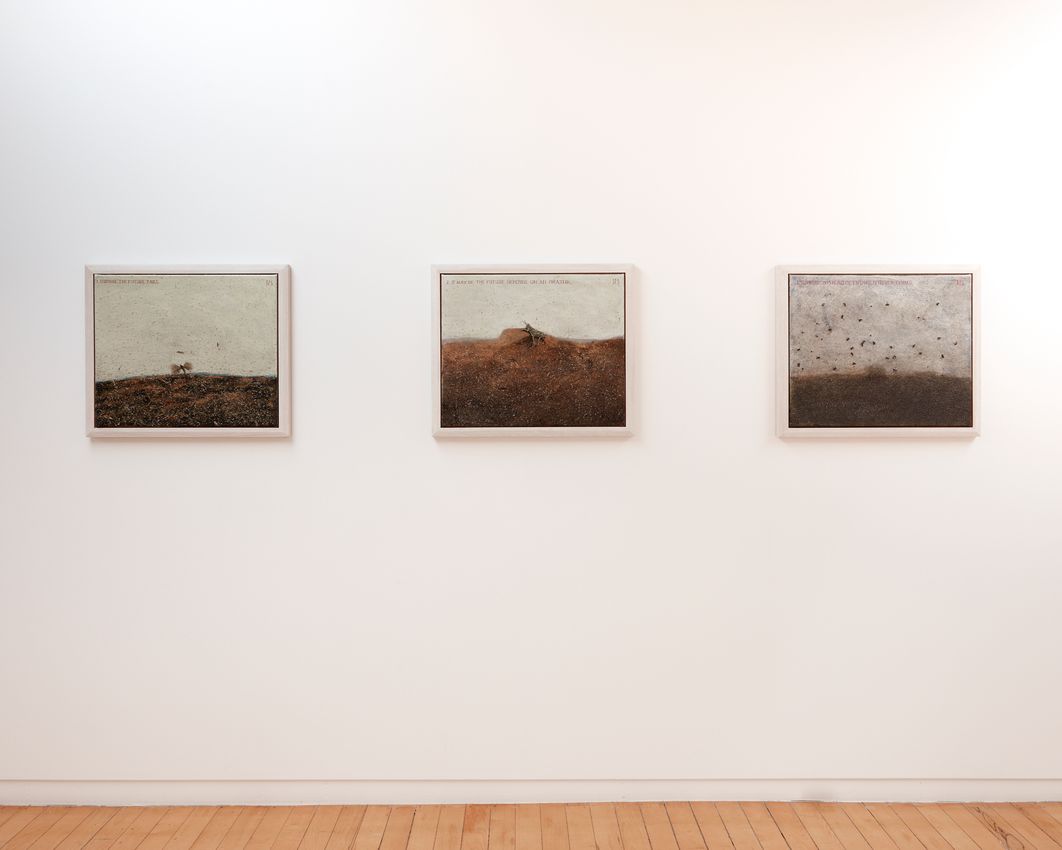
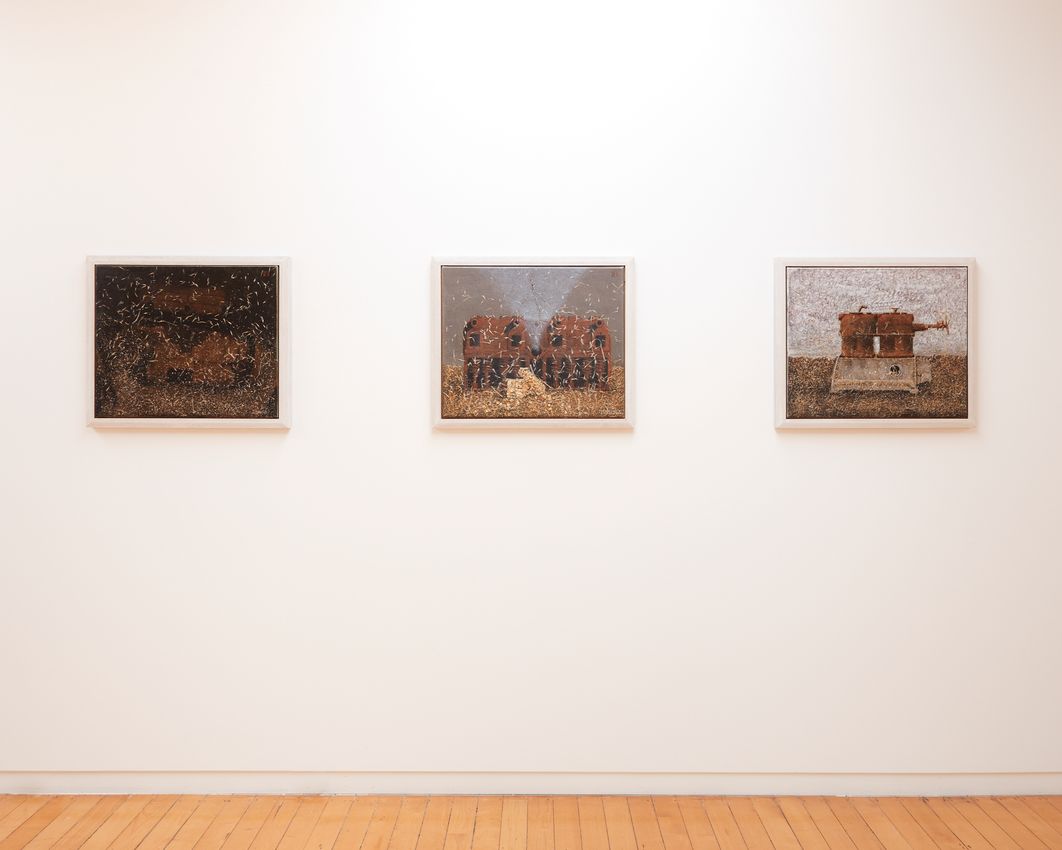
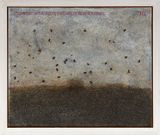
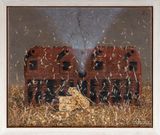
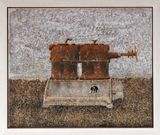
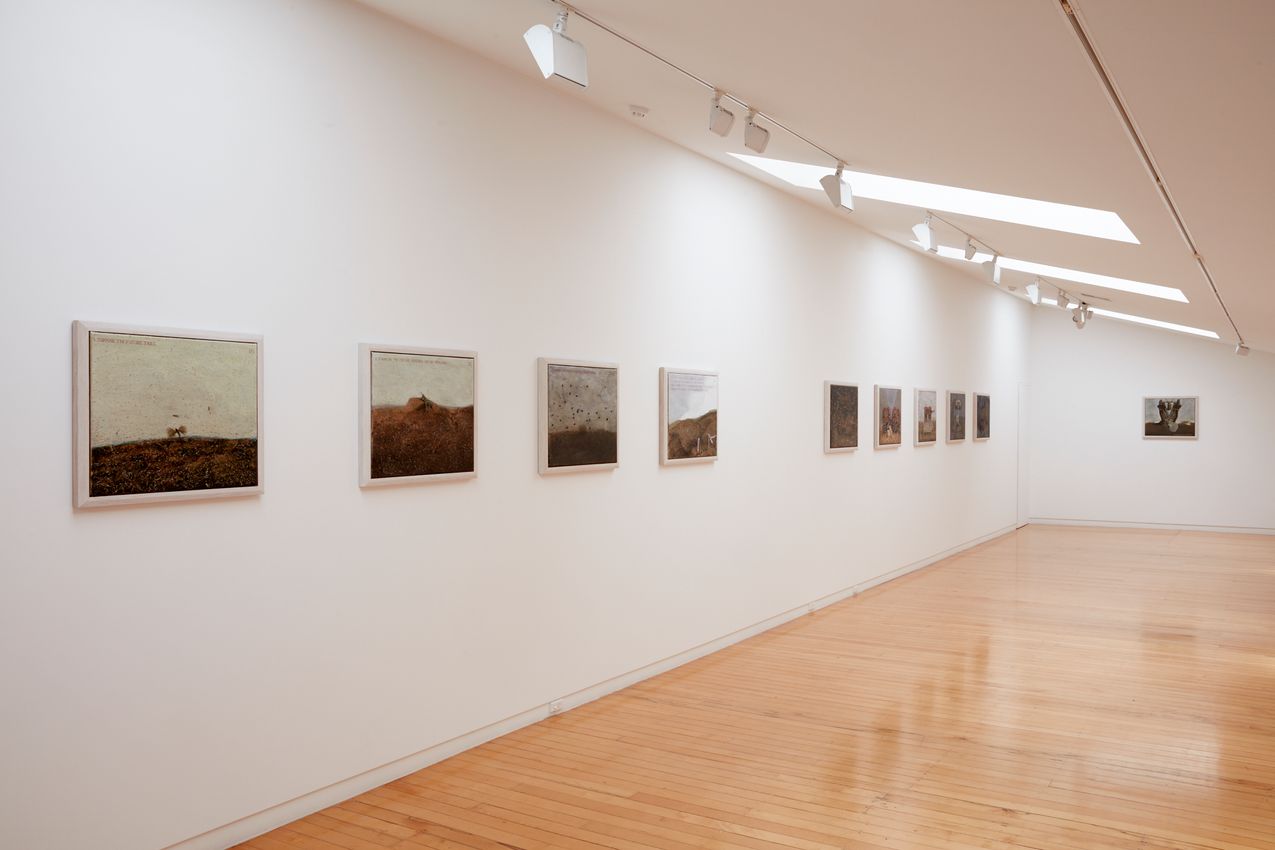
Michael Shepherd investigates what academic Camille Paglia terms “the claytonic” - the earth beneath one’s feet. Fittingly, his new paintings feature iron sand, native and introduced grass seed, granulated carbon, blessed thistle tea, muesli, dried alphabet soup and even dead bees embedded in their acrylic and polymer surfaces.[2] Shepherd is also an enthusiastic amateur botanist and spatial historian, informing his selection of these subjects and materials, and foregrounding the finer details of our native ecologies. [3]

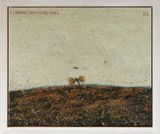
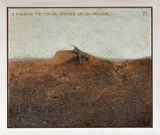
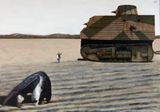
This exhibition traverses the terrain of New Zealand history, masculinity and ecological imperialism. [4] Shepherd’s interest in vital yet often overlooked ecologies manifests, for example, in his painted representations of threatened insect and plant species, depicted larger than life. These include an oversized grasshopper (invented by the artist from a combination of three different species) in Maybe the future needs an orator, and enlarged specimens of the endangered plant Myosotis Colensoi (named after the colonial botanist William Colenso) in Suppose the future fails, complete with Department of Conservation identification tags.

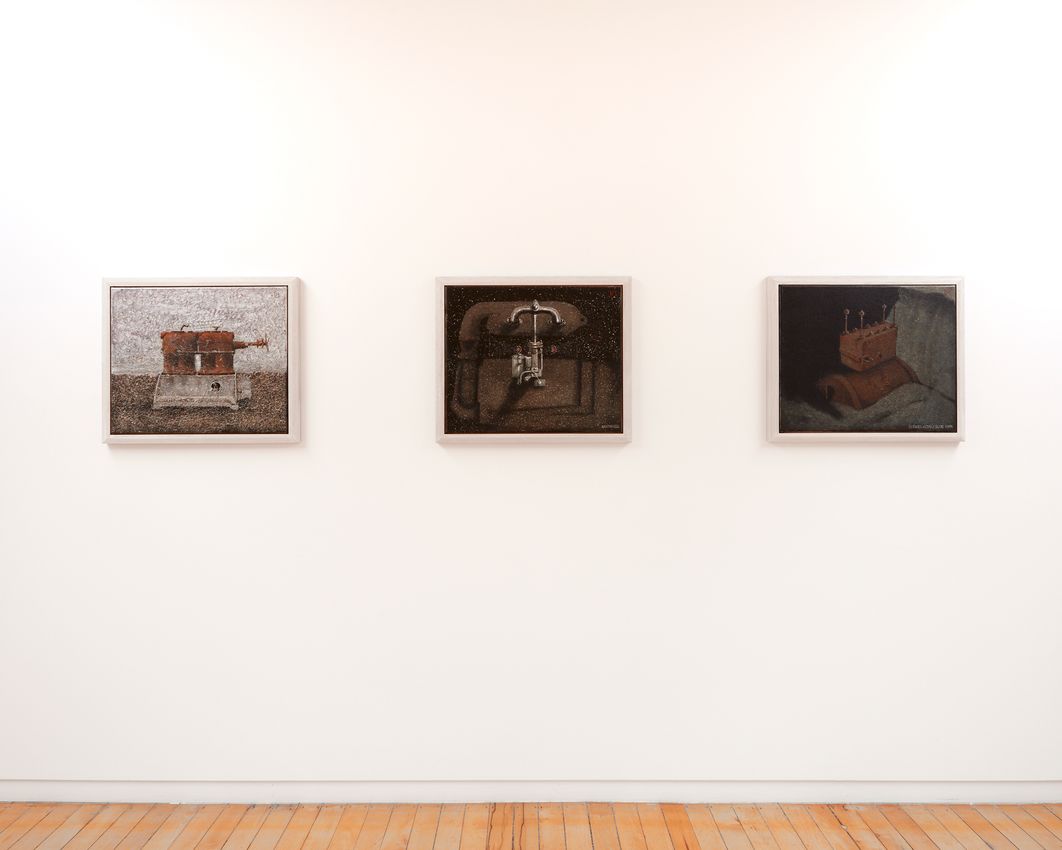
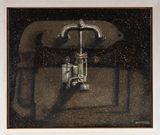
Some of the paintings also feature standing engines, machines which took on imaginary, anthropomorphised roles in Shepherd’s childhood. Here they are placed back in the environments in which he first encountered them -excavated from a paddock, found under a lean-to, or under cloth inside a garage. As a child, Shepherd describes, “hallucinating” at the sight and sound of these engines.[5] The artist was entranced by the way the carburettor sucks in air and ‘spirit’ (a former term for petroleum) and combines them to create energy, perceiving this as a kind of magic. Deeply fascinated by the machines’ cavities–their entrances and exits–he peered inside while his fingers traced their alien forms, a source of joy and terror. He read these cavities as portals to other worlds, their clicking and whirring, hiss and rumble, cementing his youthful, mythic interpretation of the engine as a “spirit repository. [6]

Shepherd’s childhood vision of engines possessed by animating spirits found affinities with works from art history he later encountered. These include Francis Picabia’s L’enfant Carbureteur (1919), and Marcel Duchamp’s The Bride Stripped Bare by Her Bachelors, Even (The Large Glass) (1915-23),where machines are metaphorically represented as human bodies. [7]

Shepherd’s paintings reflect on generations of men who coveted these engines and whose identities were indelibly linked to them. Growing up in the 1950’s, the artist’s father, a returned service WWII veteran, taught him how to run and repair engines. Fine tuning these machines was a ritualistic expression of masculinity, a kind of secret brotherhood. The workshop was a personal sanctum in which creativity could flow when freed from the demands of work and family life–much like an artist’s studio. Whether four or six cylinder, two stroke or four, at the time they were an icon of manhood–a national fever. Understanding and operating these engines was also key to male indoctrination: induction, compression, ignition, exhaust.

The artist sees these engines as a kind memento mori-telling reminders of our own mortality. Indeed, in his experience, they were often kept running to keep the memories of their former owners alive. Generations of men would tinker tirelessly so they could continue listening to the sounds their grandparents once heard. Within a contemporary framework, these archaic, defunct engines also speak to the decline of the oil economy. They are persistent remnants of historic environmental degradation, yet whose ongoing impacts continue to compound and are reaching a critical turning point when manifested in climate change. Hence, while once inspiring awe and the utopian promises of machine-assisted futures brought about by technological progress, they now also embody tragedy and death.

Linked to these ambivalences, the exhibition title Suppose the future fails is a line borrowed from Owl’s Clover, a Wallace Stevens poem which offers a critique of modernism and human hubris. For the artist, Stevens’ poem speaks to the absurdity of championing spectacle over content, and sensation over perception; to the propensity for humankind to overreach, their endeavours pushing natural limits to the point of crisis and deflation. [8]. Though Stevens wrote Owl’s Clover in the lead up to WWII, the poem also rings true with our contemporary environmental, economic and political situations, a dull echo of those dark times.

And yet in spite of these pressing reminders of our mortality and the threatened ecosystems upon which we are precariously poised, the paintings remain forward looking and optimistic. For Shepherd, the past and future are strange constructs, while the passage of evolution never ceases.[9] Always ‘down to earth’, he notes that the future -and indeed the meaning of his work - “is always in the act of becoming.” [10]

[1] Wallace Stevens, “Owl’s Clover,” 1937, excerpt from Stanza IV, in Stevens’ Collected Poetry and Prose, Frank Kermode and Joan Richardson eds. (New York: Literacy Classics of the United States Inc., 1997).
[2] The bees used in the painting died of the diseases Varroa and Foulbrood, which the artist links to their fragile ecological situation.
[3] This consideration even extends to the picture frames, designed by the artist and constructed in American oak by master craftsman Theo Findlayson.
[4] The term ‘ecological imperialism’ was first coined by Alfred Crosby. His theory was that European settlers were successful in colonisation because of their introduction of animals, plants and diseases -accidentally or deliberately -which lead to major shifts in the ecology of colonised areas. This also contributed to population collapse in endemic peoples.
[5] Michael Shepherd, interview by Emil McAvoy, November 5, 2018.
[6] Ibid.
[7] Shepherd has also studied the Italian Futurists’ depictions of the automobile.
[8] Shepherd, interview.
[9] Ibid.
[10] Ibid. Here the artist also reflects on and repurposes the philosophical thought of Gilles Deleuze.

Read More

Installation Views

About the Artist

Michael Shepherd (b. Hamilton, Aotearoa New Zealand) one of Aotearoa New Zealand’s most distinguished contemporary artists. Shepherd spent his early years in Ngaaruaawahia and this youthful proximity to the sites of pivotal events in New Zealand’s nineteenth-century history fuelled a decades-long fascination with the complexities of the colonial era and its legacies. Shepherd graduated with a Diploma of Fine Arts (Honours) from Elam, the School of Fine Arts, University of Auckland (1979) and in 1982 he was awarded a Queen Elizabeth Arts Council travel grant, which he used to study 17th century Dutch painting materials and techniques in Amsterdam. Since then, has been producing intricate, painterly works, often in series, that engage history and memory, forging connections between present and past. Shepherd has exhibited throughout New Zealand since his first solo show at the Denis Cohn Gallery, Auckland, in 1980. Most recently, the major survey exhibition of his work Michael Shepherd: Reinventing History Painting, was developed by the Waikato Museum, curated by Elizabeth Rankin (2019). Further recent exhibitions include; Te Ahi Ka Roa, Te Ahi Katoro, Taranaki War 1860–2010: our legacy — our challenge, Puke Ariki, New Plymouth, (2010), SCORE (Upon the electronic works of Douglas Lilburn), Auckland (2009), Land Wars part 2: build, Te Tuhi Centre for the Arts, Manukau City (2008). Traveller to an Antique Land – an aspect of war in North Africa, Army Museum, Waiouru (2007). Michael Shepherd The Early Years 1975-1931, The Sarjeant Gallery, Wanganui (2005), Small World Big Town: Contemporary Art from Te Papa, City Gallery, Wellington (2005), Bright Paradise: Exotic history and sublime artifice, 1st Auckland Triennial, Auckland City Art Gallery (2001). His work is held in all major collections throughout Aotearoa New Zealand.

View Artist Profile Michael Shepherd contemporary artist
About the Gallery

Two Rooms is a contemporary art exhibition venue located in a converted warehouse in Central Auckland, New Zealand. Opened in August 2006, Two Rooms presents a program of residencies and projects by leading International and New Zealand contemporary artists. The building houses two exhibition spaces, the Project Room and the Long Room.

View Gallery Profile
Address
16 Putiki Street
Newton
Auckland
New Zealand
Opening Hours
Tue - Fri, 11am - 6pm
Sat, 11am - 3pm
(1)
Auckland 16 Putiki Street, Newton
Two Rooms
16 Putiki Street, Newton, Auckland, New Zealand
+64 9 360 5900
http://www.tworooms.co.nz

Opening hours
Tue - Fri, 11am - 6pm
Sat, 11am - 3pm
The art world in focus