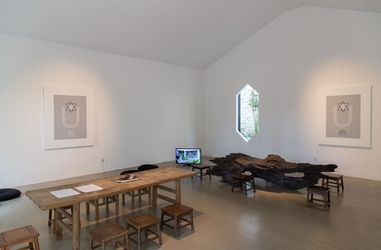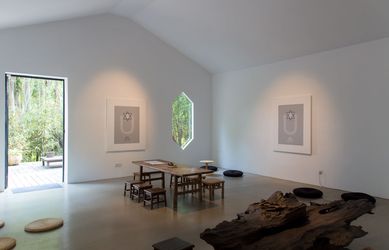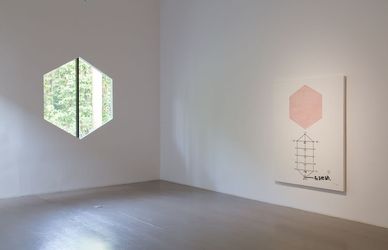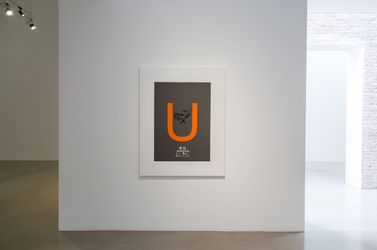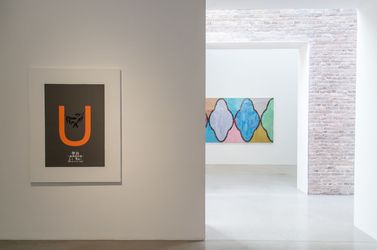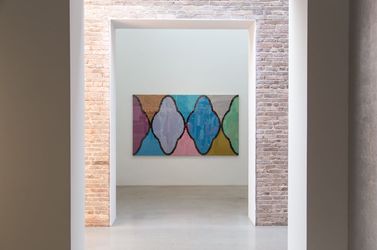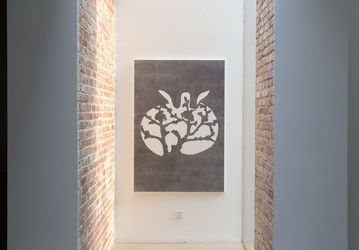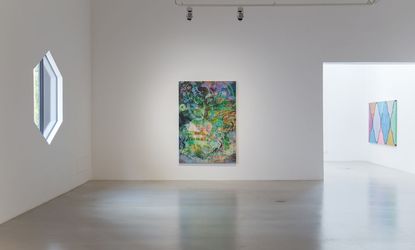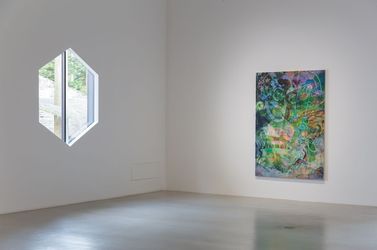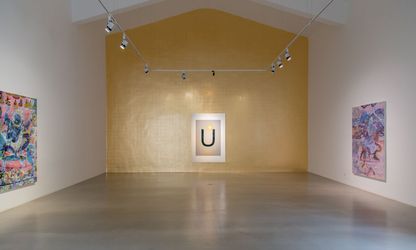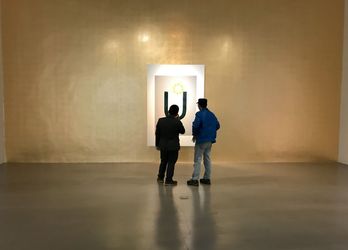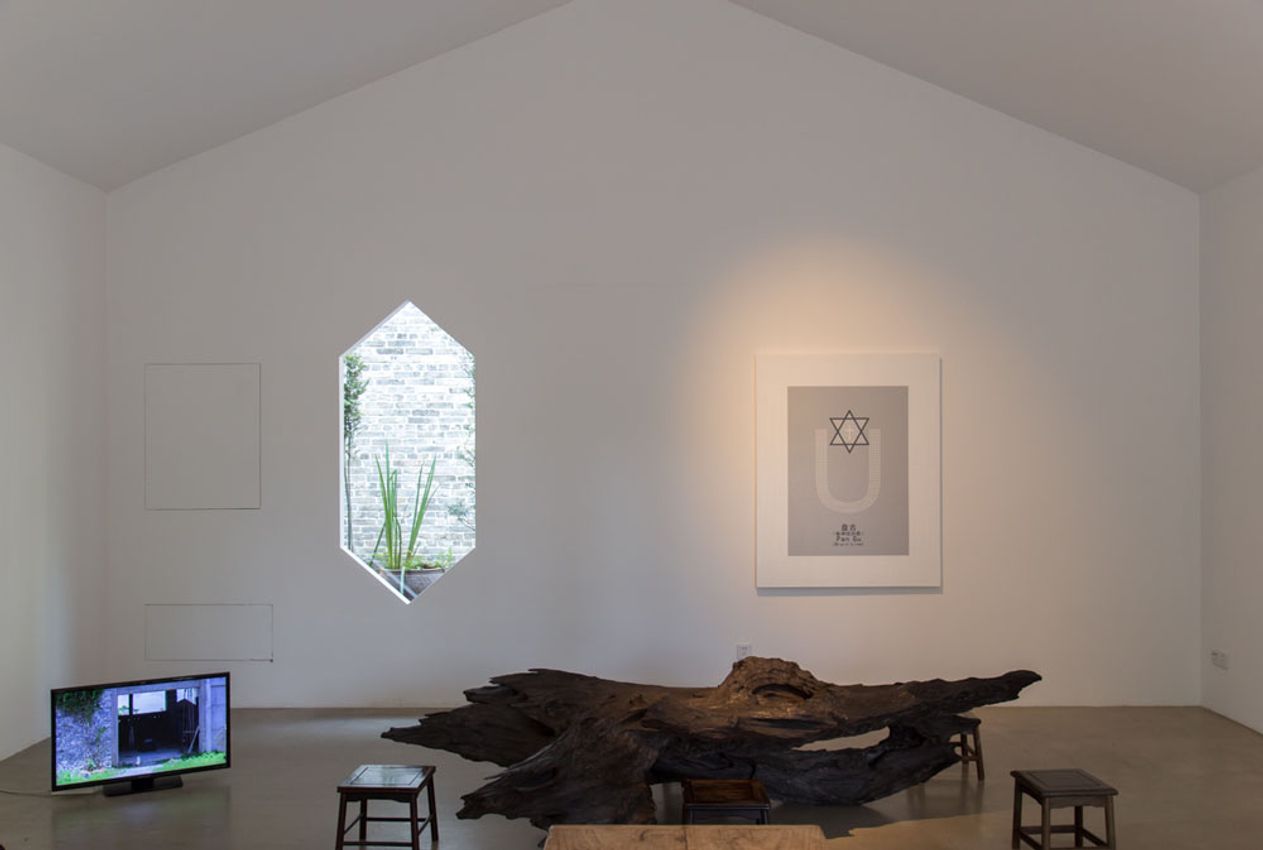
Mirrored Gardens, Hualong Agriculture Grand View Garden, Panyu, Guangzhou, China. Wed - Sun, 11am - 5pm
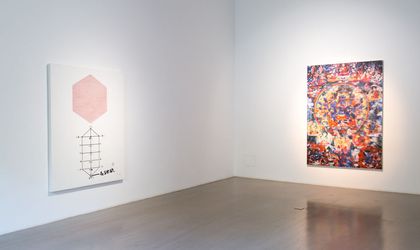
In the environment of Zheng Guogu’s Liao Garden (an ongoing garden/land project initiated in 2005), there is the circling of the koi, and there is the intricately layered aquatic system; there is the house made of reinforced concrete, and there is the overgrown plant life; there are the tealeaves that are the compressed distillation of vegetal essences, and there is the “symbol-less” “world of pure energy” to which Zheng Guogu aspires. As though in response to this carefully constructed environment, Zheng Guogu’s paintings are dedicated to the transmission of visions of sensory energy - visions that develop according to diverse trajectories across different temporal processes until they turn into colors and images.
The research into energetics that emerged from Liao Garden may seem to be a radical departure from the transformations of consumer culture that Zheng Guogu has pursued since the 1990s, but in fact he has always had an intense interest in the relations between self-conception and the image mechanisms that influence individual perception in the contemporary world.
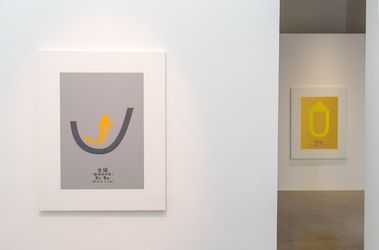
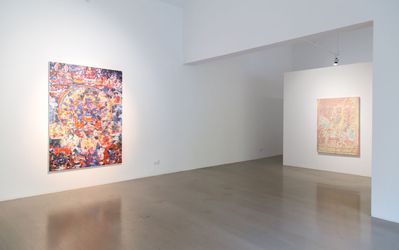
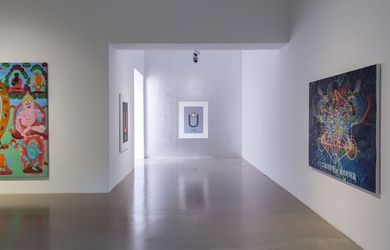
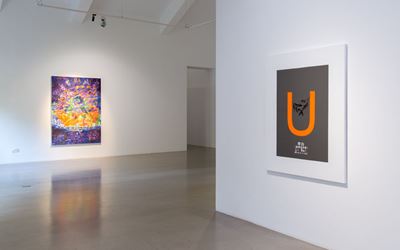
It is precisely through the aid of digital image reconstruction that Zheng Guogu’s Great Visionary Transformation series extracts traditional thangka paintings from the center of “classical multimedia power,” and “transforms” the projection of people’s visions into a vague semblance. Given the current disintegration of the “human figure,” is it possible to use the existential properties of this “transformation” itself as a support for those forms that are constantly changing and disappearing due to their own self-identification?
In contrast, the Aesthetic Resonance of Chakra series is more like a manifesto on the aesthetics of energy: the painting becomes an image not through a process of producing information/signs, but as a practice that can capture invisible bodily energies and detect different sensory dimensions; and all of this can be linked to the investigation of dark mental space in the Brain Nerves series. Such investigations necessarily require the self as the medium for sensing indescribable flows of energy, and although it may seem to have the inevitable randomness of personal methods, as a shareable space for investigating energy the painting ultimately also welcomes the corroboration of other individuals.
Even though the “human figure” dissolves into the trembling of the light waves, when we enter the thick of Zheng Guogu’s paintings we can still faintly discern the state of these energy convergences: those with extreme ups and downs, and great sorrows and happiness; the rational person, the recluse, the one who makes something out of nothing; the individualist, the objectivist, the projector; the wealthy, the creator, the adventurer; the cosmist, the mystic, the deformed; people who are calm and at peace, or people who are weak and indecisive; the featureless, the featured, and the unfathomable. And these energies we each carry with us - could we turn them into an encounter with art that leads us to transcend our own aspects?


Zheng Guogu is a conceptual Chinese artist who emerged in the 1990s amid the profound shifts of China’s opening to a globalized world. Working with photography, calligraphy, painting, video and installation, Zheng revamps the local culture of his hometown Yangjiang and New China against the contexts and trends of global contemporary art. Zheng is also a member of Yangjiang Group, an art collective founded in 2002 in Yangjiang.
Founded in 2002, Vitamin Creative Space explores an alternative working mode specifically geared to the contemporary Chinese context, and is constantly inspired by the confrontation between the contemporary life and ancient Chinese philosophy. In order to operate independently from institutionalised funding, it is active both as an independent art space and as a ‘commercial’ gallery. Vitamin Creative Space actively challenges preconceptions by merging these two traditionally opposed strategies for supporting and presenting contemporary art, targeting the search for new Chinese contributions at both the artistic-practice and the institutional level within the new global context.

A respected voice in contemporary art discourse.
Focusing on ambitious storytelling and insightful art-world commentary. Ocula Magazine publishes in-depth interviews, critical essays and timely analysis on the artists, exhibitions and ideas driving the global art world.
Learn more about Ocula Magazine
Showcasing the best of the art world.
Ocula partners with galleries from around the world to highlight their artists, artworks and exhibitions. Gallery membership is by application and invitation, with each member vetted by an independent panel.
Learn more about Ocula Membership

Specialises in the sale of major artworks.
Led by a team with deep ties to the world’s leading auction houses, galleries and collectors. Ocula’s advisory team offers bespoke services to high-net-worth clients from around the world who are looking to acquire the best of contemporary and modern art.
Learn more about our team and services