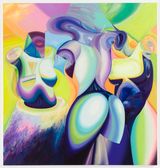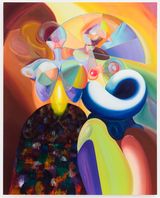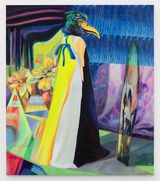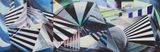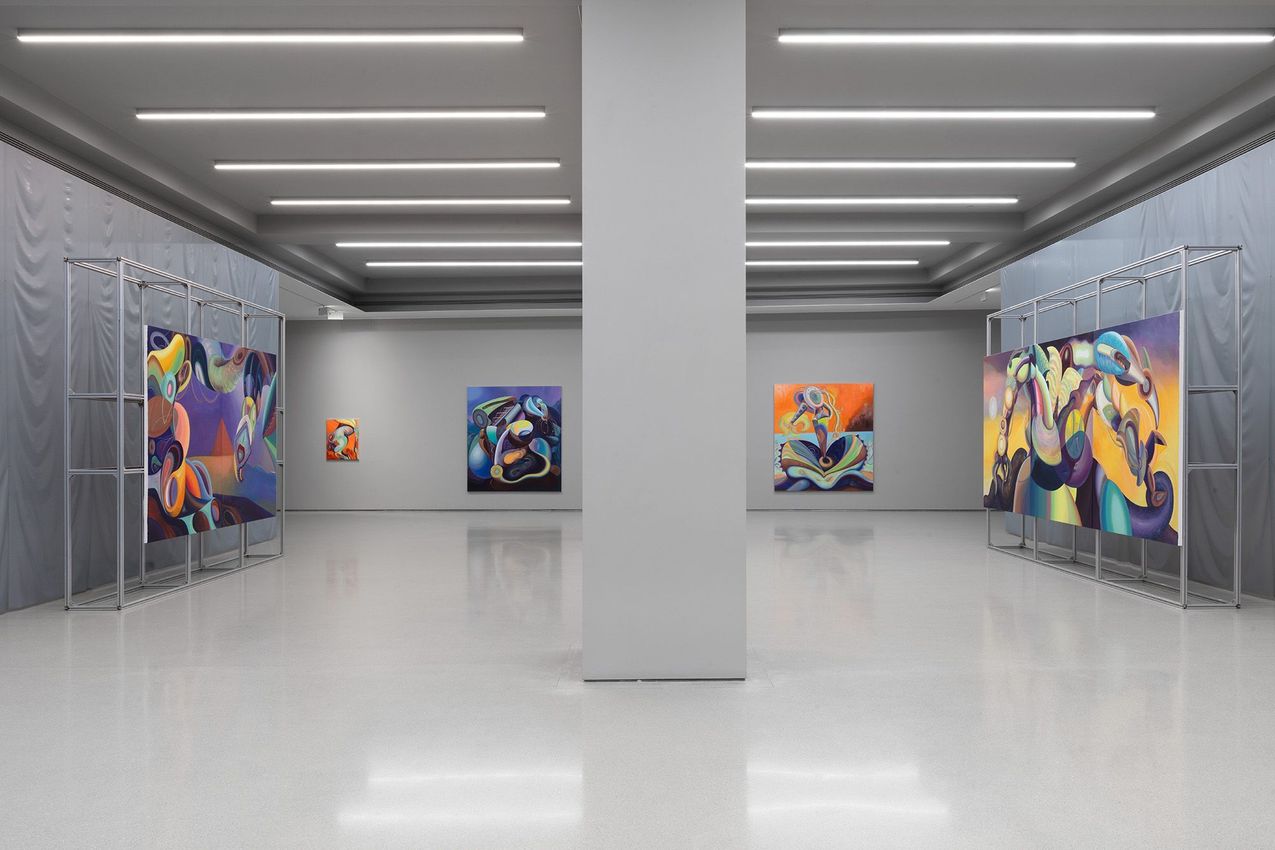
White Space presents Belly of the Beast, an exhibition of new paintings by Ce Jian. The artist’s seventh solo presentation with the gallery, the exhibition opens from October 14 to November 25, 2023.
The title of the exhibition references ‘the belly of the whale,’ a notion described by American writer and mythologist Joseph Campbell in his book The Hero with a Thousand Faces. Untangling the shared mysteries behind heroic adventures and world myths, the book posits the belly of the whale as a metaphor for the liminal state in a hero’s journey, a passage of transcendence: as if being swallowed by a whale, the hero who finds themselves in perilous situations goes through periods of uncertainty and failure, through which they achieve rebirth.
Drawing inspirations from this motif, Ce Jian fuses her interests in the contemporary renditions of classical myths, technological knowledge, visual experience, and cultural production into the development of her own concept — ‘the belly of the beast.’ Here, the beast refers both to the classic portrayals of monstrous figures in Western mythology and modern industrial robots, a symbol for future life forms. The belly at once suggests the organ inside the beast’s body where the devoured individual enters, as well as the factory space that houses manufactured robots. Interwoven in Ce Jian’s compositions, the two motifs become vehicles to explore artificial ‘life’ and the meanings behind its cultural encoding and mechanisms.
For Ce Jian, beasts in ancient myths and robots of the modern industrial age have many similarities, both embodying the state of liminality on multiple levels. The beast is a hybrid creature who has always resisted classification, while serving as a projection screen for human emotions and desires. They tend to share some physical traits with the human being but possess unique characteristics of their own. They are divine and powerful, yet cunning and dangerous. Often portrayed as the gatekeepers, they guard the border between the known and unknown worlds. On the other hand, industrial robots—essentially mechanical arms—do not resemble humans, yet their structures and operations often reference the anatomies and movements of the human body, but with powers far surpassing that of humans. Humans use robots for production purposes to fulfill their own needs but are frequently intimidated by their potentials. Both beasts and robots are creations of humans, yet they maintain an ambiguous relationship with humanity: man praises their formidable strength and intelligence, while dismissing them as primitive animals or machines.
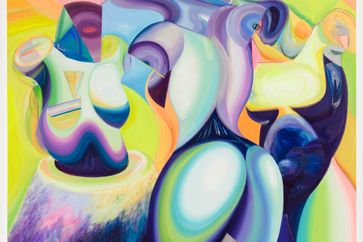
In this new body of works, Ce Jian departs from the conventional art historical depictions that assign humanoid forms to both beasts and robots. Blending the ancient, organic bodies of the beasts and the futuristic, inorganic machines of our present time, she recreates from them fluid forms rich with visual metaphors. The artist also pays particular attention to the gendered portrayals of beasts in mythological narratives, including but not limited to Scylla, the Sphinx, the Hydra, and the Harpy. Despite their female gender identities, these monstrous figures lack the appearances of women. Their association with evil echoes the demonization of various feminine qualities. Similarly, gendered robots such as those portrayed in Blade Runner and Ex Machina are also subjected to humans’ projection of their own self-denial, desire, and fear. For Ce Jian, the essential task lies in the study and decoding of the fictive narratives that created these figures, thus reconstructing and affirming their mystery, complexity, and beauty, in order to critically look at our own existence. The skin of the painting (the canvas) thereby merges with the skin of the painted subjects (the beasts and the robots); they take on a renewed and rich appearance in Ce Jian’s works, inhabiting a state of being that is organic and open.
Ce Jian has always been drawn to the intersecting realms of technology, knowledge and visual experience, of artistic and non-artistic image production. Usually she begins with relatively concrete concepts and digests and transforms them through the process of painting, thereby allowing the rational idea and formal structure to collide with the spontaneous expressive potential of the material medium and her own hand. The productive tension between constructive principles and destructive fragmentation or gestures is a consistent trait of her work. While she ruminates on a given work concept, she set herself and the issues surrounding it, she also explores painterly details as a space for free abstraction – and on this level, she raises fundamental questions regarding painting itself and its ontology.


A respected voice in contemporary art discourse.
Focusing on ambitious storytelling and insightful art-world commentary. Ocula Magazine publishes in-depth interviews, critical essays and timely analysis on the artists, exhibitions and ideas driving the global art world.
Learn more about Ocula Magazine
Showcasing the best of the art world.
Ocula partners with galleries from around the world to highlight their artists, artworks and exhibitions. Gallery membership is by application and invitation, with each member vetted by an independent panel.
Learn more about Ocula Membership

Specialises in the sale of major artworks.
Led by a team with deep ties to the world’s leading auction houses, galleries and collectors. Ocula’s advisory team offers bespoke services to high-net-worth clients from around the world who are looking to acquire the best of contemporary and modern art.
Learn more about our team and services