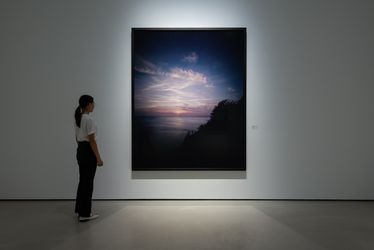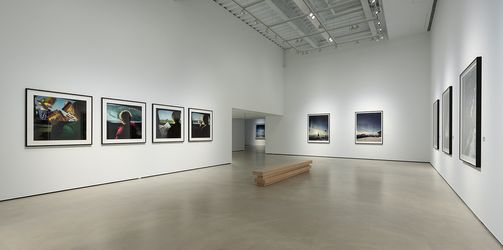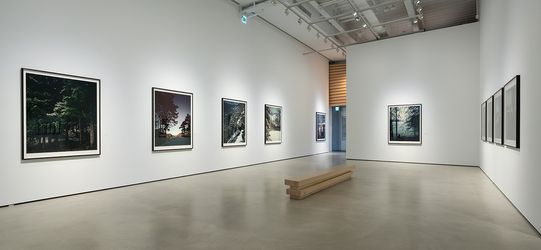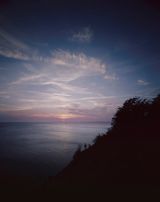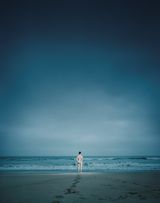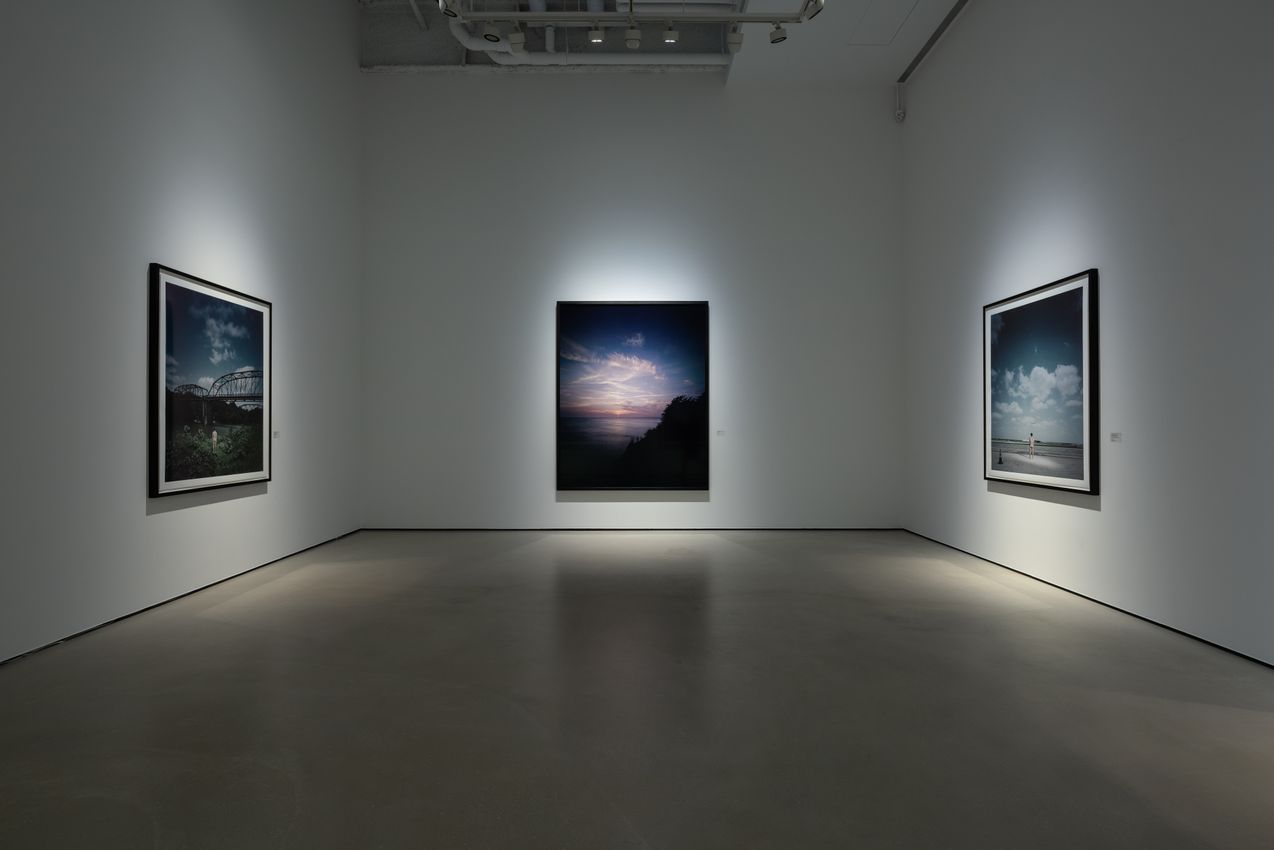
Exploring the differences between truth and construct, as well as the German history and identity after World War II, the German artist Andreas Mühe questions the power and contradictory of photography in his first solo exhibition in Taiwan. This exhibition showcases photographs Mühe created by the analogue camera from 2004 to 2018, in which some of the works had been displayed in prestige museums.
Mühe’s artistic engagement with his origin and the German past has been influenced by his upbringing. He was born in Saxony, East of Germany, to parents Ulrich Mühe, one of the country’s most acclaimed actors, and Annegret Hahn, a director and prominent figure in German theatre, who were both socialists and Germany’s cultural elites. As a self-taught photographer, the young artist was the assistant of Ali Kepen and Anatol Kotte. He has then become a freelance photographer and worked with numerous press including Vanity Fair Germany.
Obersalzberg (2011-2012)
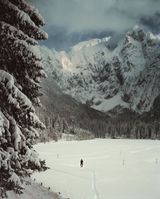
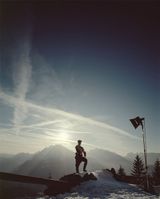
Megalomania is central to Mühe’s aesthetics; his photographs are rugged, masculine, and often reminiscent of images of 20th century dictatorship and ideologies. Mühe uses various motifs to portray these aesthetic appeals, yet the location of his photographs is always significant. In his most important series, ‘Obersalzberg’, which in Mühe’s visualises power through positioning his subjects in superior postures and various states of dressing and even undress on the Obersalzberg mountain, best known as the former Hitler’s vacation retreat. In his work, Hermann Reichsjägermeister (2012), the subject dresses in superior military uniform, and acts as the former Chancellor of Germany Hermann Göring, offering a Nazi salute to the camera as an expression of loyalty to Adolf Hitler and admiration to Volksdeutsche.
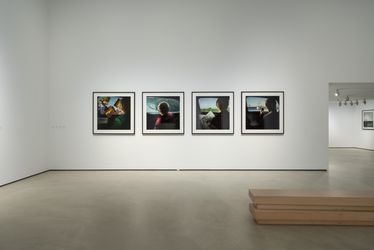
A.M. Eine Deutschlandreise (2013)
In the ‘A. M. Eine Deutschlandreise’ (2013) series, Mühe plays with the ambivalence that is intrinsic to photography. The series shows a travelling woman who resembles Angela Merkel, looking out the window from the backseat of a limousine gazing on different cultural landmarks and scenic landscapes of Germany. The photographs seem to be showing the country’s essence through the eyes of the German chancellor, yet the woman in the picture is in fact Mühe’s mother. Inspired by his trips accompanying Merkle to the US, Mühe meticulously stages these images to provoke questions about reality and appearance.
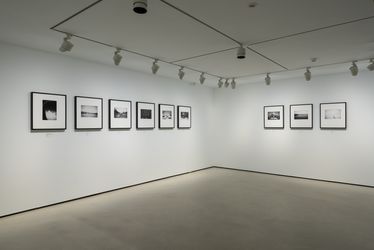
28 hours in USA (2011)
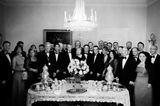
It is the only black and white series of the show. In 2011, Merkel briefly visited Washington, USA to meet with former US President Barack Obama, when the relationship between Germany and the United States was tense. Mühe used a realistic way of shooting that is different from his signature staged shooting due to the tight schedule. The diplomatic relations between Germany and the United States were documented in black and white films. Starting from the window of Luftwaffe One, the group arrived at Washington Dulles International Airport and received a warm welcome from the American officials. Then, they went directly to the National Mall in Washington to participate in an award ceremony. Merkel became the first female prime minister to be awarded the Medal of Freedom. The Merkel family went to a fine dining restaurant in Georgetown, in which the viewers can see in the work The Family (2011). Based on the composition and lighting of this picture, the solid photographic technique has been unveiled. By placing Merkel in the centre, and the brightest place of the image, the critical status of Merkel cannot be ignored.
Rammstein USA und Kanada Tour (2012)
Mühe uses his subjects as instruments to convey power in his images; therefore, he often collaborates with prominent politicians and musicians. Rammstein USA und Kanada Tour (2012) is a provocative photo reportage of the German rock band, Rammstein. Whether it is along Santa Monica beach or Colorado riverside, the band members are often portrayed in a state of nudity. It is no coincidence that Rammstein was chosen to be Mühe’s subjects, the band’s progressive style asserts the grotesque and spirit of German socialism. In doing so, Mühe keeps bringing back history in contemporary narratives.
Prora (2004)
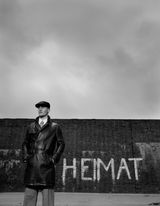
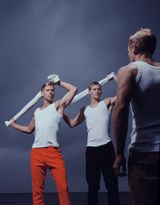
Also featured in this exhibition are Mühe’s early works, such as Prora (2004), a series of images made in the Prora beach resort, built by Nazi Germany as a future holiday facility for the German proletariat. For example, the three young muscular men in ‘Sport’ are staged in a manner that put emphasis on their athletic and grotesque bodies; whereas in ‘Heimat’ the name literally means ‘home’ and suggests Mühe’s profound obsession with the German identity.


Established in 1967, Whitestone Gallery is a leading Japanese gallery presenting a broad spectrum of Japanese art from the post-war to contemporary in spaces across East Asia.

A respected voice in contemporary art discourse.
Focusing on ambitious storytelling and insightful art-world commentary. Ocula Magazine publishes in-depth interviews, critical essays and timely analysis on the artists, exhibitions and ideas driving the global art world.
Learn more about Ocula Magazine
Showcasing the best of the art world.
Ocula partners with galleries from around the world to highlight their artists, artworks and exhibitions. Gallery membership is by application and invitation, with each member vetted by an independent panel.
Learn more about Ocula Membership

Specialises in the sale of major artworks.
Led by a team with deep ties to the world’s leading auction houses, galleries and collectors. Ocula’s advisory team offers bespoke services to high-net-worth clients from around the world who are looking to acquire the best of contemporary and modern art.
Learn more about our team and services