



Press Release

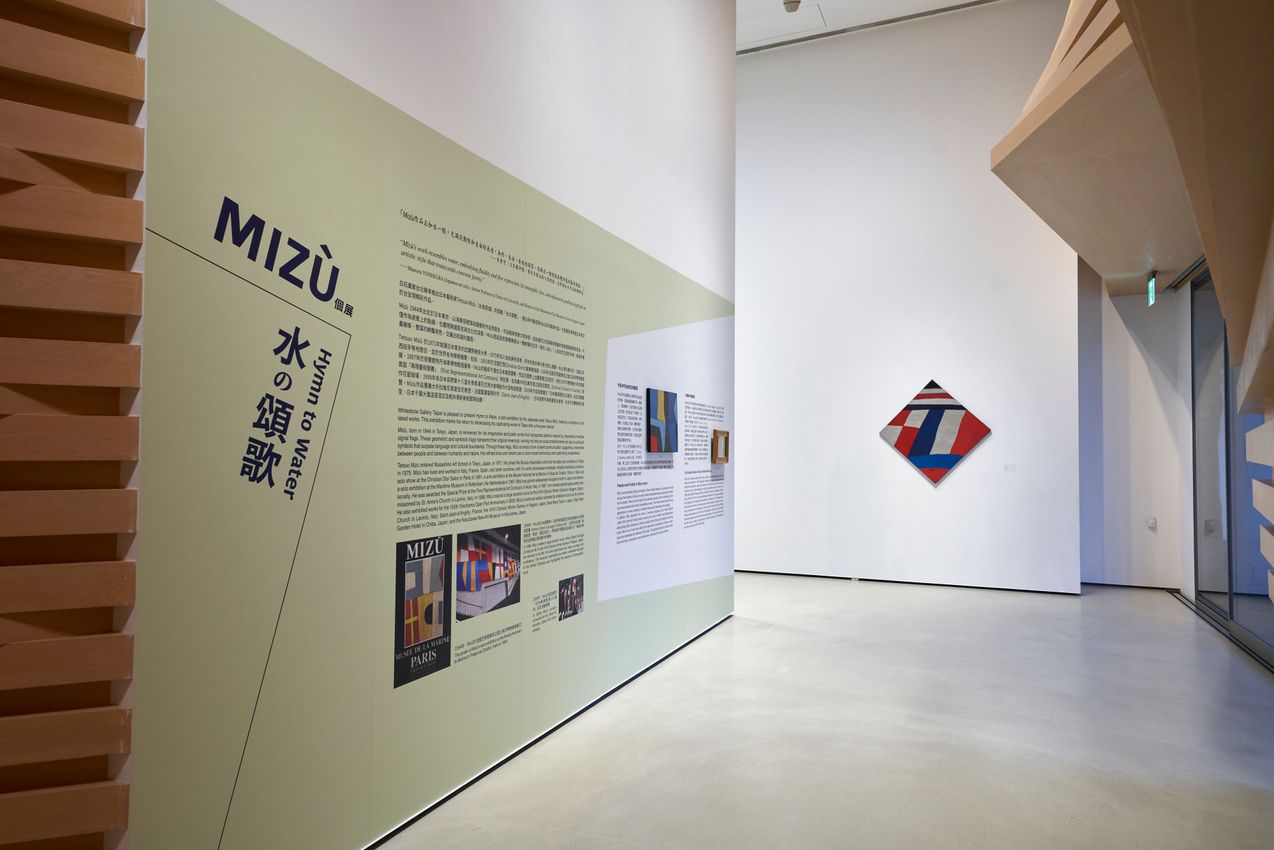
Whitestone Gallery Taipei is pleased to present Hymn to Water, a solo exhibition by the Japanese artist Tetsuo Mizù, featuring a collection of his latest works. This exhibition marks his return to showcasing his captivating works in Taipei after a five-year interval.

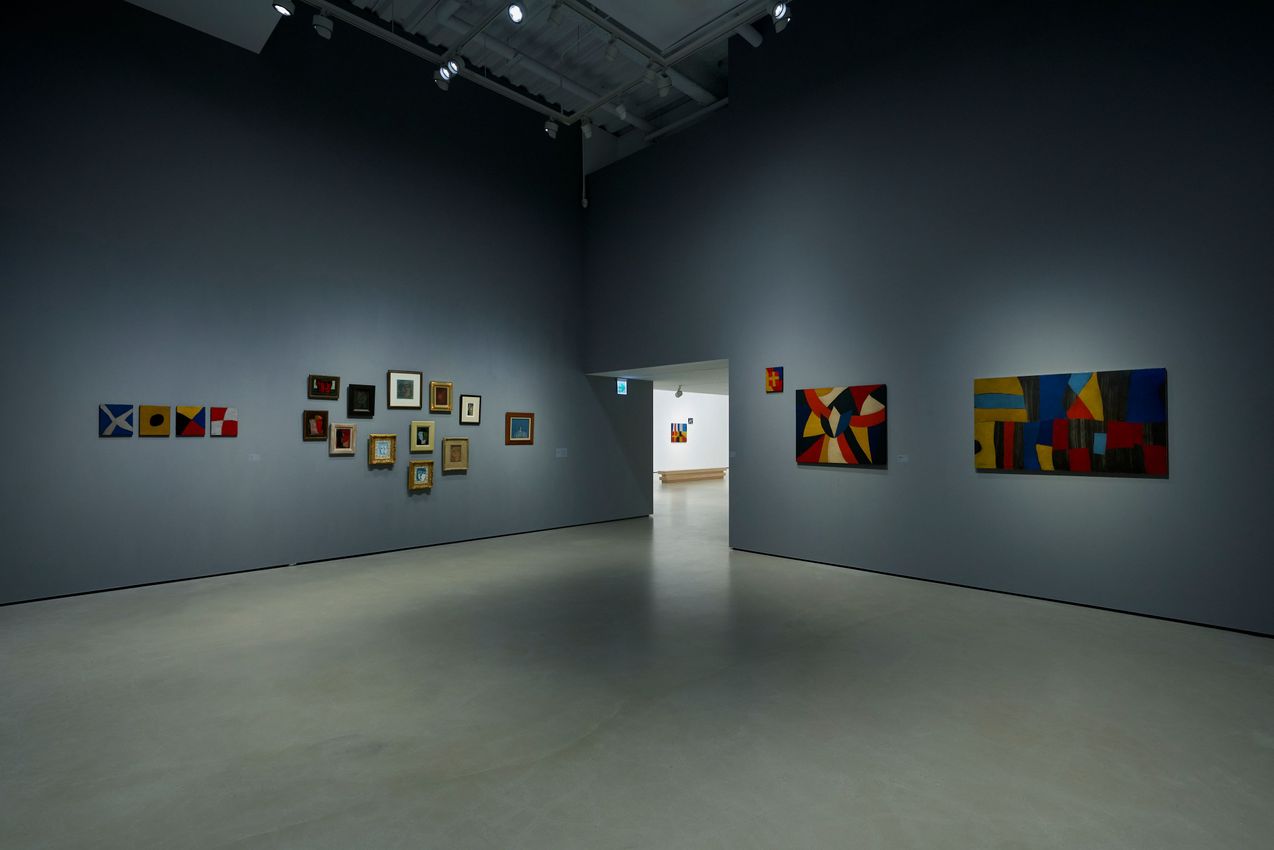
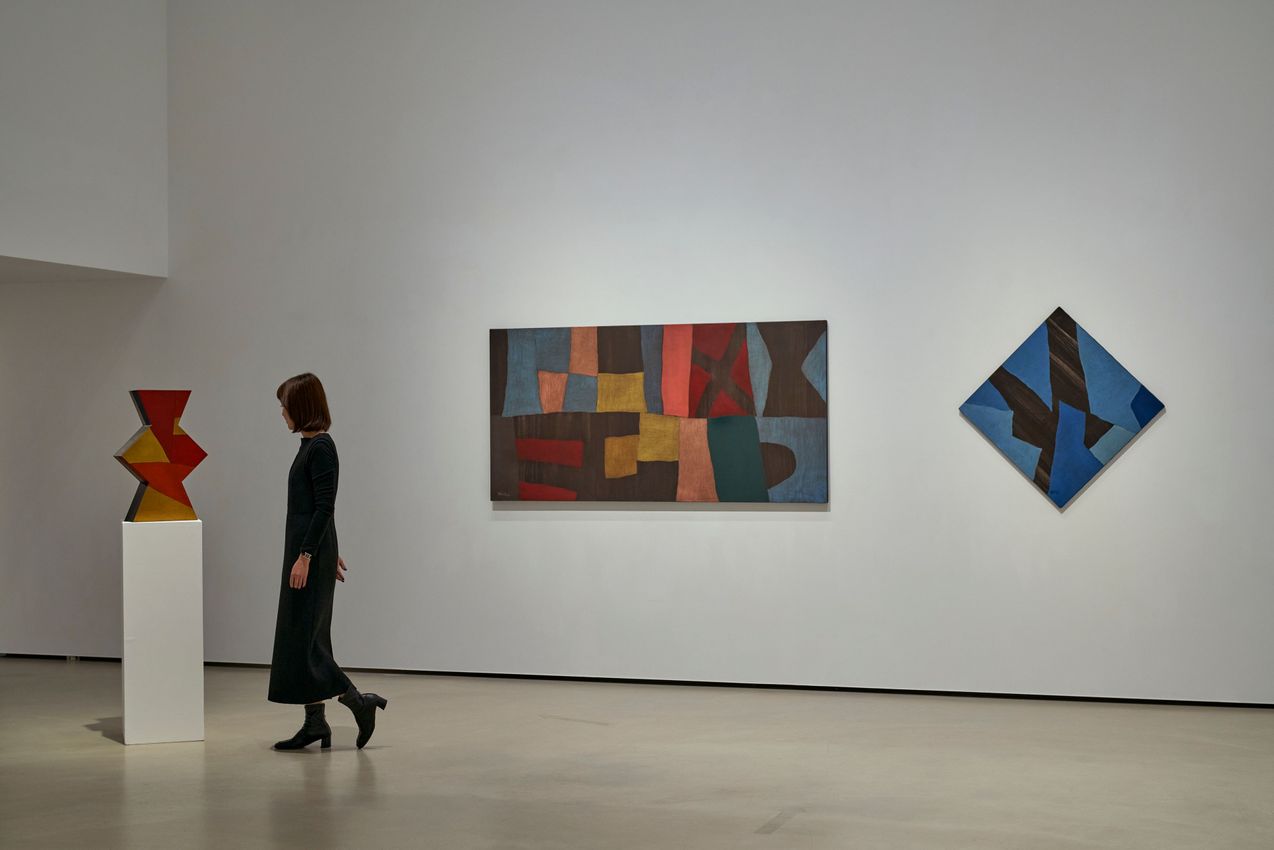
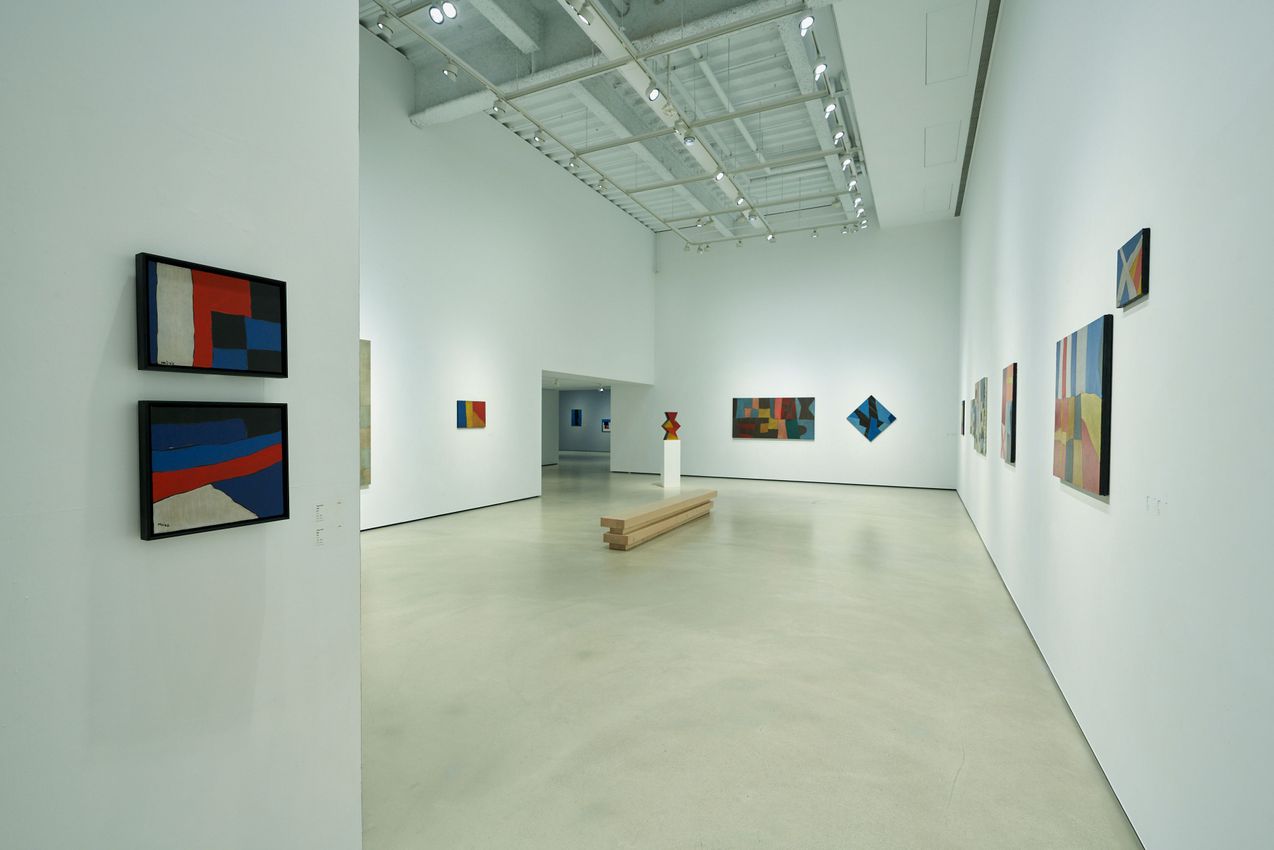
Mizù, born in 1944 in Tokyo, Japan, is renowned for his imaginative and poetic works that incorporate patterns inspired by international maritime signal flags. These geometric and symbolic flags transcend their original meanings, serving not only as visual embellishments but also as profound symbols that surpass language and cultural boundaries. Through these flags, Mizù conveys a form of silent communication, suggesting a resonance between people and between humanity and nature. His refined lines and vibrant use of colour create harmonious and captivating compositions.

Mizù’s works embody fluidity and freedom. When multiple tableaux are painted on a single canvas, the interplay of lines and colours creates independent spaces, allowing the composition to breathe. There is no fixed style; forms dissolve naturally and flow rhythmically, creating a visual cadence that mirrors the qualities of music. In addition, Mizù replicated the works of renowned Japanese artist Yumeji Takehisa (1884–1934) from the Taisho period, as well as from Ukiyo-e. While Yumeji blended poetry with painting, Mizù introduced a rhythmic quality to his art through the interplay of lines and colors. Mizù’s use of color also reflects the matte texture characteristic of Ukiyo-e, a technique that emphasizes the flatness of the image. This approach directs the viewer’s attention to the lines, composition, and overall scene, enhancing the visual experience.

The International Maritime Signal Flag system serves as a universal method of communication among ships worldwide, transcending language and cultural boundaries. Mizù’s incorporation of these elements alludes to a shared human experience and a universal language that breaks down barriers, evoking a sense of freedom and unity. Through his unique arrangements, repainting, and selective colour substitutions, Mizù transforms these precise signal flags into entirely new visual creations. By skilfully and rationally deconstructing these seemingly abstract codes on the canvas, the artist invites viewers to reconsider the significance of these symbols, highlighting a dynamic interplay between reason and emotion within his works.

Mizù was inspired by the Italian artist Amedeo Modigliani (1884–1920), renowned for his unique elongated portraits and expressive compositions that capture the essence of the human experience. Mizù’s own creations reflect a similar elegance and emotional depth, particularly through his use of line. In addition, Mizù visited exhibitions of Pablo Picasso (1881–1973), whose groundbreaking exploration of form, space, and perspective challenged and transcended the boundaries of traditional art. This experience reinforced Mizù’s commitment to his unique painting method, leading him to adopt a more personal, unrestrained form of expression. In Mizù’s portraits, the sense of volume is achieved through rounded edges and soft touches, while elongated character lines and statue-like three-dimensionality give the works a striking visual presence. The figures seem to emerge from the canvas, creating a dynamic sense of depth and presence. This emergence has become a key feature of Mizù’s artistic style.

Tetsuo Mizù entered Musashino Art School in Tokyo, Japan, in 1971. He joined the Biyutsu Association and held his debut solo exhibition in Tokyo in 1975. Mizù has lived and worked in Italy, France, Spain, and other countries, with his works showcased worldwide. Notable exhibitions include a solo show at the Christian Dior Salon in Paris in 1991, a solo exhibition at the Musée National de la Marine in Palais de Chaillot, Paris in 1994, and a solo exhibition at the Maritime Museum in Rotterdam, the Netherlands in 1997. Mizù has gained widespread recognition both in Japan and internationally. He was awarded the Special Prize at the First Representational Art Concours in Anzio, Italy, in 1987, and created stained glass works commissioned by St. Anne’s Church in Lavinio, Italy. In 1998, Mizù created a large ceramic mural for the XVIII Olympic Winter Games in Nagano, Japan. He also exhibited works for the 150th Yokohama Open Port Anniversary in 2009. Mizù’s works are widely collected by institutions such as St. Anne’s Church in Lavinio, Italy; Saint-Jean-d’Angély, France; the XVIII Olympic Winter Games in Nagano, Japan; Boat Race Toda in Japan; Otaki Herb Garden Hotel in Chiba, Japan; and the Karuizawa New Art Museum in Karuizawa, Japan.

Read More

Installation Views

About the Artist

Mizù creates the design following the title of the work with combining international maritime signal flags. Flag series puts him in the limelight in 1980’s. Spends his time in Italy, France and Spain and exhibits the works across the borders of countries. Receives special prize at the First Representational Art Concours in Anzio and installs stained glass at St. Anna Church in Lavino, Rome in 1987. He is invited to the multiple exhibitions including Chagall, Dali, Picasso, Melois and Mizù (Barcelona, Spain) in 1989 and the joint exhibition with Dali (Beaune, France) in 1990: it shows how high he has been acclaimed in Europe. Although his matte and full-brimmed texture divided by extra-fine lines represent the modern abstract, it is sometimes drawn an affinity with Ukiyo-e. His works are introduced at the art fairs such as Art Basel (Basel, Switzerland), FIAC (Paris, France), Art Rio (Rio de Janeiro, Brazil) and more.

View Artist Profile

Also Exhibiting

About the Gallery

Established in 1967, Whitestone Gallery is a leading Japanese gallery presenting a broad spectrum of Japanese art from the post-war to contemporary in spaces across East Asia.

View Gallery Profile
Address
1F, No. 1 Jihu Road
Neihu District
Taipei
Taiwan
Opening Hours
Tuesday – Saturday
11am – 7pm
(1)
Taipei 1F, No. 1 Jihu Road, Neihu District
Whitestone Gallery
1F, No. 1 Jihu Road, Neihu District, Taipei, Taiwan

Opening hours
Tuesday – Saturday
11am – 7pm
The art world in focus