



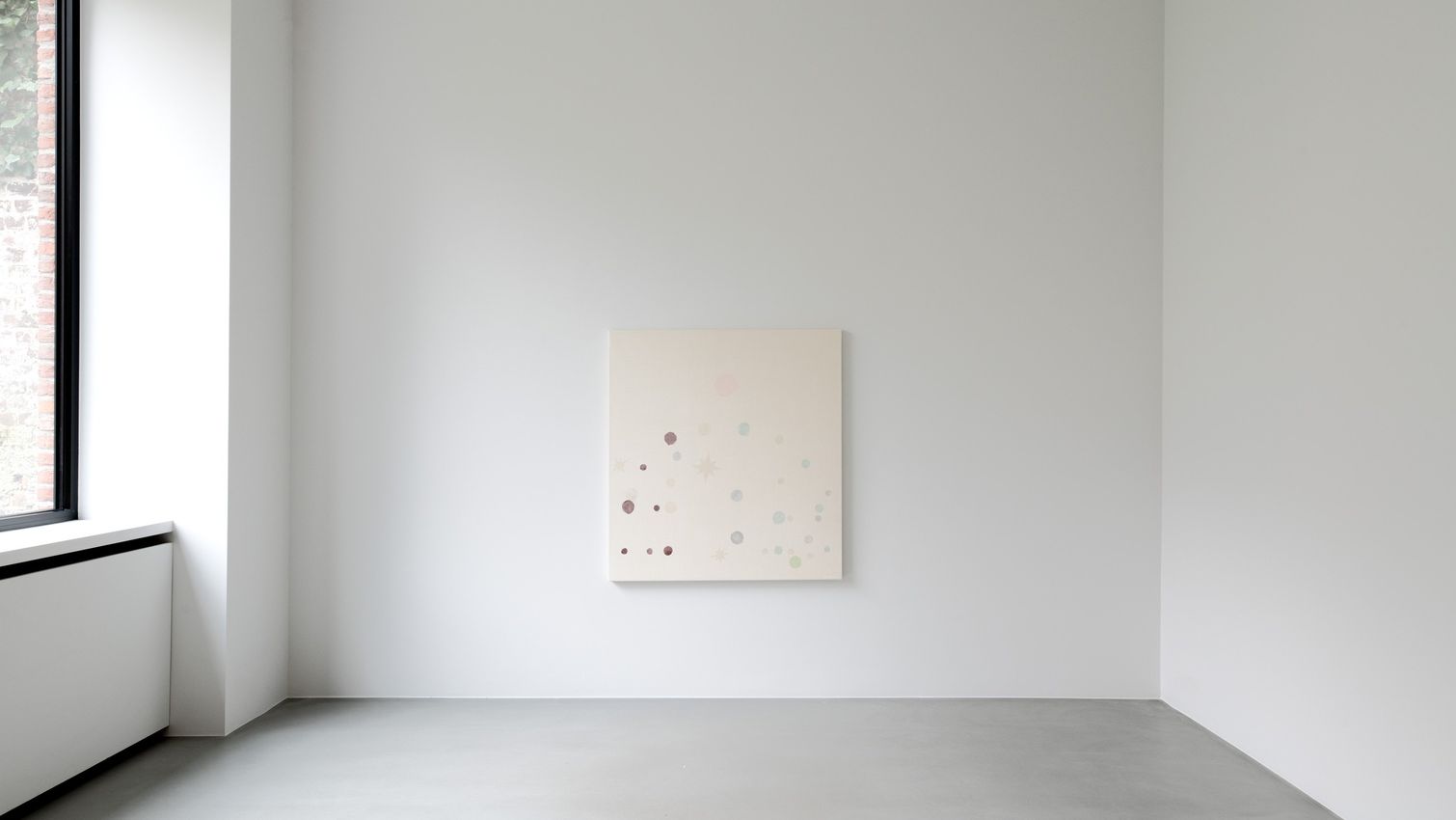
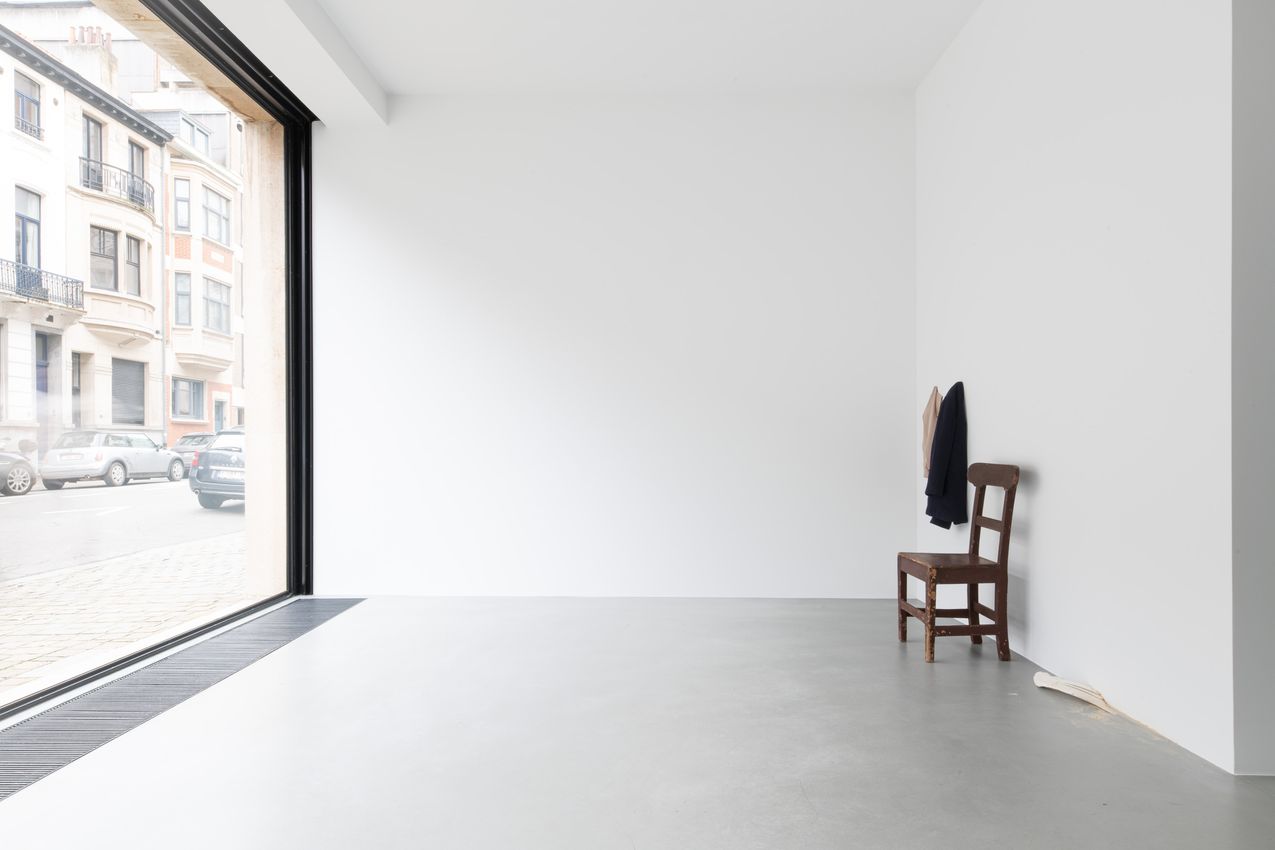
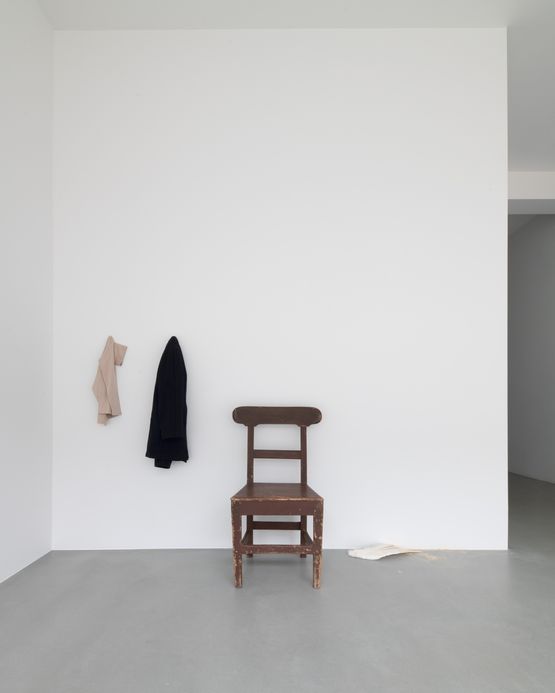
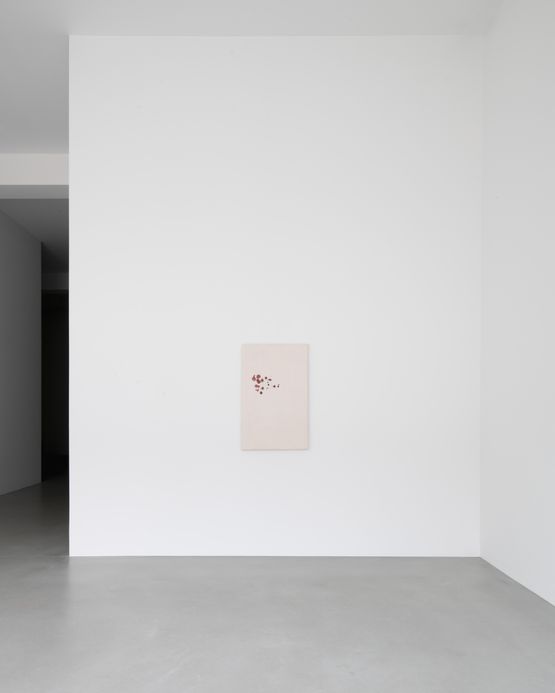
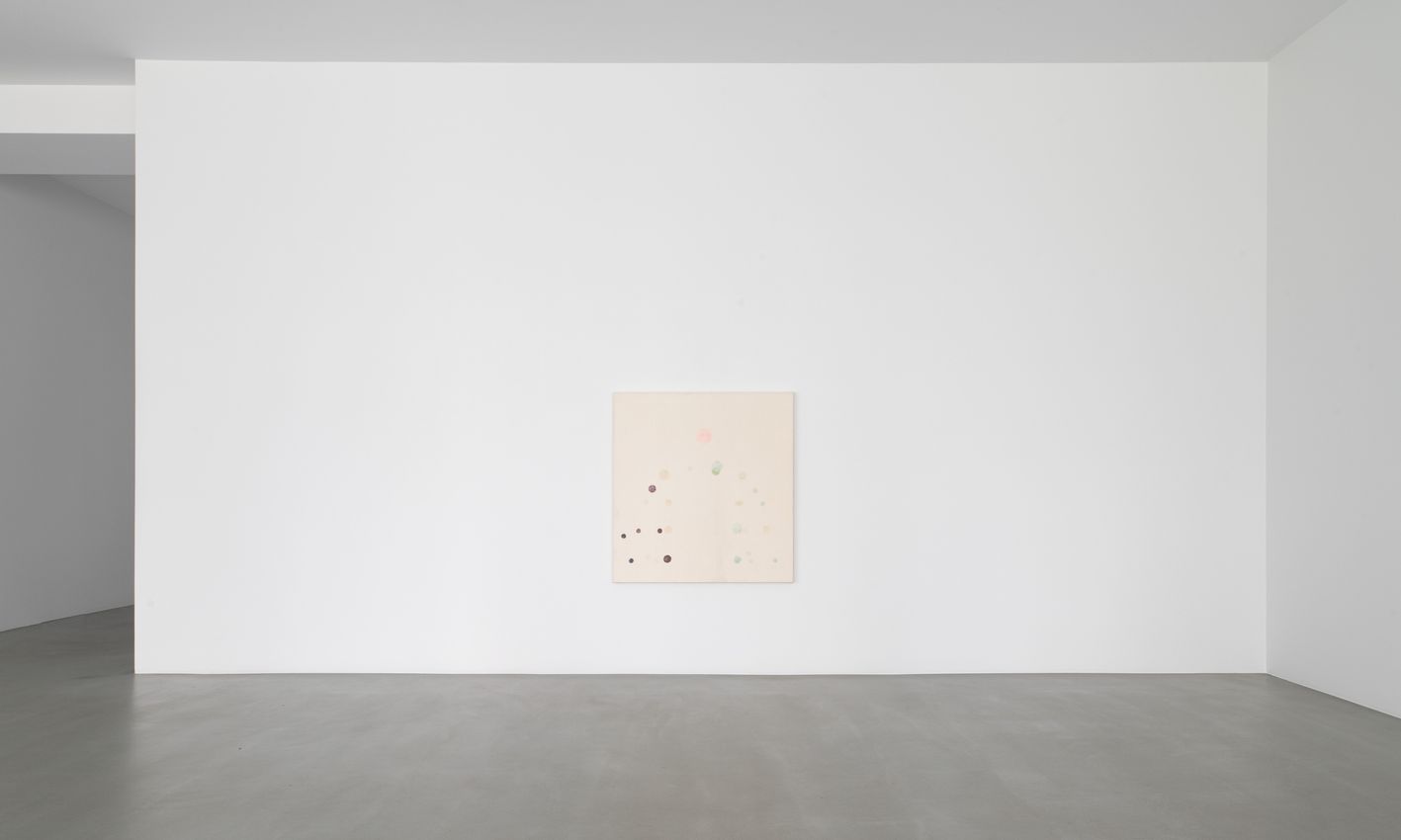
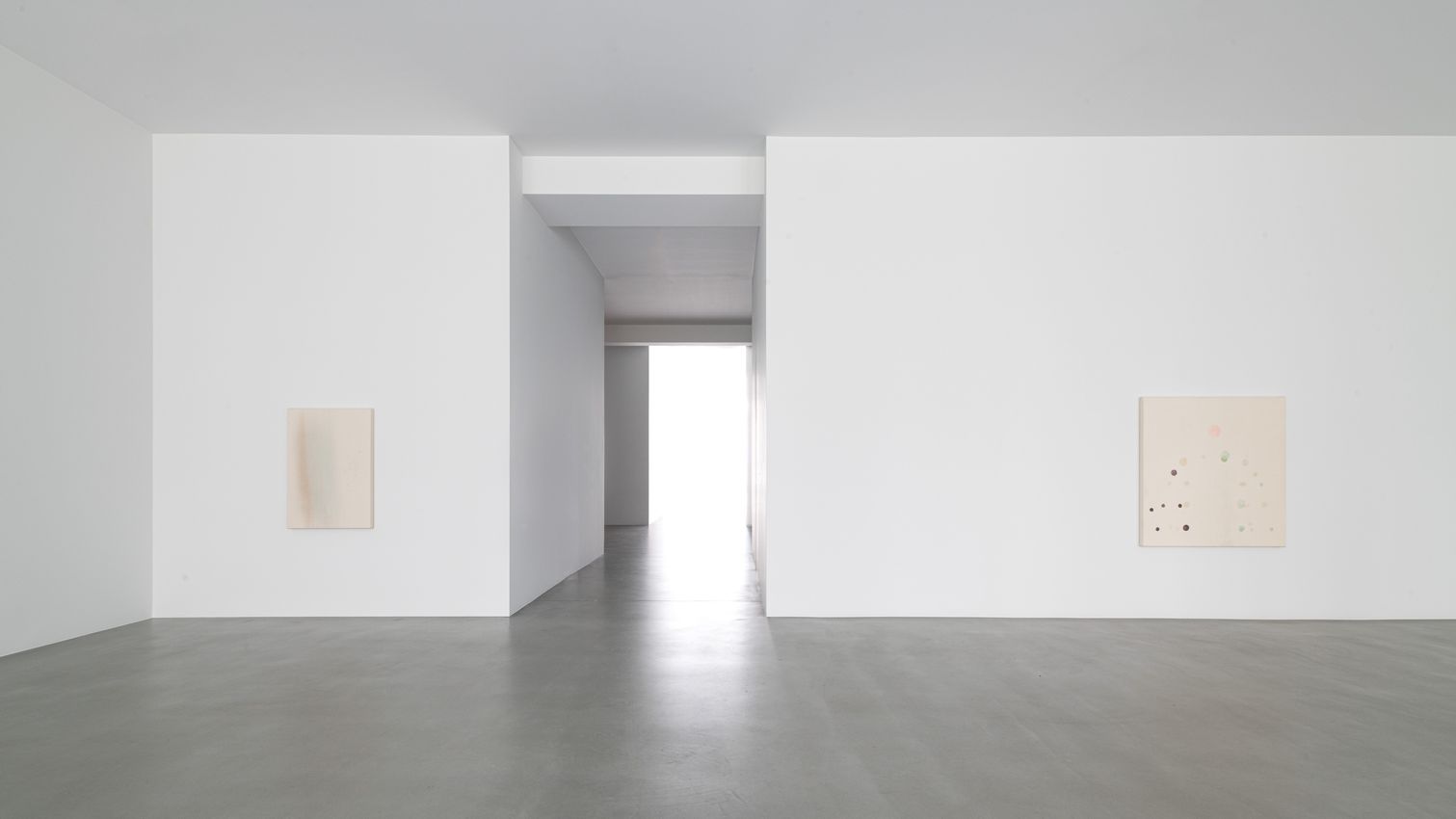
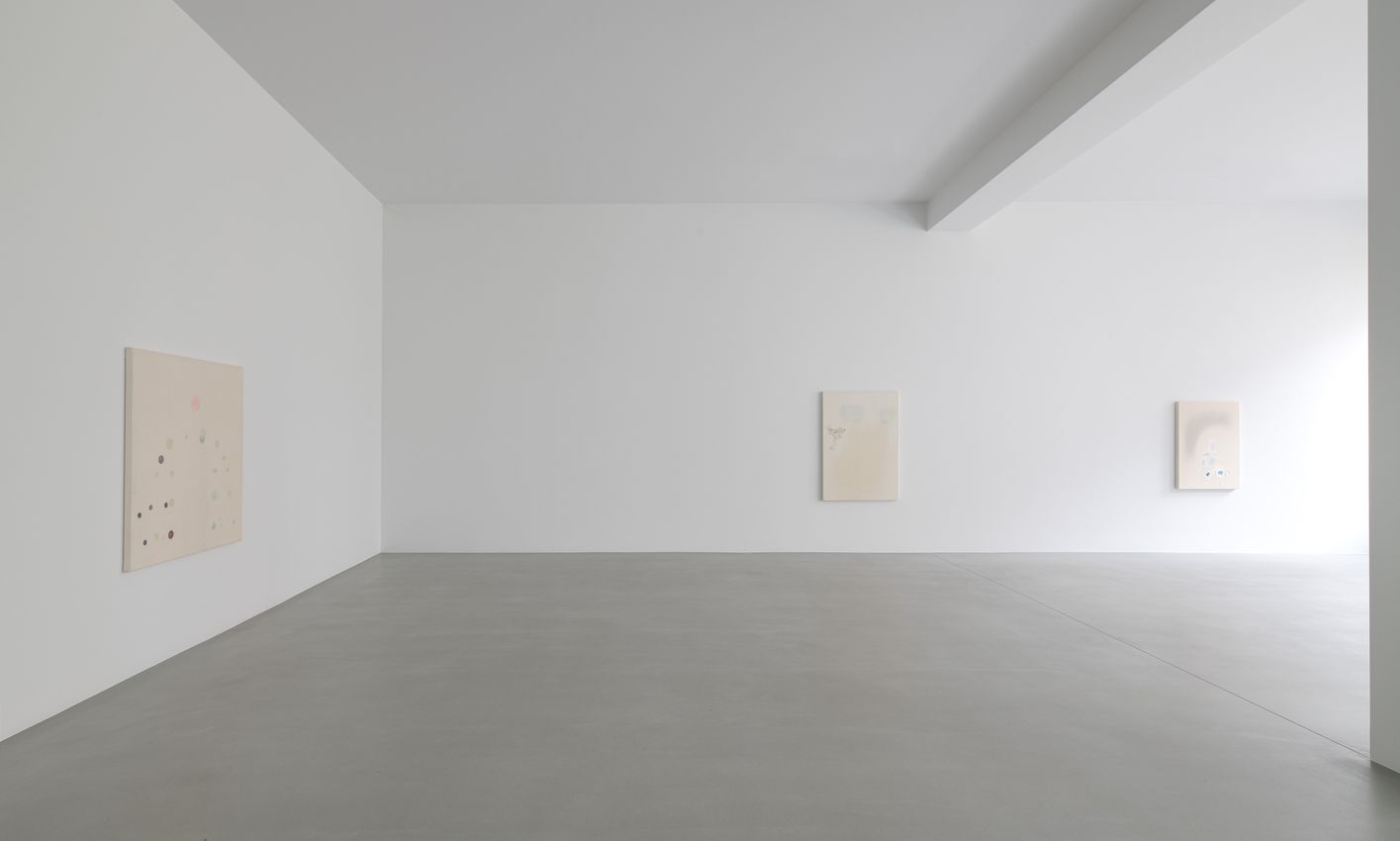
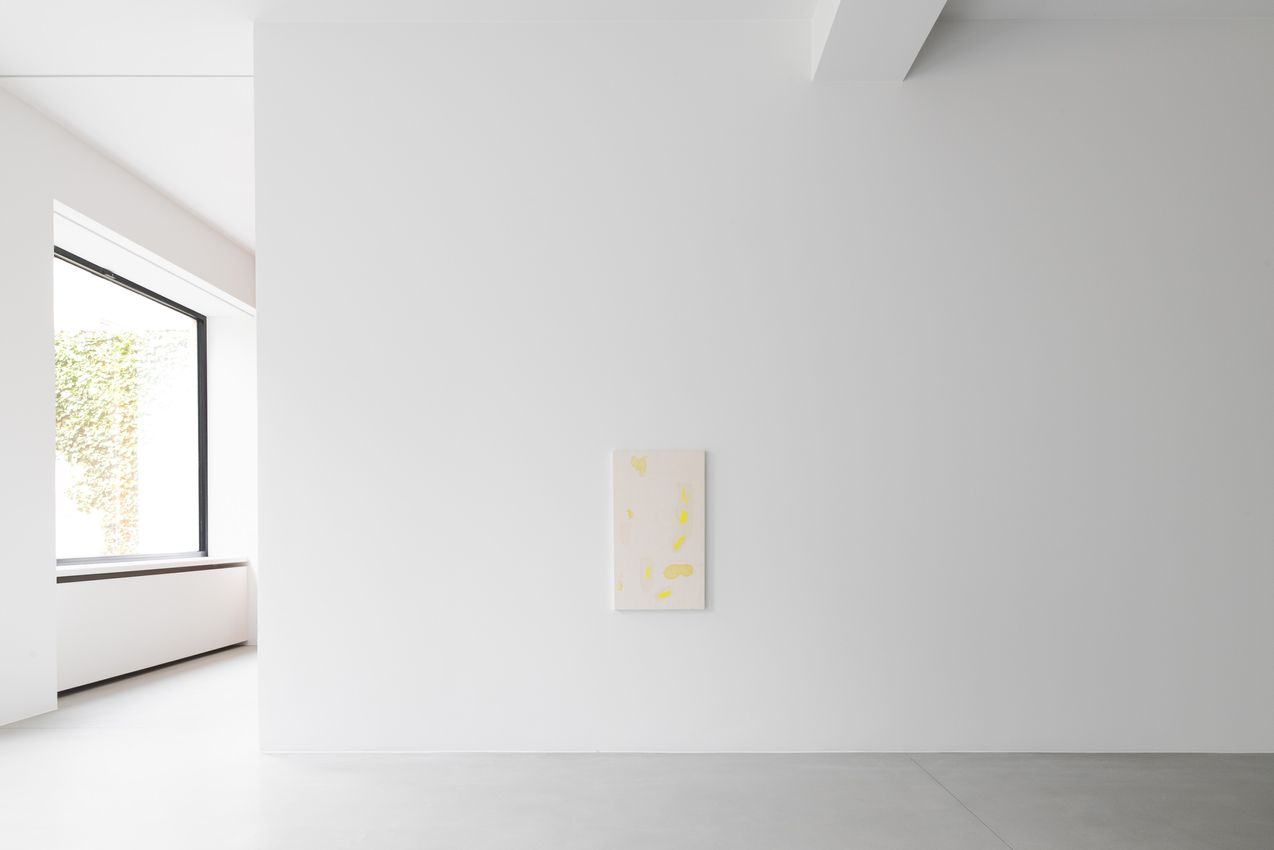
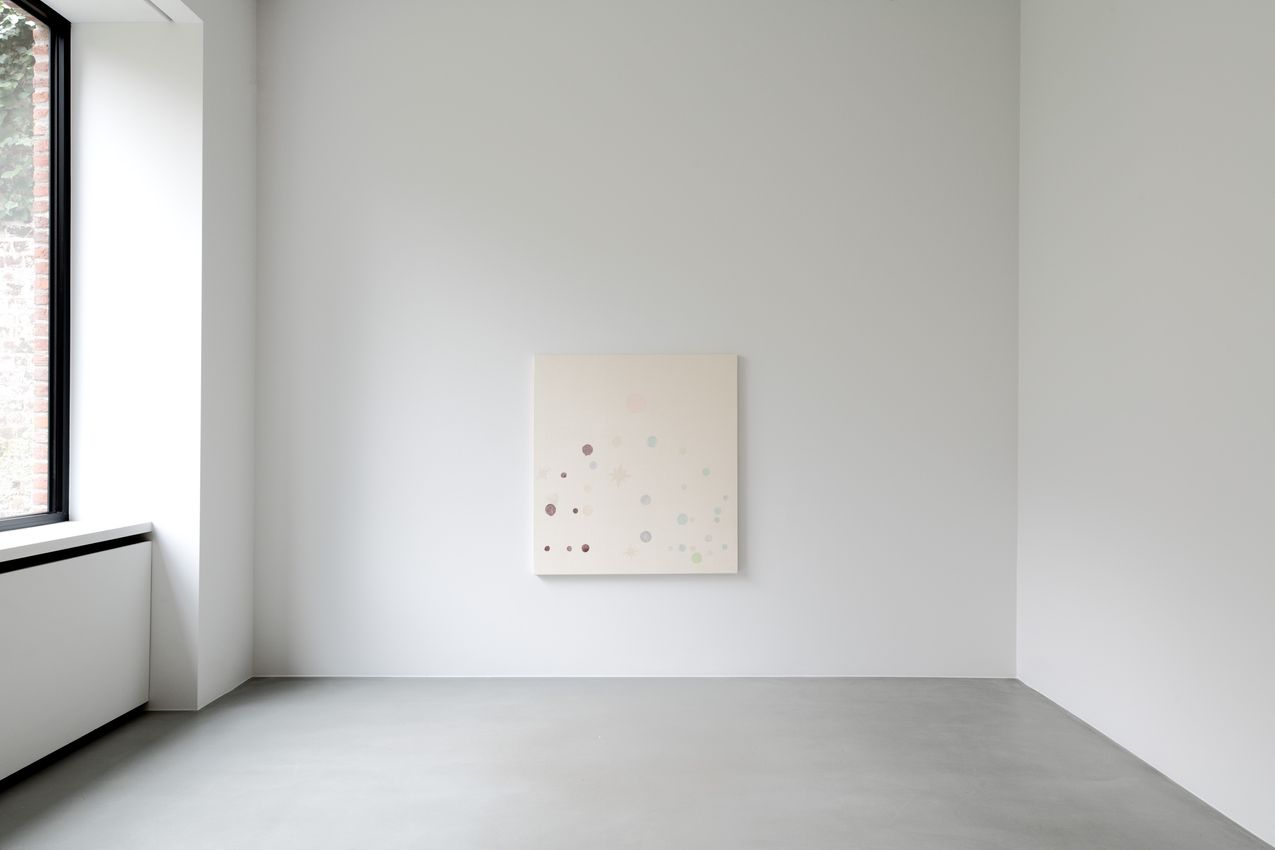

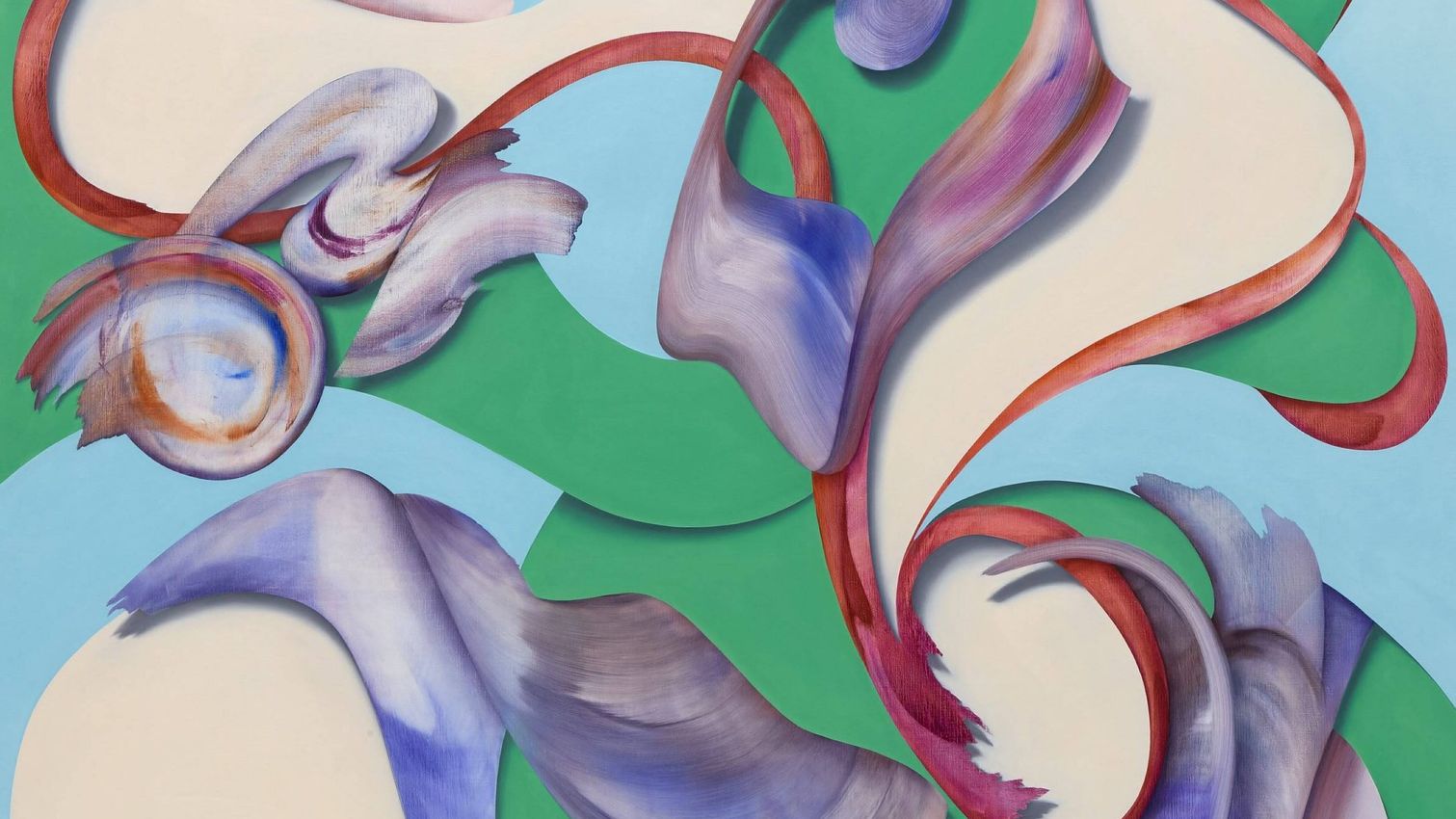
Cathy Wilkes presents a new series of paintings, marking her first exhibitionin Brussels to focus almost exclusively on two-dimensional work. Wilkes’paintings, sculpture, and poetic writing sit precariously on the edge of legibility.The artist describes aspects of her work as a mediation; the work feels humaneand commensurate with a level of intense introspective concentration. Wilkeshas referred to the presence and proximity of the dead in her work, as well asthe influence of her children and her own childhood in Northern Ireland.
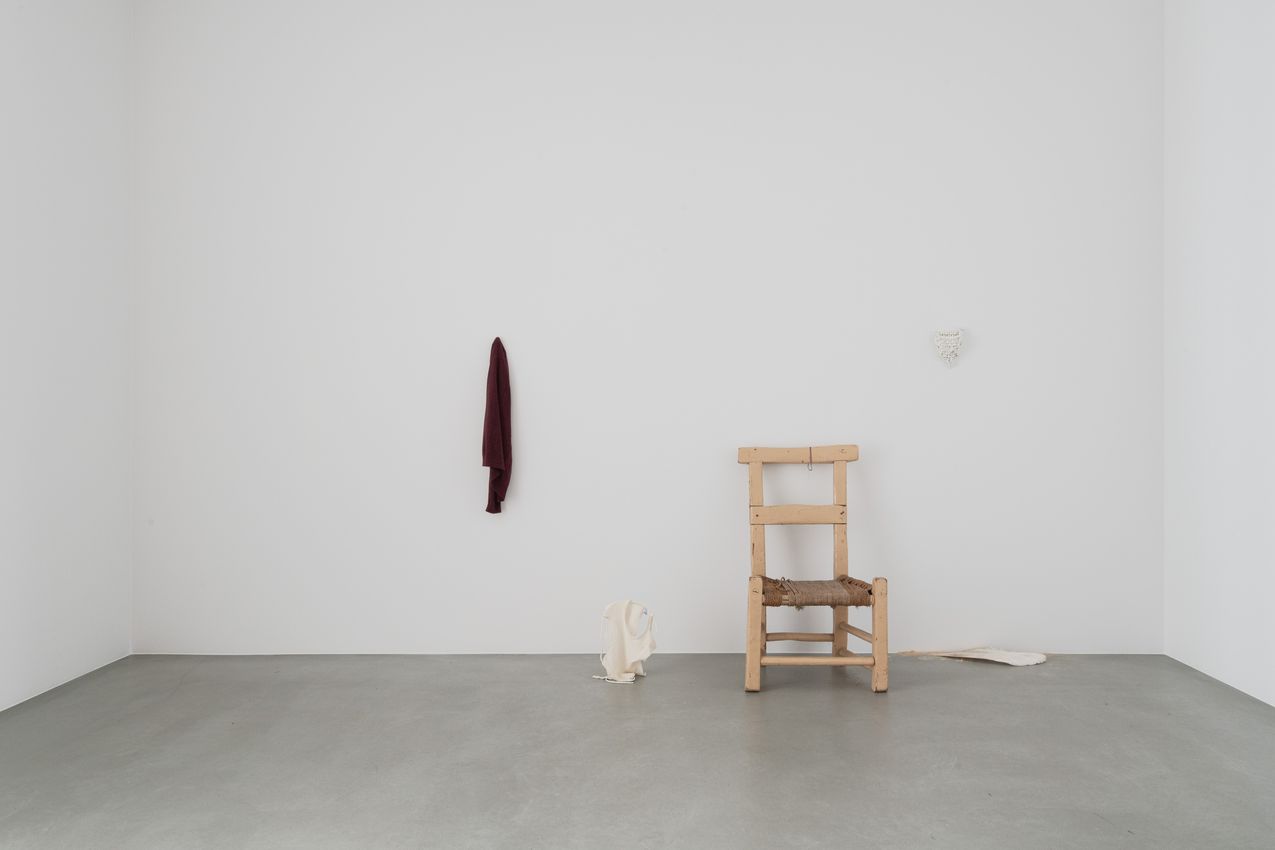
In relation to the sculptures, How It Was and I can hear the tick of your watch,Wilkes refers to reincarnation. These works, like ‘the play where nothinghappens’, show us a place of waiting or a moment after departure. Her notesread: “We called in at a farm in Crossnacreevy. We had tea in mugs thatweren’t too clean. I looked at the chairs, thinking if maybe Joseph or Jesusmight have made them. Without transmigration, we would all be thin andinsubstantial, like ghosts, I thought.”
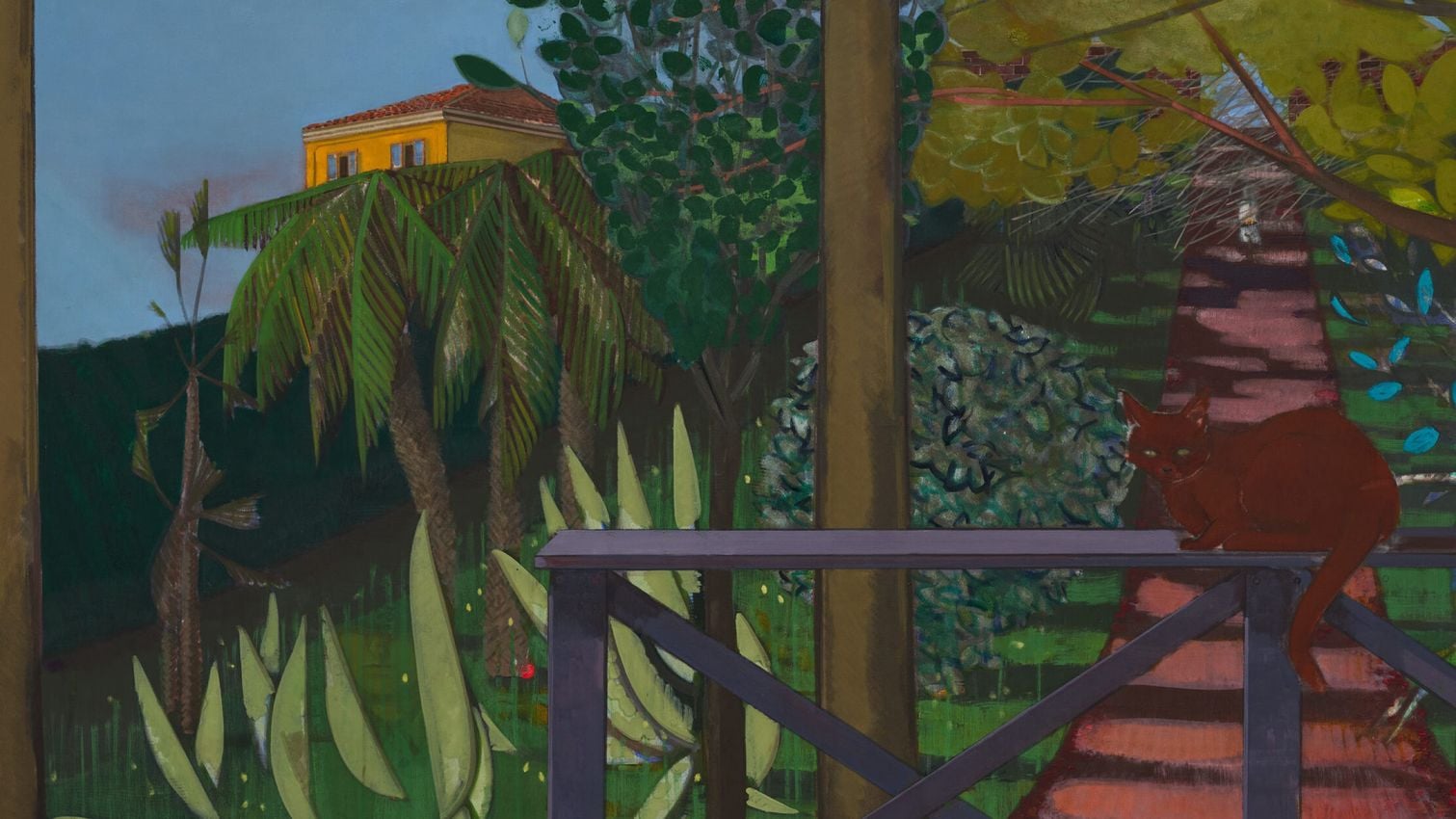
Combining celestial sparsity with the textures and colours of elegiac landscape,her paintings express loss and the repose of souls. While their titles—Rivulet,Hillside with Thorn Bushes, Dormition of Mary, and Harbour in Al Sham—implya poetic biblical illumination, they remain hypostatic and delicately iterativein themselves. Wilkes finds a correlative to the interior relationships of
her installations in their careful negotiations of space and placement on thepainted surface.
In these new paintings, the soft, blurred hues of earlier works give way to analmost unprecedented sparseness. Working with pigment and gum arabicon silk and linen, the fabric, its threads and weave, take on a more activecompositional and symbolic role. Collaged shapes and isolated painted gestures,stars and tiny swatches of cloth engage in a formal and symbolic interplay.
In Leaving and Coming Back, for example, the circles of paper hover betweensurface and substrate; they are like bandages or patches covering wounds.
“The paintings are made and repeated until they are finished. After a whileI know what should be there; I start again over and over. I can feel the speedof each action, which is fast and has no real duration—just the briefest momentcompared to long periods of waiting and looking. It doesn’t feel like production;production is too aggressive—it feels like continuous preparation, and theneventually recognition when I see it.”
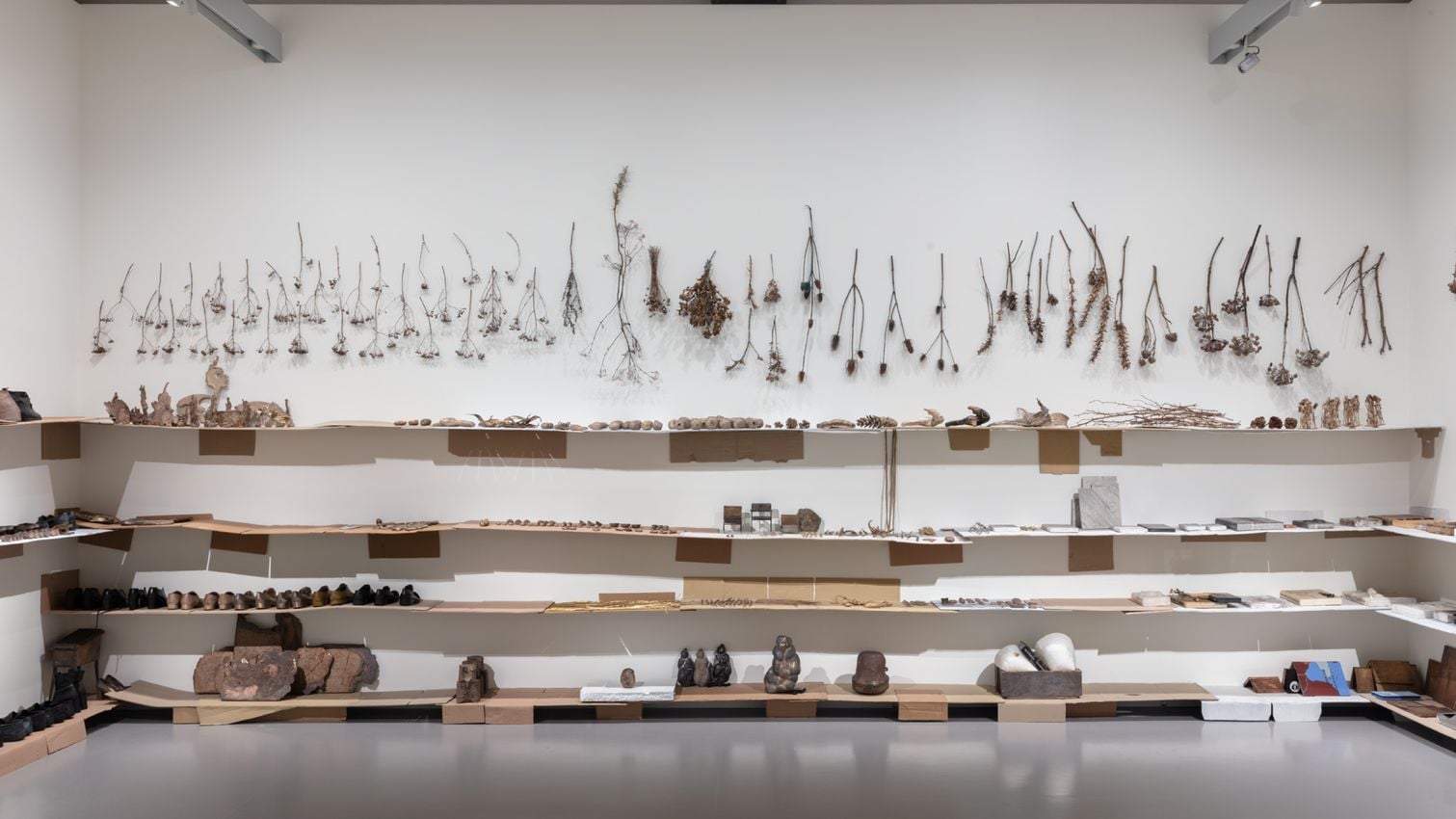
Born and raised in Belfast, Northern Ireland, Cathy Wilkes trained at Glasgow School of Art and is part of the generation of artists who emerged in the mid-1990s. Wilkes is primarily known for her large-scale installations of seemingly disparate objects, many of which are distressed, damaged, altered or adapted.


A respected voice in contemporary art discourse.
Focusing on ambitious storytelling and insightful art-world commentary. Ocula Magazine publishes in-depth interviews, critical essays and timely analysis on the artists, exhibitions and ideas driving the global art world.
Learn more about Ocula Magazine
Showcasing the best of the art world.
Ocula partners with galleries from around the world to highlight their artists, artworks and exhibitions. Gallery membership is by application and invitation, with each member vetted by an independent panel.
Learn more about Ocula Membership

Specialises in the sale of major artworks.
Led by a team with deep ties to the world’s leading auction houses, galleries and collectors. Ocula’s advisory team offers bespoke services to high-net-worth clients from around the world who are looking to acquire the best of contemporary and modern art.
Learn more about our team and services
