



Press Release

For her third solo exhibition in Brussels, Cathy Wilkes (b.1966, Belfast, N. Ireland) brings together a selection of her most recent work in an intriguing and visually rhythmic installation that draws the viewer inwards.

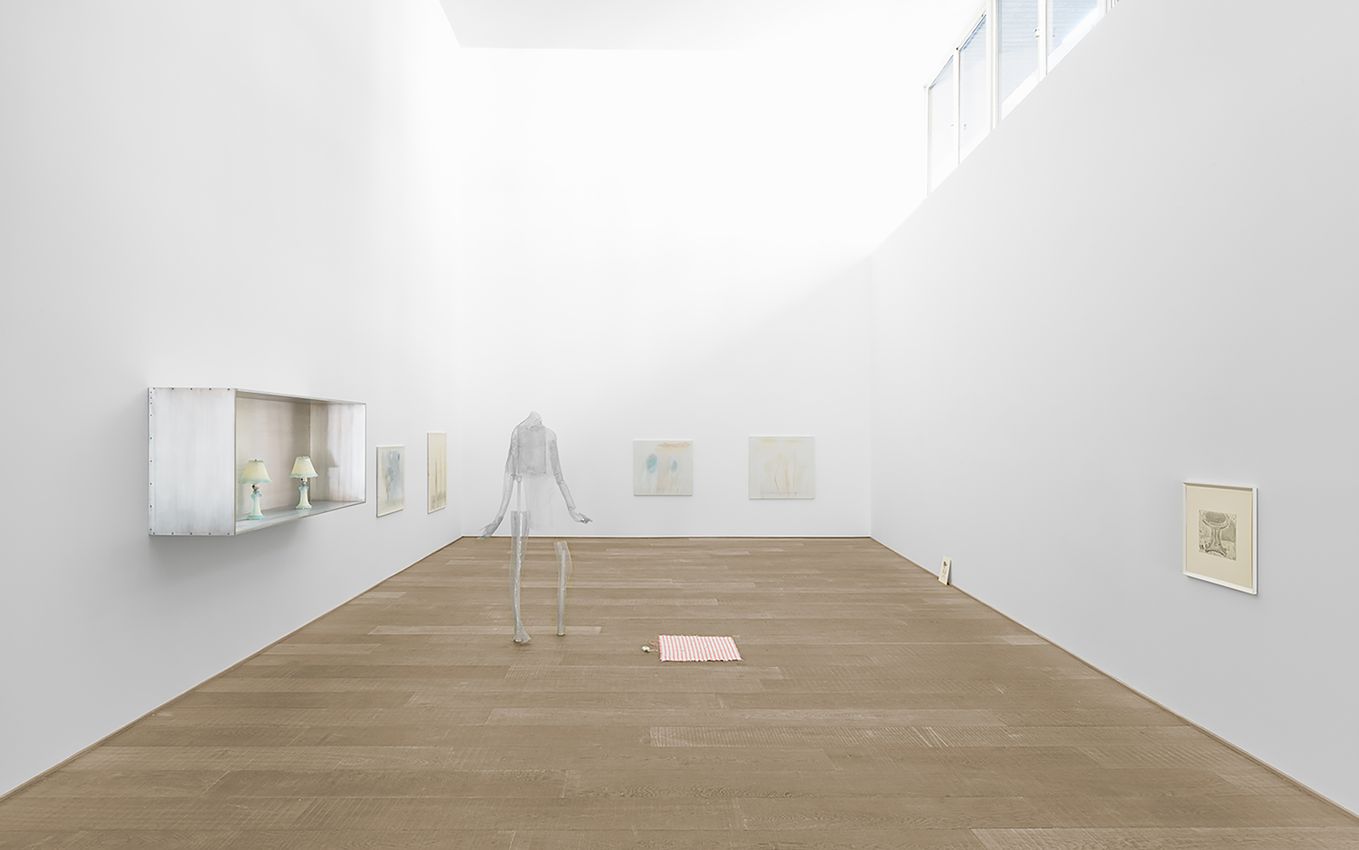
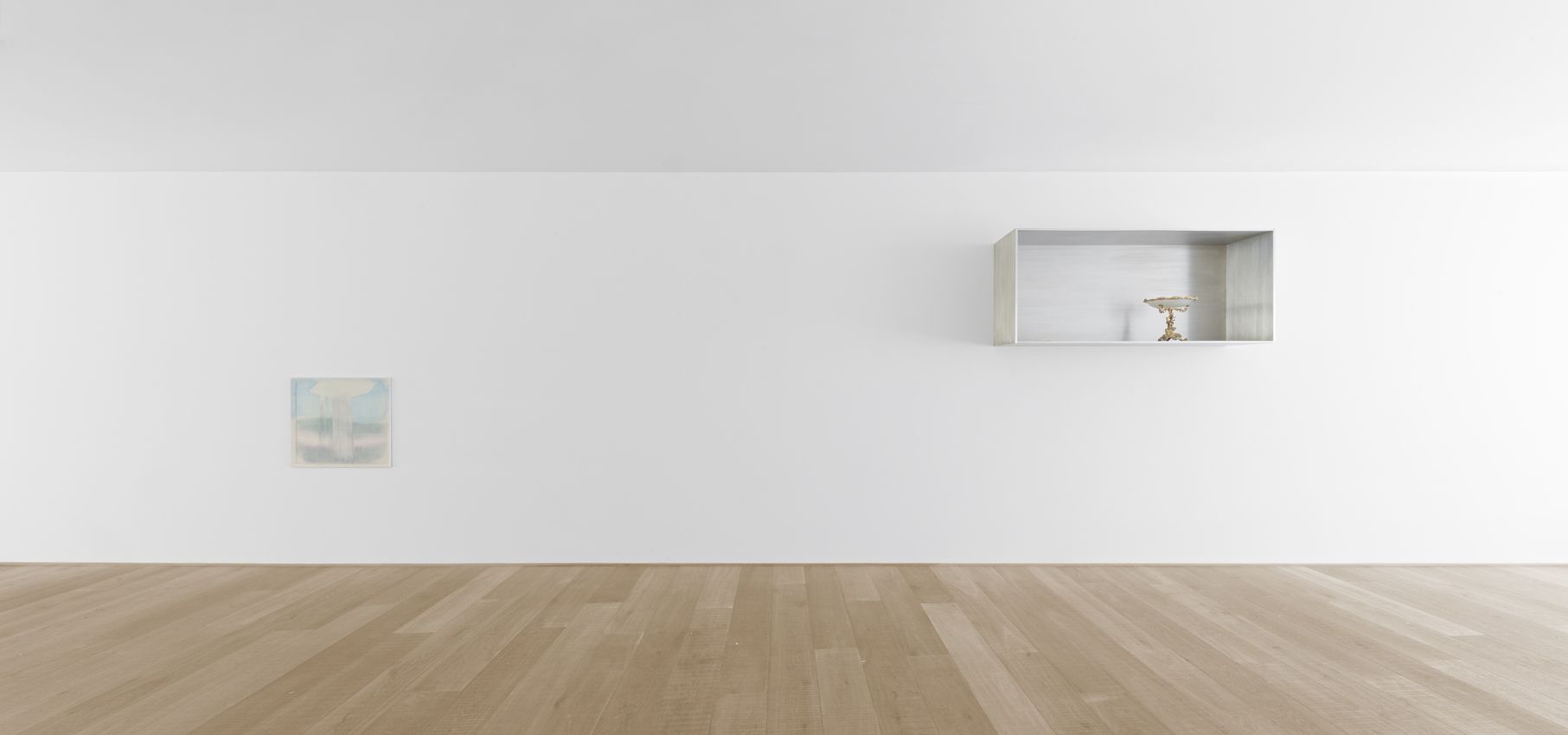
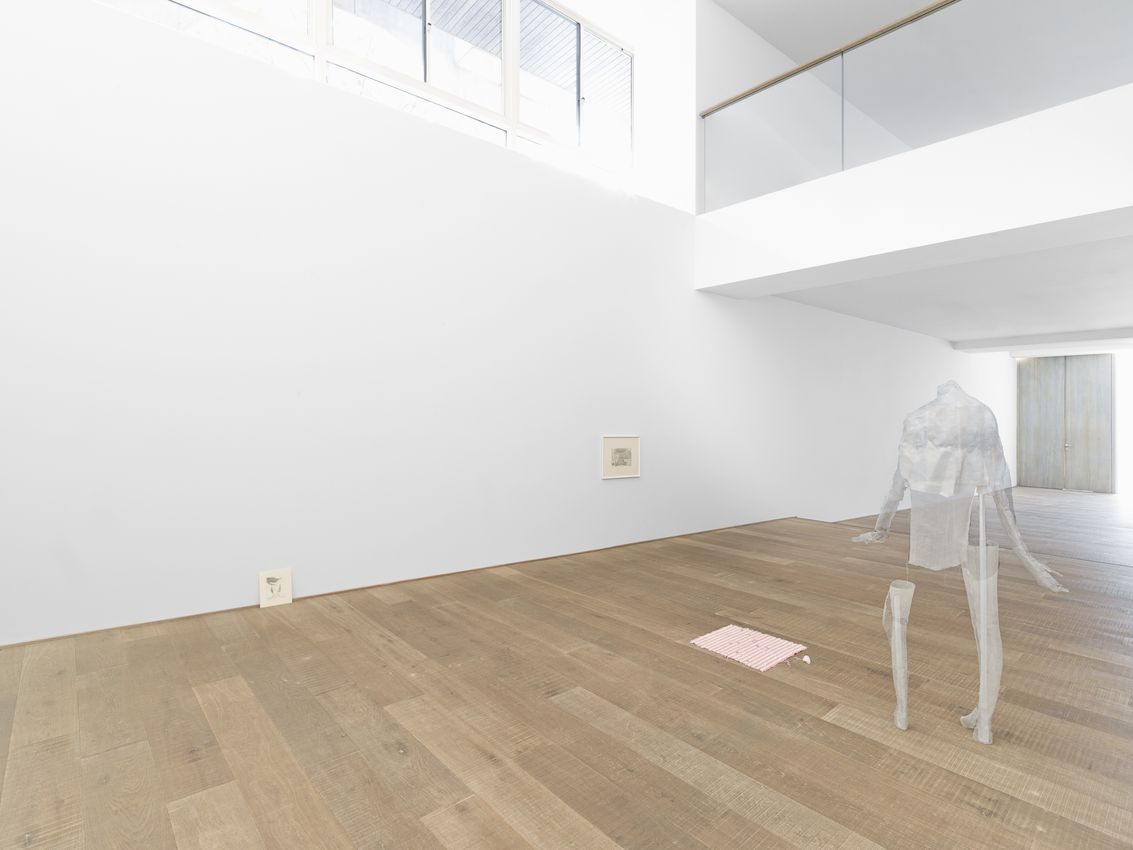
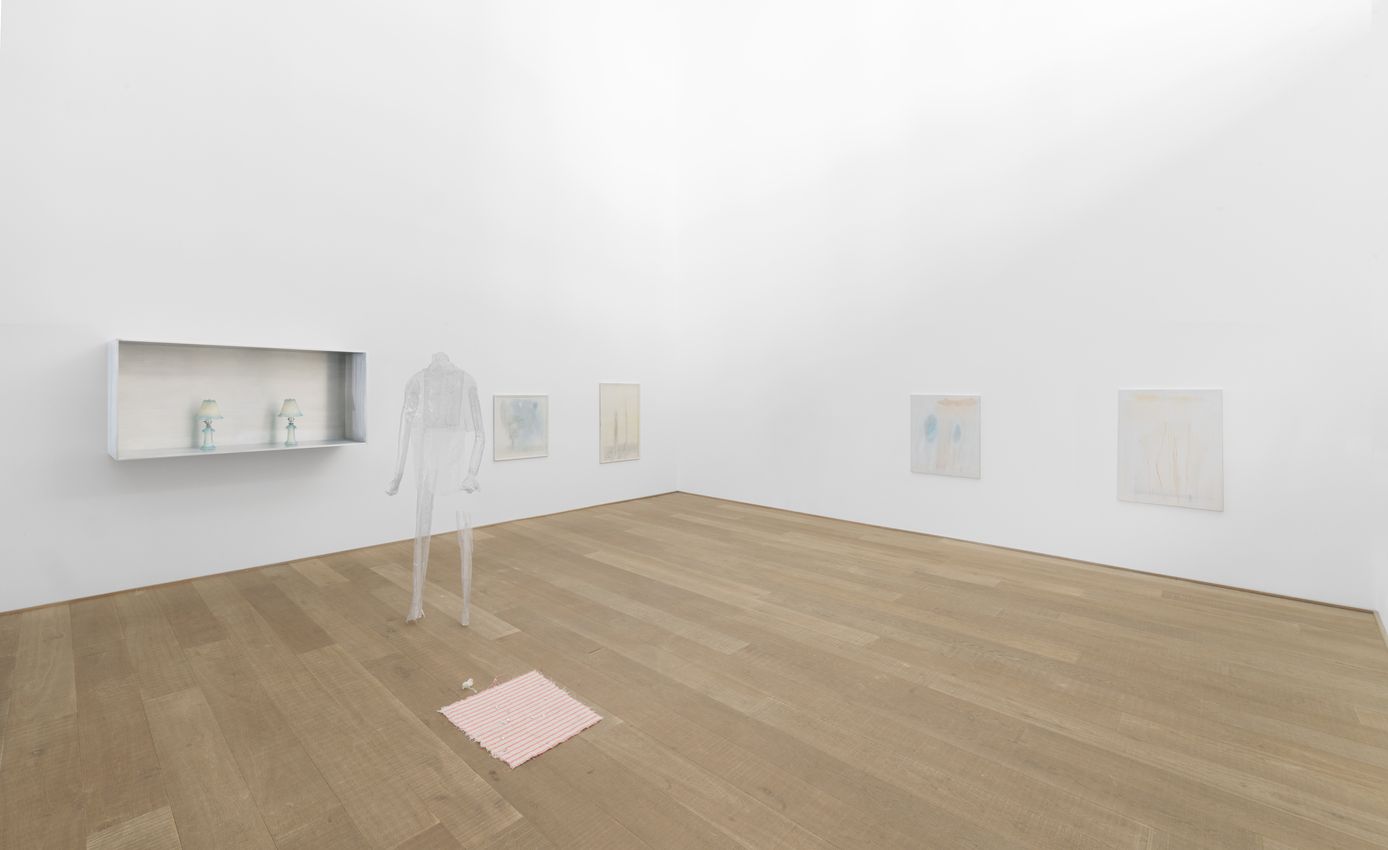
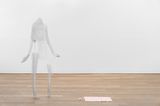
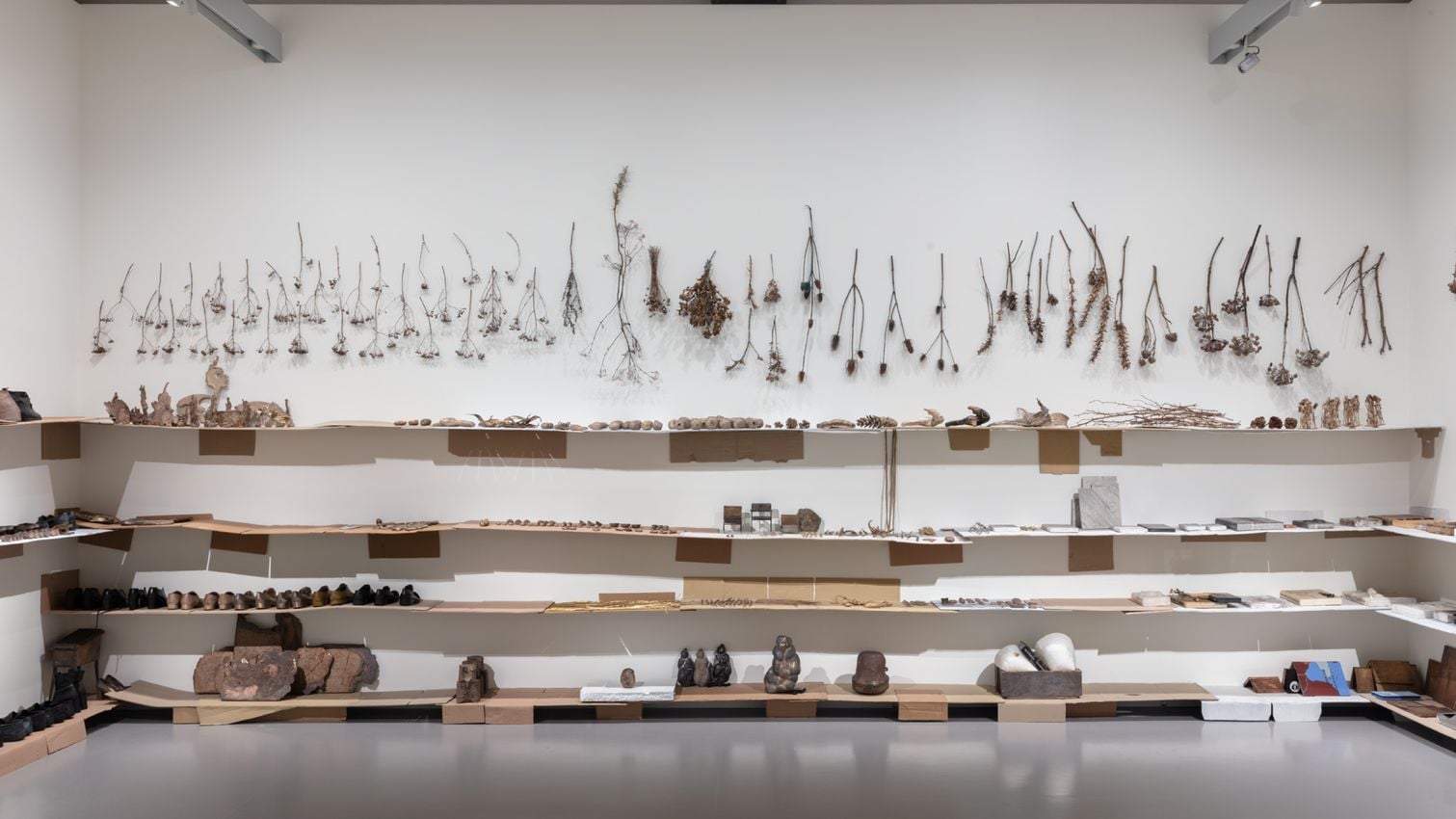
In the downstairs gallery, the space is occupied by a transparent, diaphanous sculpture that is executed with great economy of means. Wire, loosely held together by pins, suggests a faceless human form asking for money. The fragility and weightlessness of the figure, which seems to hover on the threshold of presence and absence, contrasts sharply with the emphatic nature of the two wall-mounted display cases in the exhibition. The objects within them – a pair of lamps in one, a Russian tazza in the other – are specific, historical and decorative. They seem significant, yet their meaning is elusive and hard to apprehend. Wilkes creates sculptures from found objects and reclaimed materials but eschews the idea of formal artistic production. She allows her works to speak through their associative and material presence and the use of these found objects allows for cosmic oneness across time and space within the installation of the work. The precision with which she places these objects – in relationship to one another, with reference to the architectural space, and in dialogue with other works – imbues them with a deeply poetic charge. Whether through their forlorn and banal nature, obsolescence and fragility, or even their social and domestic history, our engagement with the artefacts creates space for contemplation and often engenders a wide range of philosophical reflections, ideas and emotions.

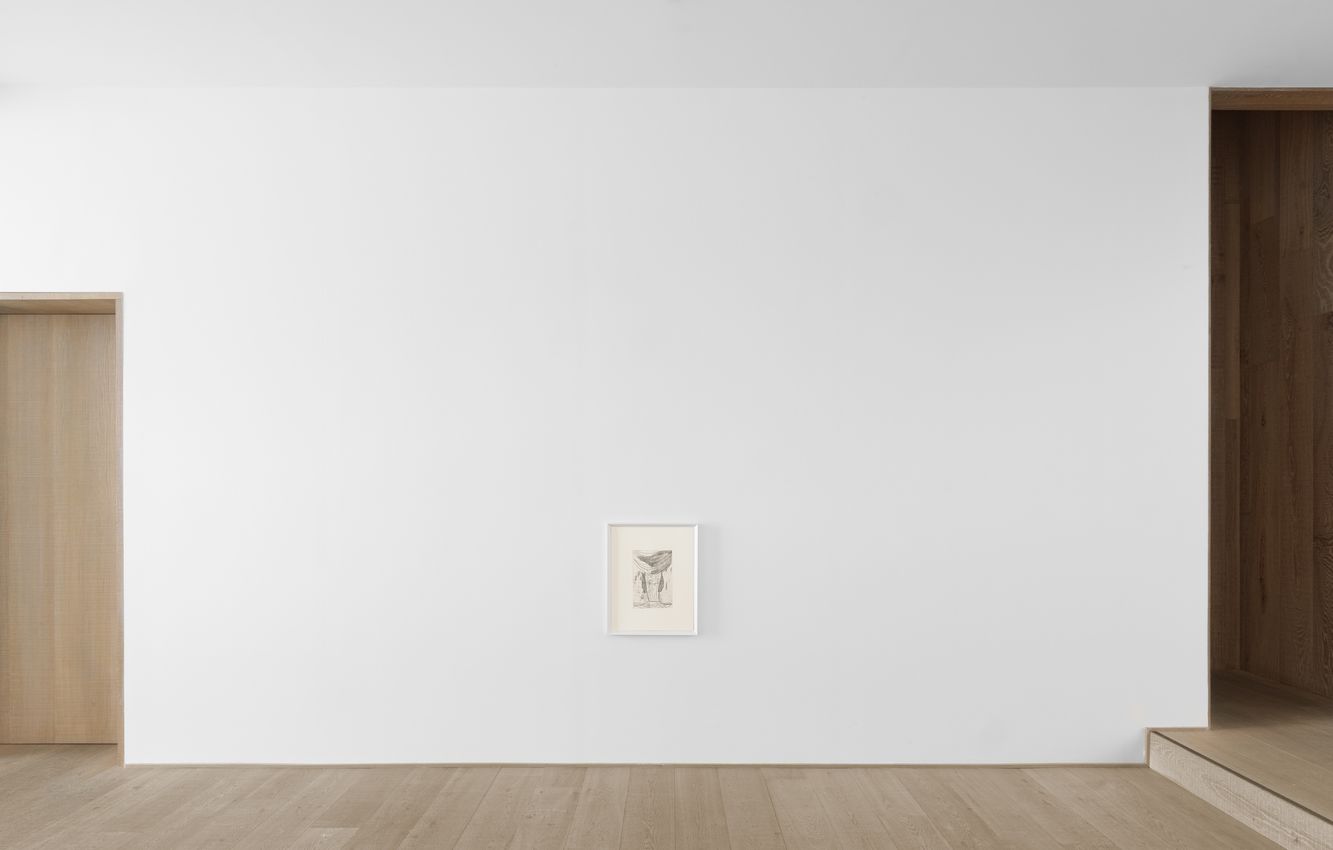
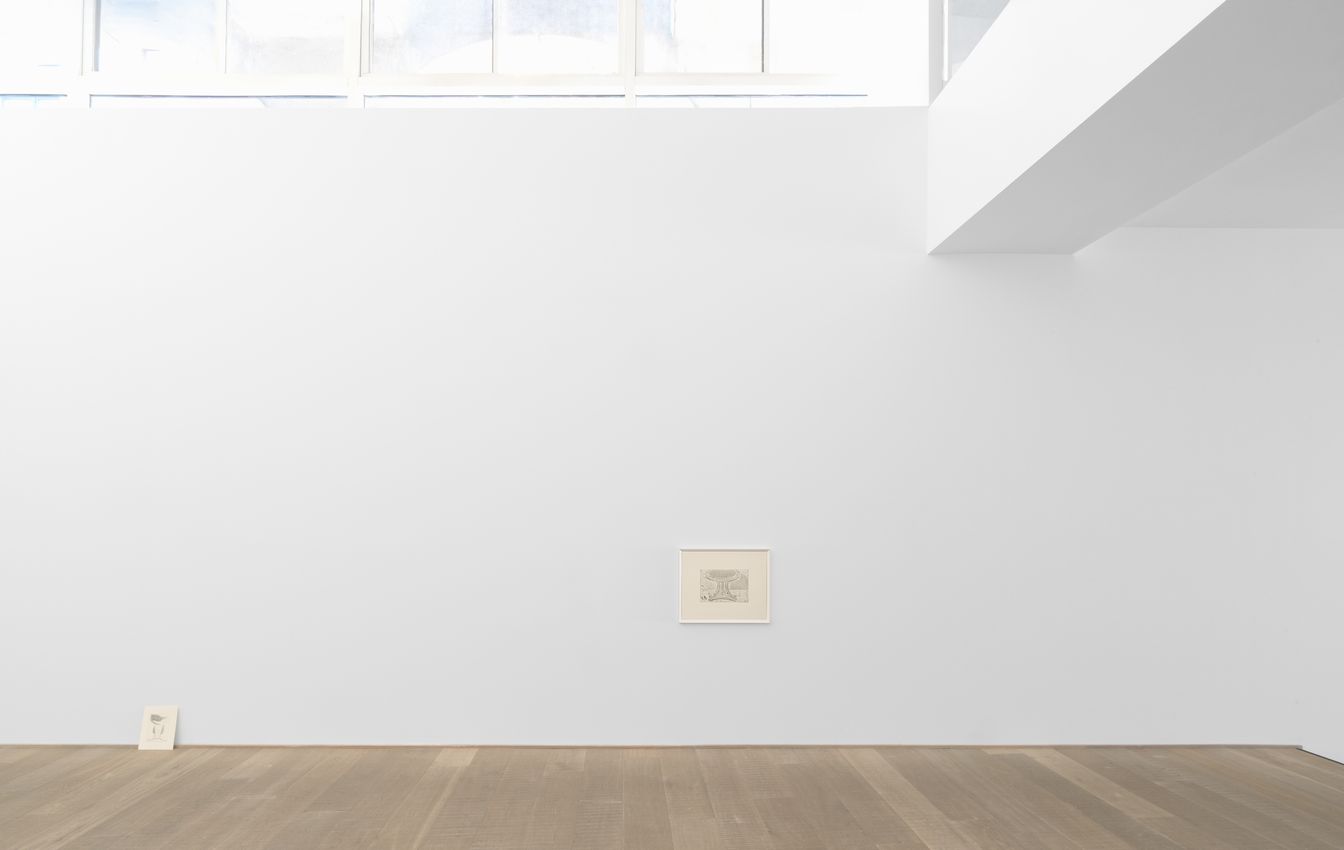
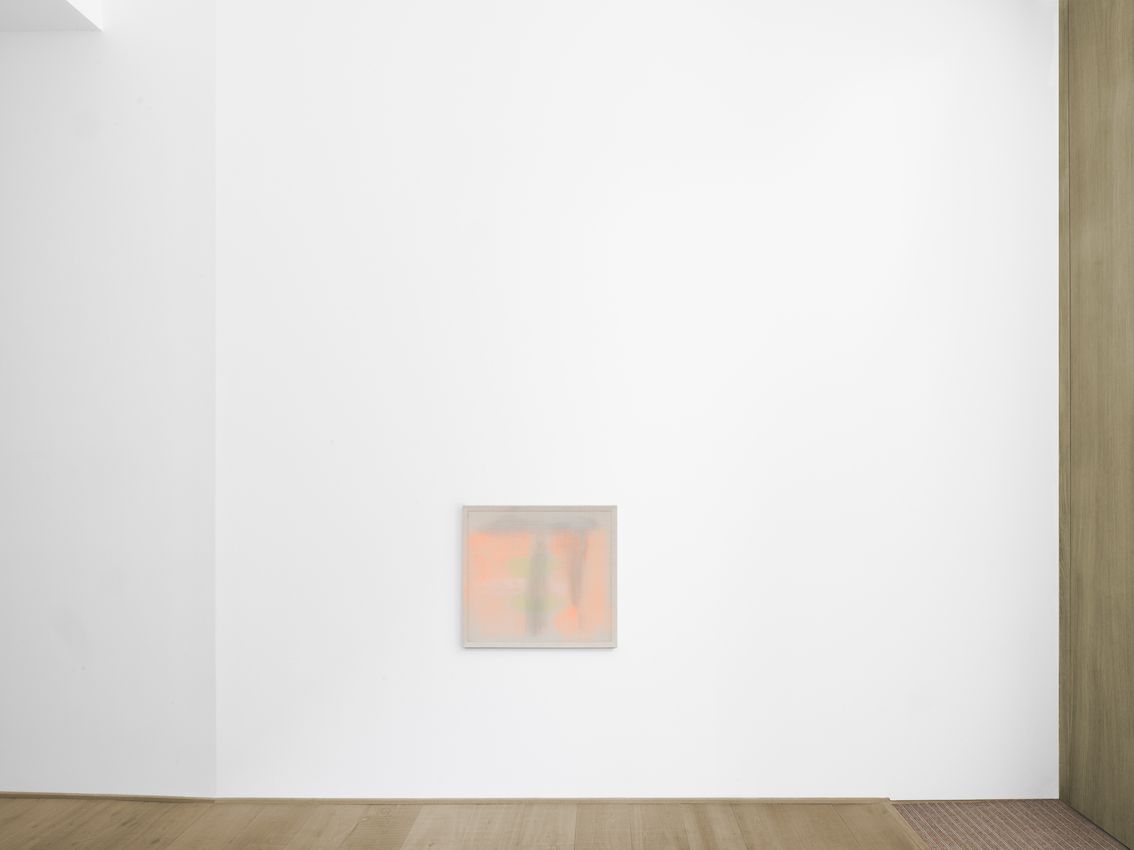
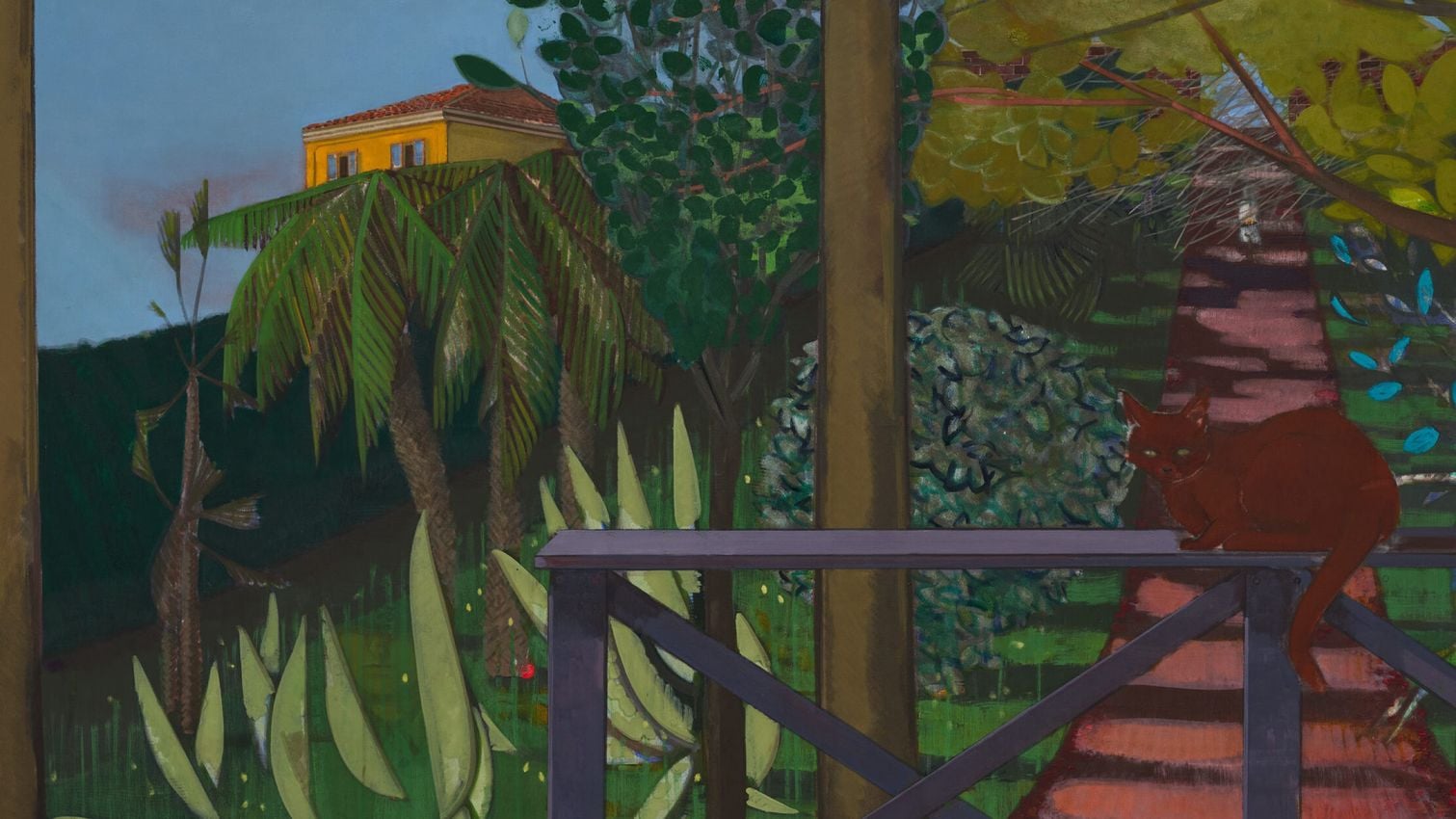
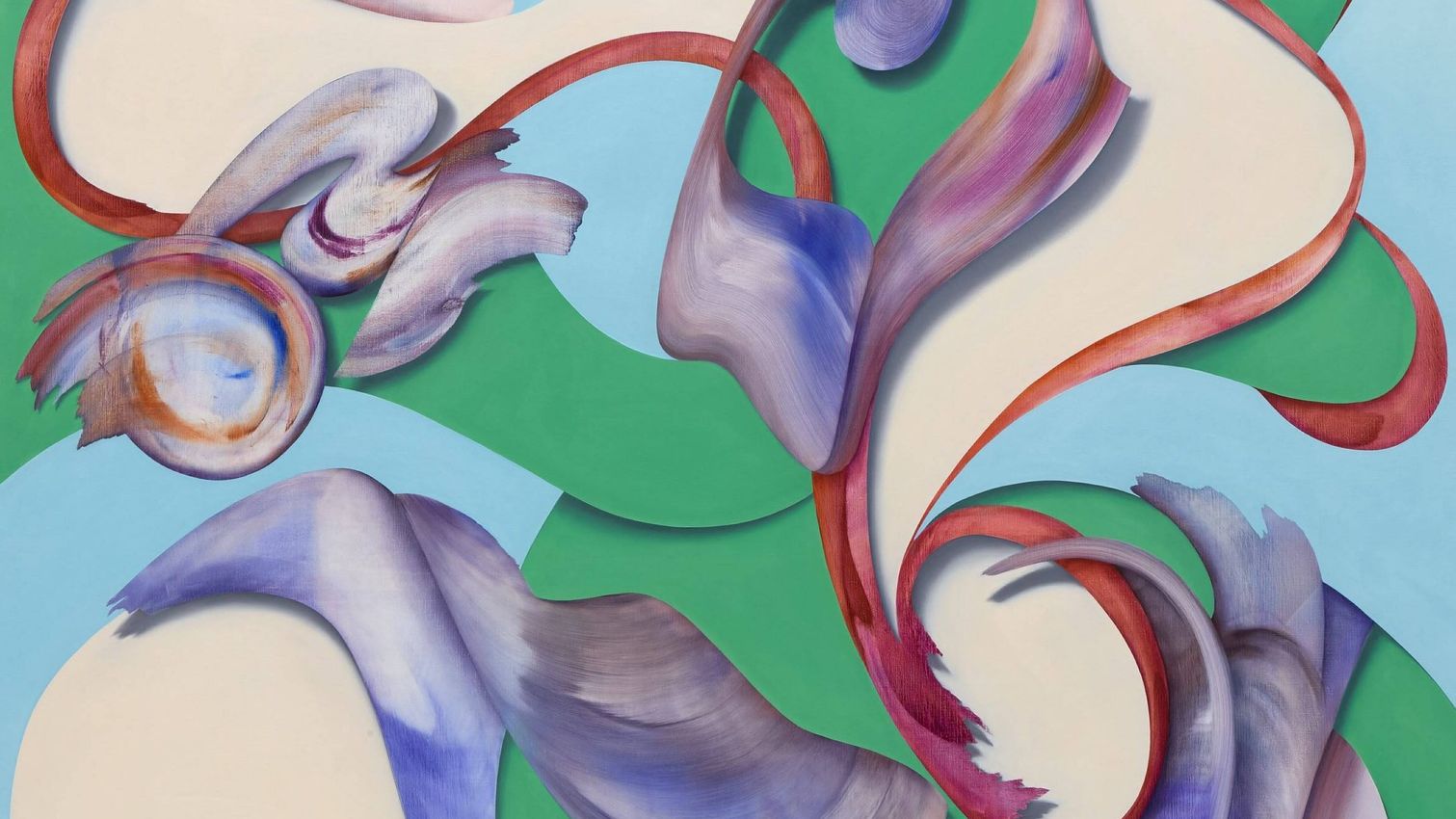
These works are shown in conjunction with a series of paintings in which medium, support, composition and colour (or its absence) have an equivalent value. In these works, the artist paints on highly sustainable fabrics (linen, pineapple leaf cloth, known as Piña, and a textile crafted from banana bark fibres) using egg tempera and gum Arabic (a binder made from the sap of the Acacia tree to which pigment is added). Many of these images reference flowers and plants. The natural luminous delicacy of these organic, time-honoured materials enters into an intriguing dialogue with the opacity and solidity of the man-made consumer goods. The exhibition also includes finely drawn lithographs and soft-ground etchings. The historical techniques used in these works result in delicate surface textures that chime with Wilkes’ paintings and overall lightness of touch.

Although her sources of reference and inspiration are never overtly stated, Cathy Wilkes’ works can often be seen as metaphors within a quest for meaning on both a personal and universal level. In her own writings, she alludes to the political realities of growing up in Northern Ireland during The Troubles, the hedgerows and flowers of her childhood, leaving home and her own body; but also to survivor’s accounts of the Siege of Leningrad (1941-44) during which people were reduced, in the most literal sense, to almost nothing.

Cathy Wilkes lives and works in Glasgow. She represented Great Britain at the 58th Venice Biennale in 2019 after having represented Scotland in 2005. She also participated in the International Exhibition of the Biennale in 2013. In 2017, she was awarded the inaugural Maria Lassnig Prize. Wilkes’ work was the subject of a touring exhibition that began at Tate Liverpool (2015) and travelled to LENTOS Kunstmuseum, Linz and the Museum Abteiberg, Moenchengladbach (2015–2016). Other solo exhibitions include MoMA PS1, New York (2017); Tramway, Glasgow (2014) and The Renaissance Society, University of Chicago (2012).

Read More

Installation Views

About the Artist

Born and raised in Belfast, Northern Ireland, Cathy Wilkes trained at Glasgow School of Art and is part of the generation of artists who emerged in the mid-1990s. Wilkes is primarily known for her large-scale installations of seemingly disparate objects, many of which are distressed, damaged, altered or adapted.

View Artist Profile

Also Exhibiting at Xavier Hufkens

About the Gallery
Xavier Hufkens is one of Europe’s leading galleries for contemporary art. Located in Brussels, the gallery maintains a diverse exhibition programme with solo exhibitions of the gallery artists as well as group exhibitions and special projects. The gallery deals in a distinctive combination of painting, drawing, sculpture, photography, video and installation-based work.

The origins of the gallery date back to 1987, when Xavier Hufkens opened a gallery space in an un-refurbished warehouse in the neighbourhood of the South Station (Midi) in Brussels. During the early years, the focus of the gallery was upon mid-career and emerging artists and the gallery is known for having introduced some of the most influential contemporary artists to Brussels at a time when they were still relatively unknown. British sculptor Antony Gormley, who is still affiliated with the gallery, Felix Gonzalez-Torres and Rosemarie Trockel all showed in Belgium for the first time with Xavier Hufkens (Gormley in 1987; Gonzalez-Torres in 1991 and Trockel in 1993).

In 1992, the gallery moved to a 19th-century townhouse at 6 rue Saint-Georges, close to the Avenue Louise. Completely renovated by Belgian architects Paul Robbrecht, Hilde Daem and Marie-José Van Hee, the house quickly gained a reputation for being not just one of the most beautiful contemporary art spaces in the Belgian capital, but also one of the most interesting. The expanded exhibition programme coincided with the additional representation of a number of established artists from Belgium and abroad, including Richard Artschwager, Thierry De Cordier and Jan Vercruysse. In 1997, Hufkens expanded the gallery further by annexing the adjacent building and a number of new artists joined the gallery, including Louise Bourgeois, Roni Horn and Thomas Houseago.

A second space in the same street, at 107 rue Saint-Georges, opened in spring 2013. Located in the Galerie Rivoli, a mixed-use commercial development from the 1970s, the new gallery space was designed by Swiss architect Harry Gugger, who was previously in partnership with Herzog and De Meuron. Slegten & Toegemann, Brussels, managed the project.

An eclectic but very clear vision underpins all of the gallery’s activities: ‘The definition of the gallery was established from the start. The common thread, then and now, is quality over and above everything else, which I find more intellectually challenging than a forced definition. From the early days I juxtaposed established artists such as Michelangelo Pistoletto with someone like Felix Gonzalez-Torres when he was totally unknown. Today I still mix my work: I have no problem showing Malcolm Morley … alongside Robert Ryman, or Willem de Kooning.’ [Xavier Hufkens in The Art Newspaper, Issue 220, January 2011, published online: 20 January 2011]

Xavier Hufkens represents some thirty artists from different generations. He was part of the six-member selection committee for Art Basel during seven years and also participates in up to five international Arts Fairs annually. The gallery has partnerships with the estates of Louise Bourgeois, Willem de Kooning, Robert Mapplethorpe and Alice Neel.
View Gallery Profile
Address
107 rue St-Georges
St-Jorisstraat
Brussels
Belgium
Opening Hours
Tuesday – Saturday
11am – 6pm
(1)
Brussels 107 rue St-Georges
Xavier Hufkens
107 rue St-Georges, St-Jorisstraat, Brussels, Belgium

Opening hours
Tuesday – Saturday
11am – 6pm
The art world in focus
