



Press Release

Xavier Hufkens is pleased to announce the second exhibition by Katherine Bernhardt at the gallery.

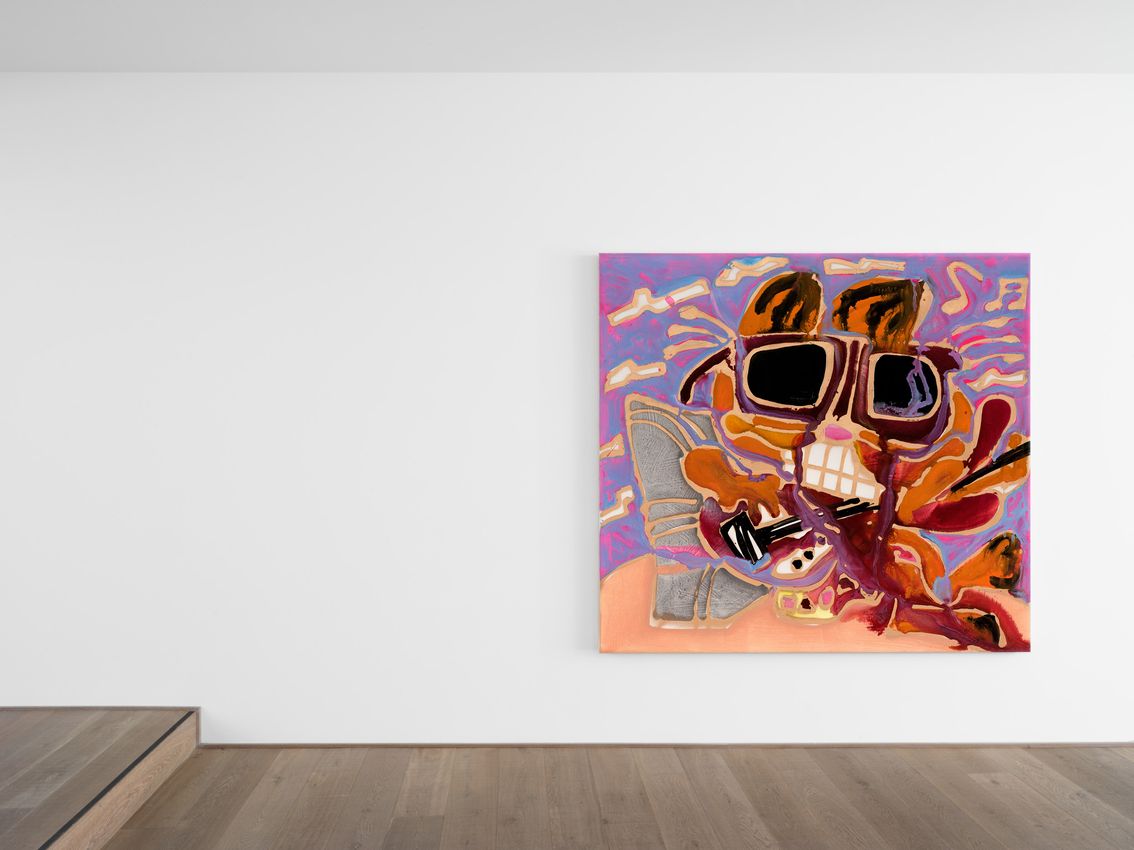
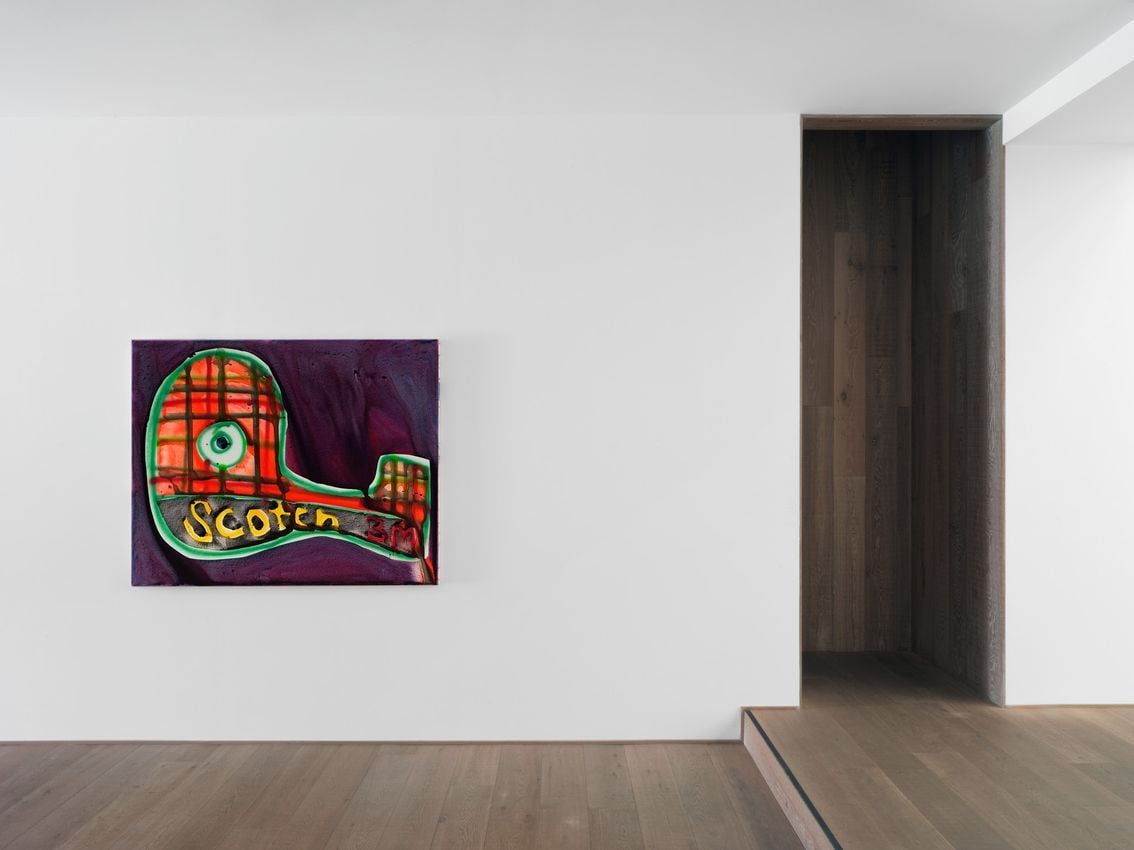
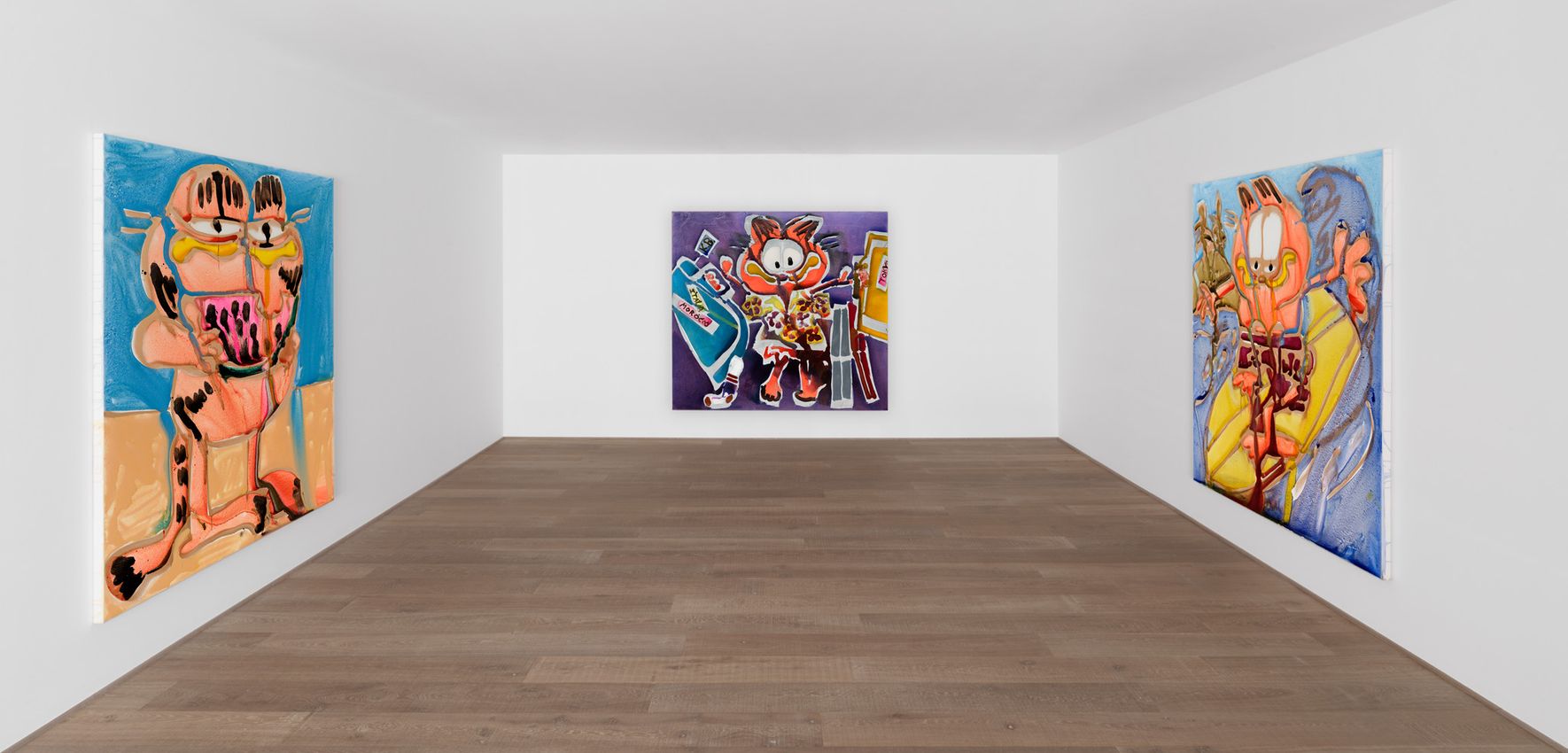
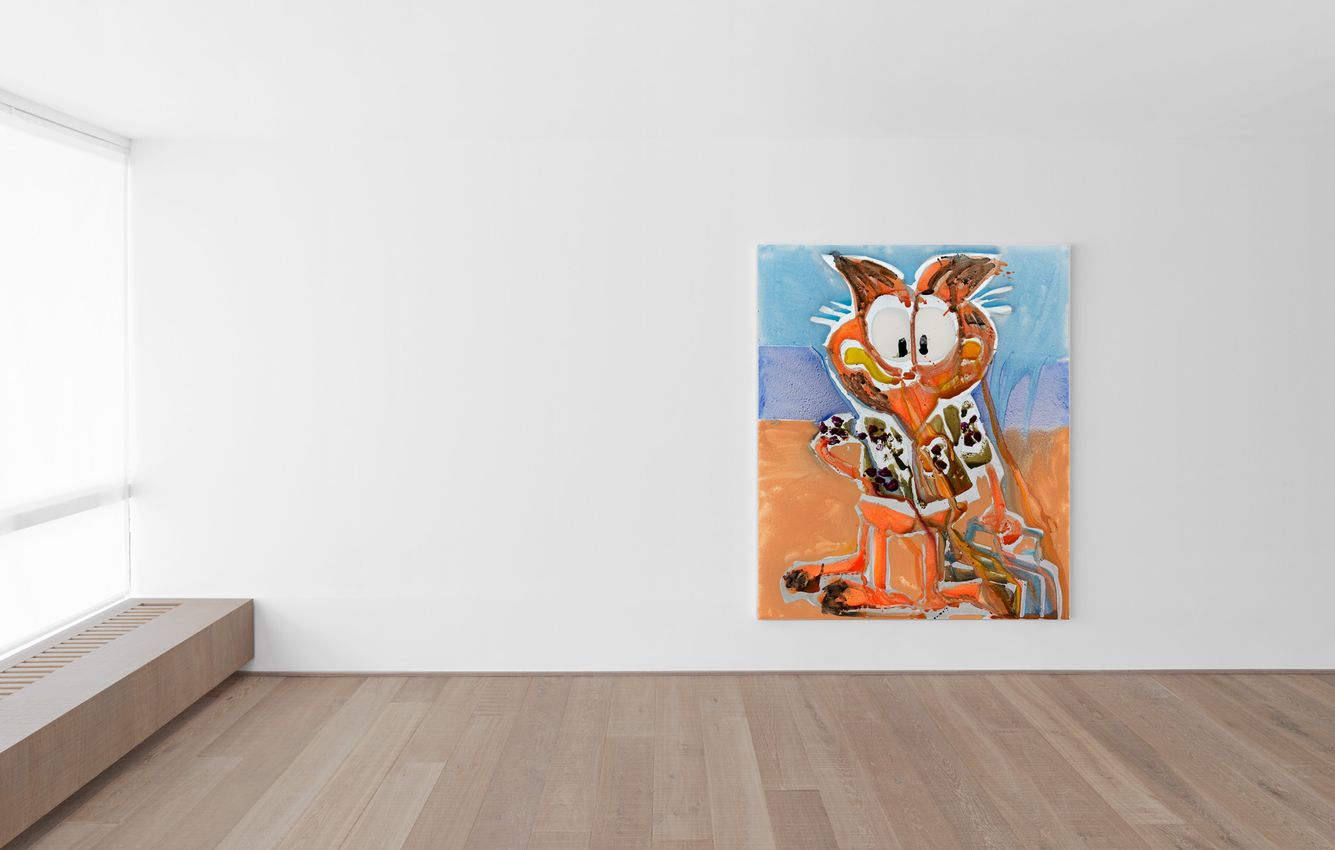
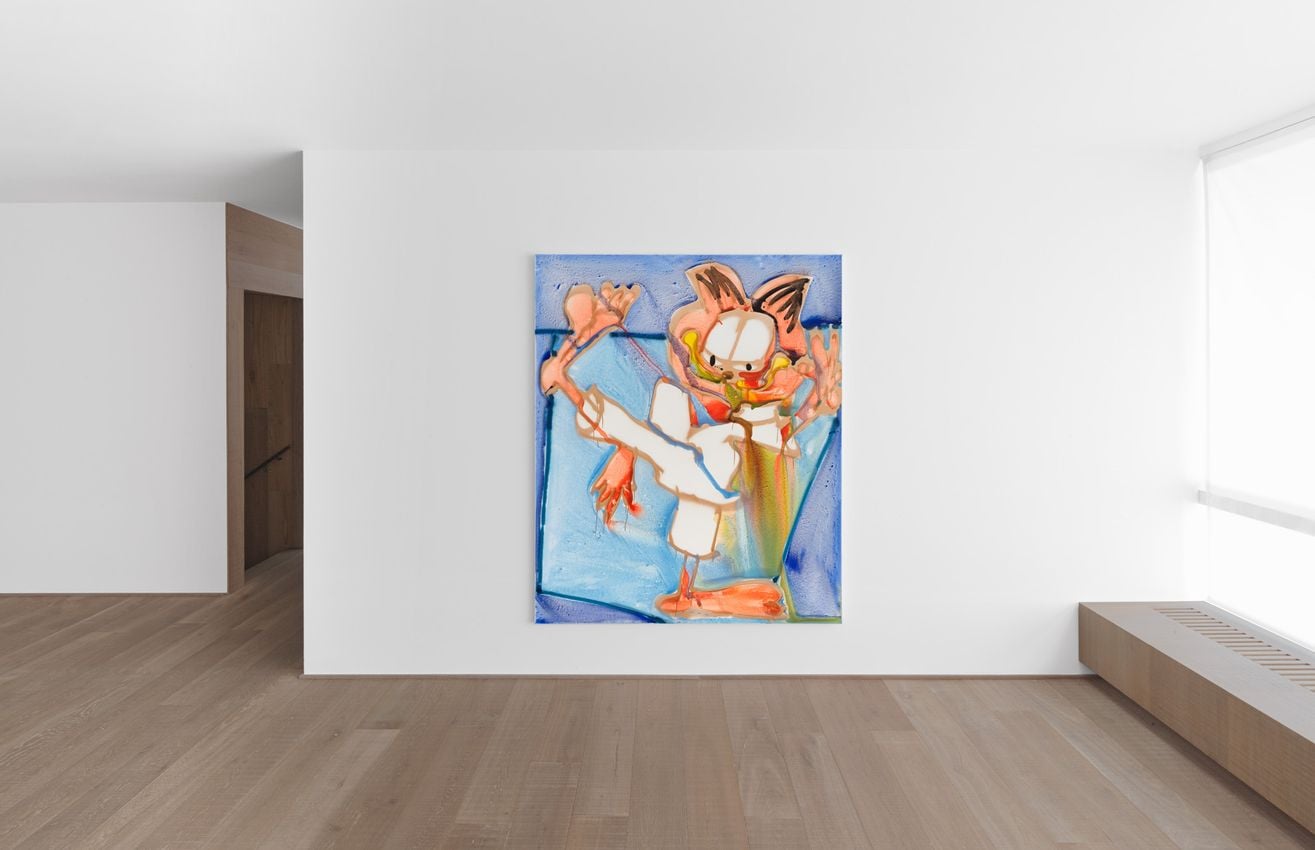
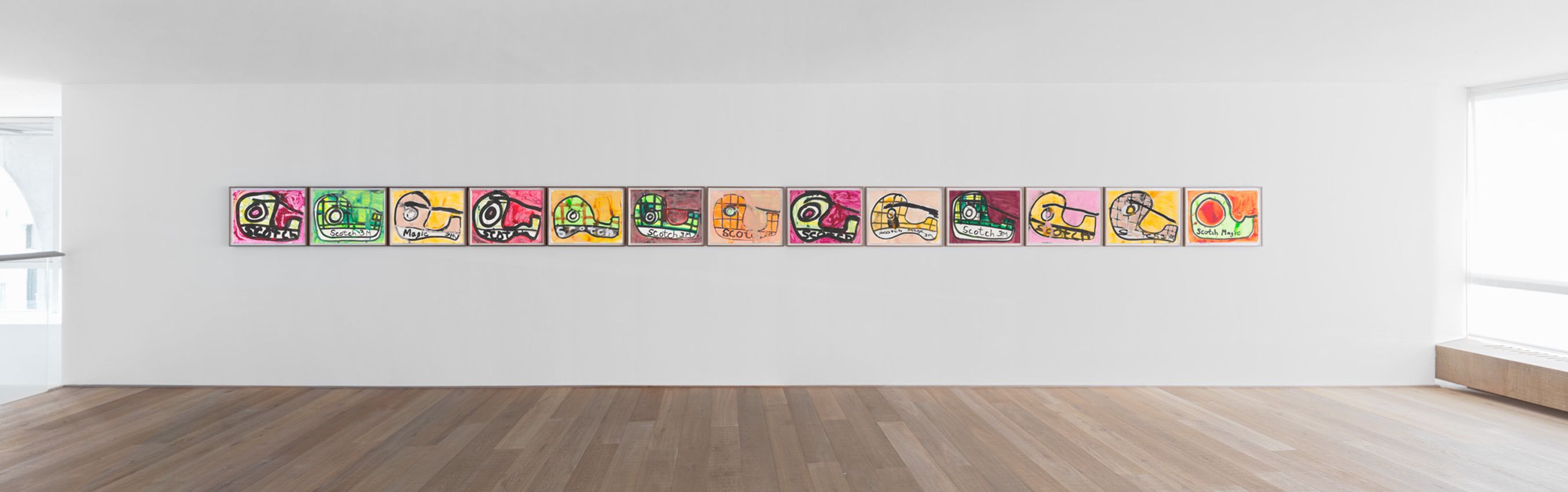
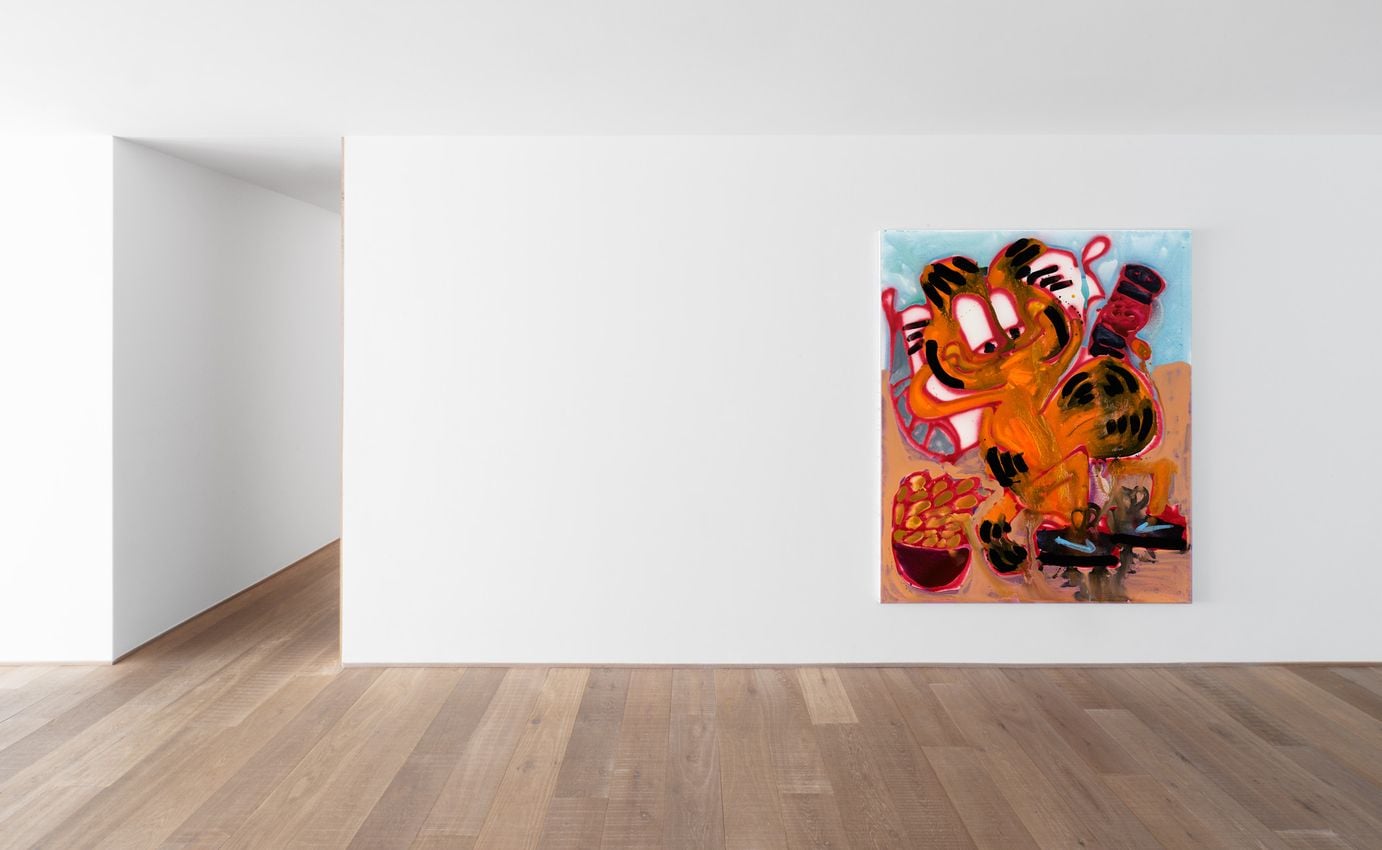
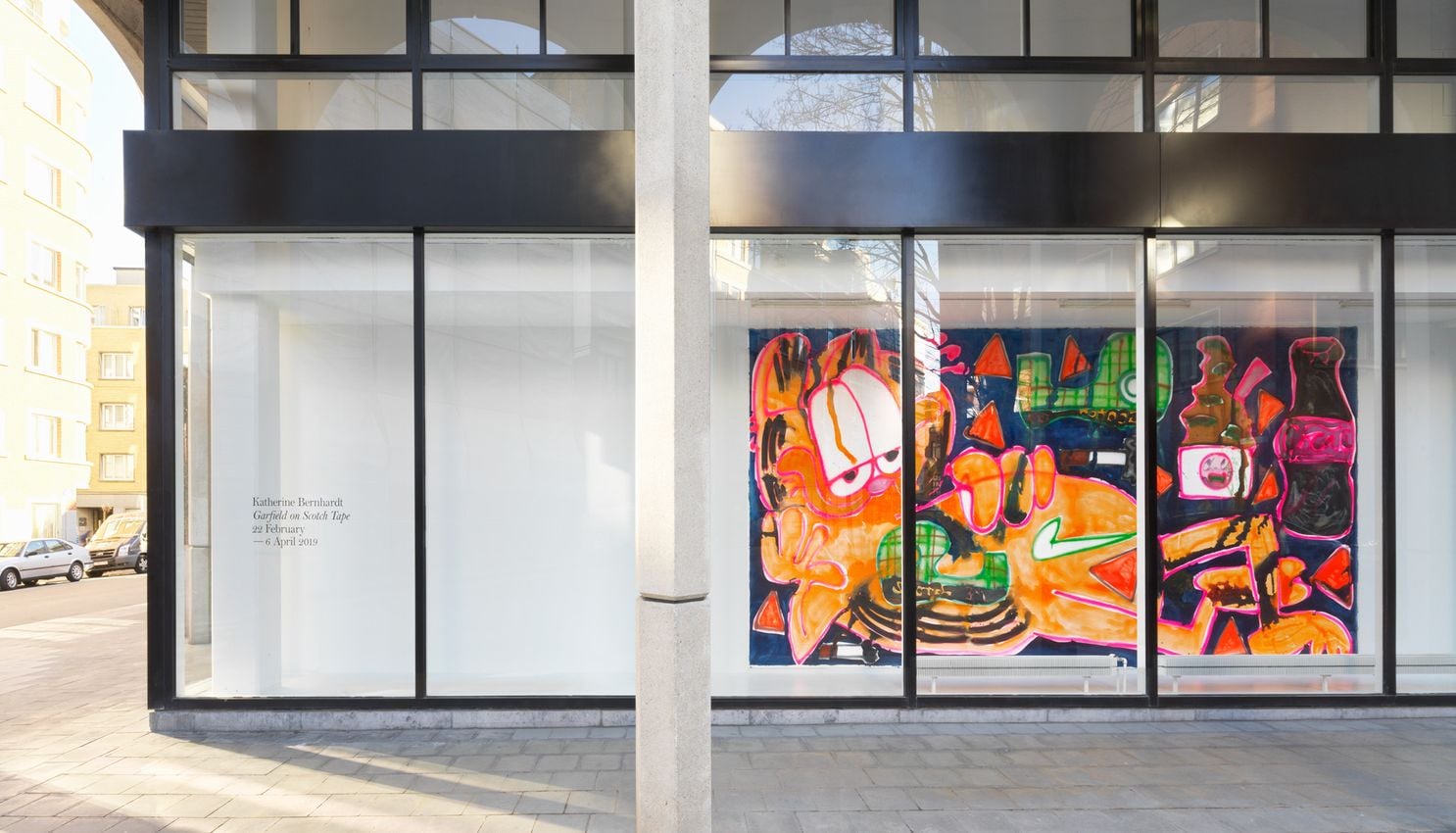
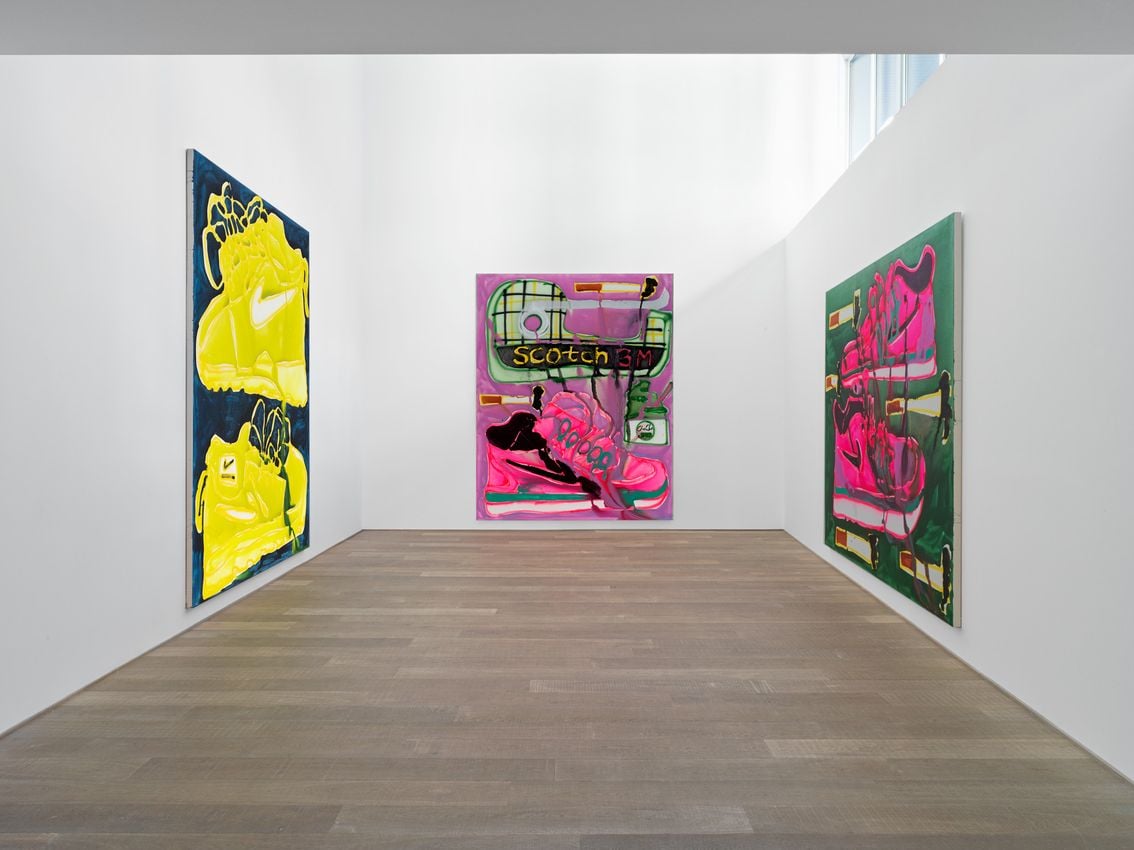
Visiting Bernhardt’s exhibition is an immersive experience: a kaleidoscopic universe of electric colours that run like stain paintings and which can depict cartoon characters as well as a host of recognisable consumer goods. At the heart of the presentation is the monumental 3 x 6 metre canvas ‘pattern painting’ entitled Garfield + Scotch Tape + Matcha + Coca Cola + Doritos + Nike (2018), while many other works depict large colourful Nike shoes and various other elements of 21st-century New York street culture and the global world of Instagram.

Bernhardt dips in and out of history with ease: Scotch Tape has been an office staple since 1930, while the first Babar the Elephant book made its appearance the very next year. The Pink Panther burst onto screens in 1964, just as Nike went into production. Garfield is an icon of the late 1970s and early 80s. She often paints certain objects and icons because of their intriguing colours and forms—mixing up different eras—and creating collage-like memories of our collective visual pasts. Other motifs, such as toucans and tropical fruits, allude to natural beauty and the environment while offering both unusual shapes for study and an opportunity to experiment with a wide spectrum of colours. Bernhardt revisits ‘larger than life’ products, and thanks to her choice of hot colour schemes, they often appear more alive now than ever before.

Bernhardt combines these motifs into spontaneous and visually arresting compositions that radiate joie de vivre. Yet for all the familiar objects or the reminiscing about cartoons, their messages are ambiguous and always open to interpretation. In this sense, they are akin to codified visual riddles. In some cases, Bernhardt conflates the lovable (a chubby Garfield cat) with the detestable (cigarettes and junk food). In another example, she uses Nikes as a contemporary reference to freedom of speech and racial justice (through quarterback Colin Kaepernick’s protests at NFL games, which led to him starring in Nike advertising campaigns, and the link to #BLM, the Black Lives Matter movement, which originated in Bernhardt’s hometown, St. Louis, Missouri). At the same time, she isolates the shoes as inanimate objects, thereby proposing them as new subject matter for the traditional genre of still life painting. The Nikes can also represent an open, direct representation of NYC as they are all people see on the subway, day in and day out, together with metro cards. Nikes and other such icons blend together literally thanks to the running paints, the fluidity of which also attest to influences such as Morris Louis, the famous stain painter. But what has Babar, the ‘king of the elephants’, got to do with the Nike logo? The unusual combination forces the viewer to become an active connoisseur, in an attempt to search out and interpret meaning, or they can simply enjoy the work in terms of form and colour. Some might see a Babar allusion in Nike’s best-selling ‘Atmos Air Max 1’ shoe, which features an elephant-print upper and a green flash in a hue that seems to echo his suit. Bernhardt might reply instead that Babar looks good in green, a shade that she is familiar with from the myriad green tiles and accents found throughout Le jardin, one of her favourite hang-out spots in Marrakesh. Likewise, some might read the image of Scotch Tape and cigarettes as a pun on the seductive but hazardous combination of whisky and cigarettes—while Bernhardt might respond that the lines simply intersected well with each other and ‘worked’. But perhaps the most replete image of them all is the monumental Garfield + Scotch Tape + Matcha + Coca Cola + Doritos + Nike (2018), in which the cartoon cat seems to have feasted on the best and worst of all delectable treats. Is it any coincidence that his engorged stomach is also etched with the Nike logo (something that Bernhardt has also ‘branded’ upon herself)?

The origins of Bernhardt’s energetic ‘pattern paintings’ can be traced back to her affinity with Morocco and specifically to an interest in Berber rugs. They are packed with miscellaneous symbols from the lives of Berber women who have woven them on hand-made looms across the Atlas Mountains since Palaeolithic times. Dutch wax fabrics based on African prints are another source of inspiration. Derived from African designs yet produced in the Netherlands since the 19th century, the cloth was originally shipped back into Africa but is now also widely produced in local West African mills. Like the Berber rugs, the African textiles are embellished with all-over patterns depicting allegories of everyday life: political figures, local landscapes, and religious themes. More popularly produced fabrics now include prints of lipsticks, electric fans, and gaming consoles. Fascinated by the designs of the carpets and of the wax fabrics, which can be ‘read’ like paintings, Bernhardt chooses a repertoire of such items for her own canvases. The objects that she selects are symbols of contemporary urban life and culture, an iconography of our times.

Katherine Bernhardt was born in St. Louis, Missouri in 1975. She lives and works in New York. Bernhardt’s work has been recently exhibited in the following solo shows: Watermelon World, Mario Testino Museum (MATE), Lima, Peru (2018); Concrete Jungle Jungle Love, Lever House, New York, NY, USA (2017); Modern Art Museum, Fort Worth, TX, USA (2017); and the Contemporary Art Museum, St. Louis, MO, USA (2017).

Read More

Installation Views

About the Artist

Katherine Bernhardt is celebrated for her large-scale, hyper-colourful paintings that merge consumer culture, pop icons, and graffiti-like mark-making into energetic, maximalist compositions emblematic of 21st-century contemporary art.

View Artist Profile

Also Exhibiting at Xavier Hufkens

About the Gallery
Xavier Hufkens is one of Europe’s leading galleries for contemporary art. Located in Brussels, the gallery maintains a diverse exhibition programme with solo exhibitions of the gallery artists as well as group exhibitions and special projects. The gallery deals in a distinctive combination of painting, drawing, sculpture, photography, video and installation-based work.

The origins of the gallery date back to 1987, when Xavier Hufkens opened a gallery space in an un-refurbished warehouse in the neighbourhood of the South Station (Midi) in Brussels. During the early years, the focus of the gallery was upon mid-career and emerging artists and the gallery is known for having introduced some of the most influential contemporary artists to Brussels at a time when they were still relatively unknown. British sculptor Antony Gormley, who is still affiliated with the gallery, Felix Gonzalez-Torres and Rosemarie Trockel all showed in Belgium for the first time with Xavier Hufkens (Gormley in 1987; Gonzalez-Torres in 1991 and Trockel in 1993).

In 1992, the gallery moved to a 19th-century townhouse at 6 rue Saint-Georges, close to the Avenue Louise. Completely renovated by Belgian architects Paul Robbrecht, Hilde Daem and Marie-José Van Hee, the house quickly gained a reputation for being not just one of the most beautiful contemporary art spaces in the Belgian capital, but also one of the most interesting. The expanded exhibition programme coincided with the additional representation of a number of established artists from Belgium and abroad, including Richard Artschwager, Thierry De Cordier and Jan Vercruysse. In 1997, Hufkens expanded the gallery further by annexing the adjacent building and a number of new artists joined the gallery, including Louise Bourgeois, Roni Horn and Thomas Houseago.

A second space in the same street, at 107 rue Saint-Georges, opened in spring 2013. Located in the Galerie Rivoli, a mixed-use commercial development from the 1970s, the new gallery space was designed by Swiss architect Harry Gugger, who was previously in partnership with Herzog and De Meuron. Slegten & Toegemann, Brussels, managed the project.

An eclectic but very clear vision underpins all of the gallery’s activities: ‘The definition of the gallery was established from the start. The common thread, then and now, is quality over and above everything else, which I find more intellectually challenging than a forced definition. From the early days I juxtaposed established artists such as Michelangelo Pistoletto with someone like Felix Gonzalez-Torres when he was totally unknown. Today I still mix my work: I have no problem showing Malcolm Morley … alongside Robert Ryman, or Willem de Kooning.’ [Xavier Hufkens in The Art Newspaper, Issue 220, January 2011, published online: 20 January 2011]

Xavier Hufkens represents some thirty artists from different generations. He was part of the six-member selection committee for Art Basel during seven years and also participates in up to five international Arts Fairs annually. The gallery has partnerships with the estates of Louise Bourgeois, Willem de Kooning, Robert Mapplethorpe and Alice Neel.
View Gallery Profile
Address
107 rue St-Georges
St-Jorisstraat
Brussels
Belgium
Opening Hours
Tuesday – Saturday
11am – 6pm
(1)
Brussels 107 rue St-Georges
Xavier Hufkens
107 rue St-Georges, St-Jorisstraat, Brussels, Belgium

Opening hours
Tuesday – Saturday
11am – 6pm
The art world in focus