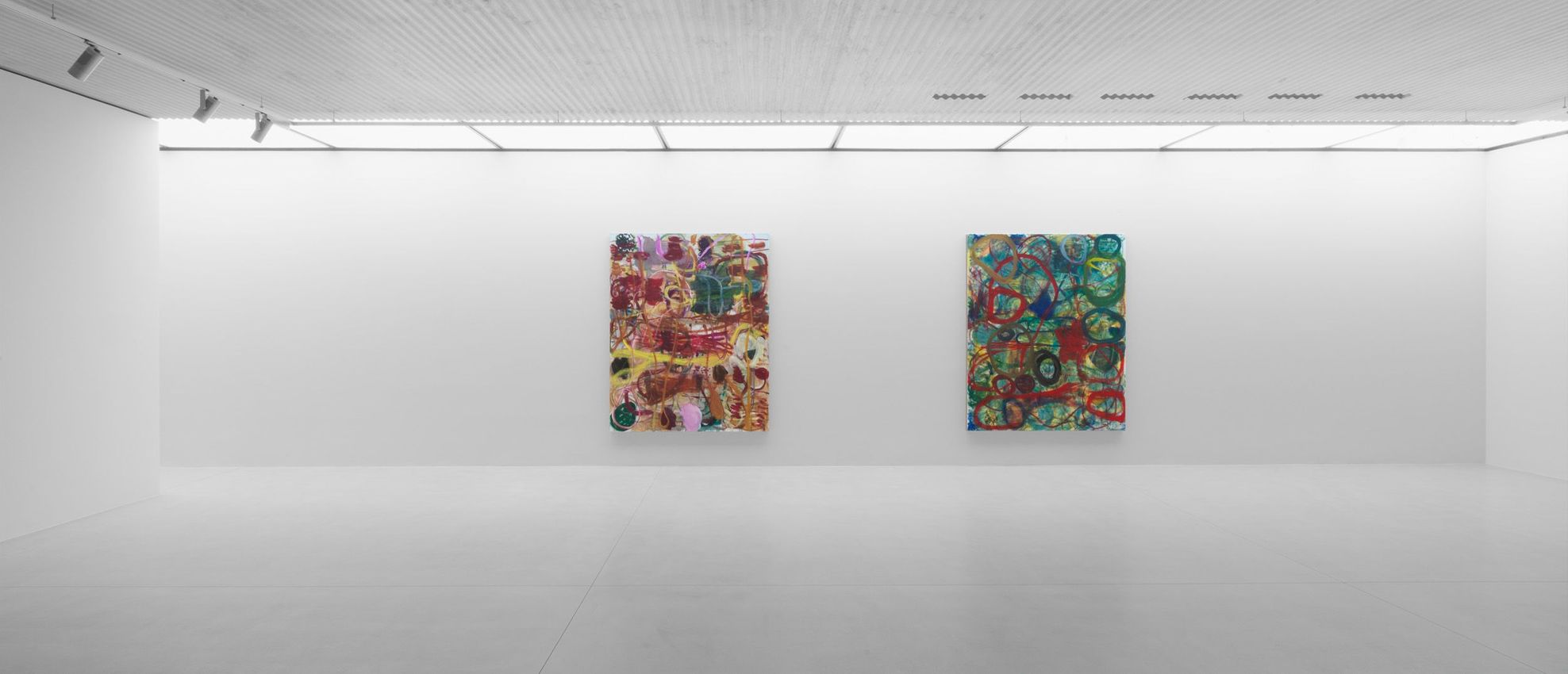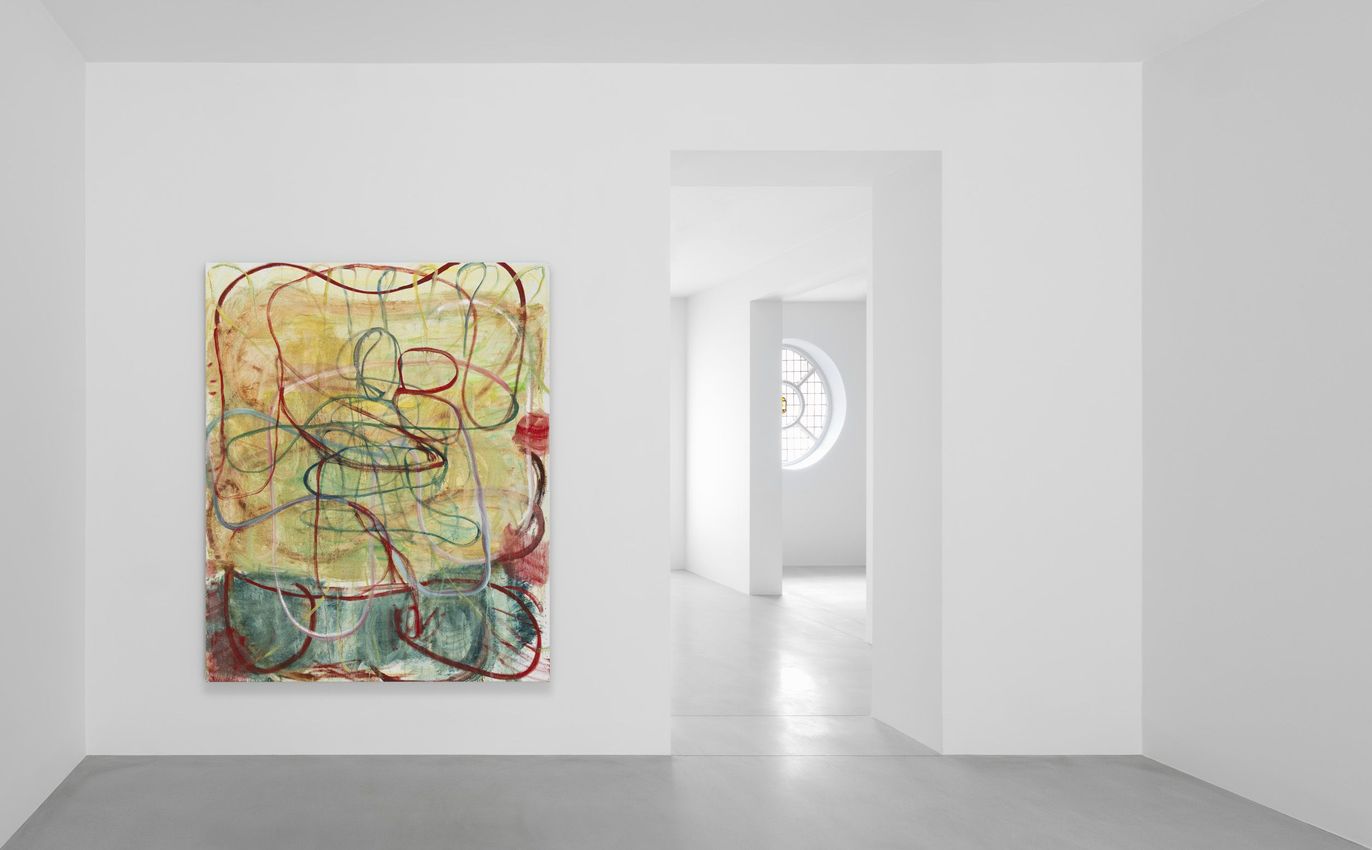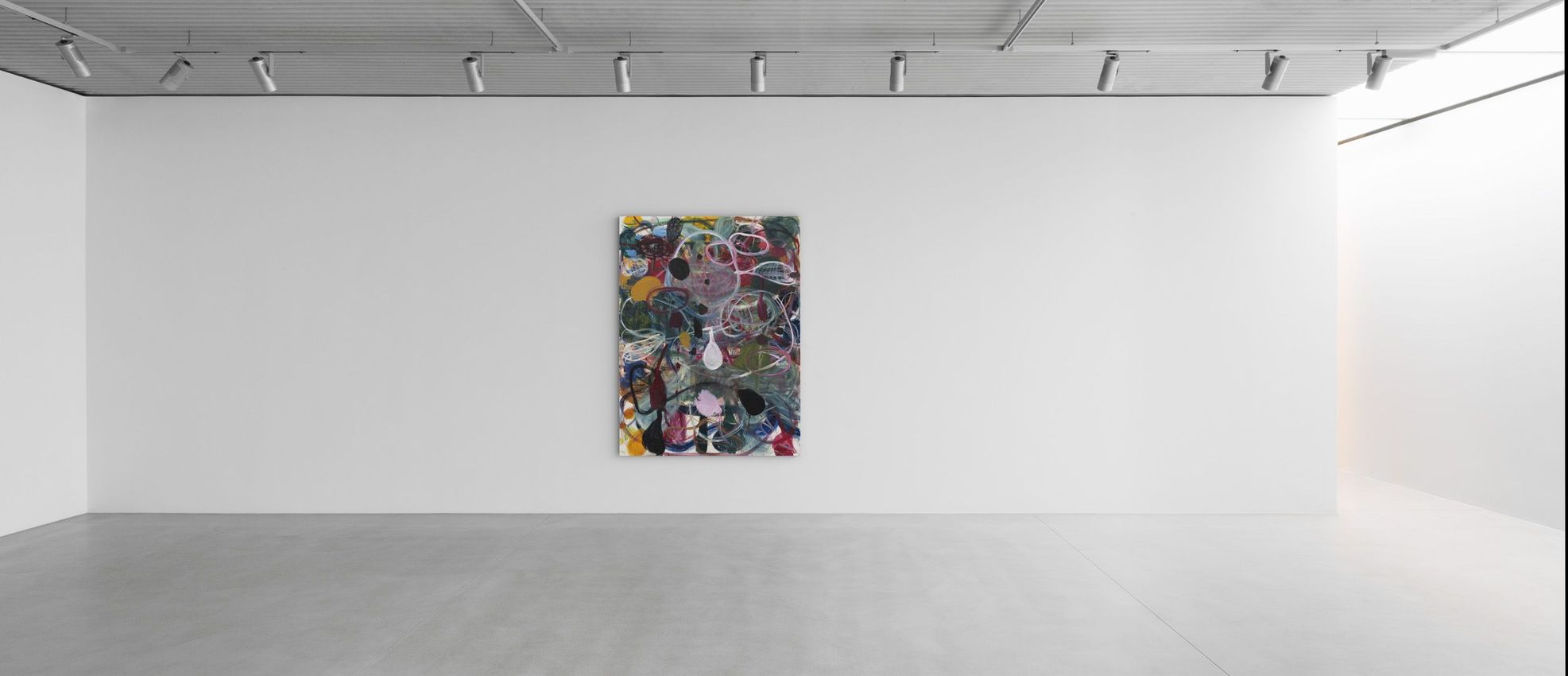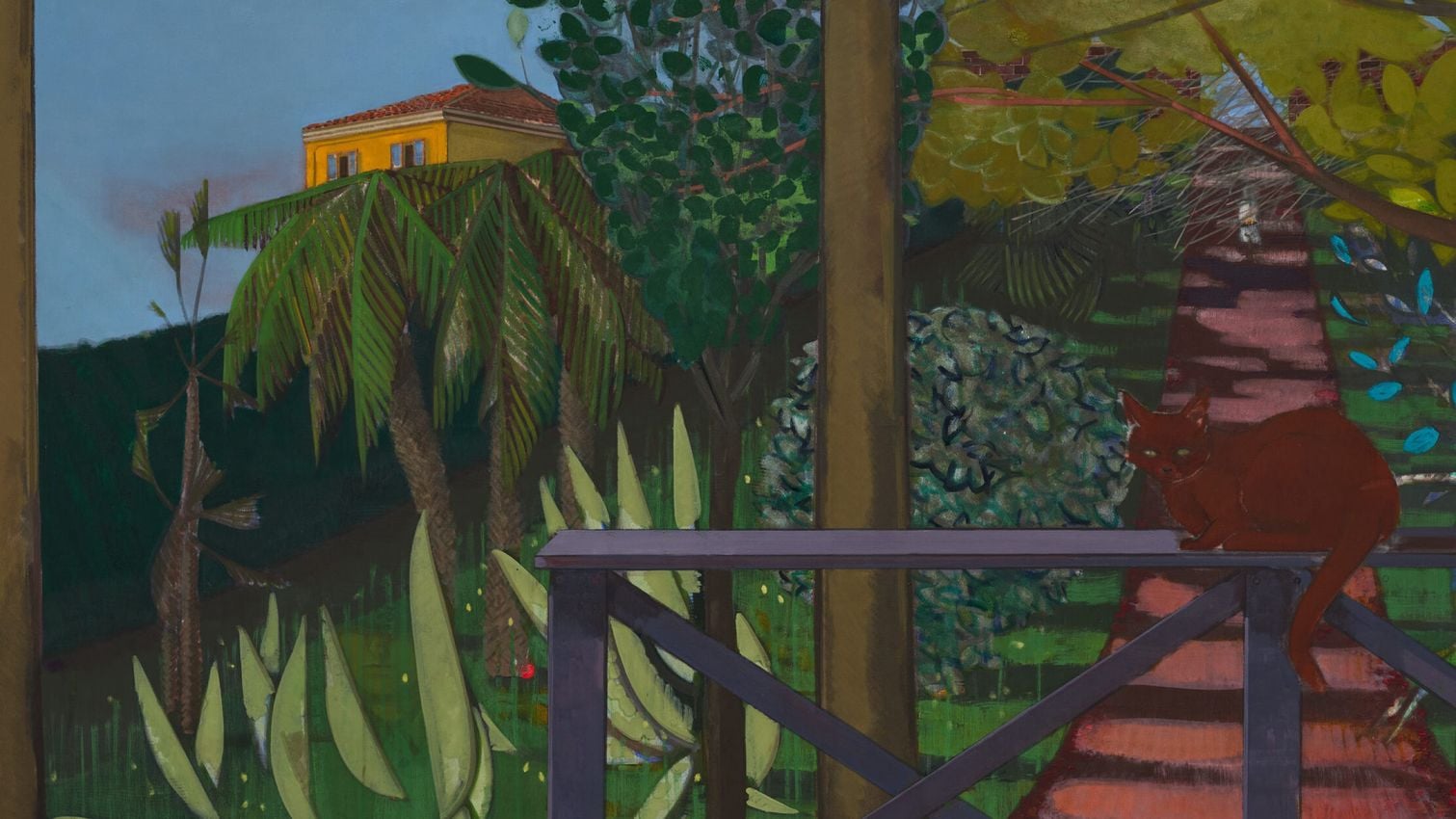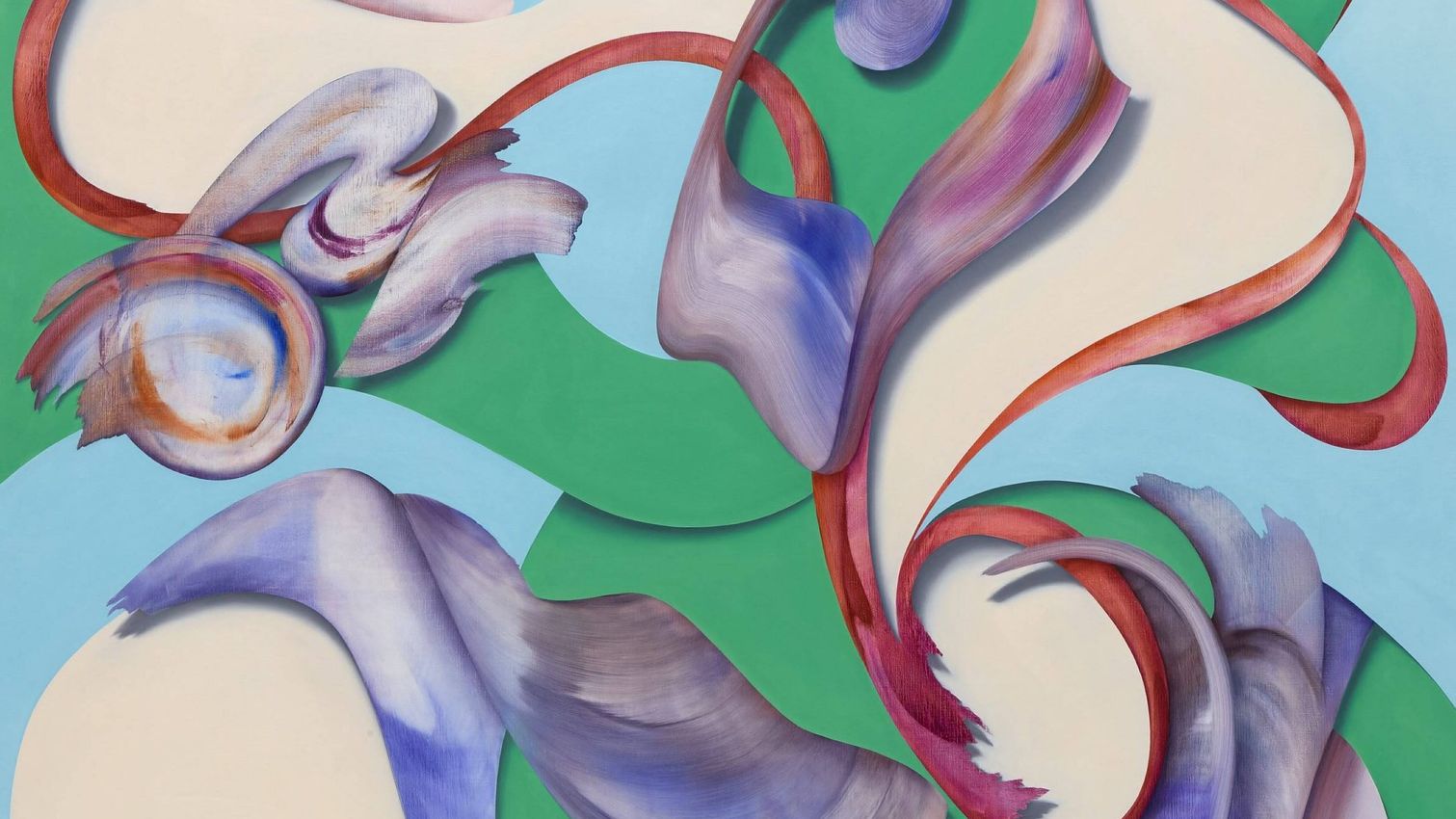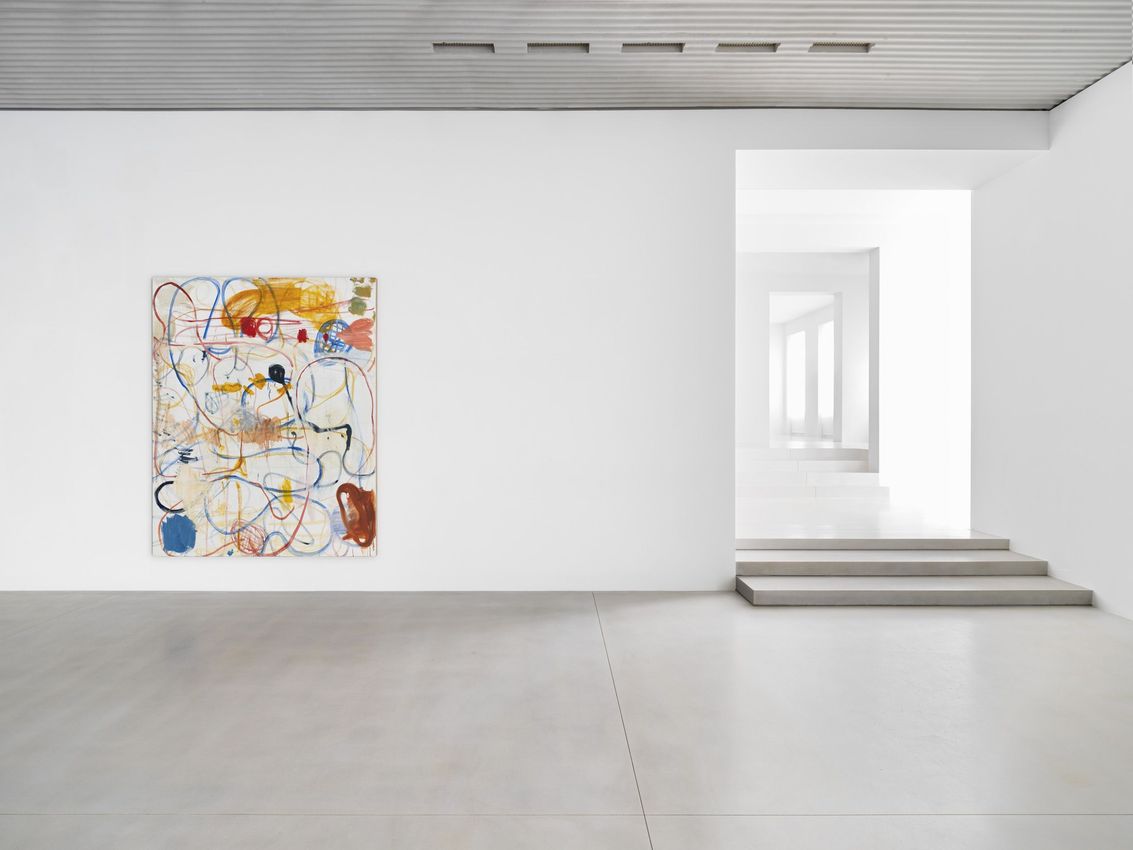
Zhang Enli’s second exhibition with the gallery, A Traveller, unveils a new series of gestural abstract portraits, marking the evolution of his oeuvre since 2019. Taking a journey into the complexities of the human psyche, the artist transcends the boundaries between figuration and abstraction, creating a unique visual language that links colour and form to memory and emotion.
Portraiture has been a central theme in Zhang Enli’s practice for over three decades. In the 1990s, for example, he created an extensive series of paintings based on the ordinary people and workers of Shanghai. The canvases have titles such as Butcher, Smoker and Dancer. While he later explored themes of nature, interiors, and objects, Zhang always considered these works as portraits. Following his interest in portraiture, his most recent works began to shift towards intuitive expressionism, which capture the ‘essence’ of his subjects beyond their representation. Rather than relying on direct observation, Zhang now harnesses the painterly medium to construct psychological landscapes in which the eye and mind can wander. Of the evolution from representation to abstraction, he says: ‘In the beginning, I worked from objects to lines. These lines were specific, like electrical cables and iron wires. But once they were depicted, I found them hard to define. It’s not easy to separate the abstract and the figurative. This has led me to where I am today. In my mind, the abstract and the figurative are not separate. Their boundaries are blurred.’
Zhang’s artistic practice embodies a fluid exchange, between external impressions and internal reflections, only to later re-enter the world through the act of painting. It is a process of obtaining insight into essential human characteristics and experiences. Yet these qualities are always evolving and resisting fixed interpretations. Zhang says: ‘You can never describe someone clearly or simply with one single sentence. I think the same goes for everything. I’ve never thought of humans as simple... A person’s ideas and consciousness are often inaccessible.’ This multidimensionality is reflected in looser and freer lines, which intersect and overlap to an unprecedented degree, and in greater compositional density.
Our imaginations are key to interpreting Zhang Enli’s works, steered in part by their titles. As the portraits are only named—or given an ‘identity’ so to speak—once finished, their titles have a dual function. They not only point to what the artist sees in his work, but also serve as an index to the viewer’s perceptions. Zhang sets great store by naming things and believes that a title can be as important as the image itself. Cultural recollections, relating to literature for example, are also crucial. An influential work for Zhang Enli is Winesburg, Ohio (1919) by Sherwood Anderson (1876-1941), which is all about people. The artist first read this book, widely considered to be one of the earliest works of modernist literature, while still a student. Anderson developed twenty-two different character studies for his novel. These detailed observations, as well as the author’s desire to see beneath the surface of life, reminded the artist of his own experiences and memories of his family.
Zhang Enli’s deeply personal, enigmatic canvases serve as two-way mirrors, reflecting both the world at large and the artist’s subconscious. Sensations and the imagination converge in these works. Do we discern what the artist sees? And what do the titles, in conjunction with the brushstrokes and colours, evoke within us? Zhang Enli expects everyone to enter the paintings via a unique pathway.
Zhang Enli (b. 1965, Jilin Province, China) lives and works in Shanghai. Selected solo exhibitions include Expression, Long Museum, West Bund (2023); Portrait, He Art Museum (HEM), Guangdong, China (2023); A Room with Colour, Long Museum Chongqing, China (2021); A Room That Can Move, Power Station of Art, Shanghai (2020); Zhang Enli, K11 Foundation, Shanghai (2019); The Bird Cage: a temporary shelter, Galleria Borghese and the Uccelliera, Rome (2019); Gesture and Form, Firstsite, Colchester (2017); Zhang Enli, MOCA, Taipei (2015); Landscape, Museo d’Arte contemporanea di Villa Croce, Genoa (2013); and Space Painting, ICA, London (2013).
Zhang Enli’s lyrical works on canvas are often inspired by seemingly ordinary objects, which can range from cardboard boxes to pieces of string, or aspects of everyday life, such as urban structures or landscape features. In such works, Enli strives to capture the immaterial and essential qualities of the object, such as the implications of weight, transparency, softness or flexibility. Enli is also known for pushing the boundaries of painting by creating site-specific sculptures that play with the historical echoes of their surroundings or across the interiors of specially constructed wooden pavilions. Known as ‘space paintings’, these immersive installations take their cue from psychological and emotional experiences, such as childhood memories or the sights and sounds of specific places. The scale of these works and the vitality of the individual brushstrokes invite the viewer to contemplate both the physical nature of the creative process and the artist’s relationship to the space. His distinctive style—fluid, spontaneous and gestural—draws on both Eastern and Western painterly traditions. The flowing lines are reminiscent of traditional Chinese brush painting, for example, whereas visible grid lines point to the Renaissance technique of ‘squaring up’ a motif for enlargement and transfer to the canvas. Enli is a master of colour and light, preferring to work in thin washes of paint and clear, crystalline colours with dark contrasts. His lightness of touch lends his oeuvre an ethereal, harmonious and deeply evocative quality.


A respected voice in contemporary art discourse.
Focusing on ambitious storytelling and insightful art-world commentary. Ocula Magazine publishes in-depth interviews, critical essays and timely analysis on the artists, exhibitions and ideas driving the global art world.
Learn more about Ocula Magazine
Showcasing the best of the art world.
Ocula partners with galleries from around the world to highlight their artists, artworks and exhibitions. Gallery membership is by application and invitation, with each member vetted by an independent panel.
Learn more about Ocula Membership

Specialises in the sale of major artworks.
Led by a team with deep ties to the world’s leading auction houses, galleries and collectors. Ocula’s advisory team offers bespoke services to high-net-worth clients from around the world who are looking to acquire the best of contemporary and modern art.
Learn more about our team and services