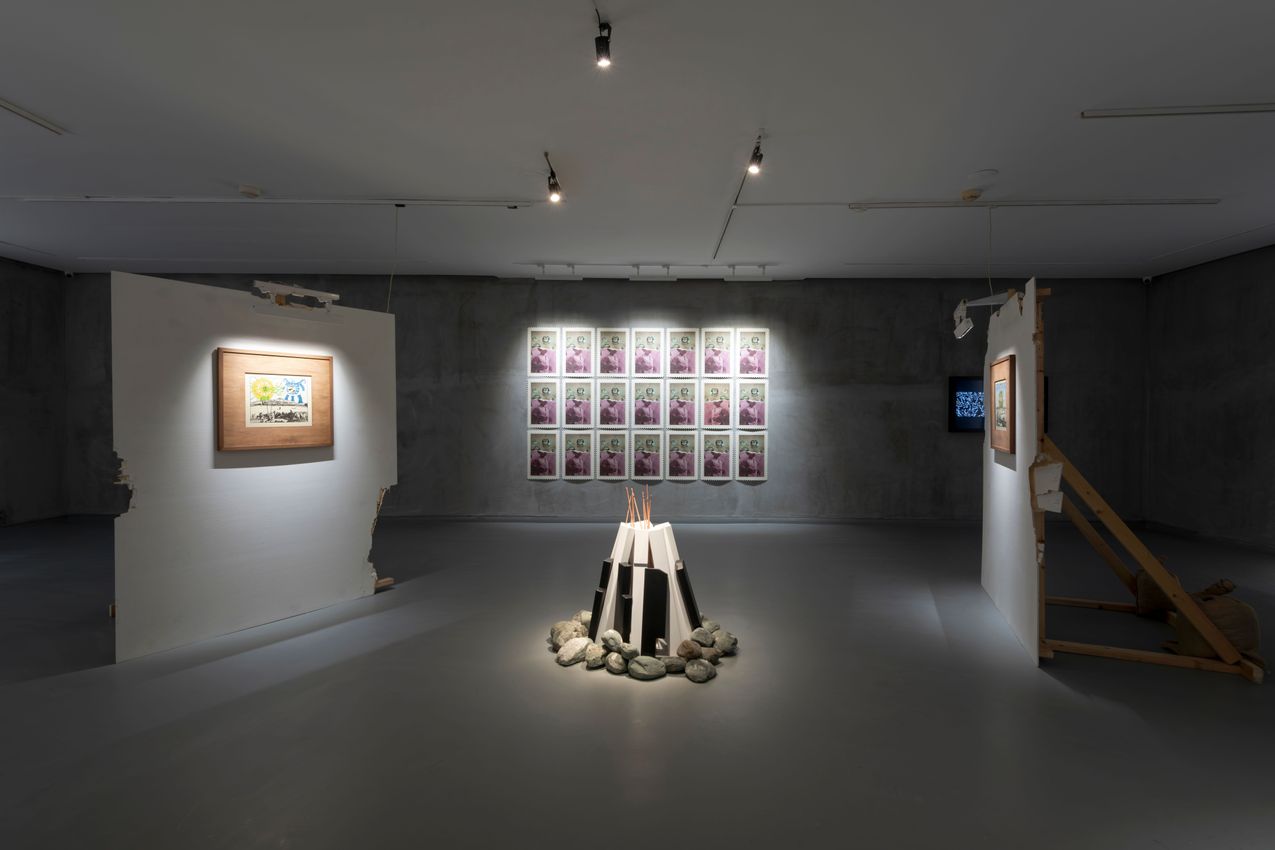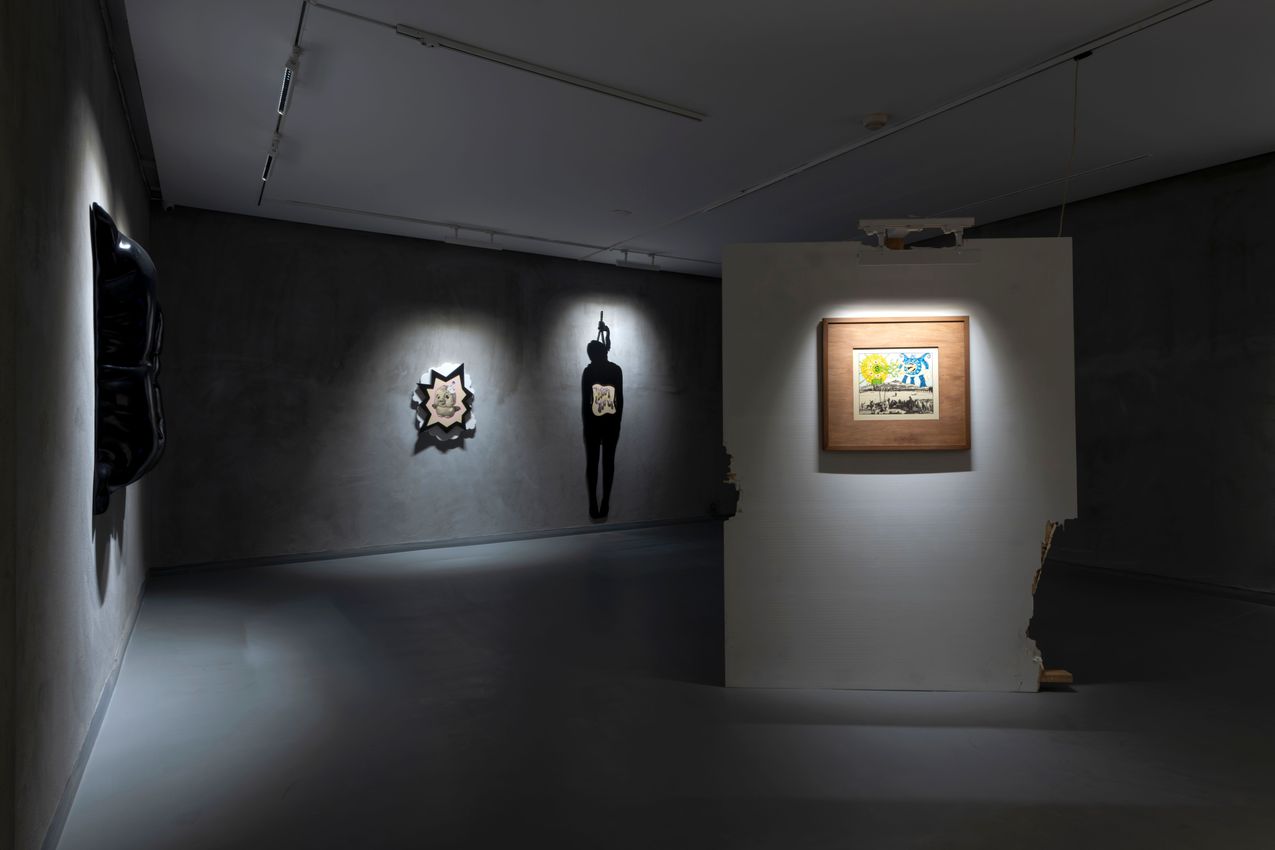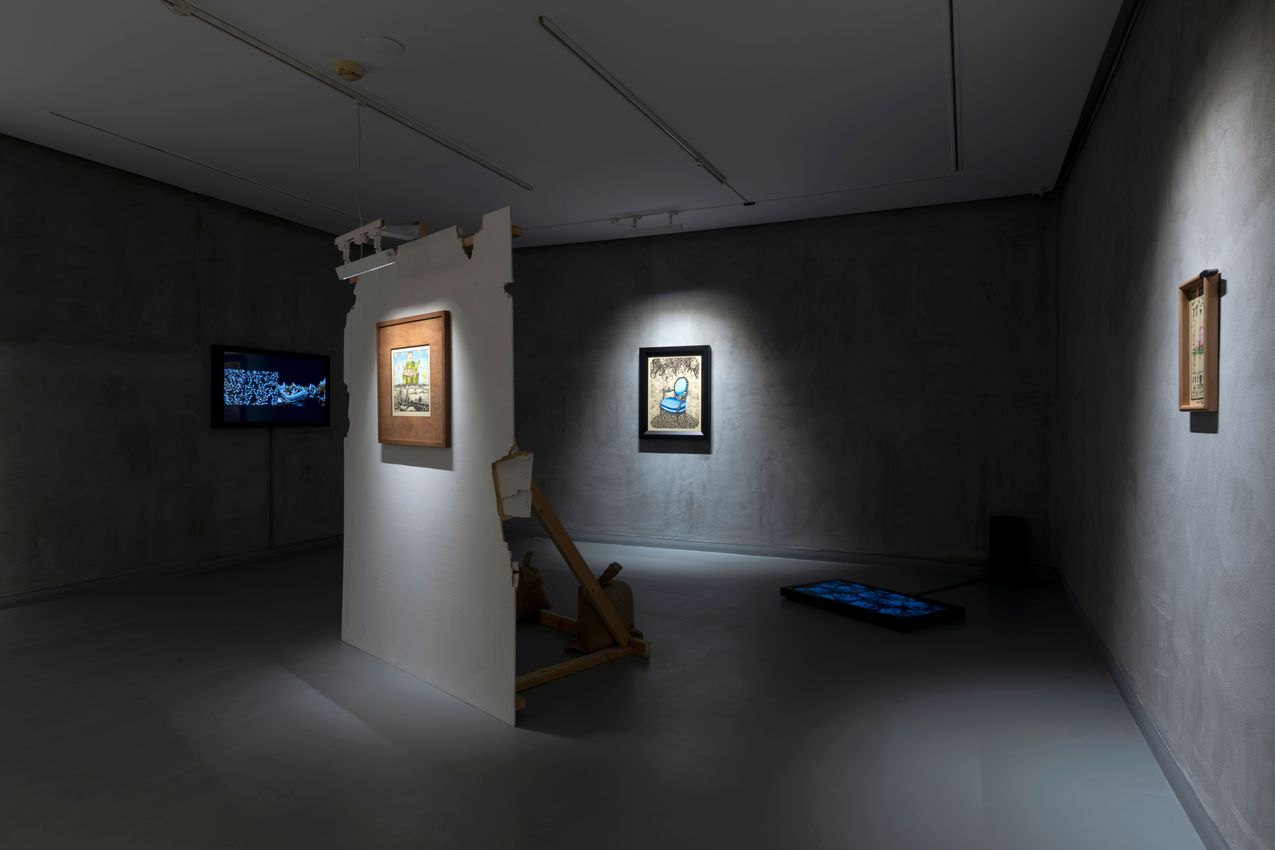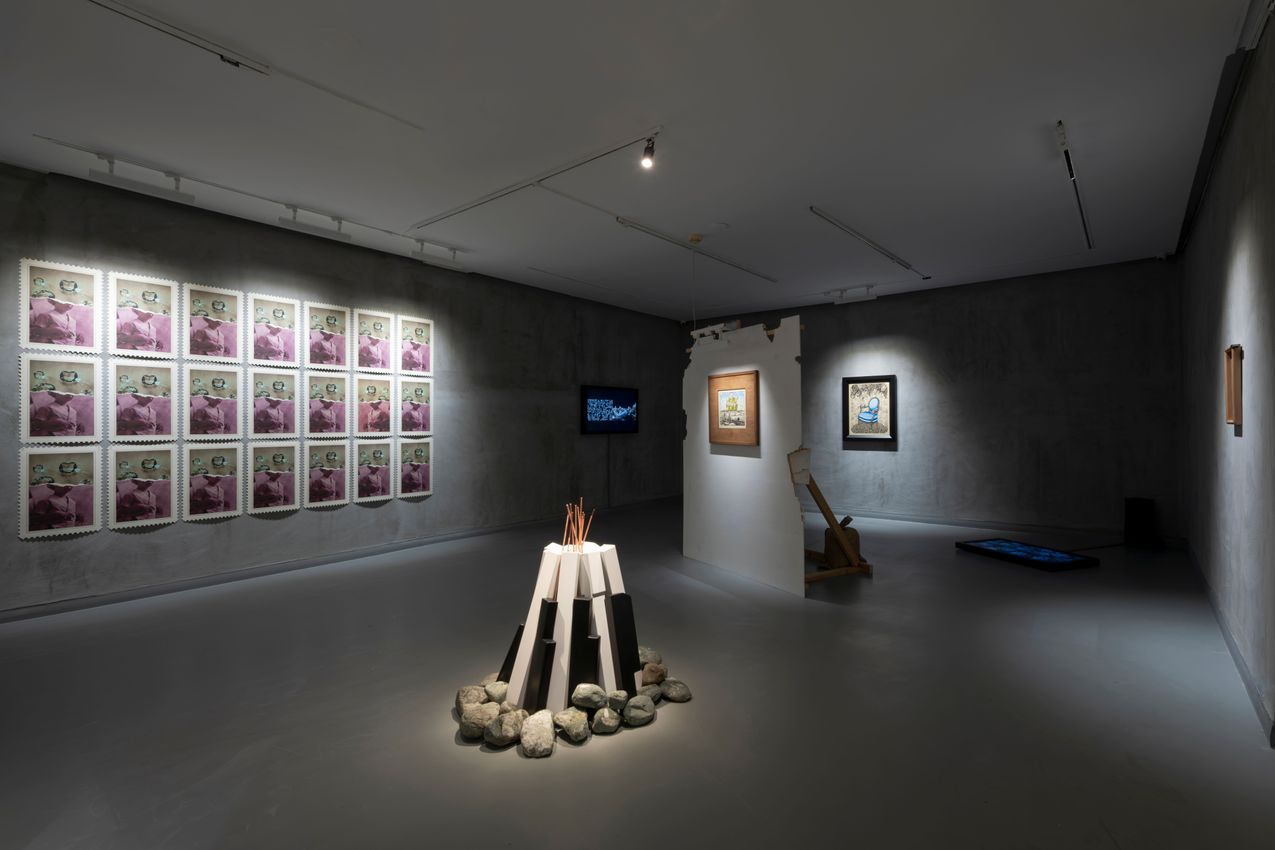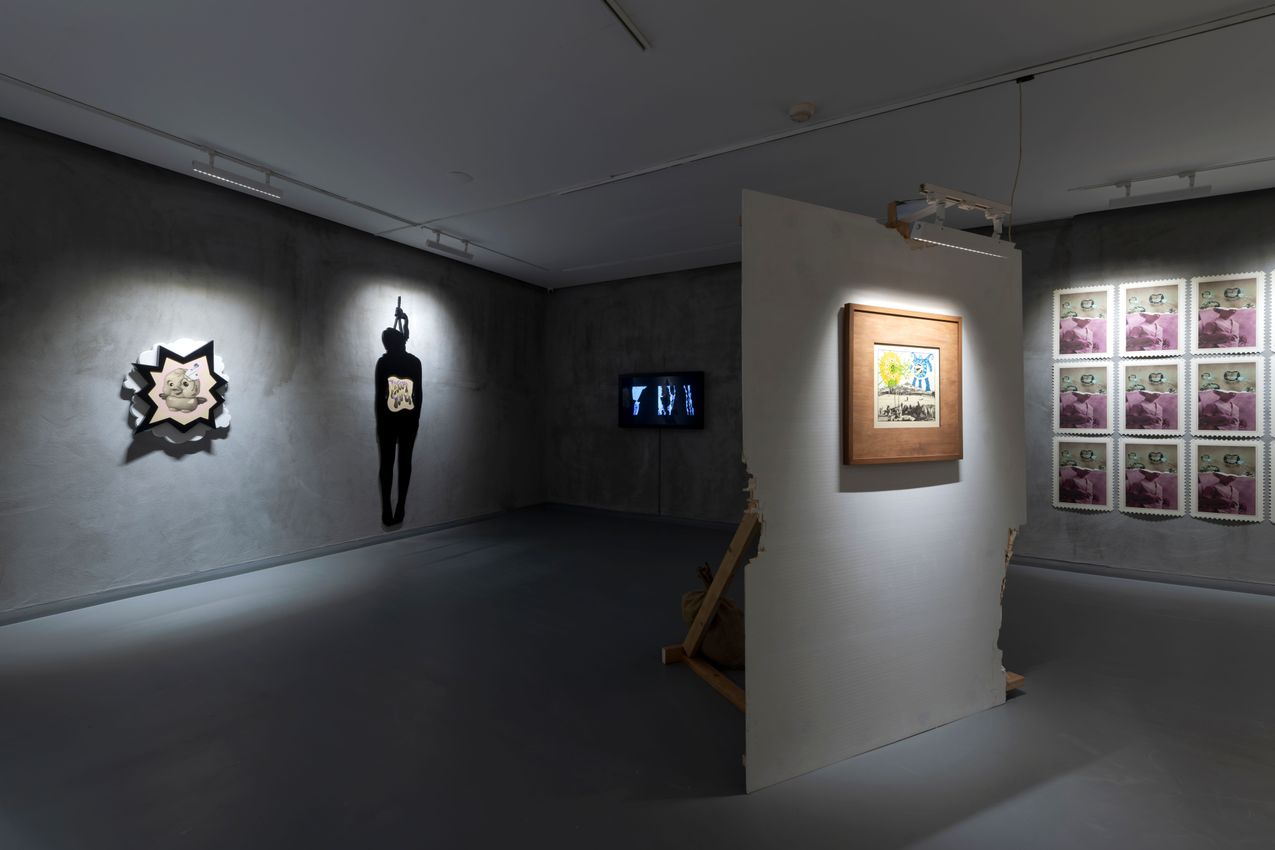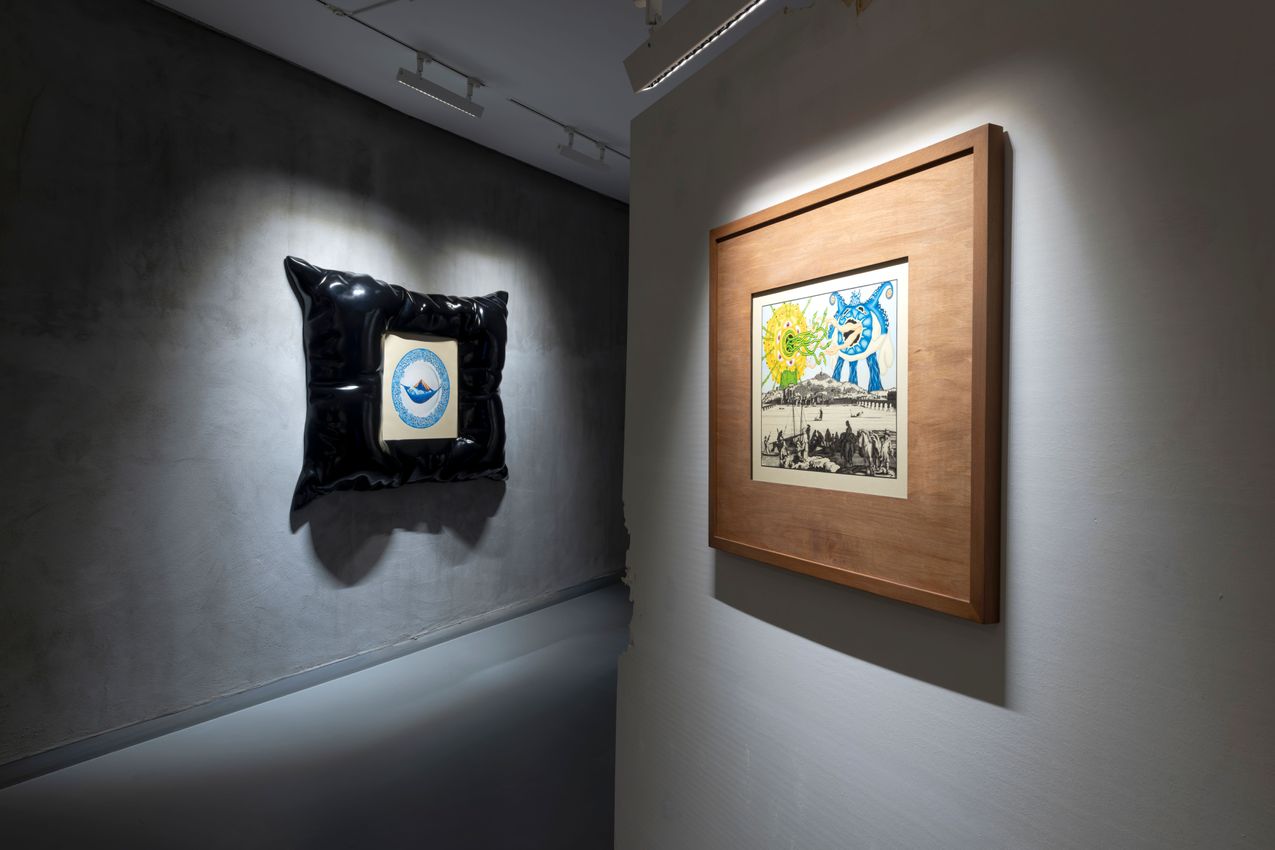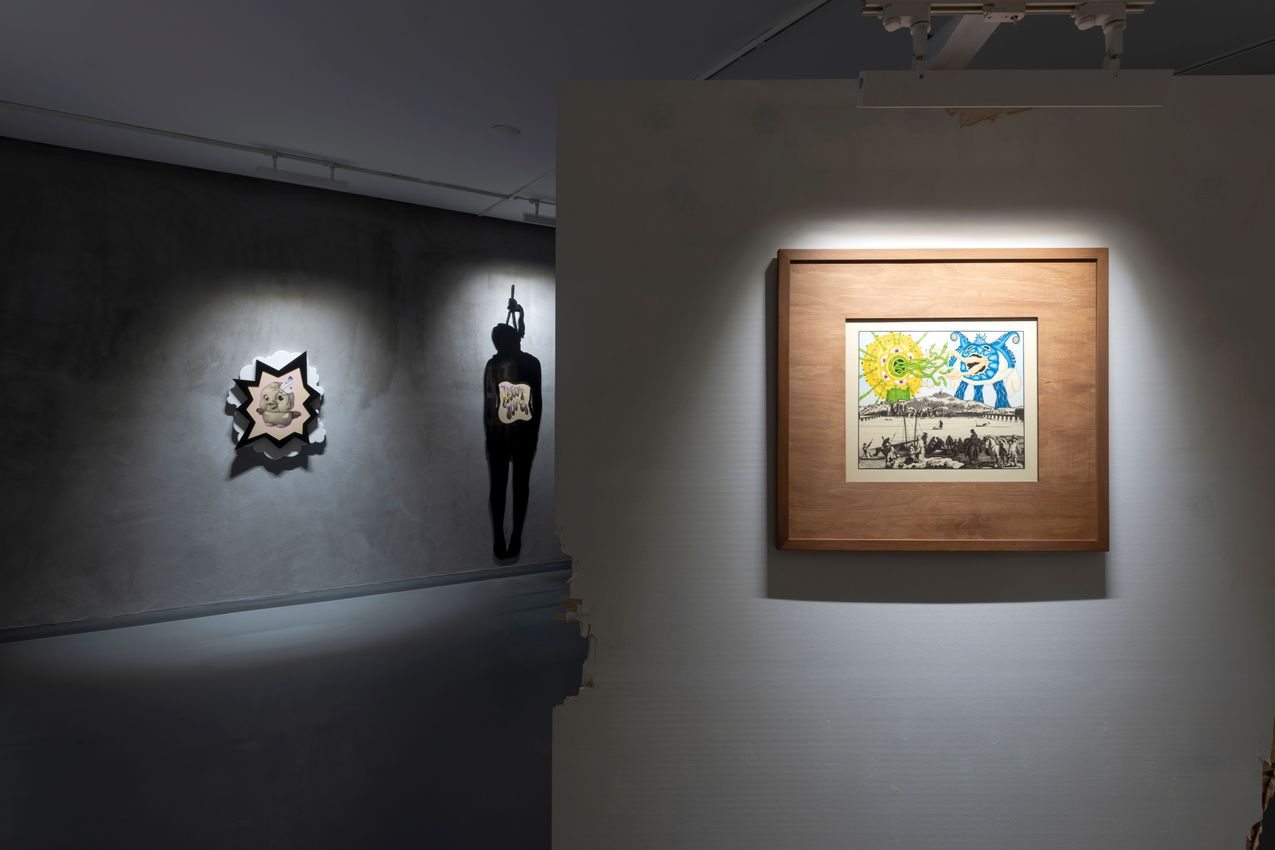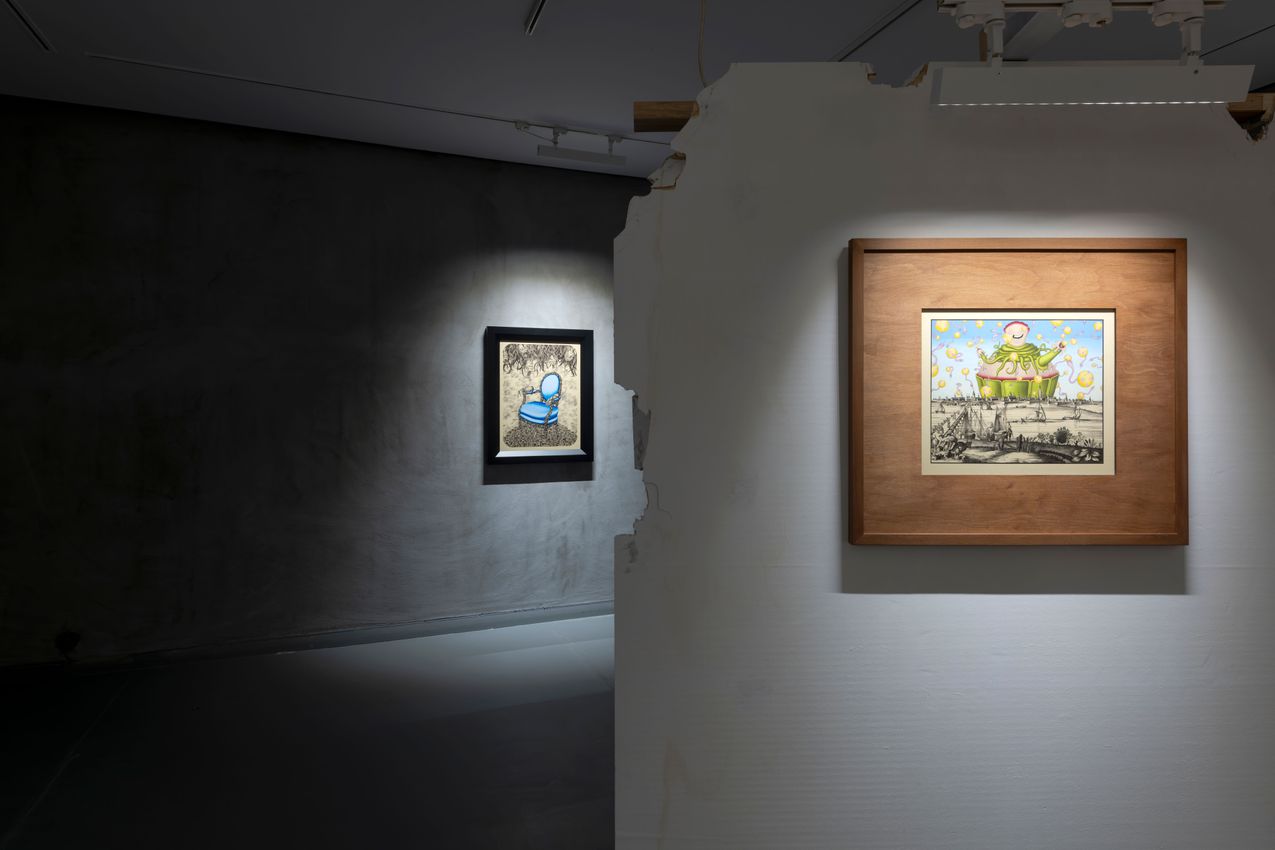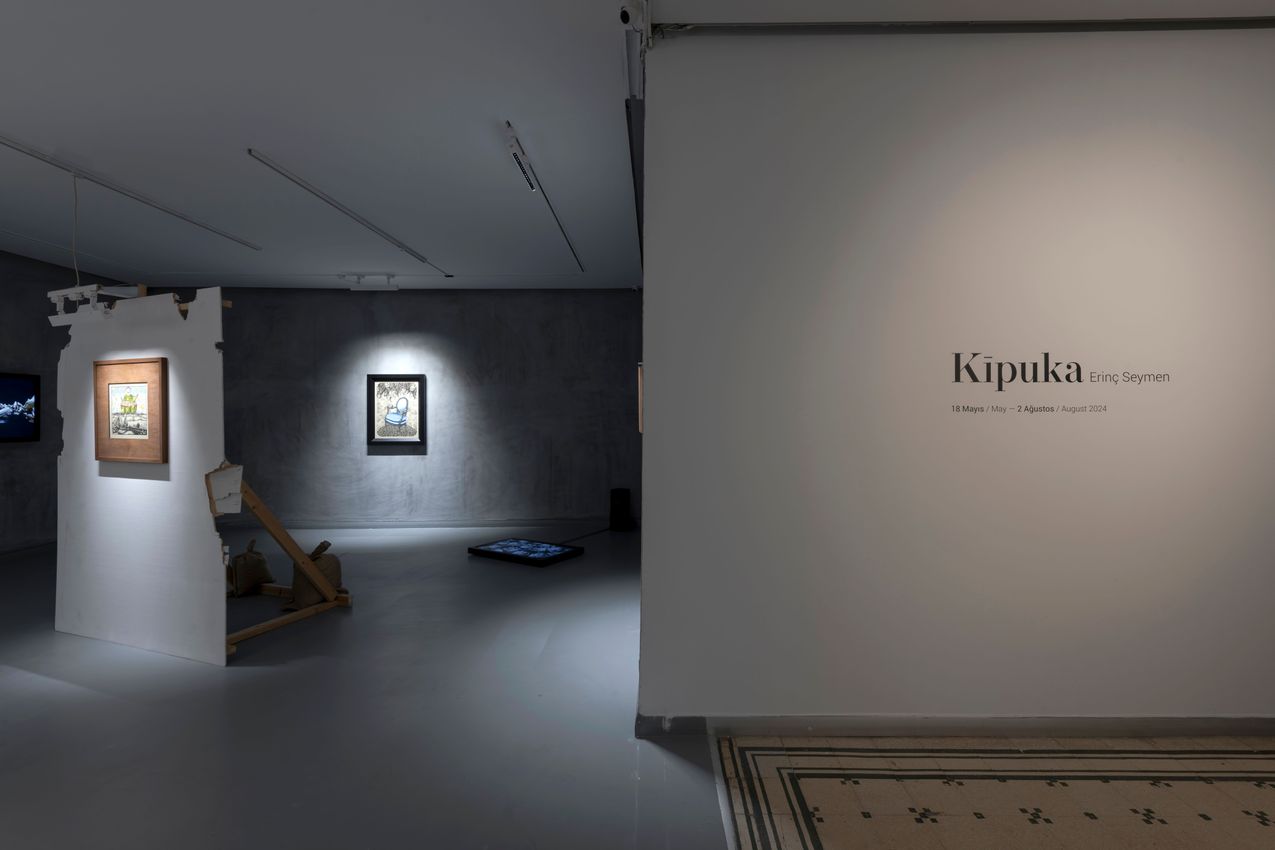
Zilberman is pleased to announce Erinç Seymen’s solo exhibition titled Kīpuka is opening at the gallery’s main space located at the Mısır Apartment in Beyoğlu between May 18, 2024–August 2, 2024. The exhibition, which gives place to artists’ recent works, creates a compelling dialogue between disaster, temporality and control.
The exhibition titled Kīpuka derives its name from the Hawaiian word for an island formed by surrounding lava flows—a land that survives and is preserved amid chaos and disaster. This physical separation serves as a metaphor for a state of isolation or detachment from the external world. Throughout the exhibition, Seymen highlights the distinct discrepancy between the borders of knowledge and unawareness. The exhibition explores the temporality of disaster; knitting a trajectory of timelessness of tragedy by highlighting instances of mythology and history. While the artist has previously delved into social relations and class in his exhibitions, he now examines the other side of the coin, weaving a biopolitical nexus between class dynamics, control and its temporality.
Kīpuka intersects with the concept of disaster in complex ways, reflecting upon broader societal power dynamics and responses to crises, it ponders upon the temporality of disaster and its unifying power amidst society. In works such as Jugendglück, Untitled and Kīpuka the artist delves into governance of disasters whereas in works titled Gods and Disasters, Arms of Tantalus, MisPrintce and PlanC, the artist focuses on governance of power. Seymen delves into the relationship between control and temporality in his videoworks, Alle gegen alle, Troubadours and Insured. Drawing a line on how time changes the effects of disasters and control in the society.
The work that gives the exhibition its name, Kīpuka, showcases a drawing of a sleeping child amidst a volcanic eruption. Influenced by the word itself, Seymen points out the silent moment before a disaster; forming a land of peace along with unawareness. The artist uses time as a messenger of disaster, time emphasizes the forthcoming disasteral power amidst silence, thus time becomes the perpetuity and the transience at the same time. Seymen continues pondering on disaster and knowledge with two artworks; Jugendglück and Untitled. The artist creates a parallel with two artworks by questioning the notion of disaster; how the public decides to name a situation as disaster and disaster’s interchanging role on shaping the society.
Seymen creates a discourse within works by delving into different instances from mythology and history and their exchange with control and disasters. The exhibition starts with the artwork titledMisPrintce, a familiar work that draws the viewers in. The work that consists of 21 stamps with one errored stamp, reiterates the interchanging capital of a disaster. This woven relationship shows the ever growing rhizomatic expansion of capital, profitizing an error or disaster. MisPrintce portrays Prince Albert II of Belgium’s photo with diamonds emphasizing the pioneer role Belgium plays in the diamond market without harboring mines. Seymen carries this relationship between control and profitizing to the Gods and Disasters series. The series showcases two different drawings of proletariat workers shaped around the illustrations of 18th century publisher Pieter van der Aa. The drawings highlight a class difference between the workers and monsters nuancing to the controlling elite.
Seymen broadens this relationship of power in his artwork Arms of Tantalus through the story of Tantalus. Tantalus, a powerful king in Greek mythology, is often associated with the notion of control. After trying to deceive gods to learn if they have the knowledge they portray to have, Tantalus was condemned to Tartarus, the deepest part of the underworld, where he stood in a pool of water beneath a fruit tree. However, whenever he reached for the fruit or tried to drink the water, they would recede from his grasp, just out of reach. This eternal punishment is seen as a symbol of the futility of grasping for control over one’s desires and circumstances. Seymen again creates a parallel between disaster and temporality within Tantalus’s story, highlighting the unending power of time, displaying the controlling effects of its continuality.
Kīpuka unveils the interwoven relationship of class, temporality and disaster; unearthing the ancient story of power and control over societies through his artworks. Erinç Seymen’s Kipuka is on view at the gallery’s main space located at the Mısır Apartment in Beyoğlu between May 18, 2024 - August 2, 2024.
Erinç Seymen (İstanbul, 1980) graduated from Mimar Sinan University of Fine Arts, Painting Department in 2006 and received his MA from Yıldız Teknik University Art and Design Faculty, with a thesis about Bob Flanagan. He participated in conferences and his articles has been published in various magazines on topics such as militarism, nationalism and gender issues. Since 2002, he has participated in several solo and group exhibitionsin İstanbul, Ankara, Vienna, Paris, London, Helsinki, Eindhoven and Lisbon. The group exhibitions he participated in are: “Along the Gates of Urban”, K&S Galerie, Berlin (2004); “An Atlas of Events”, Foundation Calouste Gulbenkian, Lisbon (2007); “I Myself am War!”, Open Space, Vienna (2008); “İstanbul, traversée”, Palais des Beaux Arts de Lille, Lille (2009); “Moods: A Generation that Goes off the Rails”, Ecole Nationale Superieure des Beaux-Arts, Paris (2010).


Zilberman, founded in Istanbul in 2008, stages 10–12 exhibitions every year in its gallery spaces in Istanbul and Berlin. The gallery occupies two separate floors of Mısır Apartment, one of the most famous examples of art nouveau architecture in Istanbul.
A respected voice in contemporary art discourse.
Focusing on ambitious storytelling and insightful art-world commentary. Ocula Magazine publishes in-depth interviews, critical essays and timely analysis on the artists, exhibitions and ideas driving the global art world.
Learn more about Ocula Magazine
Showcasing the best of the art world.
Ocula partners with galleries from around the world to highlight their artists, artworks and exhibitions. Gallery membership is by application and invitation, with each member vetted by an independent panel.
Learn more about Ocula Membership

Specialises in the sale of major artworks.
Led by a team with deep ties to the world’s leading auction houses, galleries and collectors. Ocula’s advisory team offers bespoke services to high-net-worth clients from around the world who are looking to acquire the best of contemporary and modern art.
Learn more about our team and services