






AGNIESZKA KURANT
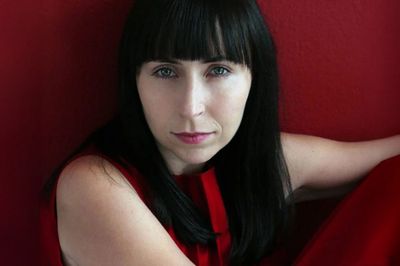
b. 1978, PolandAgnieszka Kurant is a Polish conceptual artist whose acclaimed contemporary art practice investigates the invisible forces shaping society, from collective intelligence and artificial life to the hidden economies of data and labour.
Kurant’s innovative artworks, which range from sculpture and installation to film and public art, have been presented at major institutions worldwide. She represented Poland at the 12th Venice Architecture Biennale in 2010 and has received awards including the LACMA Art + Technology Lab Grant and the Frontier Art Prize.
Early Years
Kurant was born in Łódź, Poland, in 1978. She earned a BA in photography from the Łódź Film School before moving to New York, where she is now based. Her early experiences in Poland and subsequent international education have informed her interest in cultural transformation, the future of work, and the interplay between technology and society.
Agnieszka Kurant Artworks
Kurant’s contemporary art explores the blurred lines between the natural and artificial, reality and fiction, and the individual and collective. Her works often behave like living organisms, evolving through collaboration with scientists, data specialists, and algorithms. Kurant’s practice is marked by the creation of hybrid forms—geological, biological, and digital—questioning authorship, value, and the infrastructures of capitalism.
Emergence, Collective Intelligence, and Nonhuman Agency
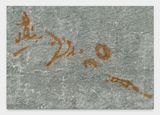
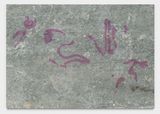
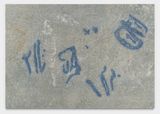
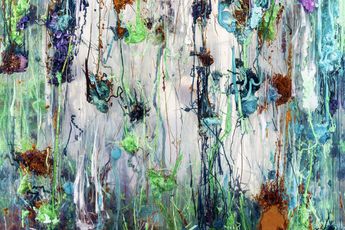
Kurant’s early projects, such as Phantom Capital (2011), examined the role of the invisible and speculative in economics and culture. Her ongoing interest in collective intelligence and nonhuman agency is seen in works like The End of Signature (2023, MIT List Visual Arts Center), where signatures generated by AI from thousands of people are engraved into glass, and Conversions (2022), a liquid crystal painting that changes in real-time in response to global protest data.
Hybrid Materials and Speculative Futures
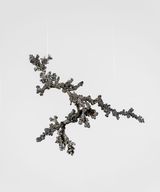
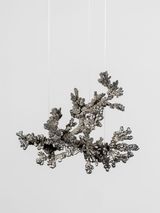
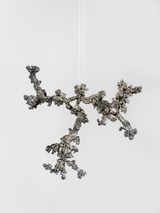
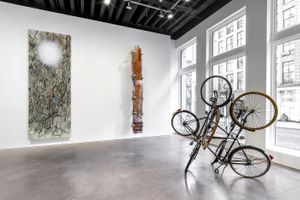
Kurant’s Post-Fordite series (2020–2024), exhibited at the Biennale of Sydney and acquired by the Hartwig Art Foundation, transforms industrial waste from defunct car factories into geological specimens, reflecting on labour, value, and the future of resources. In Sentimentite (2022), she created a new mineral by fusing objects used as currencies throughout history, speculating on the materiality of emotion and exchange. Works such as Alien Internet (2023) and Risk Landscape (2024, Mudam Luxembourg) use AI, holograms, and evolving materials to model unpredictable futures and the impact of data capitalism.
Systems, Automation, and the Economy of the Invisible
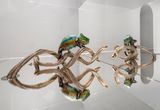
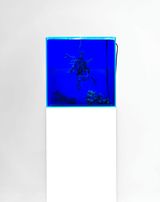
Kurant frequently collaborates with scientists to build systems that generate art autonomously, including projects that use termite colonies, slime moulds, or crowdsourced digital labour. Her installations and films often highlight the unseen infrastructures and crowds behind technological innovation, challenging the myth of individual authorship and exposing the collective nature of creativity.
Public Commissions
- The End of Signature, MIT List Visual Arts Center, Cambridge, USA (2023)
- Façade commission, Solomon R. Guggenheim Museum, New York (2015)
Awards and Accolades
- LACMA Art + Technology Lab Grant (2020)
- Frontier Art Prize (2019)
- Google Artists and Machine Intelligence Grant (2022)
- Artist Fellow, Berggruen Institute Transformations of the Human (2020–21)
Exhibitions
Agnieszka Kurant has been the subject of both solo and group exhibitions at important institutions. A selection of important exhibitions is provided below.
Solo Exhibitions
- Risk Landscape, Mudam Luxembourg (2024)
- The End of Signature, MIT List Visual Arts Center, Cambridge (2023)
- exformation, Stroom Den Haag, The Hague (2013–2014)
- SculptureCenter, New York (2013–2014)
Group Exhibitions
- 24th Biennale of Sydney, Australia (2024)
- Istanbul Biennial (2019)
- Palais de Tokyo, Paris (2014)
- Castello di Rivoli, Turin (2021)
- The Age of You, MOCA Toronto (2019)
- Tate Modern, London (multiple years)
- Guggenheim Museum, New York (multiple years)
- SFMOMA, San Francisco (multiple years)
Website
Agnieszka Kurant’s Instagram can be found here.
Further Reading
Kurant’s practice has been featured in leading magazines, including Flash Art.
Agnieszka Kurant FAQs
What is Agnieszka Kurant best known for?
Kurant is known for conceptual art that investigates collective intelligence, artificial life, and the hidden economies of data, labour, and value in contemporary society.
Where can I see Agnieszka Kurant’s art?
Her works are held in the collections of the Guggenheim Museum, New York; Centre Pompidou, Paris; MoMA, New York; SFMOMA, San Francisco; and Hartwig Art Foundation, Amsterdam. Exhibitions have been staged at Mudam Luxembourg, MIT List Visual Arts Center, SculptureCenter New York, and the Biennale of Sydney, among others.
How does Kurant use technology in her artworks?
She employs artificial intelligence, data mining, and collaboration with scientists to create evolving artworks that respond to collective behaviours, economic systems, and digital labour.
What is ‘Post-Fordite’ and why is it important?
Post-Fordite is a series in which Kurant transforms fossilised automotive paint from defunct factories into geological sculptures, reflecting on the history of labour, industrial decline, and speculative value in the digital age.
What is a lesser-known fact about Agnieszka Kurant?
Kurant’s projects often involve nonhuman agents, such as termite colonies, slime moulds, and AI, to challenge the idea of single authorship and highlight the collective, emergent nature of creativity.
Ocula | 2025

Works at Marian Goodman Gallery













Explore and Follow Artists Shaping Contemporary Art
A respected voice in contemporary art discourse.
Focusing on ambitious storytelling and insightful art-world commentary. Ocula Magazine publishes in-depth interviews, critical essays and timely analysis on the artists, exhibitions and ideas driving the global art world.
Learn more about Ocula Magazine
Showcasing the best of the art world.
Ocula partners with galleries from around the world to highlight their artists, artworks and exhibitions. Gallery membership is by application and invitation, with each member vetted by an independent panel.
Learn more about Ocula Membership
Specialises in the sale of major artworks.
Led by a team with deep ties to the world’s leading auction houses, galleries and collectors. Ocula’s advisory team offers bespoke services to high-net-worth clients from around the world who are looking to acquire the best of contemporary and modern art.
Learn more about our team and services