





ANDREAS GURSKY
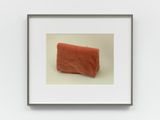
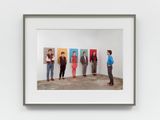
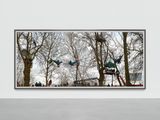
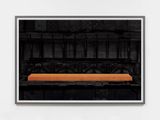
b. 1955, GermanyAndreas Gursky makes large-scale, colour photographs distinctive for their incisive and critical look at the effect of capitalism and globalisation on contemporary life.
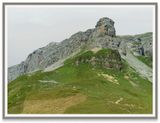
Gursky studied under Bernd and Hilla Becher at the Düsseldorf Kunstakademie in the early 1980s and first adopted a style and method closely following Becher’s systematic approach to photography, creating small, black-and-white prints. In the early 1980s, however, he broke from this tradition, using colour film and spontaneous observation to make a series of images of people at leisure, such as hikers, swimmers and skiers, depicted as tiny protagonists in a vast landscape.
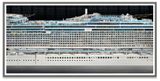
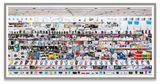
Since the 1990s, Gursky has concentrated on sites of commerce and tourism, making work that draws attention to today’s burgeoning high-tech industry and global markets. His imagery ranges from the vast, anonymous architecture of modern day hotel lobbies, apartment buildings and warehouses to stock exchanges and parliaments in places from as far a field as Shanghai, Brasília, Los Angeles and Hong Kong. Although his work adopts the scale and composition of historical landscape paintings, his photographs are often derived from inauspicious sources: a black and white photograph in a newspaper, for example, that is then researched at length before the final photograph is shot and often altered digitally before printing.
Andreas Gursky was born in Leipzig, Germany in 1955. He has exhibited internationally, including Venice Biennale of Architecture (2004), Shanghai Biennale (2002), 25th São Paolo Biennial (2002), and the Sydney Biennial (2000). He has had numerous solo exhibitions, including Moderna Museet, Stockholm (2009), Vancouver Art Gallery (2009), Museum fur Moderne Kunst, Frankfurt (2008), Kunstmuseum Basel (2007), Haus der Kunst, Munich (2007), Museum of Modern Art, New York (2001), Centro de Arte Reina Sofia, Madrid (2001), Centre Georges Pompidou, Paris (2001), and Kunstmuseum Wolfsburg (1998). Group shows have included, Deichtorhallen, Hamburg (2011), MUDAM, Luxembourg (2010), Musée d’Art Moderne, Paris (2008), Samsung Museum of Art, Seoul (2007), Haus der Kunst, Munich (2006), the Institute of Contemporary Arts, Boston (2005) and the Museum of Modern Art, New York (2005).
Courtesy White Cube

Works at White Cube





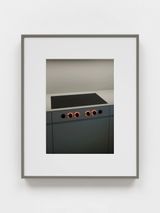

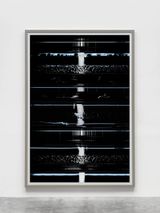

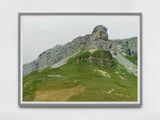

Recently Exhibited


Works Elsewhere











Andreas Gursky in Ocula Magazine








Explore and Follow Artists Shaping Contemporary Art
A respected voice in contemporary art discourse.
Focusing on ambitious storytelling and insightful art-world commentary. Ocula Magazine publishes in-depth interviews, critical essays and timely analysis on the artists, exhibitions and ideas driving the global art world.
Learn more about Ocula Magazine
Showcasing the best of the art world.
Ocula partners with galleries from around the world to highlight their artists, artworks and exhibitions. Gallery membership is by application and invitation, with each member vetted by an independent panel.
Learn more about Ocula Membership
Specialises in the sale of major artworks.
Led by a team with deep ties to the world’s leading auction houses, galleries and collectors. Ocula’s advisory team offers bespoke services to high-net-worth clients from around the world who are looking to acquire the best of contemporary and modern art.
Learn more about our team and services