

BILL HENSON
b. 1955, AustraliaAcclaimed Australian photographer Bill Henson uses chiaroscuro and a limited palette to translate the intimacy of the everyday into attention-grabbing artworks. From suburbia to semi-naked portraiture, he brings a dreamlike aesthetic to his carefully thought-out practice.
Early Years
Bill Henson was born in 1955 in Melbourne, Australia and grew up in the city’s outer suburbs in a semi-rural setting. “I spent a lot of time wandering around, daydreaming, looking at the clouds—the beauty of the world around me,” he remembers. He recalls that his mother said he used to cover “square miles” of paper with his drawings and would also spend time making things out of clay. He was enrolled at Prahran College for a degree in visual arts but has admitted he “never attended class”. Among his teachers were the photographers John Cato and Athol Smith, who supported the artistic work of the young Henson, even though what he produced rarely related to the assignments they had set. Smith showed Henson’s pictures—mainly from 1974, capturing the diffused light shining on ballet students rehearsing in an old dance hall—to the curator of the National Gallery of Victoria, who gave Henson his first solo exhibition in 1975.
Bill Henson: Artworks
Bill Henson’s images capture human emotion using a blend of formal art-making techniques and photography and cinematography. His large-scale landscapes and dreamlike portraits suggest drama, presenting viewers with an immersive snapshot of a moment in life. He uses shadows and the absence of light to ask viewers to question what’s missing or what looks strange.
- The 121 photographs in the Untitled 1983–84 series were all shot on colour film but were printed in a way that drained most of the colour, making them more dark, tonal and ethereal. A particular triptych in the collection sees a young woman flanked by a pair of photographs Henson shot at the Louvre featuring da Vinci’s The Virgin of the Rocks (1483–1485) and Virgin and child with St Anne (c 1503).
- The Suburban Series, taken during the mid-1980s, shows how Henson creates complexity in his photographs by using shadows. Reflecting the landscape of his adolescence, [Henson told \_Ocula\_][[]2 in 2013: “I have always found the suburbs very beautiful—the light, the change of seasons and so on. I am not so interested in the political dimensions of these things. I didn’t have any witticisms to land on suburbia. I was really just interested in how beautiful it was. I felt it was like a dreamscape and once I understood that was how I needed to approach it the dream started to expand in unusual ways.” When he was taking the pictures for this series, he was also photographing ancient Egyptian architecture, and he created a dialogue between the two elements.
- The Paris Opera Project (1990–1991) saw Henson spending several months photographing audience members through a lens appropriate for low light. But because he didn’t want the project to feel like a documentary about the audience, he restaged the pictures in his Melbourne studio with models, shooting on film and basing each image on his original Paris photos and instructing the models precisely. He has called these images “anti-portraits” because of their slightly detached quality.
Bill Henson: Select Exhibitions
Select Solo Exhibitions
- Bill Henson, Roslyn Oxley9 Gallery, Sydney (2025)
- The Liquid Night, Roslyn Oxley9 Gallery, Sydney(2024)
- Bill Henson, Tolarno Galleries, Melbourne (2023)
- Bill Henson: The Liquid Night 1989, The Australian Club, Melbourne (2023)
- Bill Henson: Selected Works, Starkwhite, Auckland (2023)
- Bill Henson, Roslyn Oxley9 Gallery, Sydney (2022)
- Bill Henson, Roslyn Oxley9 Gallery, Sydney (2021)
- The light fades but the gods remain, Newcastle Art Gallery (2021)
- Bill Henson, Tolarno Galleries, Melbourne (2021)
- The light fades but the gods remain, Monash Gallery of Art, Melbourne (2019)
- Bill Henson, Roslyn Oxley9 Gallery, Sydney (2019)
- Bill Henson, Tolarno Galleries, Melbourne (2018)
- Bill Henson, National Gallery of Victoria, Melbourne (2017)
- Landscapes, Castlemaine Regional Gallery (2016)
- Oneiroi, Hellenic Museum, Melbourne (2016)
- Cloud Landscapes, Art Gallery of New South Wales, Sydney (2013)
- Untitled 1985–1986, Tolarno Galleries, Melbourne (2013)
- Bill Henson: Across Time, Newcastle Art Gallery (2013)
- Bill Henson: early work from the Monash Gallery of Art collection (2010) (touring)
- Bill Henson, Institute of Modern Art, Brisbane (2007)
- Bill Henson: Three Decades of Photography, Art Gallery of New South Wales, Sydney (2005) (and touring)
- Bill Henson, Robert Miller Gallery, New York City (2004)
- Bill Henson, Roslyn Oxley9 Gallery, Sydney (2001)
- Melbourne International Festival of Arts, Melbourne (1997)
- Australian Pavilion, 46th Venice Biennale, Australian Pavilion (1995)
- Works From The Paris Opera Project, Roslyn Oxley9 Gallery, Sydney (1992)
- Bill Henson Photography, Marta Cevera Gallery, New York City (1990)
- Bill Henson Photographs, Bibliotheque Nationale, Paris (1990)
- Bill Henson, La Chartreuse de Villeneuve les Avignon, Avignon (1988)
- Bill Henson, Untitled 1983–1984, Pinacotheca, Melbourne (1985)
- Bill Henson Photographs, North Hobart Photographic Gallery, Hobart (1982)
- Bill Henson Photographs, Australian Centre for Photography, Sydney (1979)
- Bill Henson Photographs, Church Street Photographic Centre, Melbourne (1978)
- Bill Henson, National Gallery of Victoria, Melbourne (1975)
Select Group Exhibitions
- Suburban Sublime: Australian Photography, Queensland Gallery of Modern Art, (2024)
- The First 40 Years, Roslyn Oxley9 Gallery, Sydney (2024)
- The Winter Bride, Roslyn Oxley9 Gallery, Sydney (2023)
- Diane Arbus, Bill Henson, Robert Mapplethorpe,Robert Miller Gallery, New York City (2012)
- All Stars, Roslyn Oxley9 Gallery, Sydney (2000)
- Stockroom, Roslyn Oxley9 Gallery, Sydney (1995)
- Photosynthesis, Roslyn Oxley9 Gallery, Sydney (1994)
- Australian Visions, Solomon R Guggenheim Museum, New York City (1984)
Further Reading
- Bill Henson’s official website
- Bill Henson’s Instagram
- 2019 article written for The University of Melbourne
- Bill Henson in conversation with Ocula (2013) part one
- Bill Henson in conversation with Ocula (2013) part two
- 2018 interview in the Guardian
- 2024 interview in the Sydney Morning Herald
Bill Henson FAQs
What was the 2008 controversy about a Bill Henson exhibition?
Henson had prepared an exhibition at Roslyn Oxley9 Gallery in Sydney in 2008 that included photographs of a 13-year-old girl in varying degrees of nakedness. Police raided the gallery on 23 May 2008, before the exhibition officially opened, and removed several images. Anti-child sexual abuse campaigners applauded the police raid, and the then Australian Prime Minister Kevin Rudd called the pictures “absolutely revolting”. However, fellow artists saw the raid as an attack on artistic freedom. Henson had obtained subject and parental consent and was known for his sensitivity with younger models. Five years later, Henson withdrew his work from the Adelaide Biennale following media hysteria—even though none of the photographs he planned to include had been seen, and there was no indication that they were of young people.
Did Bill Henson photograph Cate Blanchett?
Yes, Henson photographed Cate Blanchett for Time Magazine in 2013, notably referring to the artwork as an “anti-portrait”. He told Ocula the same year that he wanted to make a picture that encouraged viewers to understand the difference between intimacy and familiarity. “With Cate Blanchett, I wasn’t presuming to know her well, because I don’t,” he said. “And I wasn’t presuming to try and present her in a way in which people might feel like they know her well. It was an attempt to make something, which had an intimacy—but without any familiarity—and that is why I called it an anti-portrait.”
What is the Bill Henson photograph in the Arts Centre Melbourne State Theatre?
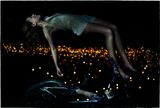
When the Ian Potter State Theatre reopened in October 2026, it featured a large commissioned photograph by Bill Henson in the foyer. Untitled 2024, measuring around two metres by three metres, features David Hallberg, the artistic director of the Australian Ballet, styled as a Dante-eqsue figure, seemingly hovering over the empty auditorium. Henson collaborated with architectural photographer John Gollings, who used a drone to capture the theatre space, while Henson shot Hallenberg in his studio. Henson told the Sydney Morning Herald in 2024 that the idea “popped into my head when I was staring at this gutted auditorium” because he had been listening to Lizst’s Dante Symphony (1856).
Ocula


View Bill Henson's Artworks











Explore and Follow Artists Shaping Contemporary Art
A respected voice in contemporary art discourse.
Focusing on ambitious storytelling and insightful art-world commentary. Ocula Magazine publishes in-depth interviews, critical essays and timely analysis on the artists, exhibitions and ideas driving the global art world.
Learn more about Ocula Magazine
Showcasing the best of the art world.
Ocula partners with galleries from around the world to highlight their artists, artworks and exhibitions. Gallery membership is by application and invitation, with each member vetted by an independent panel.
Learn more about Ocula Membership
Specialises in the sale of major artworks.
Led by a team with deep ties to the world’s leading auction houses, galleries and collectors. Ocula’s advisory team offers bespoke services to high-net-worth clients from around the world who are looking to acquire the best of contemporary and modern art.
Learn more about our team and services