





FIONA HALL
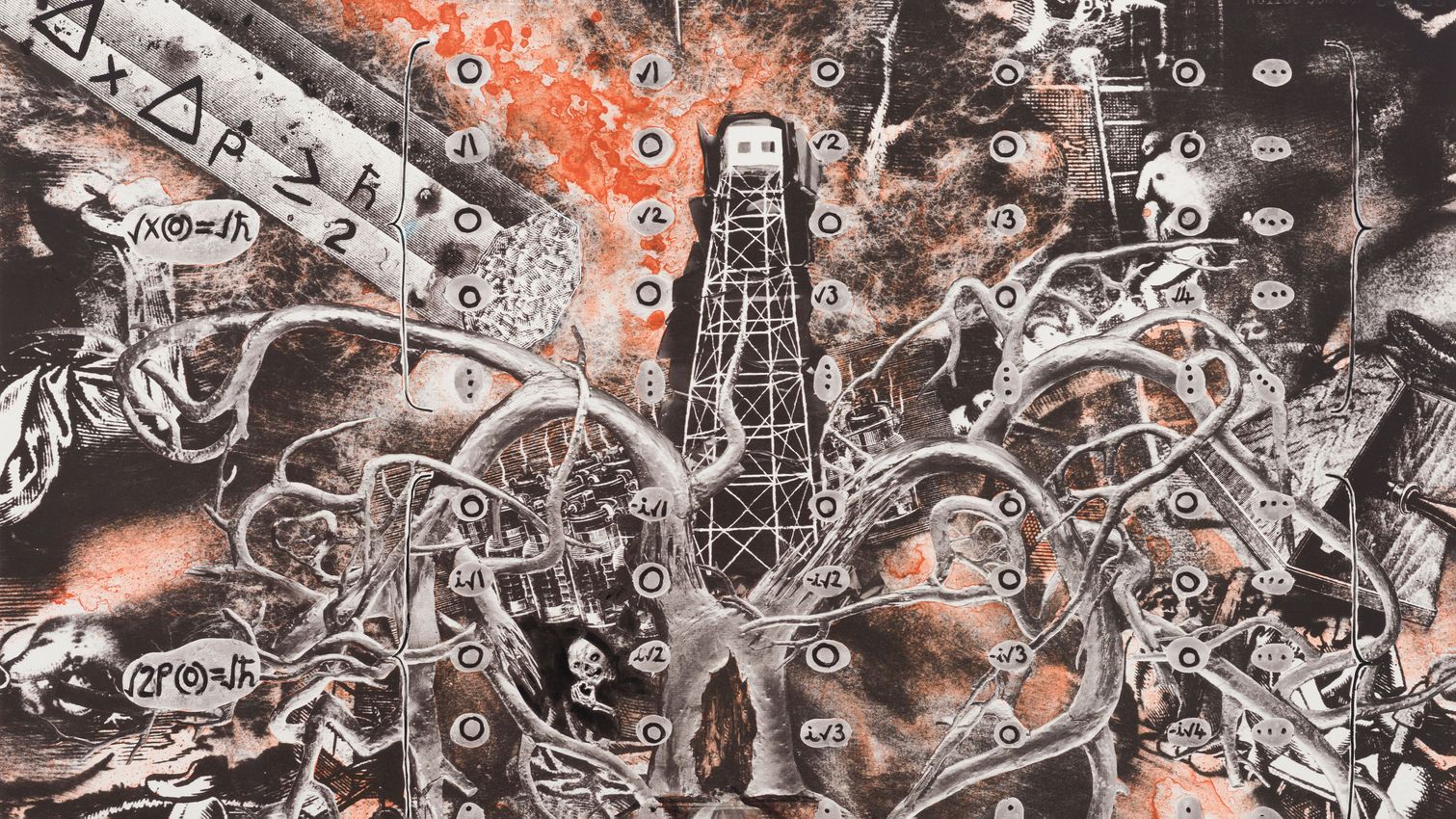
b. 1953, AustraliaFiona Hall (born 1953, Sydney) is a leading Australian contemporary artist whose practice spans photography, sculpture, installation, painting, video, and garden design. Best known for intricate, hand-worked assemblages made from everyday and often discarded materials, Hall’s work explores the entangled forces of environmental crisis, global politics, militarisation, and consumer capitalism.
Across four decades, Hall has developed a distinctive visual language in which sardine tins, military uniforms, banknotes, Tupperware, and organic matter become finely crafted objects that are both seductive and unsettling. Hall represented Australia at the 56th Venice Biennale with Wrong Way Time (2015), an immersive installation at the new Australian Pavilion in the Giardini that crystallised her long-standing engagement with ecology, conflict, and systems of value. She has exhibited widely in Australia and internationally, and her work is held in major public collections including the National Gallery of Australia, the National Gallery of Victoria, the Art Gallery of South Australia, and Queensland Art Gallery | Gallery of Modern Art.
Early Life and Career
Hall was born in Sydney and studied at East Sydney Technical College (now the National Art School), initially enrolling in painting before shifting her focus to photography in the early 1970s. As a student, she gained early recognition when her photographs were included in Thoughts and Images: An Exploratory Exhibition of Australian Student Photography at the Ewing and George Paton Galleries, University of Melbourne, in 1974.
In the late 1970s Hall moved to the United States to undertake a Master of Fine Arts at the Visual Studies Workshop in Rochester, New York, where she deepened her interest in experimental photography and the materiality of the image. Returning to Australia in 1981, she took up an artist-in-residence position at the Tasmanian School of Art and began to expand her practice beyond photography into sculpture and installation, often using found objects and organic materials. By the mid-1980s she had established a significant profile through solo and group exhibitions across Australia, positioning herself as one of the country’s most consistently innovative artists.
Works, Series and Methods
From the 1980s onwards, Hall’s work has been defined by her transformation of everyday objects into meticulously crafted, conceptually charged sculptures and installations. Early series such as Paradisus terrestris (begun 1989) use sardine tins as miniature dioramas in which botanical forms and human bodies merge, evoking connections between sexuality, colonial botany, and the commodification of nature. In other works from this period, including Morality Dolls — The Seven Deadly Sins and Illustrations to Dante’s Divine Comedy, she reworks medical imagery and mass-produced materials to probe morality, desire, and bodily vulnerability.
Hall’s sustained interest in the natural world has led her to treat flora and fauna not simply as subject matter but as indicators of broader ecological and political systems. This is evident in Fern Garden (1998), a permanent landscape installation at the National Gallery of Australia, where sculpted and planted forms interweave to create a contemplative, semi-architectural environment. Her project Fall Prey for dOCUMENTA 13 (2012) extends this logic: threatened species from the IUCN Red List are constructed from military uniforms associated with their countries of origin, making visible the links between biodiversity loss, nationalism, and militarised power.
Material choice is central to Hall’s practice, with each object and surface carrying cultural, historical, and economic associations that she deliberately activates. She often works at an intimate scale, favouring labour-intensive processes such as carving, weaving, knitting, cutting, and engraving, and rarely delegating fabrication to assistants. This emphasis on the handmade stands in deliberate contrast to the industrial spectacle of much large-scale installation, reinforcing the tension between personal craft and global systems of production and exchange.
Wrong Way Time and Subsequent Projects
Hall’s installation Wrong Way Time (2015), presented in the new Australian Pavilion at the 56th Venice Biennale, is a key in her career. Bringing together clocks, hand-painted panels, carved objects, works on paper, and vitrines filled with small sculptures, the project emphasised three intersecting concerns: global politics, world finances, and the environment. The gallery was activated by a chorus of ticking and chiming clocks painted with ominous images and slogans, while cabinets of curiosities housed meticulously worked objects that oscillate between the comic and the catastrophic.
In Wrong Way Time, Hall extended her long-standing interest in museological display, creating an environment that evokes both a natural history museum and a survivalist hoard. Everyday materials—Tupperware, PVC pipe, camouflage fabric, and shredded banknotes among them—are reconfigured into forms that suggest endangered species, fragile ecosystems, and unstable economic structures. The installation’s density and heterogeneity echo the condition it depicts: a world saturated with information, crises, and competing narratives, in which humour and despair sit side by side.
Hall has discussed the making of Wrong Way Time, and her broader approach to materials and ecology, in an in-depth Ocula conversation with writer and editor Anna Dickie, offering insight into the conceptual and personal concerns underpinning the Venice project.
Recent Work and Exhibitions
Since Venice, Hall has continued to develop ambitious projects that respond to environmental catastrophe, war memory, and the politics of place. Her large-scale installation EXODUST (2021) for The National in Sydney, and its expanded iteration Exodust – Crying Country (Mona, Hobart, 2022), address the devastation of the 2019–20 Australian bushfires, combining burnt organic matter, ash-toned palettes, and improvised shelters to evoke both ecological loss and the possibility of regeneration.
Hall has also undertaken significant public commissions, including The Hall of Service at the Anzac Memorial, Sydney (completed 2019), where she integrated hand-carved motifs, inlaid stone, and lists of hometowns to commemorate New South Wales servicemen and women in a contemplative architectural space. The series Uneasy Seasons (NGV International, 2017) and subsequent exhibitions at Roslyn Oxley9 Gallery, such as Afraid Cascade (2020) and Zero or Nothing (2024), further extend her interest in climatic volatility, resource extraction, and fragile ecologies through dense, layered installations and wall-based works.
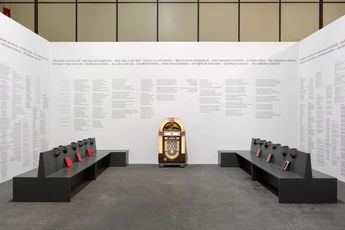
Recent group shows, including What Does the Jukebox Dream Of? at the Art Gallery of New South Wales (2024) and The First 40 Years and The Winter Bride at Roslyn Oxley9 Gallery (2023–24), situate Hall’s practice within broader conversations about contemporary Australian art and the legacies of colonial settlement. In parallel, international projects such as All Along the Watch Towers at Domaine de Chaumont-sur-Loire in France (2018) underline her ongoing engagement with landscape, architecture, and the politics of observation.
Exhibitions, Collections and Recognition
Hall has exhibited widely in Australia and internationally since the 1970s, with major institutional presentations marking key moments in her trajectory. Selected highlights include:
- 1982: Participation in the Biennale of Sydney, signalling early recognition of her experimental photographic practice.
- 1998: Opening of Fern Garden, a permanent installation at the National Gallery of Australia, Canberra.
- 2005–08: Major survey and retrospective exhibitions at Queensland Art Gallery | Gallery of Modern Art and the Art Gallery of South Australia (2005), touring to the Museum of Contemporary Art Australia and City Gallery Wellington (2008).
- 2012: Fall Prey, dOCUMENTA (13), Kassel, Germany.
- 2013: Big Game Hunting, Heide Museum of Modern Art, Melbourne.
- 2015: Wrong Way Time, Australian Pavilion, 56th Venice Biennale, Venice.
- 2017: Uneasy Seasons, NGV International, Melbourne.
- 2019: The Hall of Service, Anzac Memorial, Sydney (public commission).
- 2021–22: EXODUST (The National), Sydney, and Exodust — Crying Country, Mona, Hobart.
- 2024: Zero or Nothing, Roslyn Oxley9 Gallery, Sydney.
Hall’s work is represented in major public collections including the National Gallery of Australia, Canberra; National Gallery of Victoria, Melbourne; Art Gallery of South Australia, Adelaide; and Queensland Art Gallery | Gallery of Modern Art, Brisbane, among others. Her awards include the Contempora 5 Art Award (1997) and the Clemenger Art Award (1999), and in 2013 she was appointed an Officer of the Order of Australia (AO) for her contribution to the visual arts.
Fiona Hall FAQs
What is Fiona Hall best known for?
Fiona Hall is best known for intricate sculptural and installation works made from everyday and found materials that explore the intersections of environmental crisis, global politics, and consumer culture. Her installation Wrong Way Time at the 56th Venice Biennale (2015) is often cited as a defining work in her career.
What themes does Fiona Hall explore in her work?
Fiona Hall’s work addresses themes of ecology, biodiversity loss, militarisation, colonial histories, and the flows of capital and commodities. She frequently uses natural motifs, camouflage, and museological display strategies to reveal how these forces shape both landscapes and human bodies.
How does Fiona Hall use materials in her art?
Materials are central to Fiona Hall’s practice: she reworks sardine tins, banknotes, camouflage uniforms, plastics, burnt vegetation, and other organic matter through labour-intensive, hand-crafted processes. By choosing materials loaded with economic, military, and environmental meaning, she turns familiar objects into complex reflections on value, conflict, and ecological fragility.
Where can I see Fiona Hall’s work?
Fiona Hall’s work is held in major Australian collections including the National Gallery of Australia, Canberra; National Gallery of Victoria, Melbourne; Art Gallery of South Australia, Adelaide; and Queensland Art Gallery | Gallery of Modern Art, Brisbane. Recent exhibitions and commissions have taken place at institutions such as NGV International, the Anzac Memorial in Sydney, Mona in Hobart, and Roslyn Oxley9 Gallery in Sydney.
What is Fiona Hall’s recent work about?
Recent projects by Fiona Hall such as EXODUST and Exodust – Crying Country respond to the catastrophic 2019–20 Australian bushfires, reflecting on habitat loss, species extinction, and the politics of land. Exhibitions like Uneasy Seasons, Afraid Cascade, and Zero or Nothing continue her focus on climate volatility and global instability, often using dense, layered installations to suggest a world in a state of ongoing emergency.
Ocula | 2026

View Fiona Hall's Artworks











Explore Fiona Hall's Exhibitions









Explore and Follow Artists Shaping Contemporary Art
A respected voice in contemporary art discourse.
Focusing on ambitious storytelling and insightful art-world commentary. Ocula Magazine publishes in-depth interviews, critical essays and timely analysis on the artists, exhibitions and ideas driving the global art world.
Learn more about Ocula Magazine
Showcasing the best of the art world.
Ocula partners with galleries from around the world to highlight their artists, artworks and exhibitions. Gallery membership is by application and invitation, with each member vetted by an independent panel.
Learn more about Ocula Membership
Specialises in the sale of major artworks.
Led by a team with deep ties to the world’s leading auction houses, galleries and collectors. Ocula’s advisory team offers bespoke services to high-net-worth clients from around the world who are looking to acquire the best of contemporary and modern art.
Learn more about our team and services