






FRIDA KAHLO
1907-1954, MexicoFrida Kahlo produced a relatively small body of work yet posthumously has become one of the world’s most recognised and merchandised artists. Her meticulously crafted paintings explored her own identity, physical pain and emotional turbulence, intertwined with botanical details and cultural motifs from her native Mexico. While a contemporary of surrealist artists, and adopting a surrealist style at times, she said: “They thought I was a surrealist, but I wasn’t... I never painted dreams. I painted my own reality.”
Early Years
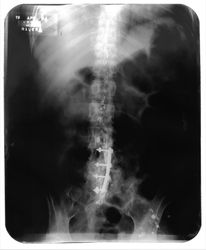
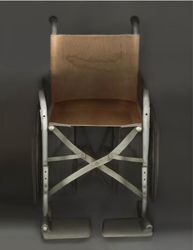
Friday Kahlo was born in 1907 in Coyocoan, Mexico City. Her childhood was characterised by poor health: she contracted polio aged six which impeded her ability to walk. She attended the National Preparatory School and joined a group who shared intellectual and political views. In 1925, a bus on which Kahlo was travelling collided with an electric tram and a steel handrail impaled her through her hip, fracturing her spine and pelvis. After several weeks in hospital, she was sent home for bed rest—her parents bought her paints and a special easel so she could paint, which is where she began to create self-portraits.
Frida Kahlo: Artworks
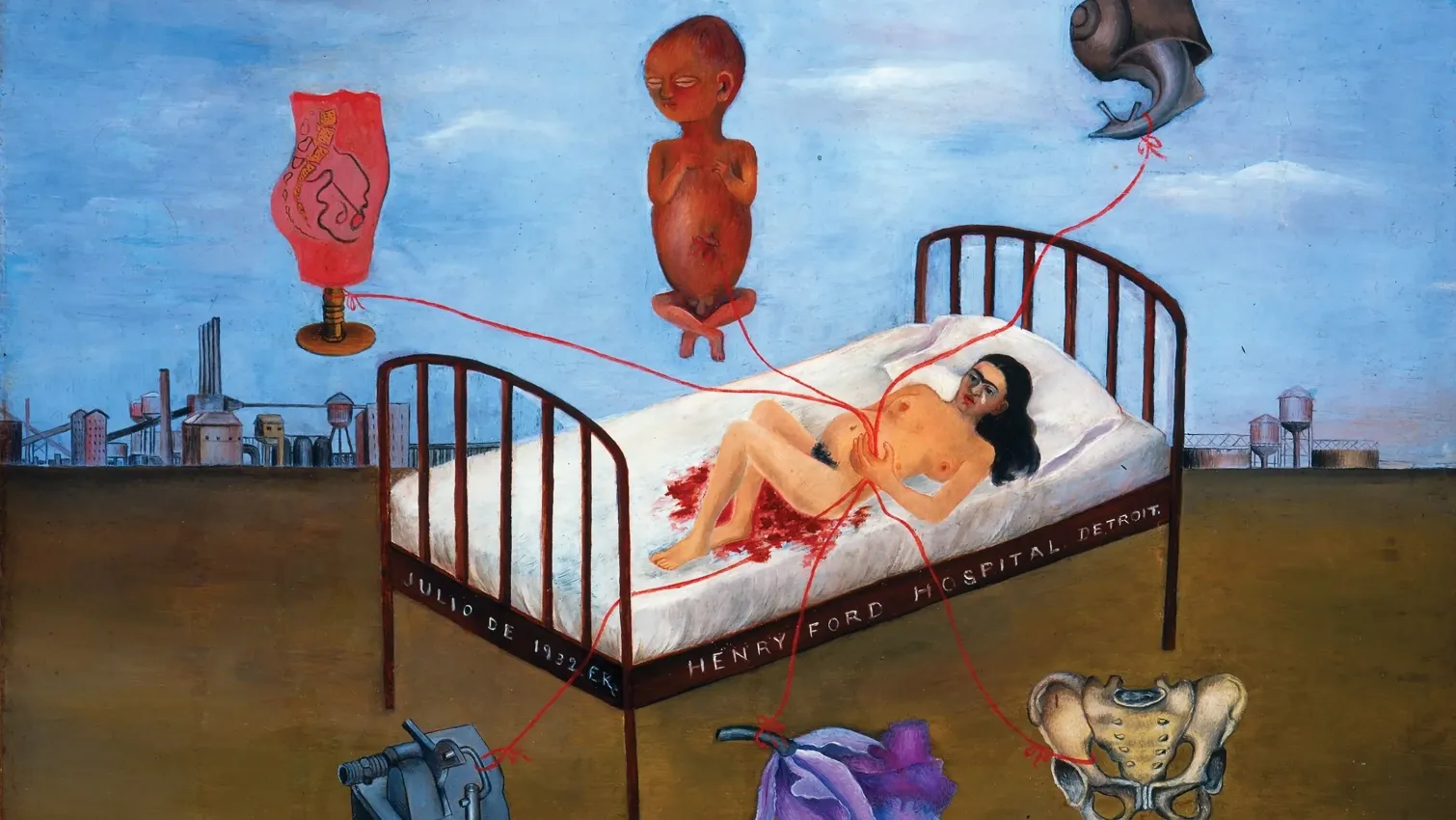
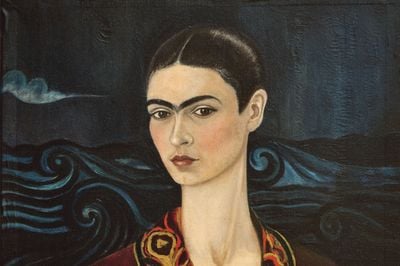
Kahlo’s figurative oil paintings were imbued with the symbols of her own emotional and physical pain. Early works, such as 1926’s Self-Portrait Wearing a Velvet Dress shows her looking straight out of the painting towards the viewer. By the time she painted Henry Ford Hospital in 1931, apparently referring to the agony of a miscarriage, she had started adding surrealist elements to her work: a snail, a foetus and a pelvis are connected to the picture’s central figure by veins.
By 1939, during her divorce, Kahlo created an uncharacteristically large-scale work, The Two Fridas: two versions of herself sit holding hands, with the heart from one transplanted to the other, representing the married Kahlo and the separated Kahlo.
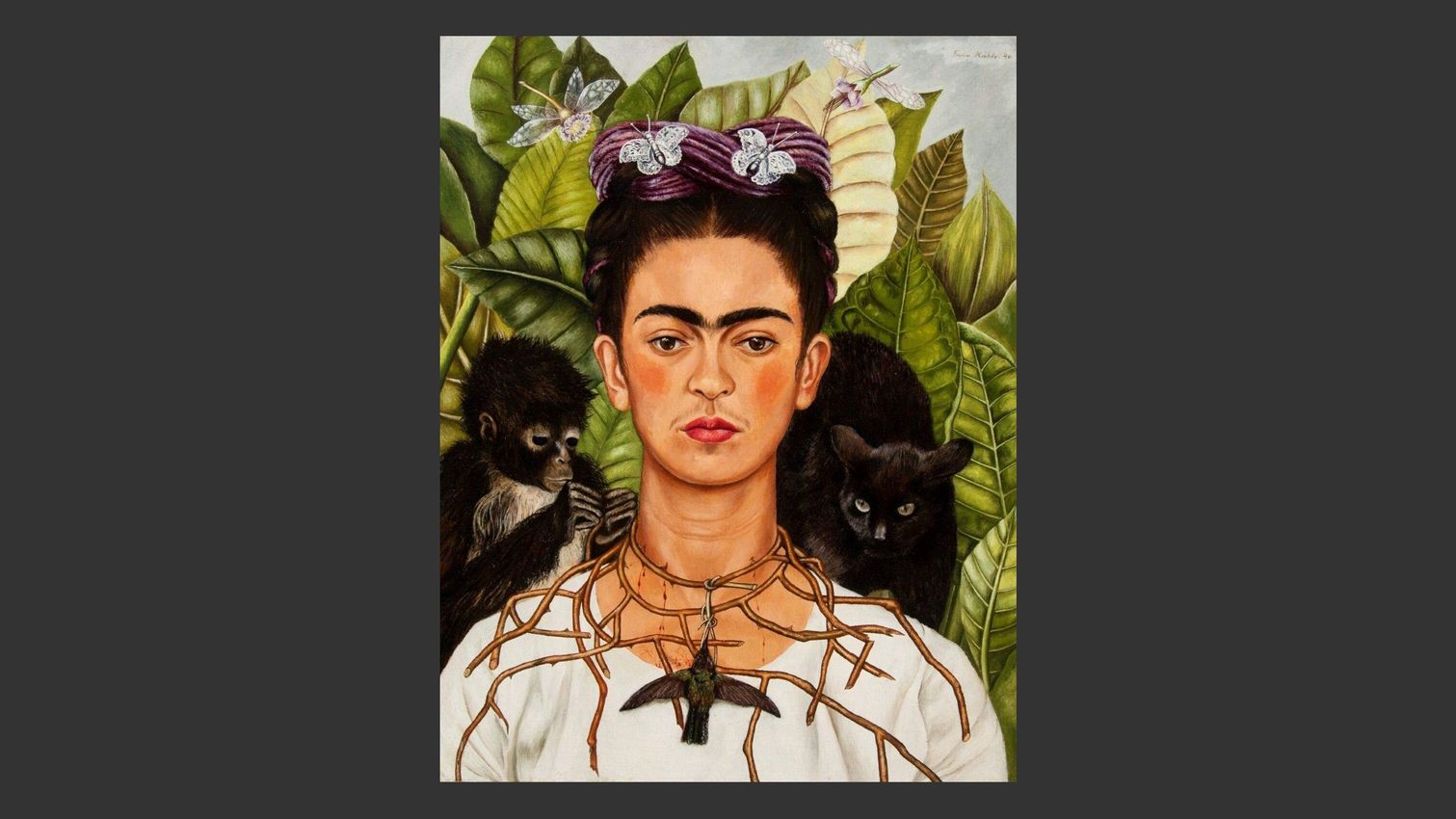
1940’s Self-Portrait with Thorn Necklace and Hummingbird, one of her best-known pieces, features Kahlo, again staring straight at the viewer, with a black cat on her left shoulder and a monkey on her right. Around her neck is a thorn necklace, which is causing her to bleed. An unusually lifeless hummingbird hangs from one of the thorns.
While Kahlo looks strong in 1944’s The Broken Column, and loose hair adds gentleness to a face whose features she has previously depicted as firm, her body is obviously enduring huge suffering: nails are studded into her skin and her torso is ripped open vertically, with a crumbling column (possibly with phallic connotations) inserted from her chin downwards.
Frida Kahlo: Select Posthumous Exhibitions
- Frida: The Making of an Icon Tate Modern, London (2026)
- Frida: Beyond the Myth, Virginia Museum of Fine Arts (2025)
- Viva la Frida!—Life and Art of Frida Kahlo, Drents Museum, Assen (2022)
- Frida Kahlo: Appearances Can Be Deceiving, Brooklyn Museum (2019)
- Mamacita Linda: Letters Between Frida Kahlo and her Mother, National Museum of Women in the Arts, Washington DC (2012)
- Frida Kahlo and Tina Modotti, Whitechapel Gallery, London (1982)
- Frida Kahlo, Museum of Contemporary Art, Chicago (1978)
Further Reading
- The official Instagram account for Frida Kahlo
- FridaKahlo.org
- The Frida Kahlo Foundation’s website
- Museo Frida Kahlo
Frida Kahlo FAQs
What is “Fridamania”?
“Fridamania” is the popular term for the commercialisation of the work and legacy of Frida Kahlo. It introduces questions about how the artist’s commercialised legacy sits alongside her revolutionary spirit. The 2026 Tate Modern/Museum of Fine Arts Houston exhibition explored this posthumous celebration of Kahlo’s image, art and persona.
Why is Frida Kahlo significant to the LGBTQ+ community?
Frida Kahlo presented herself in her paintings as androgynous, emphasising her trademark monobrow or adopting “male” clothes. She was not heterosexual; while married to Diego Rivera, it has been rumoured that she had affairs with Josephine Baker and Georgia O’Keefe. Modern-day queer artists have spoken of how Kahlo inspired their practice—for example, Julio Salgado, Raychelle Duazo and Camila Fontanele de Miranda.
What was Frida Kahlo’s relationship with Diego Rivera?
Frida Kahlo first met Mexican mural artist Diego Rivera when she was 15 and he was 37; they began a relationship five years later. While he championed her work, as a married couple, they kept separate homes and studios, and there were infidelities on both sides of the relationship. One of the stories behind Self-Portrait with Cropped Hair (1940) is that Kahlo cut off her hair following Rivera’s affair with her sister. The pair divorced in 1939 but remarried a year later. It has been suggested that the truest picture of their marriage is in the artworks they produced of each other.
Ocula


Representative Artworks
Frida Kahlo in Ocula Magazine










Explore and Follow Artists Shaping Contemporary Art
A respected voice in contemporary art discourse.
Focusing on ambitious storytelling and insightful art-world commentary. Ocula Magazine publishes in-depth interviews, critical essays and timely analysis on the artists, exhibitions and ideas driving the global art world.
Learn more about Ocula Magazine
Showcasing the best of the art world.
Ocula partners with galleries from around the world to highlight their artists, artworks and exhibitions. Gallery membership is by application and invitation, with each member vetted by an independent panel.
Learn more about Ocula Membership
Specialises in the sale of major artworks.
Led by a team with deep ties to the world’s leading auction houses, galleries and collectors. Ocula’s advisory team offers bespoke services to high-net-worth clients from around the world who are looking to acquire the best of contemporary and modern art.
Learn more about our team and services