






GÜNTHER UECKER
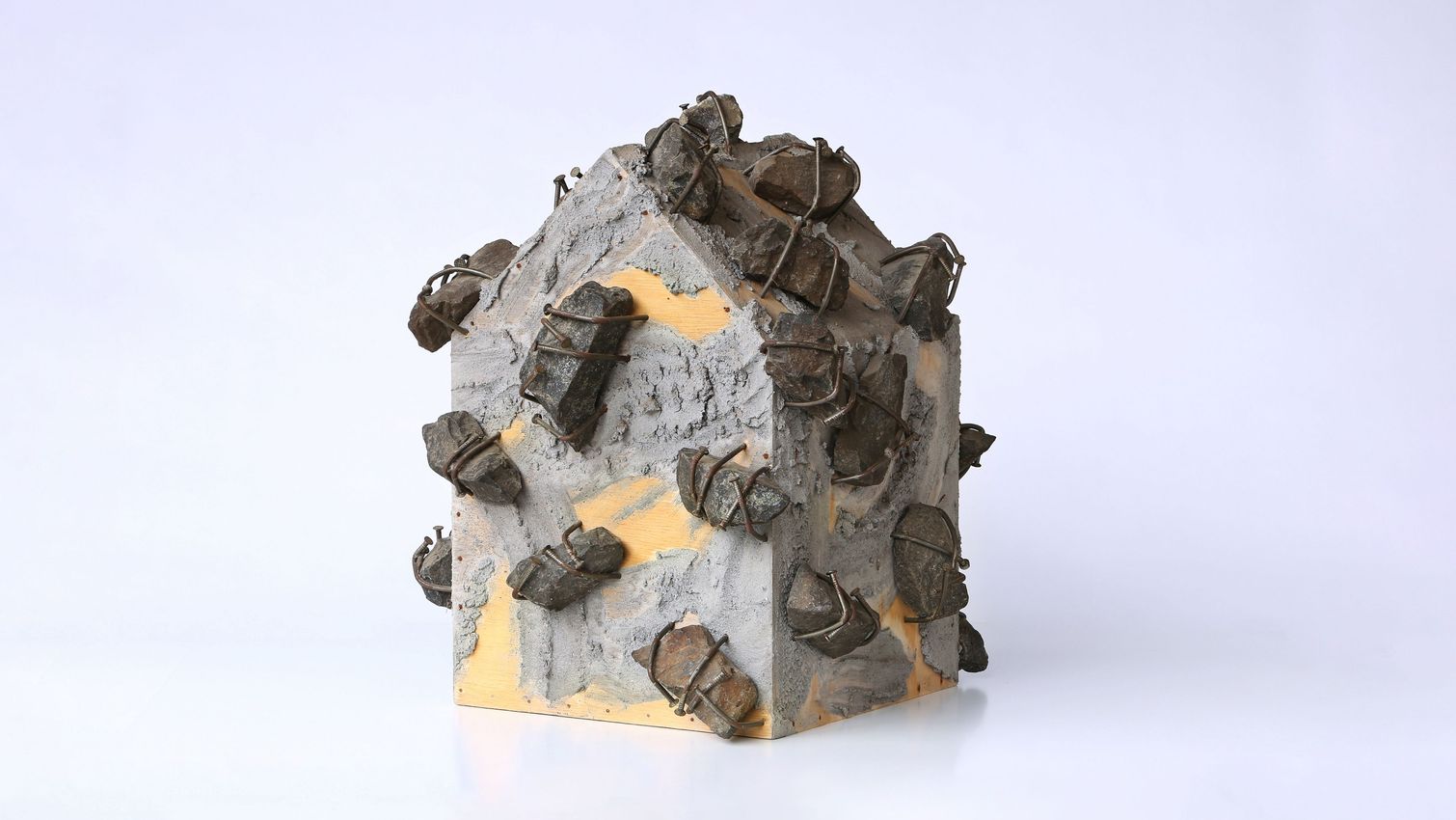
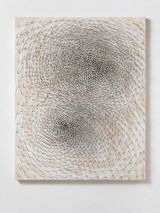
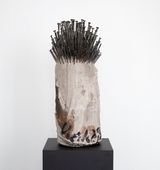
1930-2025, GermanyA central figure of Düsseldorf’s postwar Group Zero, Günther Uecker has for six decades developed his reliefs comprising dynamic arrangements of nails. Born in 1930 in Wendorf, Germany, Uecker studied at the Kunsthochschule Berlin Weissensee and Kunstakademie in Düsseldorf, where he lives and works today. In the 1950s, influenced by Eastern philosophy and Gregorian chanting, he began a ritual of hammering nails. These materials signify protection and creation to the artist, who remembers nailing planks over the windows of his home to deter Soviet troops after the Second World War.
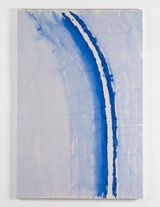
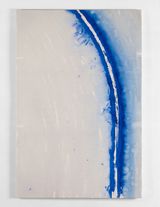
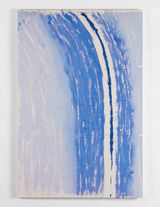
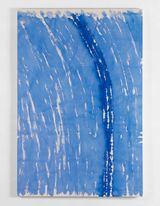
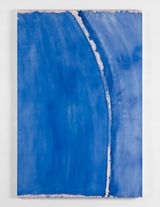
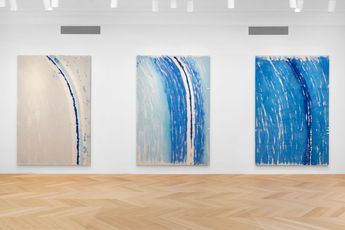
By 1957, he was hammering nails onto canvas to achieve a ‘sundial’ optical effect, casting light and shadow in ephemeral patterns. Soon, he integrated lightboxes, rotating discs, television sets, and chairs (Stuhl, 1963) into his nail sculptures. In 1961, Uecker joined Heinz Mack and Otto Piene in the anti-expressionist movement Group Zero, which prioritised expanding beyond the traditional dimensions of the canvas into kinetic, serial, and participatory realms. After the group’s dissolution in 1966, Uecker’s work incorporated aspects of conceptual and land art, and he began designing stage sets for operas. Among his public works are From Darkness to Light at the United Nations, Geneva (1978) and a Reflection and Prayer Room for the Reichstag, Berlin (2000). In 2020, he embarked on his series Lichtbogen, minimalist paintings of radiant blue-and-white arcs.
Uecker’s work has been the subject of solo exhibitions at museums worldwide. Retrospectives of his work have been organised by the Central House of Artists, Moscow (1988) and Kunsthalle München (1993), and he participated in Documenta (1964, 1968, 1977) and the 1970 Venice Biennale. His work resides in such collections as the Art Institute of Chicago; Museum of Contemporary Art, Los Angeles; Solomon R. Guggenheim Museum and Museum of Modern Art, New York; Walker Art Center, Minneapolis; Hamburger Bahnhof, Berlin; Museum Ludwig, Cologne; Centre Pompidou, Paris; Stedelijk Museum, Amsterdam; and Tate Modern, London. Among his many honors are the Pour le Mérite for Sciences and Arts (2000) and the Staatspreis des Landes Nordrhein-Westfalen (2015).
Courtesy Lévy Gorvy Dayan

Works at Lévy Gorvy Dayan







Recently Exhibited



Exhibiting Elsewhere

Works Elsewhere











Explore and Follow Artists Shaping Contemporary Art
A respected voice in contemporary art discourse.
Focusing on ambitious storytelling and insightful art-world commentary. Ocula Magazine publishes in-depth interviews, critical essays and timely analysis on the artists, exhibitions and ideas driving the global art world.
Learn more about Ocula Magazine
Showcasing the best of the art world.
Ocula partners with galleries from around the world to highlight their artists, artworks and exhibitions. Gallery membership is by application and invitation, with each member vetted by an independent panel.
Learn more about Ocula Membership
Specialises in the sale of major artworks.
Led by a team with deep ties to the world’s leading auction houses, galleries and collectors. Ocula’s advisory team offers bespoke services to high-net-worth clients from around the world who are looking to acquire the best of contemporary and modern art.
Learn more about our team and services