






HOLLIS SIGLER
1948-2001, United StatesHollis Sigler was an educator, activist, and pioneering feminist artist, who lived and worked in Chicago.
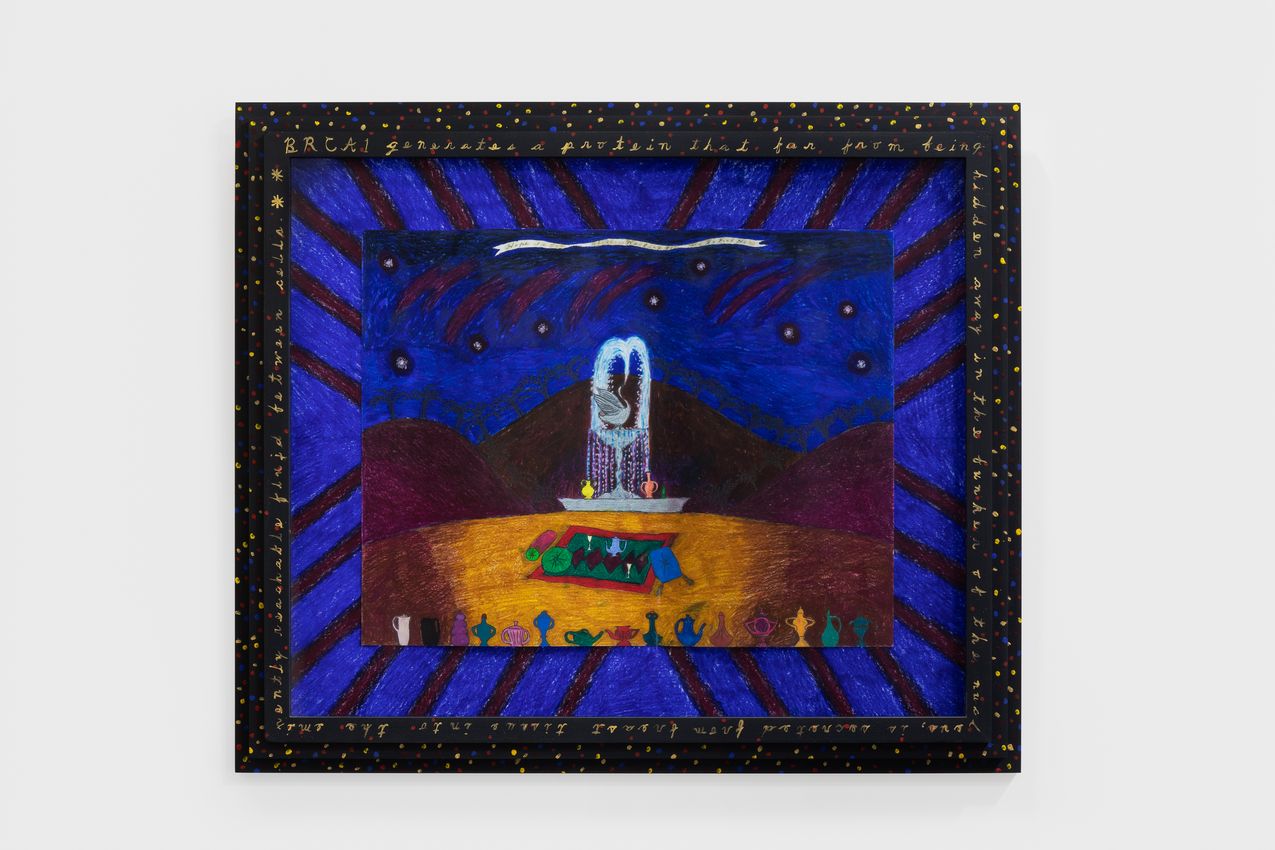
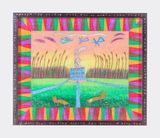
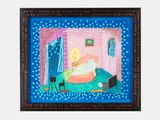
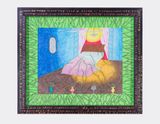
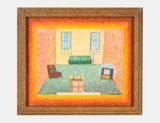
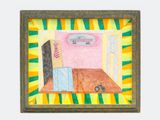
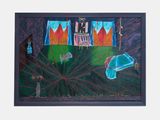
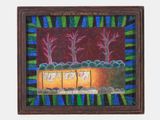
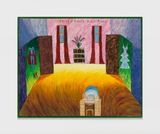
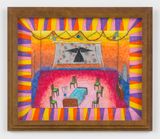
Hollis Sigler rose to prominence in the 1970s as part of Chicago’s vibrant art scene, co-founding Artemesia Gallery, a female cooperative gallery in the city. By the late 1970s, Sigler had abandoned photorealism in favor of a naive style of representation, influenced by the unrestrained drawing of her youth, and driven by a desire to shift how narrative was communicated in art. Centered on the experiences of women, Sigler’s works from the early 1980s portrayed domestic scenes set within skewed, nearly theatrical spaces. Figures were often depicted in shadow or absent entirely from Sigler’s compositions, and in their place, opened dressers, strewn items of clothing, and traces of activity would suggest the aftermath of an event. This was often reinforced by the works’ titles, which adorned the works and their intricate, handmade frames. Sigler viewed the removal of the figure as a way to generate visual tension and further explore more fleeting emotional states, such as passion, romance, desire, as well as anxiety, and fear.
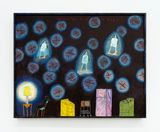
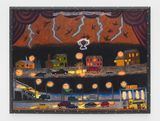
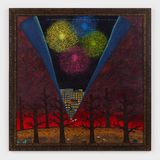
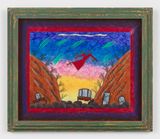
Sigler’s work would undergo another shift in 1985 after she was diagnosed with breast cancer, a disease that had also afflicted her mother and grandmother. While Sigler initially kept her diagnosis private, her works became increasingly charged with frenetic brushstrokes and agitated colors, as she connected her own fears of impermanence with the natural world, and impending ecological crisis. Tidal waves, earthquakes, and fires created scenes of disequilibrium and imbalance — a world that appeared to be in free fall.
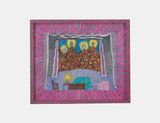
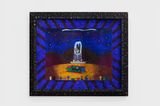
After her cancer recurred in 1992, the subject of illness became an urgent fixture within Sigler’s work, starting her series Breast Cancer Journal: Walking with the Ghosts of My Grandmothers that same year. Hoping that “the work would gain the power to destroy the silence surrounding the disease”, the resulting works formed an intensely vulnerable chronicle of her experience with the illness. Despite her waning health, Sigler remained resolute, positioning her work not only as a personal catharsis but also as a way to demystify the disease.
Text courtesy Andrew Kreps Gallery.

View Hollis Sigler's Artworks
























Explore and Follow Artists Shaping Contemporary Art
A respected voice in contemporary art discourse.
Focusing on ambitious storytelling and insightful art-world commentary. Ocula Magazine publishes in-depth interviews, critical essays and timely analysis on the artists, exhibitions and ideas driving the global art world.
Learn more about Ocula Magazine
Showcasing the best of the art world.
Ocula partners with galleries from around the world to highlight their artists, artworks and exhibitions. Gallery membership is by application and invitation, with each member vetted by an independent panel.
Learn more about Ocula Membership
Specialises in the sale of major artworks.
Led by a team with deep ties to the world’s leading auction houses, galleries and collectors. Ocula’s advisory team offers bespoke services to high-net-worth clients from around the world who are looking to acquire the best of contemporary and modern art.
Learn more about our team and services