






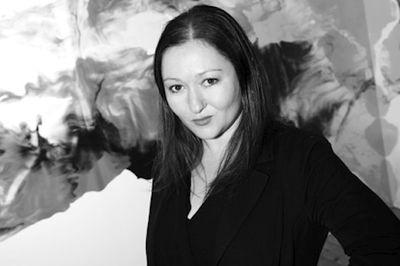
JESSE JONES
b. 1978, IrelandJesse Jones is an Irish artist known for her videos and films that conjure bygone histories into the present to examine contemporary sociopolitical conditions.
Jones’ group of three short films, titled ‘Trilogy of Dust’ (2009–11), exemplifies the artist’s critique of capitalism and patriarchy, and showcases her mastery of subliminal imagery. The first film, titled Mahogany (2009) and shot in Australian desert land, begins with an adaptation of a 1927 opera by Bertolt Brecht and Kurt Weill. Brecht and Weill’s opera criticised the pretences of freedom in the Weimar Republic; in her film, Jones develops the narrative from this starting-point into a questioning of the ability of protest to effect real change.
The second film of the trilogy, The Predicament of Man (2010), takes its title from a 1972 economics essay written by economic think-tank The Club of Rome, which speculates that late capitalism’s exponential growth theories will cause an over-stretch of resources and affect our ability to perceive reality. In the film, Jones intercuts footage of an opal mine in Australia with flashes of still images showing icons and events of the last century, suggesting an ominous future. Feminist concerns take centre stage in Against the Realm of the Absolute (2011)—the final film of the series—in which Jones draws from Joanna Russ’ novel The Female Man (1975) to sketch a distant future in which only women exist.
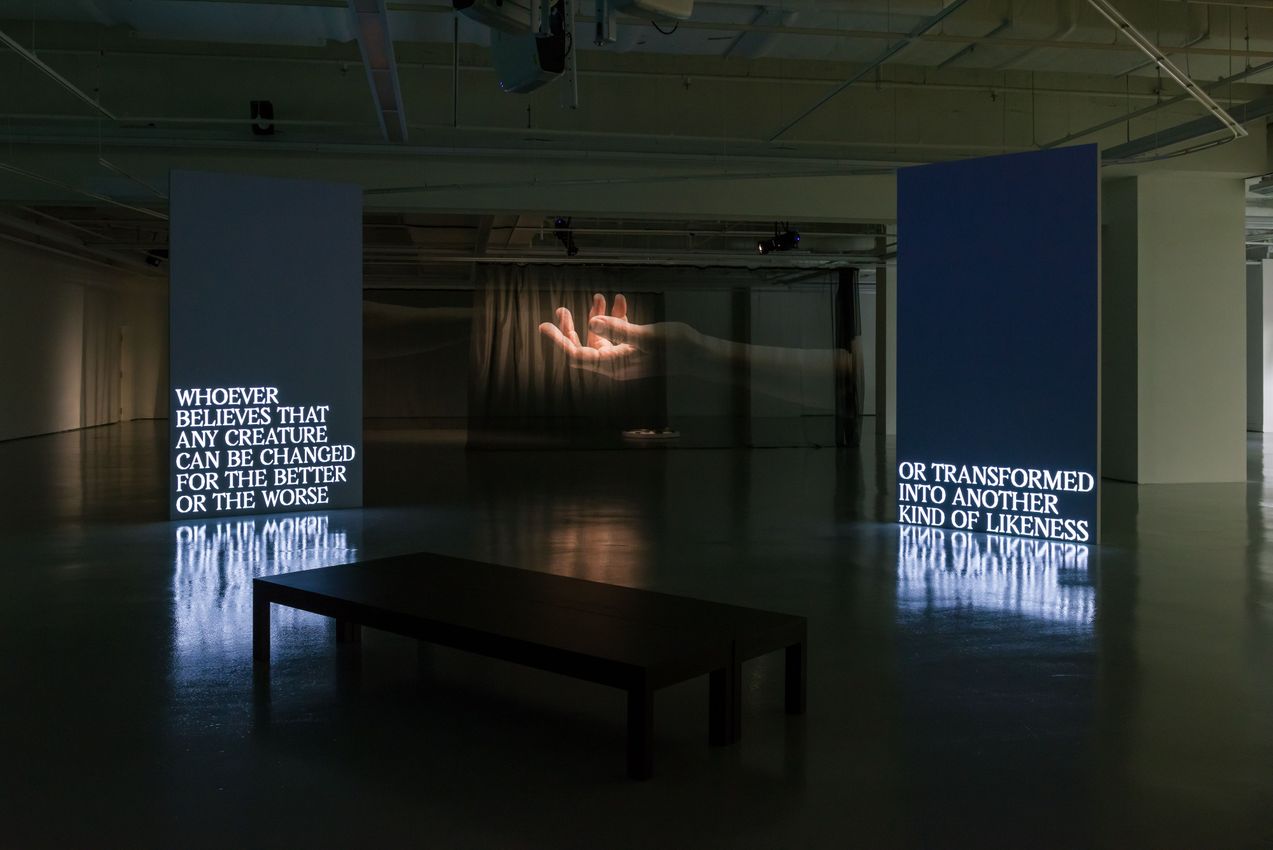
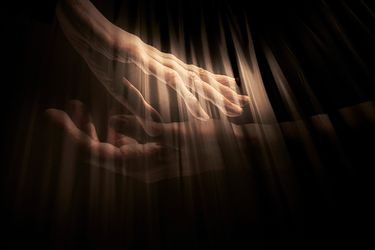
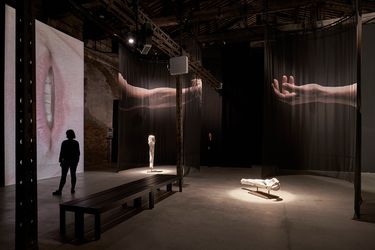
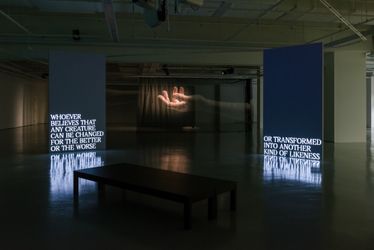
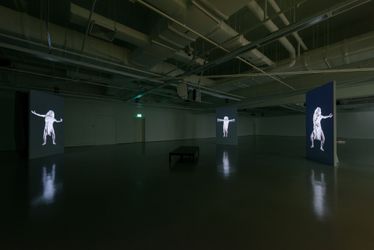
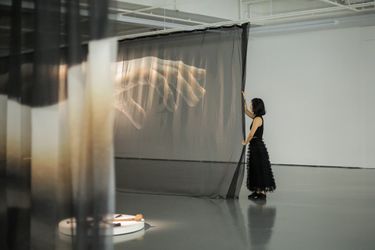
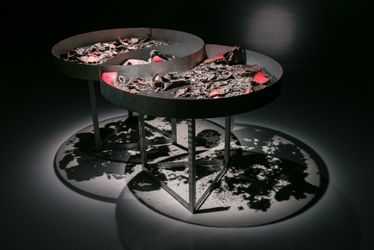
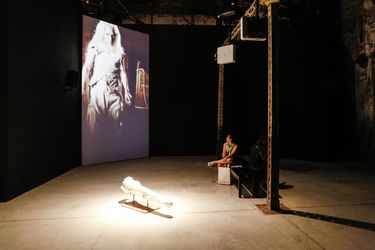
In 2017, Jones presented the multi-media installation Tremble Tremble (2017) at the Irish Pavilion at the 57th Venice Biennale. The work derives its title from a slogan chanted at Italian feminist marches in the 1970s that called for access to abortion and wages for housework. In the film, Jones combines a giant from Irish folklore and the witch as a feminist archetype to form her own mythological giantess who reads ‘In Utera Gigantae’—the artist’s fictional law that proclaims a new social order from a female perspective.
Discussing the work in her 2018 conversation with Ocula Magazine, Jones explained that she ‘wanted to create a new law to be uttered in the exhibition space. It’s a law that determines the maternal female is a giant. A human born to that giant is subject to the laws of the giant.’ In addition to feminist history and literature such as Simone Veil’s address to the French parliament in 1974 and Silvia Federici’s book Caliban and the Witch (2004), Jones cited Lucy the Australopithecus as a vital source of inspiration for Tremble Tremble. The first humanoid thought to have walked on two legs, Lucy embodies an ancient past before patriarchy.
Jones studied visual arts practice at Dublin’s Dún Laoghaire Institute of Art, Design and Technology, where she graduated with an MA in 2005. She lives and works in Dublin.
Sherry Paik | Ocula | 2018

Representative Artworks
View story
View story
View story
View story
View story
View story
View story
View story
View story


Explore and Follow Artists Shaping Contemporary Art
A respected voice in contemporary art discourse.
Focusing on ambitious storytelling and insightful art-world commentary. Ocula Magazine publishes in-depth interviews, critical essays and timely analysis on the artists, exhibitions and ideas driving the global art world.
Learn more about Ocula Magazine
Showcasing the best of the art world.
Ocula partners with galleries from around the world to highlight their artists, artworks and exhibitions. Gallery membership is by application and invitation, with each member vetted by an independent panel.
Learn more about Ocula Membership
Specialises in the sale of major artworks.
Led by a team with deep ties to the world’s leading auction houses, galleries and collectors. Ocula’s advisory team offers bespoke services to high-net-worth clients from around the world who are looking to acquire the best of contemporary and modern art.
Learn more about our team and services