





JULIA TRYBALA
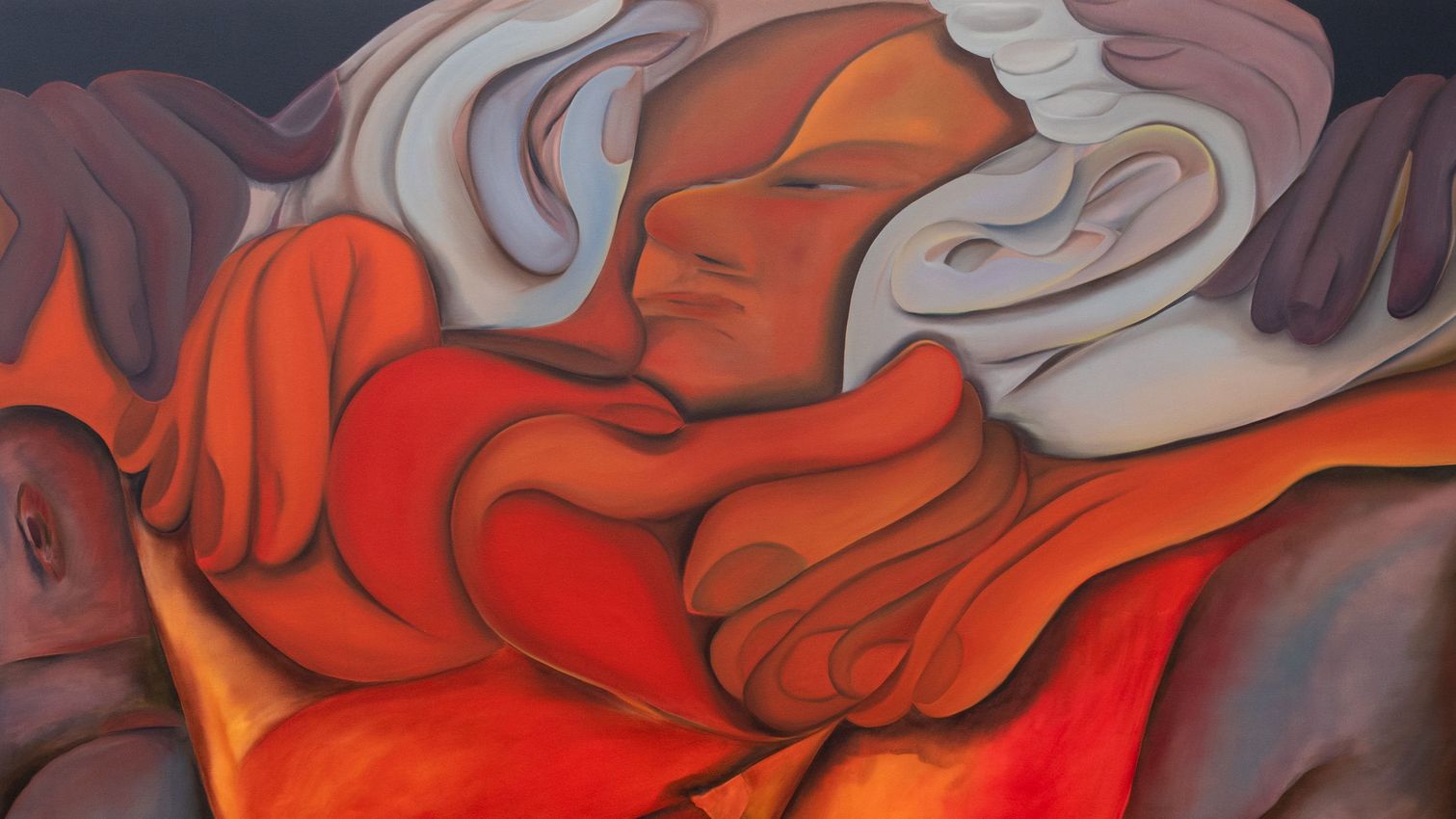
b. 1992, AustraliaJulia Trybala is a Melbourne-based painter whose work centres on the complexity of human relationships and the politics of the feminine body in space. Best known for her closely cropped, sensuous depictions of intertwined limbs and torsos, she creates intimate, psychologically charged scenes that oscillate between tenderness and unease. Working primarily in oil on canvas, Trybala is recognised for a distinctive palette and velvety, layered surfaces that heighten the emotional tone of her images.
Trybala has exhibited widely in Australia and internationally, including at the National Gallery of Victoria‘s exhibition Melbourne Now (2023), and is represented by STATION in Australia and Ames Yavuz in Asia.
Early life and Career
Born in 1992 in Melbourne, Australia, Julia Trybala lives and works in Melbourne and holds a Bachelor of Fine Art from RMIT University, completed in 2016. She began exhibiting regularly while still a student, with early solo shows such as Cloak (2015) at Tate Gallery in Sydney and Even Ravel (2016) at Boom Gallery in Geelong introducing her interest in fragmented bodies and stylised, pastel-hued interiors.ngv+3
Following graduation, Trybala developed a steady exhibition practice across artist-run spaces and commercial galleries, presenting solo exhibitions including Flesh / Gloss at Fort Delta (2017), Blushing at Alaska Projects, Sydney (2018), and New Paintings at Chamber Presents, Melbourne (2019). These shows gradually refined her visual language, shifting from more illustrative figuration toward densely composed, closely cropped figure studies that foreground skin, hair and fabric as interlocking planes of colour and texture.
Practice, Works and Methods
Trybala’s paintings are characterised by their tightly framed compositions, in which bodies are rarely presented in full and faces are often partially obscured or pushed to the margins of the canvas. Arms, hands, torsos and hair form looping, overlapping structures that read as both figurative and abstract, with flattened perspective and controlled colour harmonies emphasising the formal qualities of line, surface and rhythm. This approach creates a sense of intimacy that can feel at once inviting and claustrophobic, drawing viewers into close proximity with bodies that are simultaneously familiar and estranged.
In works and series such as Three Graces (presented at STATION, Melbourne, 2023) and Metabolism (Yavuz Gallery, Singapore, 2024), Trybala reimagines classical motifs and art-historical archetypes through a contemporary, feminist lens. Her figures often appear in groups of two or three, their gestures echoing and mirroring one another to suggest shifting alliances and emotional currents between subjects. The surfaces are built up through layers of oil paint that achieve a soft, almost plush quality; edges blur subtly, while details such as fingernails, strands of hair or folds of fabric are rendered with careful precision.
Trybala frequently works across scales, from modestly sized portraits to larger canvases where bodies fill the field and extend beyond the picture plane. This variation in scale supports the tension between closeness and fragmentation, allowing her to move from intimate, almost diaristic images to compositions that feel more emblematic or archetypal. Throughout, she maintains a focus on gesture and touch—the ways bodies lean, clasp, rest and strain—as a primary vehicle for emotional storytelling.
Themes and Context
At the core of Trybala’s practice is an exploration of intimacy and the emotional dynamics of close relationships, often filtered through personal experience and conversations with friends and family. Her paintings examine how bodies carry and communicate feeling—care, desire, anxiety, exhaustion—through posture and proximity rather than explicit narrative. The ambiguity of her scenes, which rarely specify a concrete setting, keeps attention on these emotional and relational currents rather than on external plot.
The politics of the feminine body in space is central to her work, in which female and feminine-coded figures occupy the majority of the pictorial field. By cropping and recomposing these bodies, Trybala refuses conventional full-length or idealised portraiture, instead presenting bodies as lived, felt and partial—sites of care, vulnerability and mutual support. Her practice can be situated within contemporary figurative painting that foregrounds gender, intimacy and subjectivity, aligning her with a wider generation of artists revisiting the figure through lenses of feminism and lived experience.
Exhibitions and Recognition
Julia Trybala has developed a strong exhibition history across Australia and internationally, with solo exhibitions including Hold a Body Together at STATION, Melbourne (2021), Three Graces at STATION, Melbourne (2023), and Metabolism at Yavuz Gallery, Singapore (2024). Earlier solo shows include Cry Baby at Discordia Gallery, Melbourne (2020), Room at Saint Cloche, Sydney (2020), and Blushing at Alaska Projects, Sydney (2018).
She has participated in significant group exhibitions and art fairs, such as Melbourne Now at the National Gallery of Victoria (2023), Sydney Contemporary (multiple editions), and Yellow Wallpaper at STATION, Melbourne (2021). Trybala was a finalist in the 2021 Brett Whiteley Travelling Art Award, and her work is held in the Artbank collection in Australia, as well as numerous private collections. Her ongoing relationship with STATION and Ames Yavuz reflects her growing profile within the broader landscape of contemporary figurative painting in the region.
Julia Trybala FAQs
Who is Julia Trybala?
Julia Trybala is a Melbourne-born painter (b. 1992) who lives and works in Melbourne, Australia and is known for intimate, closely cropped figurative paintings that explore relationships and the feminine body. She holds a Bachelor of Fine Art from RMIT University (2016) and exhibits regularly in Australia and internationally.
What is Julia Trybala best known for?
Julia Trybala is best known for her oil paintings of intertwined bodies and fragmented figures, where arms, hands, hair and fabric form dense, looping compositions at the edge of abstraction. Her work is recognised for its lush surfaces, distinctive colour palettes and focus on intimacy, tenderness and vulnerability.
What themes does Julia Trybala explore in her work?
Trybala’s work explores the complexity of human relationships, particularly the emotional and physical dynamics between women and feminine bodies. Themes of care, dependence, desire and anxiety are conveyed through gesture and touch rather than explicit narrative, situating her practice within contemporary feminist figurative painting.
Where can I see Julia Trybala’s work?
In 2026, Trybala presents New Paintings, her fourth solo exhibition with STATION, Melbourne, running from 31 January to 14 March 2026. Her work has also been shown at Yavuz Gallery in Singapore, and in institutional exhibitions such as Melbourne Now at the National Gallery of Victoria, with works held in collections including Artbank.
What was Julia Trybala’s 2026 exhibition at STATION about?
STATION describes New Paintings as extending Trybala’s ongoing focus on the complexity of human relationships, presenting new canvases in which cropped, entangled bodies convey intimacy and emotional tension. The exhibition follows earlier solo shows at the gallery, including Hold a Body Together (2021) and Three Graces (2023), consolidating her position within contemporary figurative practice in Melbourne.
Ocula | 2026

Works at Ames Yavuz


Recently Exhibited


Works Elsewhere












Explore and Follow Artists Shaping Contemporary Art
A respected voice in contemporary art discourse.
Focusing on ambitious storytelling and insightful art-world commentary. Ocula Magazine publishes in-depth interviews, critical essays and timely analysis on the artists, exhibitions and ideas driving the global art world.
Learn more about Ocula Magazine
Showcasing the best of the art world.
Ocula partners with galleries from around the world to highlight their artists, artworks and exhibitions. Gallery membership is by application and invitation, with each member vetted by an independent panel.
Learn more about Ocula Membership
Specialises in the sale of major artworks.
Led by a team with deep ties to the world’s leading auction houses, galleries and collectors. Ocula’s advisory team offers bespoke services to high-net-worth clients from around the world who are looking to acquire the best of contemporary and modern art.
Learn more about our team and services