





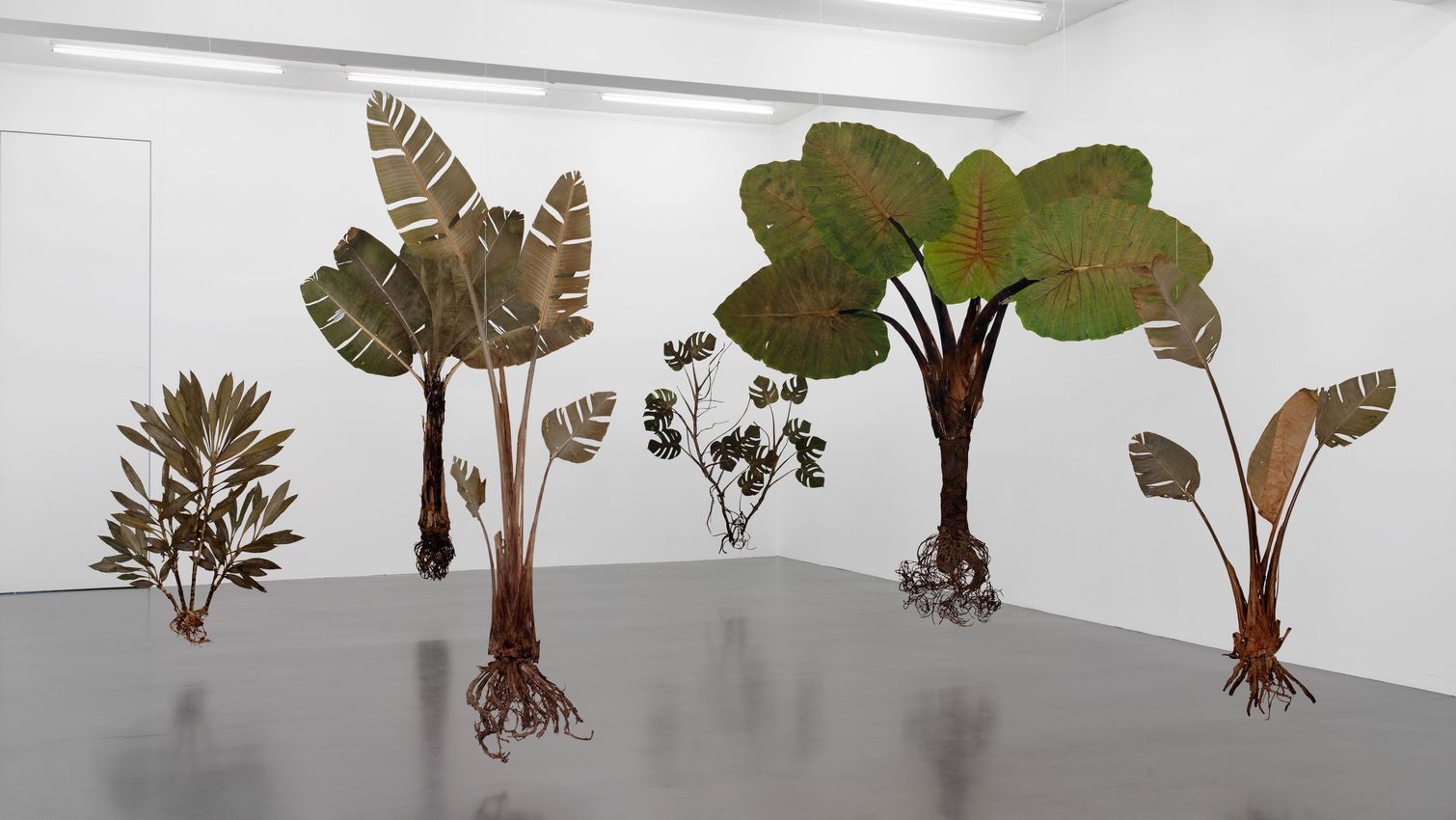
JULIUS VON BISMARCK
b. 1983, GermanyJulius von Bismarck is a German conceptual artist best known for technologically driven installations and interventions that examine how perception, power, and images shape our understanding of nature and reality. Working across installation, sculpture, video, and performance, he often uses scientific instruments and engineering to manipulate environmental phenomena, from storms and landscapes to urban infrastructure. His projects and series, including Image Fulgurator (2007), Some Pigeons Are More Equal Than Others (2010, with Julian Charrière), and Egocentric System (2015), have been presented at institutions such as Berlinische Galerie, Palais de Tokyo in Paris, and The Power Plant in Toronto. In 2026, ACCA in Melbourne will host a major solo exhibition dedicated to the artist.
Early life and Career
Born in 1983 in Breisach am Rhein, Germany, Julius von Bismarck studied visual communication at the Berlin University of the Arts and completed postgraduate studies at the Institut für Raumexperimente led by Olafur Eliasson. This combination of design training and experimental, research-led studio practice helped ground his work in both conceptual rigor and an interest in scientific tools. Early in his career, he attracted international attention with Image Fulgurator, a device that hijacks the moment of a camera’s flash to project hidden images into photographs, establishing his engagement with media systems and invisible infrastructures of control.
Following residencies and collaborations, including a notable residency at CERN that exposed him to cutting-edge physics and data visualisation, von Bismarck’s practice shifted toward working directly with natural forces and landscapes. He increasingly developed large-scale installations and experiments in outdoor environments, from manipulated trees and animal behaviour to choreographed storms and waves, marking a move from urban image critique to environmental and planetary concerns.
Works, series and methods
Von Bismarck’s Image Fulgurator uses a custom-built flash and projection system to insert motifs—such as political symbols or corporate logos—into other people’s photographs at the instant they are taken, without their knowledge. The project functions both as a technical hack of photographic vision and as a critical commentary on how ideology is embedded in images and public space. The collaborative project Some Pigeons Are More Equal Than Others, created with Julian Charrière and Dominique Koch, used non-toxic dye to colour city pigeons in bright hues, temporarily transforming a stigmatised urban species into something exotic and uncanny, and prompting viewers to reconsider hierarchies among animals and their human-made habitats.
In Egocentric System, von Bismarck lived alone for an extended period on a rotating concrete platform, monitored by cameras, transforming his own body and daily routines into a cyclical experiment in disorientation and perception. The work, presented in large-scale video installation form, explores how spatial instability and repetition affect psychic and bodily experience, connecting personal endurance with larger questions about human adaptation to unstable environments. More recent projects, including those developed around storms, lightning, and altered landscapes, use meteorological and geophysical processes as both subject and medium, involving elaborate mechanical systems, sculptural apparatus, and immersive audiovisual environments.
Themes and Context
Across his practice, von Bismarck’s work explores how human perception is mediated by technology and how systems of power inscribe themselves onto both images and the natural world. He often stages subtle but highly controlled interventions that only fully reveal themselves through documentation, emphasising the gap between lived experience and its representation. His environmental and landscape-focused works consider climate change, resource extraction, and territorial control, situating him alongside contemporary artists who address ecological crisis through technologically sophisticated, research-based practices. At the same time, his use of humour, absurdity, and performative risk resists didacticism, inviting viewers to confront ethical questions through surprise, ambivalence, and visual spectacle.
Exhibitions, Collections and Recognition
Julius von Bismarck has exhibited widely in Europe and internationally, with solo exhibitions at Berlinische Galerie in Berlin, Palais de Tokyo in Paris, The Power Plant in Toronto, and other major venues. He has participated in prominent group exhibitions and biennial contexts that foreground experimental and media-based practices, and his works are held in public and private collections, including European contemporary art collections such as Sammlung Deilmann. The exhibition Julius von Bismarck: This is not the storm at ACCA in Melbourne presents a focused survey of recent work, foregrounding his engagement with meteorological events and extreme weather as both subject matter and experiential environment for audiences. This exhibition consolidates his profile in the Asia-Pacific region and underscores the international relevance of his investigations into perception, climate, and technological mediation.
Julius Von Bismarck FAQs
What is Julius von Bismarck best known for?
Julius von Bismarck is best known for conceptually driven installations and interventions that use custom-built technologies to manipulate perception, images, and natural phenomena. Projects such as Image Fulgurator, which hijacks photographic flashes, and environmental works dealing with storms, landscapes, and animals have made him a key figure in technologically engaged contemporary art.
What themes does Julius von Bismarck explore in his work?
Von Bismarck’s work explores themes of perception, control, and the relationship between humans and their environments, often focusing on how technology shapes what and how we see. He also addresses ecological and political questions, including climate change, territorial power, and the status of non-human species within urban and planetary systems.
What is ‘This is not the storm’ at ACCA about?
Julius von Bismarck: This is not the storm at ACCA in Melbourne brings together works that engage with extreme weather and atmospheric phenomena, using installation, image, and sound to stage encounters with simulated or mediated storms. This exhibition reflects on how climate events are experienced, represented, and anticipated, situating viewers inside environments that blur the boundary between natural forces and technological orchestration.
Where can I see Julius von Bismarck’s work?
Von Bismarck’s work can be seen in exhibitions at contemporary art institutions such as ACCA in Melbourne, Berlinische Galerie, Palais de Tokyo, and The Power Plant, as well as in periodic biennial and festival contexts. His works are also represented by galleries including Esther Schipper in Berlin, and appear in collections like Sammlung Deilmann.
How does Julius von Bismarck use technology in his practice?
Technology is central to von Bismarck’s practice, from custom optical devices and rotating platforms to systems that register and manipulate natural forces. Rather than celebrating innovation for its own sake, he uses these tools to reveal hidden structures of control and perception, making viewers newly aware of the infrastructures behind images and environments.
Ocula | 2026







Recently Exhibited


Explore and Follow Artists Shaping Contemporary Art
A respected voice in contemporary art discourse.
Focusing on ambitious storytelling and insightful art-world commentary. Ocula Magazine publishes in-depth interviews, critical essays and timely analysis on the artists, exhibitions and ideas driving the global art world.
Learn more about Ocula Magazine
Showcasing the best of the art world.
Ocula partners with galleries from around the world to highlight their artists, artworks and exhibitions. Gallery membership is by application and invitation, with each member vetted by an independent panel.
Learn more about Ocula Membership
Specialises in the sale of major artworks.
Led by a team with deep ties to the world’s leading auction houses, galleries and collectors. Ocula’s advisory team offers bespoke services to high-net-worth clients from around the world who are looking to acquire the best of contemporary and modern art.
Learn more about our team and services