

JULIAN CHARRIÈRE
b. 1987, SwitzerlandAsking how humans perceive nature and inhabit the world, French-Swiss artist Julian Charrière begins many of his projects with fieldwork at places with unique or evolving cultural and geophysical identities. Across photography, sound, installation and performance, he also collaborates with scientists, musicians and engineers.
Early Years
Julian Charrière was born in Morges in Switzerland in 1987. Surrounded by the Alps and the Jura, he was drawn to the outdoors at a young age but because he had hip issues, he initially observed nature more than physically engaging with it. He studied at the Universität der Künste in Berlin, graduating in 2013 from Olafur Eliasson’s Institute for Spatial Experiments, which challenged traditional art-education models.
Julian Charrière: Artworks
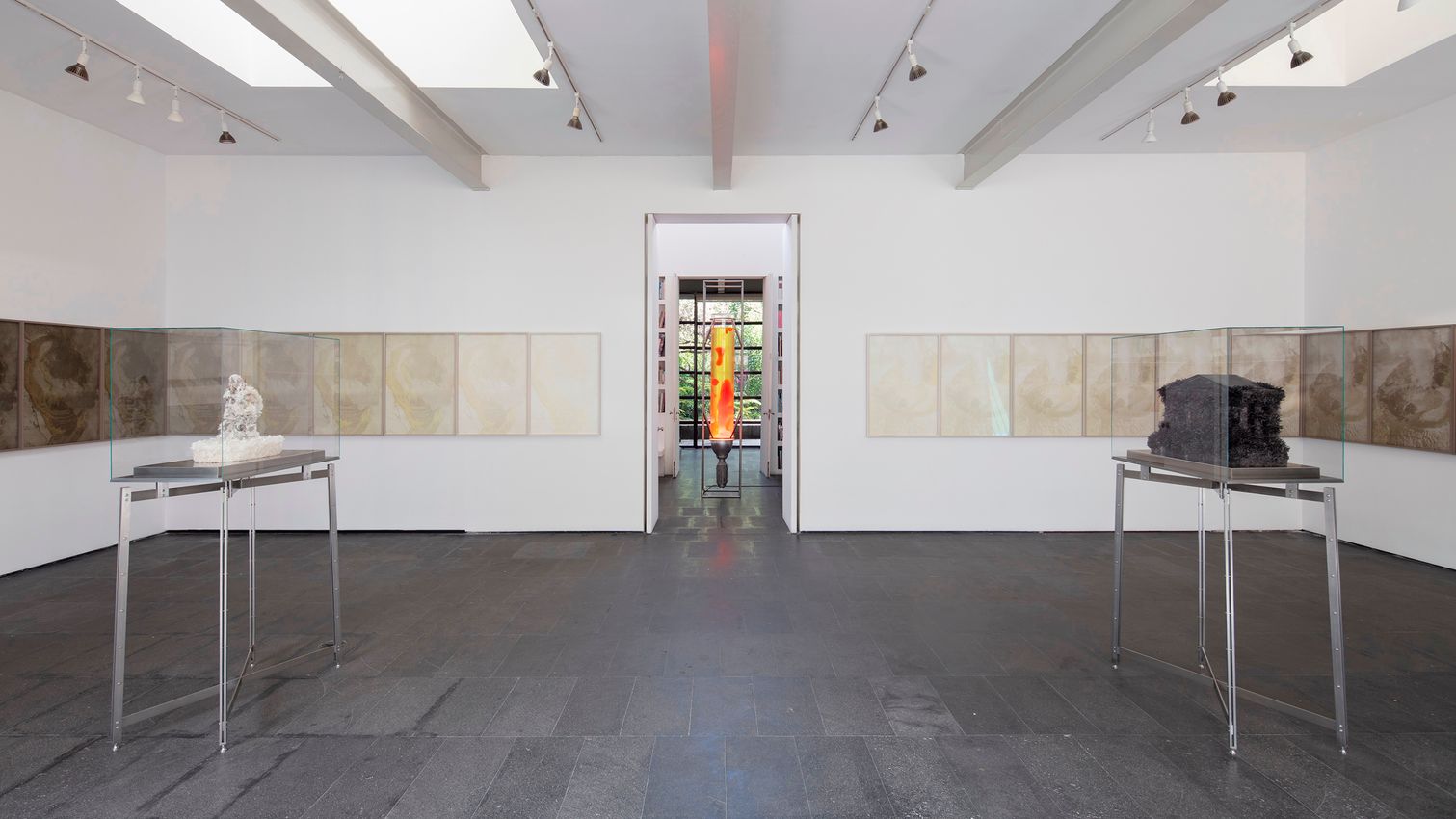
Julian Charrière blends science and creativity in his observational, questioning artworks that consider the way the Earth is transforming. He regularly visits extreme territories (from volcanoes to coral reefs to glaciers to radioactive areas) to create art that asks us to use our present circumstances to look back to the climate millions of years ago and imagine what it might look like millions of years into the future. His projects unpack established narratives about human life and the idea of time.
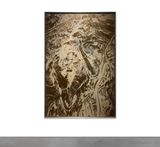
- For his 2014 photographic series Polygon, Charrière visited Semipalatinsk in Kazakhstan, formerly the USSR’s nuclear test site. He used analogue black-and-white film to capture what remained of the site (monolithic buildings, watchtowers) but before he developed each image, he scattered thermonuclear strata on each negative, echoing an effect discovered by Henri Becquerel in 1896 showing how radioactivity affects film.
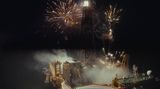
- Towards No Earthly Pole, which originated in 2019 and was displayed in Dallas in 2021 (among other locations), centred on a video montage that avoided familiar climate-emergency-in-the-Arctic imagery and instead used two drones—one as a spotlight, the other to film—to take footage of glistening, moving glaciers in the pitch dark. Studying ice can teach us about past climates; Charrière also sees this as an opportunity for us to question our own place on the planet.
- At the 61st Venice Biennale in 2026, Charrière exhibited 13 clocks encrusted with minerals, phosphates and salts, transforming them from instruments that measure time into “surfaces on which time physically accumulates”. He left the 19th century timepieces in places where they would encounter natural decay, such as waterfalls and limestone caves. The exhibition also included Spiral Economy (2025), a vending machine dispensing fossilised ammonites.
Julian Charrière: Select Awards
- Eric and Wendy Schmidt Environment and Art Prize, MOCA, Los Angeles (2024)
- SAM Prize for Contemporary Art, Paris (2022)
- Prix Mobilière, Switzerland (2018)
Julian Charrière: Select Exhibitions
Select Solo Exhibitions
- Ring of Fire, OMR, Mexico City (2026)
- Hard Core, Museum of Old and New Art, Tasmania (2026)
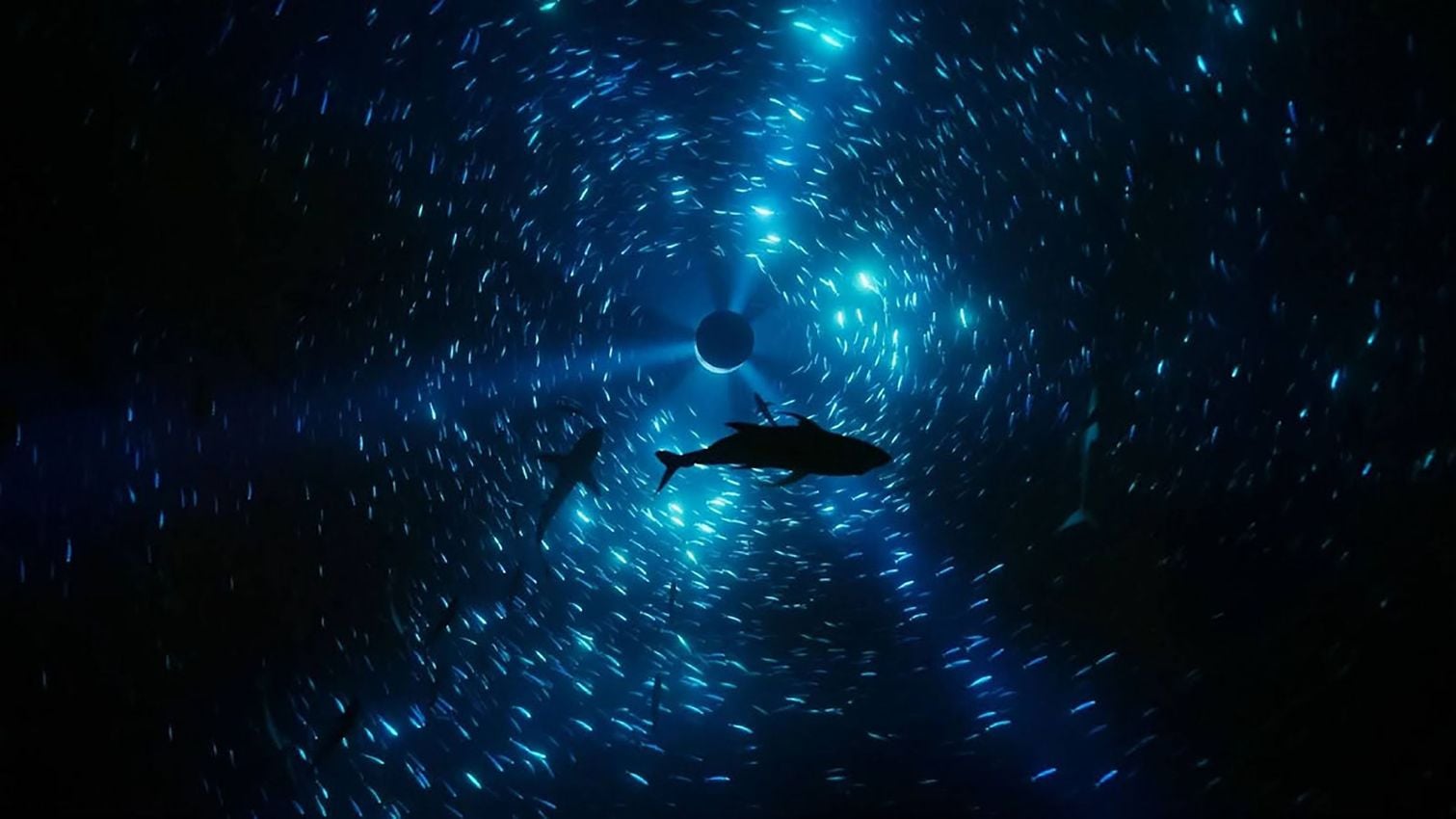
- Midnight Zone, Perrotin, Tokyo (2025) (and touring)
- Chorals, Ruinart Crayères, Reims (2025)
- Vertigo. Villa Carmignac, Porquerolles (2025)
- Solarstalgia, Arken Museum of Modern Art, Ishøj (2024)
- Controlled Burn, Langen Foundation, Neuss (2023)
- Erratic, San Francisco Museum of Modern Art (2022)
- Towards No Earthly Pole, Aargauer Kunsthaus (2020) (and touring)
- All We Ever Wanted Was Everything And Everywhere, Museo d’Arte Moderna di Bologna (2019)
- An Invitation to Disappear, Kunsthalle Mainz (2018) (and touring)
- For They That Sow the Wind, Parasol Unit—Foundation of Contemporary Art, London (2016)
- We are All Astronauts, Centre Culturel Suisse, Paris (2014)
- Das Numen: Transformation, Haus am Lützowplatz, Berlin (2013)
Select Group Exhibitions
- The Sixth Extinction, Nevada Museum of Art (2026)
- Call for Action, Boston Public Art Triennial (2025)
- We Will Survive: The Prepper Movement, MUDAC, Lausanne (2024)
- NGC Triennale 2023, Melbourne (2023)
- 16th Lyon Biennale of Contemporary Art (2022)
- Come Together, Filmfest Locarno La Rotonda (2021)
- Of Roots and Clouds, Sapporo International Art Festival 2020 (2020)
- Nowness Experiments, The Mesh K11 Art Foundation, Shanghai (2019)
- Ever Since We Crawled Out, Galerie Tschudi, Zuoz (2018)
- Le Rêve des Formes, Palais de Tokyo, Paris (2017)
- Desert Now Steve Turner Gallery, Los Angeles (2016)
- Art Môtiers 2015 (2015)
- The Go-Between, Museo Nazionale di Capodimonte, Naples (2014)
- Come, All Ye Faithful, Florian Christopher, Zurich (2013)
- Life Clock, Den Frie Centre for Contemporary Art, Copenhagen (2012)
- 100° Festival, Hebbel am Ufer, Berlin (2011)
- Let’s start to implement little errors, Institut für Raumexperimente, Berlin (2010)
- Géometria Physiké, Galerie-Atelier Oellermann, Berlin (2008)
Further Reading
- Julian Charrière’s website
- Julian Charrière’s Instagram
- YouTube interview on Louisiana Channel (2025)
- Artist profile page at Perrotin
- 2026 interview in Flash Art
Julian Charrière FAQs
How does Julian Charrière relate art to the climate emergency?
Charrière believes that discourse around the climate is often too anthropocentric, focusing on human and economic survival rather than thinking about humanity’s place within ecosystems. He sees that art can change our world view, creating a path for humans to acknowledge that all life forms are interconnected.
How did Julian Charrière work with the Champagne house Ruinart?
Julian Charrière created two projects with Ruinart in 2025. The Lutetian Sea was an ocean that covered much of Europe around 45 million years ago—visiting Ruinart’s chalk cellars allowed Charrière to explore memories of this body of water and also to consider how past climates link to our potential future. His sound, light and water installation Chorals (2025) featured a dark pool and underwater sounds, while Veils (2025) connected coral reefs with the origins of the chalk and limestone soil in the Champagne region.
Did Julian Charrière capture 2-billion-year-old air?
When the Earth’s atmosphere began to fill with free oxygen more than two billion years ago, it facilitated aerobic life. Charrière wanted to give people the chance to inhale oxygen trapped in iron ore since that time period, and the Museum of Old and New Art in Tasmania created a permanent space for his installation, Breathe, in 2026 that allowed this to happen. Sourcing iron ore from Pilbara in Australia, he explained: “I want people to get all the way back to the beginning of the Earth.”
Ocula



View Julian Charrière's Artworks














Explore and Follow Artists Shaping Contemporary Art
A respected voice in contemporary art discourse.
Focusing on ambitious storytelling and insightful art-world commentary. Ocula Magazine publishes in-depth interviews, critical essays and timely analysis on the artists, exhibitions and ideas driving the global art world.
Learn more about Ocula Magazine
Showcasing the best of the art world.
Ocula partners with galleries from around the world to highlight their artists, artworks and exhibitions. Gallery membership is by application and invitation, with each member vetted by an independent panel.
Learn more about Ocula Membership
Specialises in the sale of major artworks.
Led by a team with deep ties to the world’s leading auction houses, galleries and collectors. Ocula’s advisory team offers bespoke services to high-net-worth clients from around the world who are looking to acquire the best of contemporary and modern art.
Learn more about our team and services