





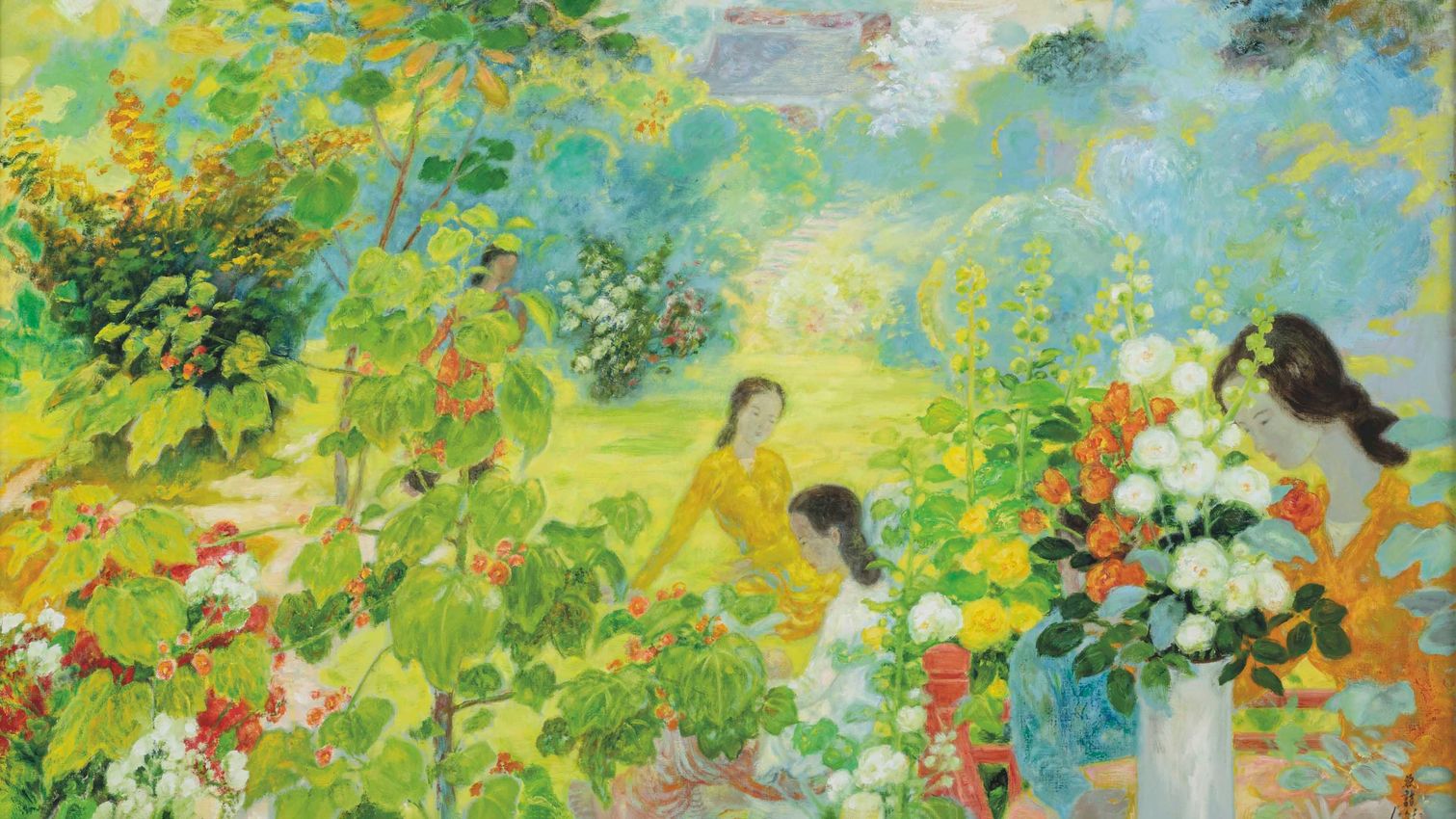
LÊ PHỔ
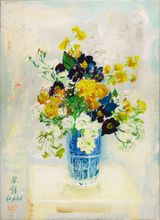
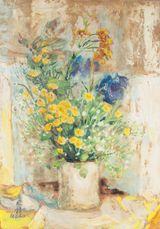
1907-2001, VietnamLê Phổ was a pioneering Vietnamese-French painter whose prolific output synthesised Vietnamese aesthetics with Western academic training techniques and influences. His oeuvre is celebrated for its technical and stylistic rigour, lyrical depictions of women, floral compositions, and serene domestic scenes.
Early Years
Born on 2 August 1907 in Hà Đông, near Hanoi, Lê Phổ hailed from a distinguished family; his father served as the last Viceroy of Tonkin. He commenced his formal art education at the École des Beaux-Arts de l’Indochine in Hanoi in 1925, studying under Joseph Inguimberty and Victor Tardieu, a colleague and contemporary of Henri Matisse. In 1931, Lê Phổ travelled to Paris, Belgium, and Italy, where he developed an admiration for European Renaissance and religious art.
Upon returning to Vietnam in 1933, he taught at the Hanoi School of Fine Arts and completed commissions for Emperor Bảo Đại. In 1937 after directing the Indochina section of the International Exposition in Paris, he settled permanently in the French capital.
Stylistic development:
Lê Phổ’s artistic journey is often delineated into three distinct periods:
Early Vietnamese Period (1925—1937)
During his formative years, Lê Phổ’s works predominantly featured Vietnamese landscapes, flora, and fauna, rendered in watercolours on silk. These pieces exude a sense of nostalgia and are characterised by delicate brushwork and muted, natural tones.
l’Age heureux [The Happy Age] (1930) is an example of work from his period, featuring a group of people on the bank of a river, under the shade of a tree. The landscape is depicted as serene and simplistically rendered, yet the interactions between the figures in the foreground are intriguing; all gazes are downcast except for the central figure, a young girl who gazes out of the picture plane with an enigmatic expression that could express a range of emotions from curiosity to contempt.
Romanet Gallery Period (1938—1962)
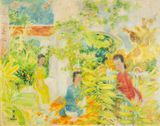
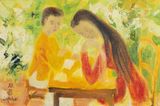
After relocating to Paris, Lê Phổ’s style evolved under the patronage of French art dealer Romanet. His paintings from this era exhibit a fusion of Impressionist and Surrealist influences, with elongated figures and dreamlike settings. Notable works include Le Concert (1938-40) and La préparation du bouquet (c. 1956), which showcase his refined technique and thematic focus on familial intimacy and leisure.
Findlay Gallery Period (1963—2001)
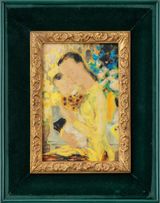
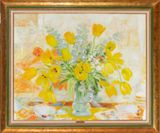
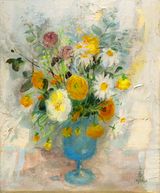
In his later years, Lê Phổ’s association with Wally Findlay Galleries in the United States marked a period of increased international recognition. His artworks from this time are distinguished by vibrant colours and a more expressive style, often depicting women amidst lush floral arrangements.
Notable Exhibitions
Lê Phổ’s works have been exhibited extensively, including:
- Paris Colonial Exposition, Paris (1931)
- DEPARTURES Intersecting Vietnamese Modern Art with R. Streitmatter-Tran, De Sarthe, Hong Kong (2017)
- Florals for Spring, Groundbreaking, Heather James Fine Art, Palm Desert (2023)
- Nucleo Storico: Unpacking Global Modernism, Venice Biennale (2024)
- City of Others: Asian Artists in Paris, 1920s—1940s, National Gallery Singapore (2025)
Lê Phổ FAQs
Who is Lê Phổ?
Lê Phổ was a Vietnamese-French painter renowned for his prolific oeuvre representing his life and training between Vietnamese and Western artistic traditions, particularly noted for his depictions of women, nature, and domestic scenes.
What is Lê Phổ’s most famous work?
La famille dans le jardin (c.1938) is among his most celebrated paintings, achieving a record-breaking auction price in 2023.
What influenced Lê Phổ’s art?
His art was influenced by his Vietnamese heritage, French academic training, and exposure to European Renaissance and modernist art styles of Surrealism, Symbolism and Fauvism.
Where can I view Lê Phổ’s artworks?
His works are held in various international collections and exhibited in major cities worldwide, including Paris, New York, and Singapore.
What is the significance of Lê Phổ’s art?
Lê Phổ’s art represents a harmonious blend of cultural aesthetics, contributing significantly to the development of modern Vietnamese art and its recognition on the global stage.
Ocula | 2025















Explore and Follow Artists Shaping Contemporary Art
A respected voice in contemporary art discourse.
Focusing on ambitious storytelling and insightful art-world commentary. Ocula Magazine publishes in-depth interviews, critical essays and timely analysis on the artists, exhibitions and ideas driving the global art world.
Learn more about Ocula Magazine
Showcasing the best of the art world.
Ocula partners with galleries from around the world to highlight their artists, artworks and exhibitions. Gallery membership is by application and invitation, with each member vetted by an independent panel.
Learn more about Ocula Membership
Specialises in the sale of major artworks.
Led by a team with deep ties to the world’s leading auction houses, galleries and collectors. Ocula’s advisory team offers bespoke services to high-net-worth clients from around the world who are looking to acquire the best of contemporary and modern art.
Learn more about our team and services