





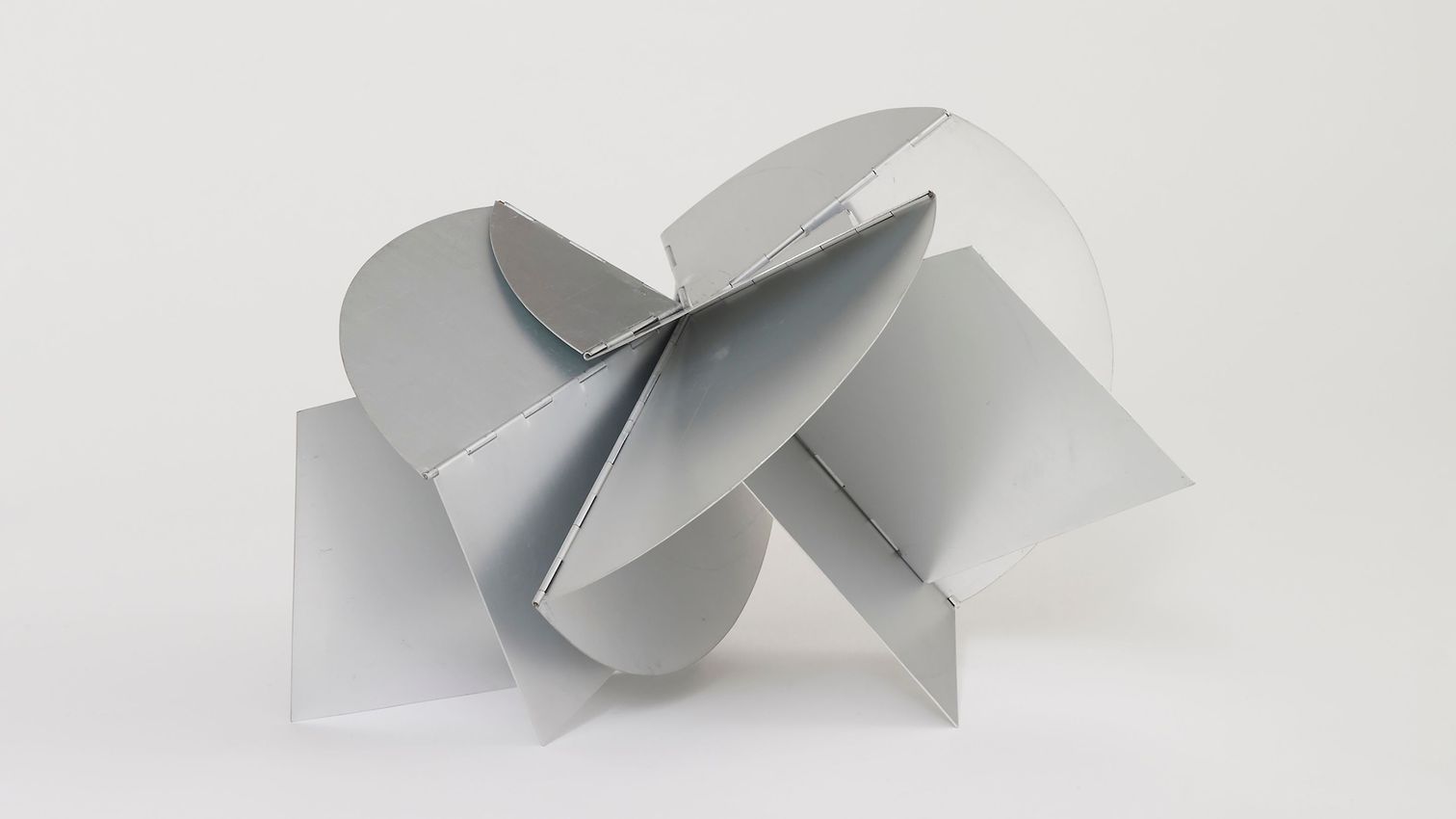
LYGIA CLARK
1920-1988, BrazilBorn in 1920 in Belo Horizonte, Lygia Clark’s early paintings laid the foundation for her later experiments with geometric abstraction and sensory engagement. Her founding and involvement with the Neo-Concrete movement in the late 1950s and early 1960s marked a pivotal shift in her practice, as she began to create works that invited tactile interaction and explored the phenomenological experience of the viewer. From her renowned “Bichos” (Critters) series, which featured interactive metal sculptures, to her later therapeutic propositions using simple objects and sensory stimuli, Clark continually pushed the boundaries of artistic expression.
Clark’s work is found at major art institutions and collections, such as the MoMA (New York), the Tate Collection (London), Centre Pompidou (Paris) and the Reina Sofia (Madrid). In recent years her work has been presented at major retrospectives, such as MoMA’s ‘Lygia Clark: The Abandonment of Art, 1948-1988’ (2014) and Guggenheim Bilbao’s ‘Lygia Clark: Painting as an Experimental Field, 1948–1958’ (2020).
Courtesy Baró

Works at Baró








Recently Exhibited


Works Elsewhere






Lygia Clark in Ocula Magazine




Explore and Follow Artists Shaping Contemporary Art
A respected voice in contemporary art discourse.
Focusing on ambitious storytelling and insightful art-world commentary. Ocula Magazine publishes in-depth interviews, critical essays and timely analysis on the artists, exhibitions and ideas driving the global art world.
Learn more about Ocula Magazine
Showcasing the best of the art world.
Ocula partners with galleries from around the world to highlight their artists, artworks and exhibitions. Gallery membership is by application and invitation, with each member vetted by an independent panel.
Learn more about Ocula Membership
Specialises in the sale of major artworks.
Led by a team with deep ties to the world’s leading auction houses, galleries and collectors. Ocula’s advisory team offers bespoke services to high-net-worth clients from around the world who are looking to acquire the best of contemporary and modern art.
Learn more about our team and services