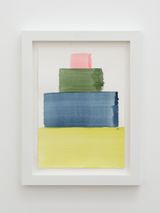
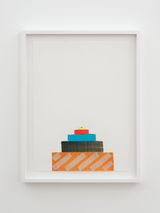
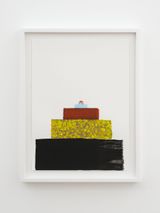
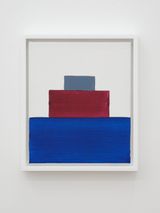
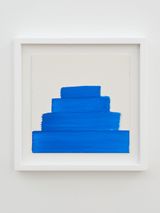
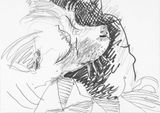
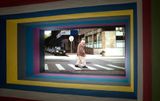
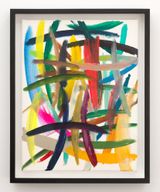
Martin Creed labels and identifies his artworks by numbers. By doing so, he gives each work equal status, irrespective of its material, shape, or size. Creed developed this distinctive approach to avoid decision-making and to explore the dilemma he faced of wanting to simultaneously make something and nothing.
The Ordinary and the Everyday
In Work No. 227: The lights going on and off (2000), Creed challenges traditional museum standards by manipulating the existing light fittings of the exhibition space. By seizing an empty room and switching the lights on for five seconds and then off for five seconds, Creed forms a new atmosphere that toys with viewers’ experience and expectations. Viewers’ impression of time and space is altered, and a focus on the physicality of the room comes into play.
Work No. 227: The lights going on and off (2000) is part of a wider series of work that aims to investigate the ordinary and the everyday. Creed’s oeuvre praises the mundane by using materials like Blu-Tak, party balloons, and masking tape in his artwork.
Creed submitted Work No. 227: The lights going on and off for the Turner Prize at the Tate Gallery, London in 2001. He was awarded the prestigious prize and received £20,000 in prize money.
Public Commissions
Everything Is Going To Be Alright (1999) is a series of neon-light installations that is regarded as one of the artist’s most important works. The neon installation displays the phrase ‘Everything Is Going To Be Alright’ in colourful lettering, 13 metres in length and half a metre in height.
Intended for display at a height across the façade of a building, Creed’s installation functions as a tool for the artist to communicate with his audience. Creed is prompting a reaction from viewers who try to decode his statement’s ambivalent meaning. The use of neon—a raw gas that cannot be seen—plays into Creed’s conflicting desire to create something and nothing from his art.
The work was originally commissioned for the Clapton Portico in Hackney, London. It has since been displayed at a number of other settings around the world, in countries including Italy, America, Scotland, and New Zealand.